Summary

  1. Mandelson scandal an 'issue of national security', Kemi Badenoch sayspublished at 10:07 BST

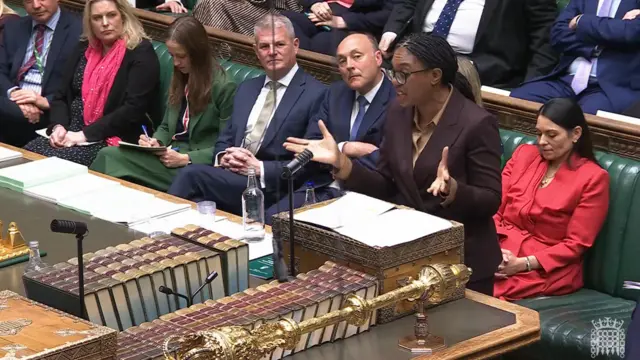
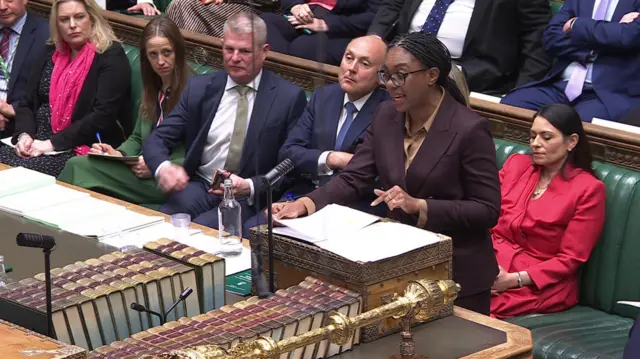
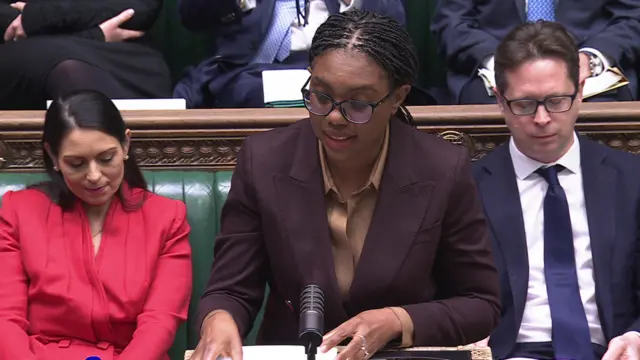
    Kemi Badenoch speaks in Parliament. She is wearing a bright blue outfit and gesturing with her right hand.Image source, PA Media

    Leader of the Opposition Kemi Badenoch says the Lord Mandelson row is an "issue of national security".

    The Conservative Party leader tells ITV's Good Morning Britain: “Somebody who was a national security risk – and this had been flagged – was put into the most senior and sensitive diplomatic post, where all sorts of information, intelligence, which I would not have seen as a secretary of state, would have come across his desk."

    Badenoch says Prime Minister Keir Starmer is "throwing everybody under a bus" and not taking responsibility, even as other people's careers are being ended over the scandal.

    “I’ve already said that he should resign; I don’t think that he will resign," she adds.

    Utimately, Badenoch says, the PM's future will come down to Labour MPs and "whether they want to be complicit in this cover-up".

  2. What we know about Mandelson's vetting processpublished at 09:51 BST

    The government is under intense pressure to explain how Mandelson came to be granted Developed Vetting (DV) status, which is needed to view top secret government material, despite concerns flagged during his screening process.

    If you're wondering what actually happens with a Developed Vetting security check, here's a quick explanation:

    It is a process employed by the government for those required to access sensitive material and be granted the highest level of security clearance.

    It is carried out by United Kingdom Security Vetting (UKSV), a specialist agency within the Cabinet Office.

    Lord Mandelson speaks into a microphone at the ambassador's residence in Washington. Behind him is a US flag, flowers and a painting on yellow wallpaper.Image source, Reuters
    Image caption,

    Lord Mandelson was appointed as the UK's ambassador in Washington in December 2024

    The process is designed to identify whether people applying for government jobs pose a security risk, either because they might seek to abuse their position, or because their personal lives make them a potential blackmail target - for example, if they are in high levels of debt or are having an affair.

    Candidates fill out various questionnaires and undergo an interview with a specially trained vetting officer, which is designed to be intrusive.

    As well as their finances and internet use, candidates are asked about very personal areas like friendships, family, health and sex life, sometimes over several hours.

  3. Olly Robbins is 'heartbroken' after leaving his job, former colleague sayspublished at 09:36 BST

    Tom Fletcher sits in the Today programme radio studio
    Image caption,

    UN humanitarian chief Tom Fletcher worked at the Foreign Office for decades

    Tom Fletcher, who is now the United Nations' humanitarian chief, previously worked at the Foreign Office for decades and is a friend of Olly Robbins.

    "I've known Olly for a long time," Fletcher tells BBC Radio 4's Today programme following the top civil servant leaving his job after a report into Mandelson's vetting came to light.

    "This is a guy who has public service and integrity stitched into his DNA in a way I haven't seen with any other single individual and I've worked with so many people inside government," Fletcher says.

    Robbins has "had an utterly rough few days", he says, and adds "he's a pretty strong kind of character but I think he's heartbroken".

  4. Mandelson: A key Labour veteran with a history of resignationspublished at 09:19 BST

    Lord Peter MandelsonImage source, Reuters

    Lord Peter Mandelson started working for Labour in the 1980s and has been a central figure in the party for decades.

    He played a key role in the New Labour movement, which saw Sir Tony Blair win a landslide election victory in 1997.

    The former MP for Hartlepool held a number of ministerial roles but was twice forced to resign.

    His first resignation was in 1998, when it was revealed he had received a secret loan of £373,000 from his ministerial colleague Geoffrey Robinson.

    Then-Prime Minister Tony Blair with Peter Mandelson in 2001. They are walking past a group of pupils on a visit to a school in Hartlepool.Image source, PA Media
    Image caption,

    Lord Mandelson - picture here with Tony Blair in 2001 - was a key figure in his government

    Less than a year later he was back in government as Northern Ireland secretary, before being forced to quit in 2001 over allegations of misconduct related to a passport application for the Hinduja brothers. An inquiry later cleared him of wrongdoing.

    After spending four years as EU trade commissioner he made another shock comeback, when then-Prime Minister Gordon Brown appointed him as business secretary and gave him a place in the House of Lords.

    PM Keir Starmer then appointed the Labour veteran as the UK's ambassador in Washington in December 2024.

    It was hoped his contacts across business and politics, as well as his ability to charm, would help him to develop a strong relationship with the incoming Trump administration.

  5. It was judged an 'unconventional ambassador' could work for the US - Labour ministerpublished at 08:55 BST

    A bit more now from Labour's Scotland Secretary, Douglas Alexander, who has just been speaking to BBC Radio 4's Today programme and earlier this morning spoke to BBC Breakfast.

    He's asked why the prime minister announced Lord Mandelson as the UK's ambassador to the US before vetting was completed, if the process was so important to him.

    Alexander responds by saying "Mandelson was appointed in line with the process for political appointments for ambassadors" that the government "inherited from our predecessors".

    Pressed again on why the process played out in this order, the Scotland secretary says "we all now recognise that the process was flawed" and adds the government has changed it.

    "A judgement was made that the Trump administration was an unconventional administration, and a unconventional ambassador could do a job for the United Kingdom," Alexander says.

    "That judgement was wrong," he adds.

  6. What are the key questions facing the PM?published at 08:34 BST

    British Prime Minister Keir Starmer leaves after the multinational virtual summit and press conference at the Elysee Presidential Palace in Paris, France, April 17, 2026Image source, Reuters

    The prime minister has repeatedly told MPs that "full due process" was followed in the appointment of Lord Mandelson as US ambassador.

    Sir Keir Starmer has been accused by opponents of misleading parliament and will make his case to the Commons later.

    Here are some of the key questions MPs will want him to answer:

    • What did he know and when?
    • Why did Starmer and his team not ask for more information?
    • Did the PM mislead parliament?
    • Why did Mandelson fail his vetting?
    • Will he face further pressure after Monday's Commons appearance?

    You can read more about this in our political reporter Jennifer McKiernan's story.

  7. Olly Robbins was thrown under the bus, former Foreign Office official sayspublished at 08:12 BST

    An Amol Rajan interview with Lord Simon McDonald, who is a former permanent under-secretary for the Foreign Office and head of the diplomatic service, featured on BBC Radio 4's Today programme this morning.

    Asked if former top civil servant Olly Robbins was "thrown under the bus", McDonald says "yes".

    McDonald says that the fact Robbins' removal from his position came on the same day the story first broke in the Guardian "shows to me that Number 10 wanted a scalp, they wanted it quickly".

    "I cannot see that there was any process, any fairness, any giving him the chance to set out this case and that feels to me wrong," he adds.

  8. What we know about Mandelson's contact with Epsteinpublished at 08:03 BST

    Undated image shows Jeffrey Epstein and Peter Mandelson onboard a yacht in an unspecified location.Image source, US Department of Justice
    Image caption,

    Jeffrey Epstein and Peter Mandelson pictured onboard a yacht in an unspecified location

    Lord Mandelson, Starmer's pick for US ambassador, was sacked seven months into the job over his ties to the late convicted sex offender Jeffrey Epstein.

    Mandelson has long argued that he accepted Epstein and his lawyer's version of events, and only discovered the truth after his death in 2019.

    The BBC understands his position is he has not acted in any way criminally and that he was not motivated by financial gain.

    This Flourish post cannot be displayed in your browser. Please enable Javascript or try a different browser.

  9. 'All roads lead to resignation': Opposition parties pile pressure on Starmerpublished at 07:53 BST

    Starmer walks past a row of people including Peter MandelsonImage source, AFP via Getty Images
    Image caption,

    Mandelson applauds Starmer at London Labour's Regional Conference in January 2023

    Downing Street has said that the prime minister did not know about the outcome of Lord Mandelson's security vetting, while Starmer says he is "furious" about not being told.

    But these denials haven't been enough to stymie the calls from opposition parties for Starmer's resignation.

    • Conservative leader Kemi Badenoch has said the explanation from No 10 is "completely preposterous" and adds "all roads lead to resignation". She told a press conference on Friday that she is "considering every parliamentary option" to removing the prime minister and called on Labour MPs to "do the right thing" and get rid of him
    Kemi Badenoch stands at a podiumImage source, PA Media
    Image caption,

    Leader of the Opposition Badenoch held a press conference on Friday

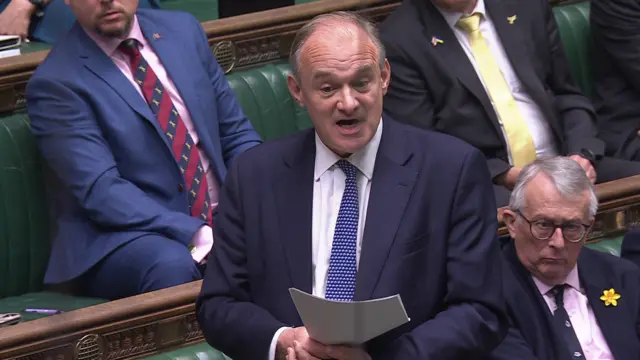
    • Liberal Democrat leader Ed Davey has said the situation shows “catastrophically poor judgement” on a matter of national security, and that the evidence suggested Starmer had misled the public and Parliament
    • Reform UK leader Nigel Farage has said there is “no doubt” the Commons was misled, and describes top Foreign Office official Olly Robbins as a “sacrificial lamb” after his effective sacking
    • Plaid Cymru leader Rhun ap Iorwerth accuses the prime minister of becoming “distracted from his day job and failing those he serves”
    • Green Party leader Zack Polanski has said on Friday there was "no way today should end" without Starmer's resignation, andbranded any other outcome an “absurd scenario”
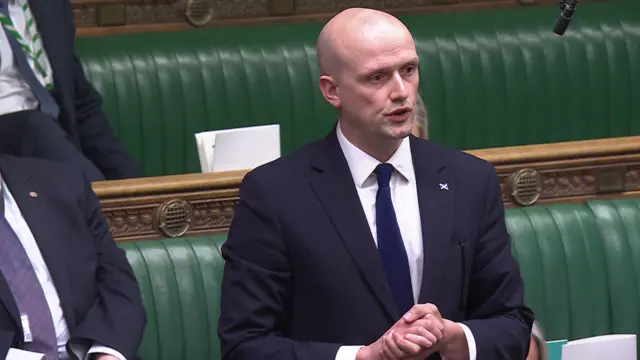
    • The SNP's leader in Westminster Stephen Flynn says the prime minister is either “incompetent, gullible or a liar”, or he was “all three”
  10. 'Simply untrue' to claim Starmer is lying about Mandelson, minister sayspublished at 07:40 BST

    Douglas Alexander on the set of BBC Breakfast

    Labour's Secretary of State for Scotland Douglas Alexander says "absolutely" Keir Starmer can "survive the political scandal" from this Mandelson vetting row.

    Claims that the prime minister is lying - including from Opposition Leader Kemi Badenoch - are "simply untrue", he tells BBC Breakfast.

    "The reality is, Peter Mandelson should not have been appointed, the prime minister recognises and has stated repeatedly that that was a mistake," he says.

    He adds that "lessons need to be learned" in relation to the appointment process, and Starmer will answer questions from MPs today about it.

  11. Who is Olly Robbins?published at 07:39 BST

    Olly Robbins stands in the street in WestminsterImage source, PA

    It emerged late on Thursday that the most senior civil servant in the Foreign Office, Olly Robbins, was leaving his post.

    It came after the Guardian reported that his department didn't tell Prime Minister Starmer that Lord Mandelson had failed security vetting for the role of US ambassador, and decided to let him take up the role.

    The BBC understands he was effectively sacked after Starmer and Foreign Secretary Yvette Cooper lost confidence in him.

    Robbins was made permanent under-secretary at the Foreign Office in January 2025.

    As department leader, this also made him the head of the UK's diplomatic service and the most senior policy adviser to the foreign secretary.

    He was previously permanent secretary of the Department for Exiting the European Union in 2016, and former PM Theresa May's Europe adviser from 2017-19, overseeing Brexit negotiations.

    He'd also served as principal private secretary for former PMs Tony Blair and then Gordon Brown.

  12. Analysis

    Starmer is likely to argue this is all the fault of Olly Robbinspublished at 07:34 BST

    Henry Zeffman
    Chief political correspondent

    The prime minister’s argument today in its essence will be that all this is the fault of Olly Robbins, who was the head civil servant at the Foreign Office until he was sacked by Starmer in a phone call on Thursday night.

    He will argue, first, that Robbins should not have overruled the vetting agency’s recommendation that Lord Mandelson not be given security clearance.

    And second, he will argue that Robbins should have alerted him and the government about what had transpired far sooner, and certainly while he was facing intense questions about the decision to appoint Mandelson.

    Robbins will have his chance to answer all that when he is expected to appear before a committee of MPs tomorrow.

    Expect opposition parties to question whether the prime minister could and should have done more to find out the full sequence of events before facing questions on this. Was he culpably incurious?

    But it is worth stressing that as of this morning it does not feel like Labour MPs are seriously angry about this. That alleviates the pressure on Starmer in the short term.

    But they are seriously frustrated that the Mandelson saga has entered a fresh chapter, and that frustration could increase the danger to Starmer’s position in the medium term.

  13. Starmer would have blocked Mandelson over vetting failure, ministers saypublished at 07:18 BST

    David LammyImage source, PA Media
    Image caption,

    Deputy Prime Minister David Lammy was foreign secretary at the time of Mandelson's appointment as US ambassador

    Keir Starmer would have blocked the appointment of Lord Mandelson as US ambassador had he known he failed security vetting, ministers have said.

    Technology Secretary Liz Kendall said on the BBC's Sunday with Laura Kuenssberg that Starmer was told Mandelson had been granted developed vetting status, adding: "If he had known that UK security vetting hadn't cleared him, he would not have made that appointment."

    Kendall's defence of the prime minister echoed remarks by Deputy PM David Lammy, who has told the Guardian, external he had "absolutely no doubt at all" that the prime minister "would never, ever have appointed" Mandelson if he had known he failed vetting.

    Lammy, who was foreign secretary at the time of Mandelson's appointment, says neither he nor his advisers had been told about the vetting process.

    • You can read more about what ministers have been saying in this story
  14. 'I'm absolutely furious,' Starmer says about Mandelson revelationspublished at 07:05 BST

    Media caption,

    Watch: 'I'm absolutely furious,' says Starmer on Friday

    Speaking to reporters on Friday, Prime Minister Keir Starmer said he would go to Parliament to "set out all the relevant facts in true transparency so Parliament has the full picture" about Lord Mandelson's appointment as ambassador to the US.

    We're expecting that address to the House of Commons at 15:30 BST.

    Starmer vehemently denied knowing that Mandelson had failed his security vetting, calling it "staggering".

    "That I wasn't told that he'd failed security vetting when I was telling Parliament that due process had been followed is unforgivable," he said.

    "Not only was I not told, no minister was told and I'm absolutely furious about it."

    He added that: "It is totally unacceptable that the prime minister making an appointment is not told that security vetting has been failed."

  15. Why did Mandelson fail his vetting?published at 06:42 BST

    Lord Mandelson has grey hair swept to one side and is wearing glasses and a blue coatImage source, Reuters

    This is one of the questions MPs will be hoping to hear answered.

    The remaining documents relating to Lord Mandelson's vetting and appointment are set to be released imminently. They were initially withheld on the orders of the Metropolitan Police, which is investigating Lord Mandelson for potential criminal activity.

    Lord Mandelson has not responded to requests for comment but the BBC understands his position is that he has not acted in any way criminally and that he was not motivated by financial gain.

    The documents also need to be inspected by the Intelligence and Security Committee of cross-party MPs, which is trying to balance allowing as much information as possible into the public domain without compromising national security.

    Former US ambassador Lord Mandelson shakes hands with US President Donald Trump in the Oval Office. The two men are wearing dark suits and white shirts and ties as they shake hands.Image source, Reuters
    Image caption,

    Former US Ambassador Lord Mandelson pictured shaking hands with President Trump last year in the Oval Office

    In November, the then head of the civil service, Sir Chris Wormald, said Lord Mandelson was not formally interviewed for the role of US ambassador.

    Wormald said Mandelson was not directly asked in person about any conflict of interest, but instead needed to fill in a form aimed more at potential financial conflicts. This process has now been changed.

    Details of the due diligence checks made before Lord Mandelson's appointment, carried out by the Cabinet Office on behalf of Downing Street, are still to emerge.

    However, Wormald told MPs in November that the document did contain an "initial assessment" of mitigations around potential professional or financial relationships and noted the inclusion of "a general reputational risk" linked to Epstein.

  16. How did we get here?published at 06:33 BST

    Sir Keir Starmer is once again coming under pressure over the appointment of Lord Mandelson as the UK's ambassador to the US.

    The Labour grandee was given the post in December 2024 only to be sacked a year later over his ties to the late convicted sex offender Jeffrey Epstein.

    Questions have been raised over what the prime minister knew when about his appointment.

    This Flourish post cannot be displayed in your browser. Please enable Javascript or try a different browser.

  17. Starmer to address MPs over Mandelson vetting scandalpublished at 06:23 BST

    Sir Keir Starmer has short grey hair neatly combed and is wearing a black coat with dark blue tie and white shirt. His hands are adjusting his glasses and he looks seriousImage source, Reuters

    The prime minister is facing calls to resign as he heads to the House of Commons later to address Lord Mandelson's appointment as UK ambassador to the US.

    It emerged last week that Lord Mandelson had failed a vetting process to undertake the role and yet was still sent to the US on the diplomatic mission.

    Starmer has denied knowing that the peer had failed the process, saying it was "staggering" that he hadn't been told.

    The BBC's political editor Chris Mason reported that Lord Mandelson himself was also unaware he had failed it.

    Top civil servant at the Foreign Office Sir Olly Robbins has resigned following the scandal and now opposition voices are calling for the prime minister to do the same.

    But some Labour ministers have defended the PM, saying he would not have made the appointment had he known.

    We'll bring you all the latest updates and analysis right here on this page.