Summary

  • The former top official at the Foreign Office, Sir Olly Robbins, says No 10 had a "dismissive approach" to Lord Mandelson's vetting

  • He was sacked after the PM discovered Robbins did not tell him that Mandelson had failed the vetting process to be the US ambassador - timeline of events

  • Robbins tells the Foreign Affairs Select Committee there was an "atmosphere of pressure" and a "very strong expectation" from No 10 that Mandelson should be "in post and in America" as quickly as possible

  • It comes after Keir Starmer said officials made a "deliberate decision" not to tell him that Mandelson had failed security vetting

  • In a letter to the committee, Robbins says the body that conducts vetting considered Mandelson a "borderline" case and was "leaning towards recommending that clearance be denied"

  • He says he was never shown the form where the vetting team said it had "high concerns" about Mandelson

  • Robbins still believes that he and the Foreign Office made the correct decision given the information he received - the PM's position is the exact opposite, writes Henry Zeffman

  1. 'Devastating' evidence and 'so many red flags' - opposition parties reactpublished at 12:48 BST

    Kemi Badenoch speaking in front of a crowd in a close-up photo. She's looking to the side of the camera and is mid speech. She's wearing a turquoise blazer with a black blouse underneath.Image source, PA Media

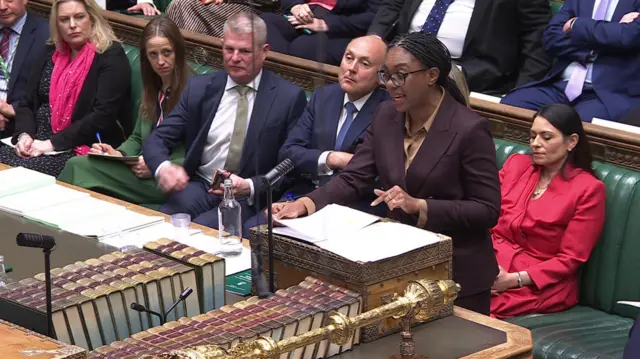
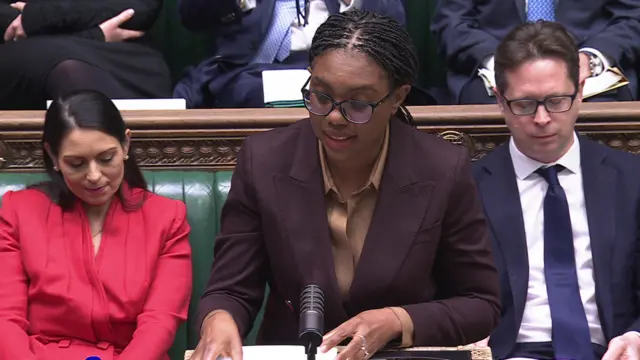
    Tory leader Kemi Badenoch calls Olly Robbins's evidence today "devastating" for Starmer. She says it is "absolutely clear" that full due process wasn't followed in Mandelson's appointment.

    "Keir Starmer has misled the House," she writes in a statement on X.

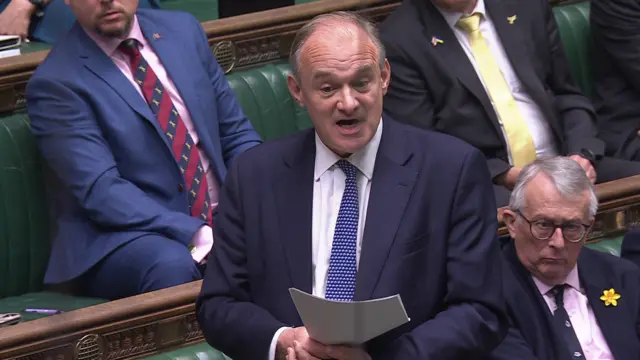
    On Monday, Lib Dem leader Ed Davey and the Green Party's Zack Polanski called for the prime minister to resign.

    In a video shared on social media on Tuesday morning, Polanski says Mandelson's appointment was "a failure of judgement from the very beginning".

    Last night, Davey said it is "truly shocking" how badly Starmer has "let the country down".

    Reform UK leader Nigel Farage tells reporters he does not accept that Starmer was telling the truth "at all", and that there are "still so many red flags".

    "Even without the official vetting it was pretty obvious that Mandelson was the wrong candidate for America", he says.

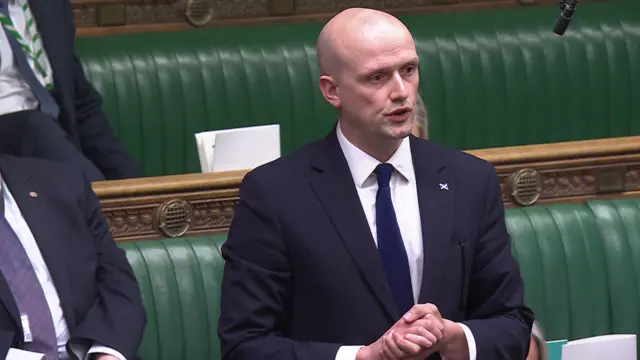
    The SNP's Westminster leader Stephen Flynn says: "Starmer chose to appoint the Prince of Darkness. And that Darkness has now enveloped him."

    Meanwhile, Plaid Cymru's Westminster leader Liz Saville-Roberts says Robbins' evidence showed Labour's "crony culture" and is "indefensible".

  2. Parliament not given information 'it should have been given', says foreign secretarypublished at 12:39 BST

    Yvette Cooper speaking in the House of CommonsImage source, House of Commons

    Foreign Secretary Yvette Cooper is currently speaking in the House of Commons, answering questions from MPs during a scheduled Foreign Office questions session.

    On the vetting of Mandelson, Cooper says she, the prime minister and the former foreign secretary "should have been told there was an issue and I am very troubled that we were not".

    She says Parliament was not given all of the information "it should have been", and has commissioned a review into the information that was provided.

    Shadow foreign secretary Priti Patel asks Cooper why she lost confidence in Robbins last week.

    The foreign secretary says Mandelson "should never" have been appointed to the post of ambassador to the US.

    But, she adds, there is a responsibility on ministers to provide accurate information to the House of Commons - and they "should have been told" about the vetting body's conclusions and recommendation.

  3. BBC Verify

    Was there 'no stipulation' Mandelson should be vetted?published at 12:21 BST

    By Tom Edgington

    Earlier in his committee session, Olly Robbins described an atmosphere of "constant pressure" to get Mandelson in post in Washington.

    “There was already a very, very strong expectation… coming from Number 10 that he needed to be in post and in America as quickly as humanly possible”, he told the committee.

    Robbins went on to say that the documents released in March - known as the Mandelson files - showed there was “no stipulation” from Number 10 that Mandelson should be vetted.

    BBC Verify has looked through the documents, which contain an undated letter from the prime minister’s principal private secretary to the Foreign Office communicating Keir Starmer’s decision to appoint Mandelson.

    A screenshot of part of a letter, which has the UK government's crest, the 10 Downing Street address and reads: "From the Principal Private Secretary Dear Philip, The Prime Minister has decided to appoint the Rt Hon the Lord Peter Mandelson to the post of HMA Washington. Please would you take forward the necessary arrangements at pace. We would like to secure agrément as soon as possible to enable a handover in advance of the US inauguration. I would be grateful if you would inform the current incumbent that the post will be filled by a political appointment. Please do not disclose the individual at this stage, until we have approval from HM The King."

    The letter makes no explicit reference to vetting, only that “the necessary arrangements” are taken forward “at pace”.

    The files also contain Mandelson’s “employment offer” letter, dated 20 January 2025. It states the role requires top-level clearance and that “your security clearance has been confirmed”.

    “The whole process has been highly unusual - right from the point where Mandelson's appointment was announced before any vetting had taken place,” says Hannah Keenan, from the Institute for Government think tank.

  4. Emergency debate on Mandelson appointment due later this afternoonpublished at 12:15 BST

    Following Olly Robbins being questioned by the Foreign Affairs Select Committee, there will be an emergency debate in the House of Commons on Lord Mandelson's appointment as ambassador to the US.

    The debate, tabled by Kemi Badenoch and expected after 13:30 BST, will cover the government's accountability in appointing Mandelson - which the Conservative leader describes as a "matter of national security".

    You will be able to follow all of the latest updates on this page.

    Kemi Badenoch speaking in the House of Commons on MondayImage source, House of Commons
  5. No 10 had a 'dismissive attitude' over vetting, but process followed, says Robbins- a recappublished at 12:02 BST

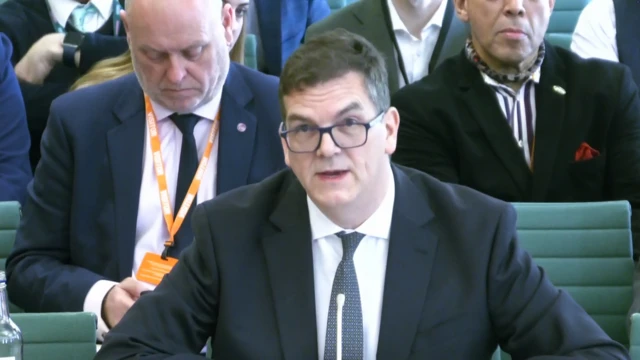
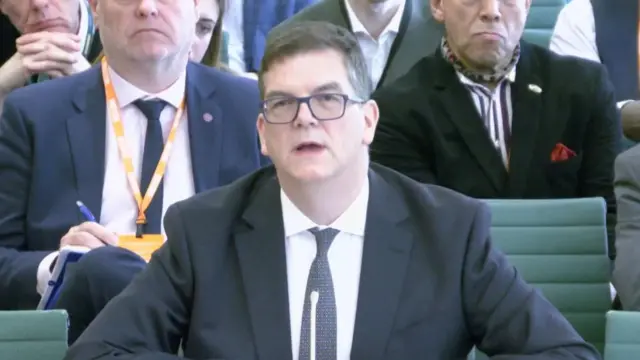
    Olly Robbins, wearing a black suit with black tie, speaking into microphone as he appears before the Foreign Affairs CommitteeImage source, House of Commons

    The former top official at the Foreign Office, Olly Robbins, has just finished giving evidence to a committee of MPs over the vetting process for former US ambassador Lord Mandelson.

    Robbins, who was appointed to the role in January last year, says when he took over there was "already a very very strong expectation" from No 10 that Mandelson "needed to be in post and in America as quickly as possible".

    In terms of the vetting process, he says there was a "generally dismissive attitude" in No 10 over Mandelson's clearance - and the position taken by the Cabinet Office was that "Mandelson's status meant that vetting might be unnecessary".

    But, Robbins insists, his department followed the process "rigorously" and vetting was completed to the "normal high standard".

    He tells MPs that he was briefed that the body that conducts vetting considered Mandelson a "borderline case" and were "leaning towards" recommending that clearance be denied - but the Foreign Office decided that the risks identified could be "managed or mitigated".

    Asked about the impact on the government if Mandelson's clearance had been denied, Robbins says: "I think it would have been very difficult indeed."

    Robbins says that senior politicians - including prime ministers - are entitled to know when people fail vetting.

    But, he adds, there is not an "ongoing dialogue" between senior officials and ministers, and he would "absolutely not" have considered telling anyone in No 10 about the vetting teams concerns surrounding Mandelson - saying the system "must remain confidential".

    That's a different view from No 10, which has made clear in recent days that they believe Robbins should have informed them about security concerns.

  6. Robbins says he is 'desperately sad' about current circumstancespublished at 11:52 BST

    Media caption,

    Watch: Emotional Robbins reflects on 'wonderful' colleagues

    Labour MP Dan Carden asks Robbins if he understands why he has been dismissed from his post.

    Robbins says he does not fully understand why he is in his current position, but that as a human he is "desperately sad about it".

    He says he loved the job and institution, adding that he was "proud" to serve this government and any that might follow it. He also says he had wonderful colleagues that he misses deeply, who he feels proud of leading.

  7. 'Would you do anything different in hindsight?'published at 11:52 BST

    Labour MP Alan Gemmell asks Robbins if, in hindsight, would he have done anything differently over Mandelson's appointment?

    Robbins says there are various aspects of the system that could be improved, and the British state is "dissecting itself to some extent in public over this".

    He thinks about his colleagues working overseas who are under "incredible pressure", and says he finds himself wondering "who this helps".

  8. Interesting aspects of Mandelson's life 'well known,' suggests Robbinspublished at 11:51 BST

    Emily Thornberry points out that there were "interesting" things about Lord Mandelson and says "that's really the nub of this - how on earth did this happen?"

    Robbins replies to say that interesting aspects about Mandelson's life were "very very well known".

    "This doesn't stack up," Thornberry goes on to say. "In the end he lost his job because he was a threat and that should have been revealed with the DV [developed vetting].

    "He was leaking secrets from the British state to a foreign bank, that is pretty serious".

    "Some spook somewhere knew that," she adds.

    Robbins replies: "That was not known at the time of his withdrawal, to my knowledge."

    The BBC understands Lord Mandelson's position is that he has not acted in any way criminally and was not motivated by financial gain.

  9. Objective of vetting is not to 'trip' people up, says Robbinspublished at 11:22 BST

    Robbins reiterates that developed vetting is a" risk judgement" and it depends on the management and mitigation of those risks.

    "The objective of the system is not to discover things about people and trip them up," Robbins continues.

    "It is to encourage the applicant to be open and to make full and frank disclosure of potential vulnerabilities and if possible find ways of managing them."

    • Olly Robbins has finished giving evidence - we're still bringing you some of the latest exchanges, stick with us
  10. Robbins says he was 'deeply concerned' by leakpublished at 11:11 BST

    Labour MP Alex Ballinger asks Robbins how the information which showed Mandelson had failed security vetting was leaked to the press.

    Robbins says he was "deeply concerned" by the leak, adding that the security vetting system does not work if candidates don't understand it is an "entirely different category of protection".

    He says: "That trust, once gone, cannot be got back."

  11. Robbins shares worries about PM's public linespublished at 11:05 BST

    Robbins says he was worried "at various points" that the prime minister was "given lines to deploy publicly" that the Foreign Office hadn't had a chance to work through with colleagues.

    He adds that there are lots of things that could have been improved, but that "I tried to operate the system to the best of my ability".

  12. Not an 'ongoing dialogue' between ministers and officials over vetting, says Robbinspublished at 10:57 BST

    Following questions from Labour MP Uma Kumran, Robbins says prime ministers and other ministers are entitled to know when people fail vetting, but that there is not an "ongoing dialogue" between senior officials and ministers.

    He says such an arrangement would erode the very principle of the system, which he describes as "vetting in confidence".

    Robbins repeats that Mandelson did not fail his security vetting when asked by Kumaran about the red boxes highlighted on the former ambassador's form.

    The Labour MP also asks Robbins if he was worried about the prime minister misleading Parliament.

    "I hope I have explained, I don't think it would have been proper for me to expose the full picture," Robbins reiterates. "I believe strongly I had an obligation not to do that."

    Robbins then tells the committee that he did consider asking for the UKSV underlying documents once Mandelson had been removed from office in September. He says it was discussed on his behalf, but Robbins was told he needed a national security justification for accessing the documents.

  13. Foreign Office were asked to consider Mandelson's case 'at pace'published at 10:43 BST

    Labour MP Abtisam Mohamed asks Robbins about the "dismissiveness" he experienced from No 10 when it was being assessed whether Mandelson should be granted clearance.

    He responds by saying a letter from No 10 that the Foreign Office received said the department should take its considerations on Mandelson "at pace", but that it wanted the decision to be made in advance of the upcoming US inauguration.

    Robbins says that the process was taken in the usual way and he did not feel it was rushed, adding that the Foreign Office had asked the UKSV to put Mandelson's case at the top of the queue "rather than waiting its turn".

  14. Analysis

    Robbins asked to see Mandelson vetting documents, according to letterpublished at 10:34 BST

    Jack Fenwick
    Political correspondent

    While Olly Robbins is still answering questions, it's worth looking at another intriguing question raised by the letter he wrote to the committee.

    He says that after Mandelson was sacked as ambassador to the US, Robbins asked to see the full vetting documents.

    Robbins says there were discussions between the Foreign Office and the Cabinet Office about whether this access would be granted.

    In the end it was decided that he wouldn’t be allowed to view the documents.

    At the very least this shows that people inside the Cabinet Office were aware that Robbins was asking questions about the vetting process.

    Let’s not forget that one of the biggest criticisms levelled at the prime minister has been that he and his team were not curious enough about this whole saga.

    If officials knew that the most senior civil servant in the Foreign Office was digging around, this could add to claims that the PM’s own team should have been digging around too.

  15. Robbins directly criticises prime minister's judgement for the first timepublished at 10:32 BST

    Jack Fenwick
    Political correspondent

    Mandelson and StarmerImage source, PA Media

    We've spoken a lot about the vetting process which happened after Peter Mandelson was announced as the ambassador.

    But there was also a due diligence process that happened before the prime minister picked Mandelson.

    Documents related to that due diligence process have already been made public.

    We know that it threw up various reputational risks - including Mandelson's links to China and Jeffrey Epstein.

    Robbins says: "I regret that the due diligence process which threw up, as I understand it, serious reputational risks didn't colour the prime minister's judgement."

    That's a clear indication that he believes the prime minister should have decided against giving Mandelson the job before the vetting process even began.

  16. Robbins says he was told Doyle questions 'sensitive'published at 10:24 BST

    Thornberry comes on to ask about Starmer's ex-head of communications, Matthew Doyle, who came up in the session a short while ago.

    "I don't know what the origin of the suggestion was, and I don't know who exactly was behind it or how serious it was," Robbins says - but adds it was "serious enough" for No 10 to get in touch to ask for any jobs that were coming up.

    "That is the point at which I felt I needed to lay down some markers," Robbins continues.

    Conservative John Whittingdale then follows up, asking Robbins who told him not to tell the foreign secretary about the matter.

    The No 10 private office were clear "this was so sensitive" that "I should keep it to myself for now," Robbins tells the committee.

  17. Robbins claims he was asked to 'potentially' find a job for Starmer's ex-head of commspublished at 10:15 BST

    Henry Zeffman
    Chief political correspondent

    That’s one out of the left-field. Robbins has just claimed that in March 2025 he was asked by No 10 to “potentially” find a job as an ambassador for Matthew Doyle.

    At the time Doyle was the prime minister’s director of communications.

    He was subsequently given a peerage, an appointment which itself descended into scandal over Doyle’s relationship with a convicted sex offender.

    This is going to go down very badly with Labour MPs.

    Doyle, like Mandelson, has a long history as an influential figure on the right of the Labour Party. He first worked in government under Tony Blair.

    Note, too, that Robbins claims to have been told by No 10 not to discuss the prospect of a diplomatic appointment for Doyle with David Lammy, then the foreign secretary.

  18. What we know about Mandelson's vetting form - and what Robbins knew about itpublished at 10:05 BST

    Jack Fenwick
    Political correspondent

    We're getting more detail than ever about the decision to give Mandelson developed vetting.

    Last week the government published a template of the form, external that UK Security Vetting (UKSV) fill out when deciding whether to recommend giving someone clearance.

    That form includes three boxes - green, amber and red - which indicate the vetting team’s recommendation.

    We are told that for Mandelson's form, the vetting team ticked the red box - indicating an explicit recommendation not to approve vetting.

    But Robbins, who is still giving evidence, says he was never given that information.

    "[I do] not recall the way in which the UKSV findings were presented to me as being that definitive", he says, adding that he was instead told "that it was borderline and they were leaning towards recommending against".

    This will raise questions about whether Robbins - the most senior civil servant at the Foreign Office at the time - was given the correct information by other officials in his department, and whether the prime minister knew what Robbins had or hadn’t seen when he decided to sack him.

    The vetting form with several boxesImage source, UK Government
    Image caption,

    An excerpt from the vetting form as published by the Cabinet Office

  19. Would have been 'difficult' for PM if Mandelson clearance deniedpublished at 10:04 BST

    Labour MP Dan Carden then asks what would the impact have been if Mandelson's clearance had been denied.

    "I think it would have been very difficult indeed," Robbins answers adding it could have been difficult for the foreign secretary and the prime minister.

    Carden points to Starmer saying the Foreign Office granted Mandelson clearance against the specific recommendation.

    He asks Robbins if he believes the PM is misunderstanding this process, to which the ex-civil servant says he can only describe the process as he understands it.

    Carden then asks if the prime minister is right to have expected to be provided with more information on the vetting process.

    In response, Robbins says this is a "dangerous misunderstanding of the necessity of confidentiality of the process".

  20. Retracting Mandelson's appointment could have caused 'issue' in UK-US relationship, says Robbinspublished at 09:56 BST

    Conservative MP John Whittingdale takes the next set of questions.

    Whittingdale asks whether retracting the appointment could have damaged US relations. In response, Robbins says that it could have "caused quite an issue in the relationship".

    Liberal Democrat MP Edward Morello then asks if it was Robbins' judgement that the mitigations for the concerns raised through the vetting process were satisfactory.

    He says he trusted the judgement of the recommendations made to him, saying they are "very clever people" and their decisions were independent of the pressure he was under.