Summary

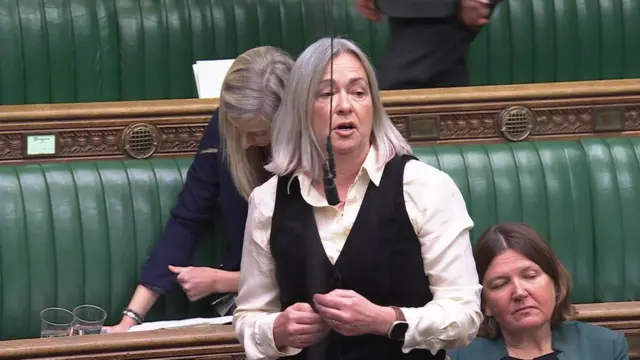
  1. Plaid Cymru MP says discussion of details becomes 'defence of incompetency'published at 15:50 BST

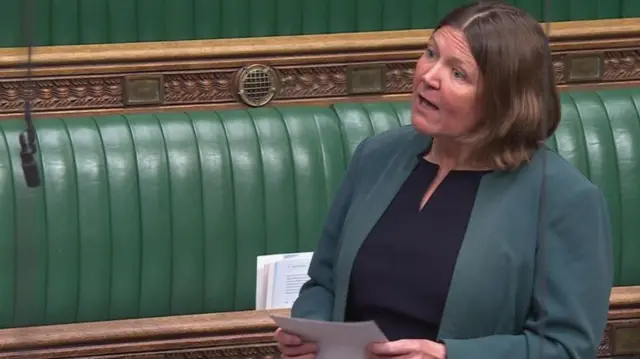
    Plaid Cymru's Liz Saville-Roberts says discussion over the "fine details" of the Mandelson vetting process "morphs into a defence of ignorance... and a defence of incompetency".

    She says that's doing the prime minister "as much harm" as any argument about his honesty.

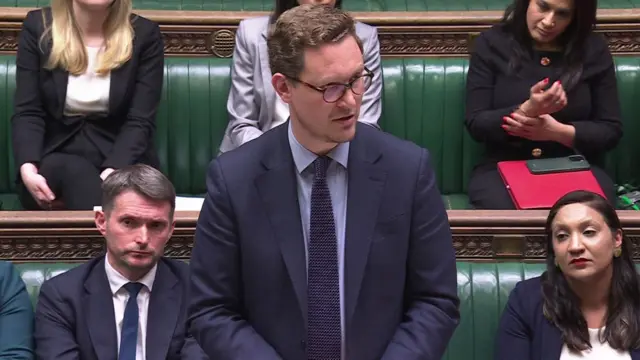
    Labour MP Alex Ballinger responds, saying they've heard "real concerns" about the appointment process during the debate, and that he's glad a review has been announced.

  2. Starmer was 'persuaded' to appoint Mandelson, says Labour MPpublished at 15:24 BST

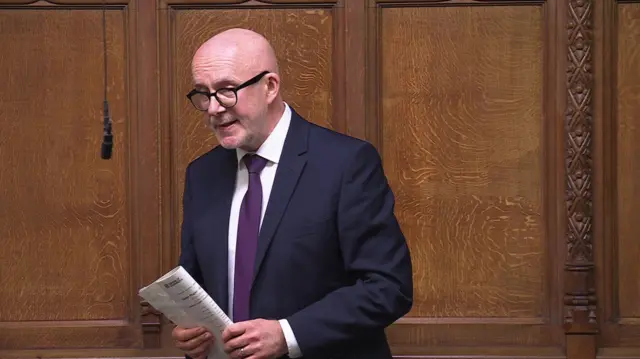
    Labour MP Matt WesternImage source, House of Commons

    Labour MP Matt Western says Keir Starmer "wanted to bring order" to the UK's trade arrangements, which is why he was "persuaded" to appoint Mandelson as US ambassador.

    If there is "one thing" he can say about the prime minister, it's that "he is absolutely rock solid when it comes to process", Western says.

    He adds that he believes Starmer is a man of "utmost decency, and would never, ever lie" - as he knows his credibility rests on that.

    Western says it's important to differentiate between the prime minister and the team around him, adding that Starmer had realised "there were problems within his team" when he "sacked" his former chief of staff Morgan McSweeney.

    • For context, McSweeney quit the role in February after mounting scrutiny over his role pushing for Mandelson's appointment. He said he did not oversee the vetting but wanted to take "full responsibility" for advising the prime minister to appoint him
  3. 'Why was he so determined to get Mandelson in post?' asks Lib Dem leaderpublished at 14:59 BST

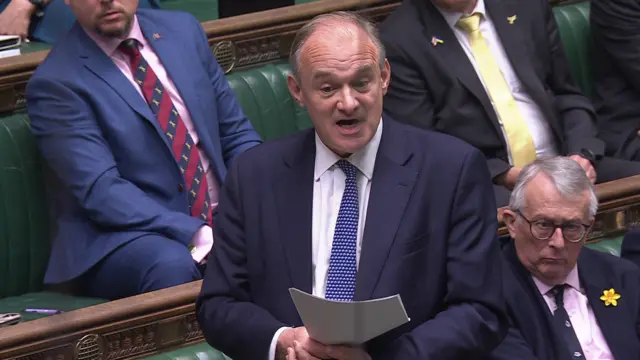
    Ed Davey in the CommonsImage source, House of Commons

    MPs are still taking part in an emergency debate over the Mandelson vetting process - you can watch live at the top of the page.

    Next, the House of Commons hears from Liberal Democrats leader Sir Ed Davey, who begins by reflecting on how "utterly depressing it is we are having to have this debate at all".

    He says: "Instead of fixing the NHS and social care; instead properly funding our defence or cutting prices at the pumps; here we are having to ask why the prime minister appointed close friend of notorious paedophile sex trafficker to one of most important and sensitive jobs in this government.

    • For context, Mandelson was sacked as US ambassador over his ties to the late convicted sex offender Jeffrey Epstein. He has since said he regretted ever having known Epstein

    Davey asks: "Why was he so determined to get Mandelson in post? I think we know a big part of the answer - Donald Trump."

    He accuses the prime minister of trying "to appease Trump" and "stroke his ego" with the hope that the US president would be nice in return.

    "Clearly he thought Mandelson was the man for that job," Davey adds.

  4. 'It is time for him to go' - Tory leader backs call for no confidence vote in prime ministerpublished at 14:43 BST

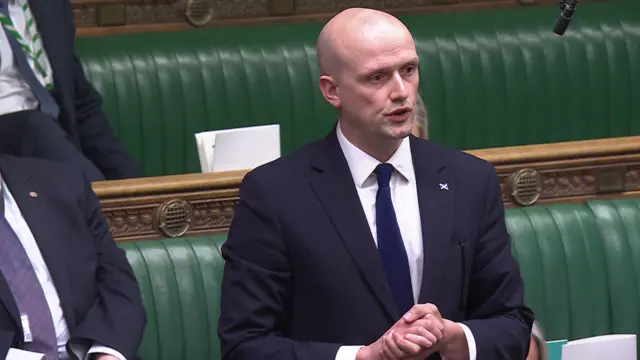
    Badenoch gives way briefly to the SNP's Stephen Flynn, who asks the Tory leader if she believes there should be a vote of no confidence in the prime minister.

    "I think he is right," Badenoch replies. "Because I don't believe the prime minister has the intention of doing the honourable thing himself, even though that is the standard to which he held everyone else."

    That decision is ultimately up to Labour MPs, she says.

    Concluding, Badenoch says: "This prime minister has put the country's national security at risk. He must take responsibility, it is time for him to go."

    Stephen FlynnImage source, House of Commons
    Image caption,

    The SNP's Stephen Flynn asks Kemi Badenoch if she believes there should be a no confidence vote in the prime minister

  5. Starmer using Robbins as 'human shield' - Badenochpublished at 14:41 BST

    The prime minister is not present in the Commons for today's debate, something which Badenoch says she is not surprised about.

    Continuing her opening remarks, Badenoch says the British public deserve to know how this "failure" happened, and accuses the prime minister of using Olly Robbins as a "human shield".

    Badenoch claims the sacking of civil servants to "carry the can" for Starmer's failures has cost taxpayers more than £1.5m before the dismissal of Robbins.

    Badenoch says that due to factors such as cost of living rises and war in the Middle East, the UK needs a prime minister "who has a grip on national security".

  6. 'Mandelson wasn't a one off', says Tory leaderpublished at 14:34 BST

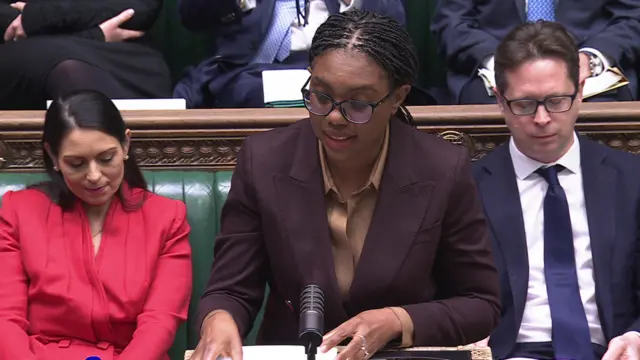
    Kemi Badenoch in the CommonsImage source, House of Commons

    The Conservative Party leader turns to what she calls this morning's "bombshell" testimony by Olly Robbins.

    She mentions his comments earlier that Downing Street put "constant pressure" on the Foreign Office to approve Mandelson's appointment.

    Badenoch says "we know that he is giving us the slightest indication of how bad things were".

    She says "Mandelson wasn't a one off", pointing to comments from Robbins who said No 10 asked him to “potentially” find a job as an ambassador for Matthew Doyle - more on that here.

    "The idea that it is No 10 who are the victims of others not following due process is quite frankly laughable", Badenoch adds.

  7. Starmer appointed 'known national security risk' - Badenochpublished at 14:28 BST

    Kemi Badenoch begins, saying the prime minister "personally decided to appoint a serious, known national security risk" as US ambassador.

    She says Mandelson had already been "sacked from government twice for lying", and was known to have a public relationship with Jeffrey Epstein, and links to Russia and China.

    The leader of the opposition says Starmer didn't deny knowing about these before appointing Mandelson, in his statement to the Commons yesterday.

    "I cannot overstate how serious a matter this is," she says.

  8. Commons debate over Mandelson appointment begins - watch livepublished at 14:19 BST
    Breaking

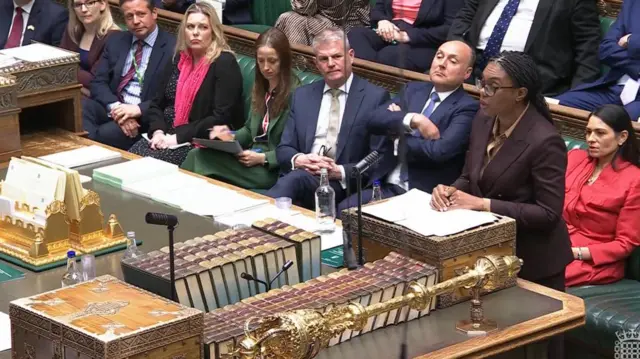
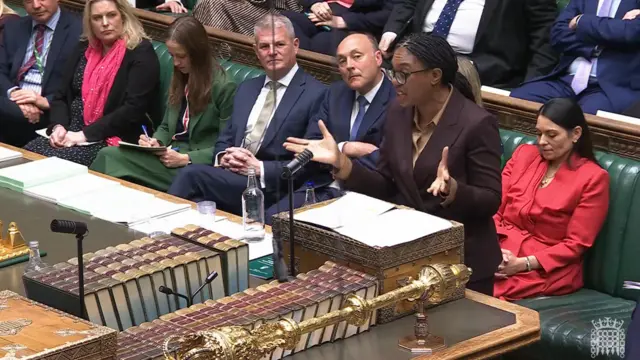
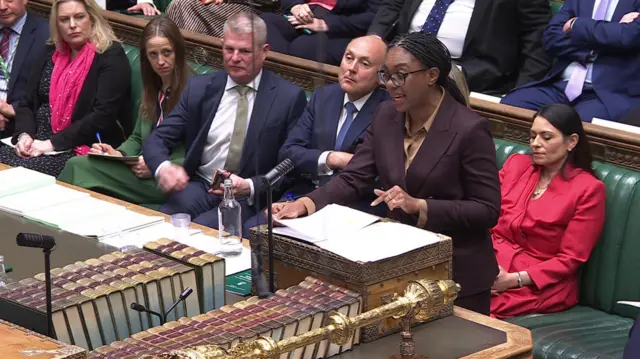
    Kemi Badenoch standing in the House of Commons, wearing a dark brown blazer and light brown blouseImage source, House of Commons

    An emergency debate on Peter Mandelson's appointment process has just begun.

    Leader of the Opposition Kemi Badenoch stands to speak in the House of Commons, to cheers from her benches.

    She tabled the question on Monday - saying at the time there remains "serious questions about what [Starmer] knew and when".

    You can watch live at the top of this page, and we'll bring you the key lines here.

  9. BBC Verify

    Three things we still don’t know after Robbins’s evidencepublished at 14:07 BST

    By Tom Edgington

    We’ve been following this morning's session with Olly Robbins - here are some of the questions that remain unanswered:

    Who in No 10 was puttingconstantpressure” on the Foreign Office over Mandelson?

    Robbins described how the Foreign Office was under “constant pressure” throughout January 2025 to approve Mandelson’s appointment.

    When pressed, Robbins said the pressure came from the private office in No 10 but said he wouldn’t “scapegoat other civil servants”.

    Did the vetting raise any any fresh concerns about Mandelson?

    Robbins was asked if the vetting process revealed any fresh concerns about Mandelson that weren’t already public.

    He refused to answer saying: “I don't think I can open that box.”

    Pressed about this later in the session, Robbins said: “You’re inviting me to say were there risks that were not already known in the public domain and I’m afraid if there’s one thing keeping me sane over the last few days is that I will defend the integrity of this process.”

    Former top Foreign Office civil servant Sir Olly Robbins wearing black rectangular glasses, dark suit. white shirt and dark tieImage source, ParliamentTV via Reuters

    What did the vetting body recommend?

    Prime Minister Keir Starmer told MPs yesterday that “UKSV [UK Security Vetting] recommended to the Foreign Office that developed vetting clearance should be denied to Peter Mandelson”.

    However, today Robbins suggested it was less clear cut.

    He said he was briefed in person on 29 January, where he was told Mandelson’s vetting “was a borderline case and that UKSV were leaning against granting clearance”.

    Speaking after the session, committee chair Dame Emily Thornberry said that despite Robbins claiming Mandelson’s case was borderline, “the paperwork - as we understand it - actually shows that the UKSV had recommended that developed vetting be denied”.

  10. Starmer said Robbins made an 'error of judgement' - spokesmanpublished at 13:30 BST

    More now from Downing Street.

    A No 10 spokesman says the prime minister told his Cabinet today that Robbins was a “man of integrity and professionalism” who made an “error of judgement”.

    In a readout of the meeting, he says: “[Starmer] concluded by saying that Sir Oliver Robbins made an error of judgement, but that he is a man of integrity and professionalism.

    “He said it is wrong that the current cabinet secretary and permanent secretary at the Cabinet Office had been attacked despite doing exactly the right thing and sharing the information with the prime minister once they had gone through the correct processes to do so.

    “He said that there are thousands of hard-working civil servants across the country who are full of integrity, doing excellent work every day.”

  11. No 10 denies 'atmosphere of pressure' over vettingpublished at 13:22 BST

    The prime minister’s official spokesman is also asked about Robbins’s claim that there was an “atmosphere of pressure” and “constant chasing” from within the private office about Mandelson’s vetting.

    Asked whether officials in the office had been “nagged or cajoled or bullied” by ex-chief of staff Morgan McSweeney, they say: “No.

    “As I said earlier, there is a distinction clearly between asking reasonably for updates on an appointment process… I would draw a distinction between the idea of pressure and, you know, being kept informed about the process and the progress of the appointment.”

  12. Downing Street denies showing 'dismissive' approach to Mandelson vettingpublished at 13:17 BST
    Breaking

    Downing Street denies showing a “dismissive” approach to Lord Mandelson’s vetting for US ambassador.

    Asked by reporters whether No 10 recognised the description by Olly Robbins earlier, the prime minister’s official spokesman says “no”.

    They add: “There’s clearly a difference between asking for updates on an appointment and the idea of… being dismissive about vetting.”

  13. 'Devastating' evidence and 'so many red flags' - opposition parties reactpublished at 12:48 BST

    Kemi Badenoch speaking in front of a crowd in a close-up photo. She's looking to the side of the camera and is mid speech. She's wearing a turquoise blazer with a black blouse underneath.Image source, PA Media

    Tory leader Kemi Badenoch calls Olly Robbins's evidence today "devastating" for Starmer. She says it is "absolutely clear" that full due process wasn't followed in Mandelson's appointment.

    "Keir Starmer has misled the House," she writes in a statement on X.

    On Monday, Lib Dem leader Ed Davey and the Green Party's Zack Polanski called for the prime minister to resign.

    In a video shared on social media on Tuesday morning, Polanski says Mandelson's appointment was "a failure of judgement from the very beginning".

    Last night, Davey said it is "truly shocking" how badly Starmer has "let the country down".

    Reform UK leader Nigel Farage tells reporters he does not accept that Starmer was telling the truth "at all", and that there are "still so many red flags".

    "Even without the official vetting it was pretty obvious that Mandelson was the wrong candidate for America", he says.

    The SNP's Westminster leader Stephen Flynn says: "Starmer chose to appoint the Prince of Darkness. And that Darkness has now enveloped him."

    Meanwhile, Plaid Cymru's Westminster leader Liz Saville-Roberts says Robbins' evidence showed Labour's "crony culture" and is "indefensible".

  14. Parliament not given information 'it should have been given', says foreign secretarypublished at 12:39 BST

    Yvette Cooper speaking in the House of CommonsImage source, House of Commons

    Foreign Secretary Yvette Cooper is currently speaking in the House of Commons, answering questions from MPs during a scheduled Foreign Office questions session.

    On the vetting of Mandelson, Cooper says she, the prime minister and the former foreign secretary "should have been told there was an issue and I am very troubled that we were not".

    She says Parliament was not given all of the information "it should have been", and has commissioned a review into the information that was provided.

    Shadow foreign secretary Priti Patel asks Cooper why she lost confidence in Robbins last week.

    The foreign secretary says Mandelson "should never" have been appointed to the post of ambassador to the US.

    But, she adds, there is a responsibility on ministers to provide accurate information to the House of Commons - and they "should have been told" about the vetting body's conclusions and recommendation.

  15. BBC Verify

    Was there 'no stipulation' Mandelson should be vetted?published at 12:21 BST

    By Tom Edgington

    Earlier in his committee session, Olly Robbins described an atmosphere of "constant pressure" to get Mandelson in post in Washington.

    “There was already a very, very strong expectation… coming from Number 10 that he needed to be in post and in America as quickly as humanly possible”, he told the committee.

    Robbins went on to say that the documents released in March - known as the Mandelson files - showed there was “no stipulation” from Number 10 that Mandelson should be vetted.

    BBC Verify has looked through the documents, which contain an undated letter from the prime minister’s principal private secretary to the Foreign Office communicating Keir Starmer’s decision to appoint Mandelson.

    A screenshot of part of a letter, which has the UK government's crest, the 10 Downing Street address and reads: "From the Principal Private Secretary Dear Philip, The Prime Minister has decided to appoint the Rt Hon the Lord Peter Mandelson to the post of HMA Washington. Please would you take forward the necessary arrangements at pace. We would like to secure agrément as soon as possible to enable a handover in advance of the US inauguration. I would be grateful if you would inform the current incumbent that the post will be filled by a political appointment. Please do not disclose the individual at this stage, until we have approval from HM The King."

    The letter makes no explicit reference to vetting, only that “the necessary arrangements” are taken forward “at pace”.

    The files also contain Mandelson’s “employment offer” letter, dated 20 January 2025. It states the role requires top-level clearance and that “your security clearance has been confirmed”.

    “The whole process has been highly unusual - right from the point where Mandelson's appointment was announced before any vetting had taken place,” says Hannah Keenan, from the Institute for Government think tank.

  16. Emergency debate on Mandelson appointment due later this afternoonpublished at 12:15 BST

    Following Olly Robbins being questioned by the Foreign Affairs Select Committee, there will be an emergency debate in the House of Commons on Lord Mandelson's appointment as ambassador to the US.

    The debate, tabled by Kemi Badenoch and expected after 13:30 BST, will cover the government's accountability in appointing Mandelson - which the Conservative leader describes as a "matter of national security".

    You will be able to follow all of the latest updates on this page.

    Kemi Badenoch speaking in the House of Commons on MondayImage source, House of Commons
  17. No 10 had a 'dismissive attitude' over vetting, but process followed, says Robbins- a recappublished at 12:02 BST

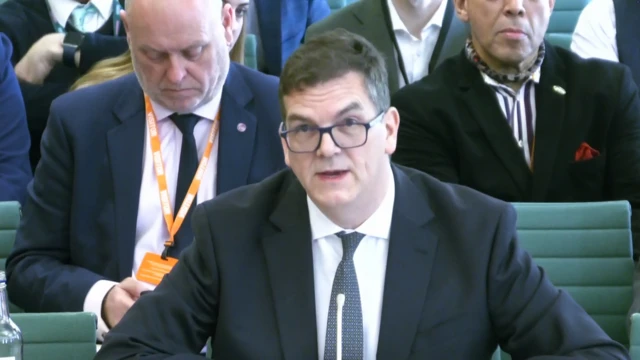
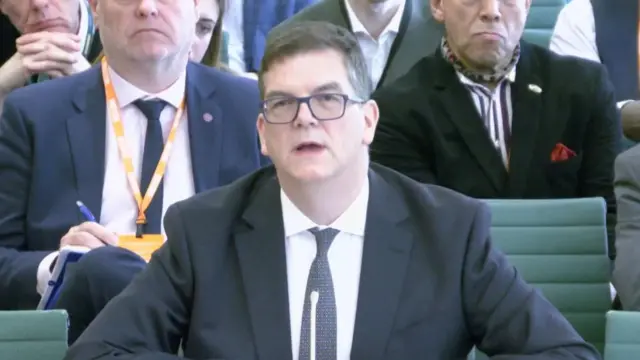
    Olly Robbins, wearing a black suit with black tie, speaking into microphone as he appears before the Foreign Affairs CommitteeImage source, House of Commons

    The former top official at the Foreign Office, Olly Robbins, has just finished giving evidence to a committee of MPs over the vetting process for former US ambassador Lord Mandelson.

    Robbins, who was appointed to the role in January last year, says when he took over there was "already a very very strong expectation" from No 10 that Mandelson "needed to be in post and in America as quickly as possible".

    In terms of the vetting process, he says there was a "generally dismissive attitude" in No 10 over Mandelson's clearance - and the position taken by the Cabinet Office was that "Mandelson's status meant that vetting might be unnecessary".

    But, Robbins insists, his department followed the process "rigorously" and vetting was completed to the "normal high standard".

    He tells MPs that he was briefed that the body that conducts vetting considered Mandelson a "borderline case" and were "leaning towards" recommending that clearance be denied - but the Foreign Office decided that the risks identified could be "managed or mitigated".

    Asked about the impact on the government if Mandelson's clearance had been denied, Robbins says: "I think it would have been very difficult indeed."

    Robbins says that senior politicians - including prime ministers - are entitled to know when people fail vetting.

    But, he adds, there is not an "ongoing dialogue" between senior officials and ministers, and he would "absolutely not" have considered telling anyone in No 10 about the vetting teams concerns surrounding Mandelson - saying the system "must remain confidential".

    That's a different view from No 10, which has made clear in recent days that they believe Robbins should have informed them about security concerns.

  18. Robbins says he is 'desperately sad' about current circumstancespublished at 11:52 BST

    Media caption,

    Watch: Emotional Robbins reflects on 'wonderful' colleagues

    Labour MP Dan Carden asks Robbins if he understands why he has been dismissed from his post.

    Robbins says he does not fully understand why he is in his current position, but that as a human he is "desperately sad about it".

    He says he loved the job and institution, adding that he was "proud" to serve this government and any that might follow it. He also says he had wonderful colleagues that he misses deeply, who he feels proud of leading.

  19. 'Would you do anything different in hindsight?'published at 11:52 BST

    Labour MP Alan Gemmell asks Robbins if, in hindsight, would he have done anything differently over Mandelson's appointment?

    Robbins says there are various aspects of the system that could be improved, and the British state is "dissecting itself to some extent in public over this".

    He thinks about his colleagues working overseas who are under "incredible pressure", and says he finds himself wondering "who this helps".

  20. Interesting aspects of Mandelson's life 'well known,' suggests Robbinspublished at 11:51 BST

    Emily Thornberry points out that there were "interesting" things about Lord Mandelson and says "that's really the nub of this - how on earth did this happen?"

    Robbins replies to say that interesting aspects about Mandelson's life were "very very well known".

    "This doesn't stack up," Thornberry goes on to say. "In the end he lost his job because he was a threat and that should have been revealed with the DV [developed vetting].

    "He was leaking secrets from the British state to a foreign bank, that is pretty serious".

    "Some spook somewhere knew that," she adds.

    Robbins replies: "That was not known at the time of his withdrawal, to my knowledge."

    The BBC understands Lord Mandelson's position is that he has not acted in any way criminally and was not motivated by financial gain.