Prices had been easing in many areas in early 2026 - but the world has changedpublished at 08:30 BST
 Dharshini David
Deputy economics editor
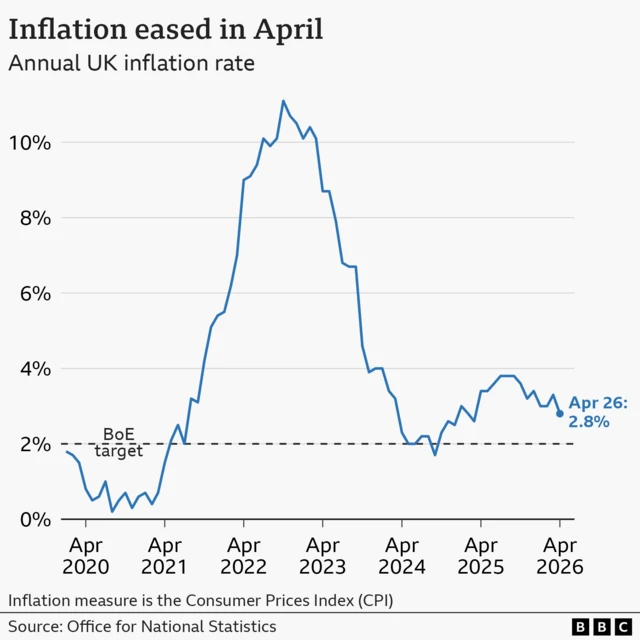
These figures give a tantalising glimpse into another world. Take away the most volatile bills we face, the likes of food and energy, and so-called core inflation - covering items like clothes and days out - dropped back to 2.5% in April.
It’s a reminder of how price pressures had been easing in many areas in early 2026.
But the world has changed. Not only have higher diesel and petrol prices added significantly to our cost of living but there’s more to come.
Just take a look at an another official measure, producer prices, which looks at both the cost of raw materials and of items leaving factory gate. There, growing price pressures are all too evident – they will likely hit our shelves and pockets in the coming months.
But this month inflation figures, being slightly better than expected, do underline expectations that inflation won’t get anywhere near the rates we saw in the early stages of the war in Ukraine. First, because the rise in commodity prices has been less marked.
And second, in a stretched economy there is less capacity for inflation pressures to travel - both in the ability of companies to put up prices, and the ability of workers to score higher pay rises.