Summary

  1. Treasury minister says government is not looking to introduce caps on food pricespublished at 08:09 BST
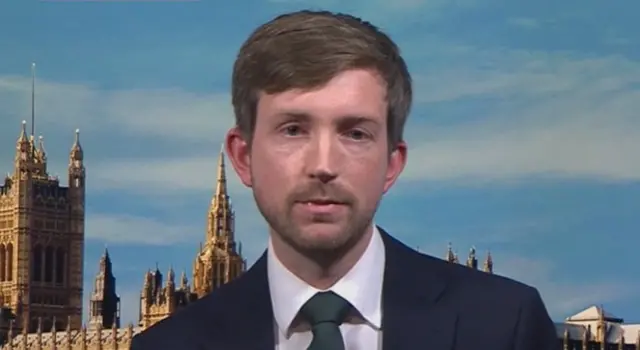
    Treasury minister Dan Tomlinson speaks on BBC Breakfast

    Treasury minister Dan Tomlinson says introducing caps on particular food prices "just isn't something we are looking at".

    His remarks come after the BBC reported the government is urging UK supermarkets to limit food prices on key groceries, prompting criticism from retailers.

    Tomlinson tells BBC Breakfast that the government has announced it is giving the Competition and Markets Authority (CMA) more powers in response to economic crises.

    He says ministers are always in conversation with supermarkets about steps that can be taken to support families.

    Pressed on the easing of sanctions on some Russian oil, Tomlinson says that the UK has sanctioned more ships from Russia's shadow fleet than any other country.

    He adds that the rules are changing "in a very specific and time limited way" and that the government remains steadfast in its commitment to Ukraine.

  2. Today's figure 'will provide little comfort to struggling households' - Lib Demspublished at 07:53 BST

    Liberal Democrat Treasury spokesperson Daisy Cooper says today's inflation figures, which saw a fall in the annual rate to 2.8%, "will provide little comfort to households and businesses struggling to make ends meet".

    “Prices are still rising at an alarming rate and the threat of Trumpflation is hanging over people’s heads, as Trump’s idiotic Iran war continues to push up the price of essentials here at home," Cooper says.

    She adds the government should support the UK's most vulnerable households with their energy bills and roll out a Lib Dem plan to reduce petrol prices by 12p per litre.

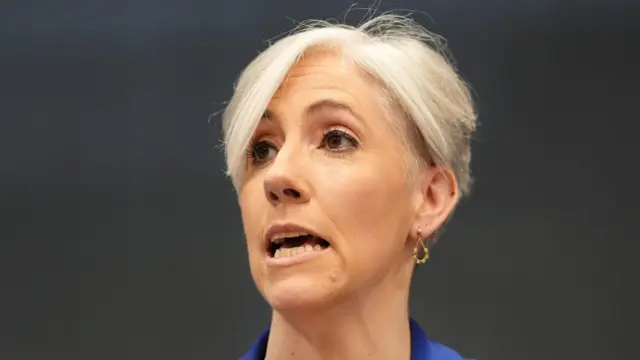
    Liberal Democrats' Treasury spokesperson Daisy Cooper.Image source, PA Media
  3. Inflation rate expected to peak around 4% by end of year, economist tells BBCpublished at 07:39 BST

    Simon French, chief economist at investment bank Panmure Liberum, tells the Today programme the slowing inflation rate is due to "downward pressure on regulated prices" and the energy price cap.

    "But that price cap will go up again in July," he says, adding that input cost inflation, which covers the cost of raw materials, fuels and services, is still rising almost 8% per year.

    Due to these facts he says it is still expected that inflation will peak "around 4% by the end of the year".

  4. Analysis

    Respite in inflation – but for how long?published at 07:34 BST

    Dharshini David
    Deputy economics editor

    A dual fuel price cap set some time before the war in the Middle East started, along with some government help, kept a lid on not just bills but inflation as expected.

    Price rises in food and package holidays eased too - the latter reflecting the early timing of Easter this year. Those more-than offset other pressures - including petrol prices hitting their highest level in over three years.

    However, just a few months ago, analysts expected inflation to hit the Bank of England’s target at this point. And even this limited respite in inflation is likely to be short-lived , as higher costs will continue to filter through to other items - from food to flights - but some impacts will take months to come through.

    Economists predict that inflation won't get anywhere near the double-digit rates seen just a few years ago - but how high it goes will go depends on the as yet uncertain path of the conflict, and the help the government is preparing to unveil.

    Yesterday it was confirmed that incomes are still outpacing inflation for most - but that too could change. Things will feel more stretched in the coming months.

  5. Inflation rate fall 'welcome' but prices still rising too fast, says shadow chancellorpublished at 07:21 BST

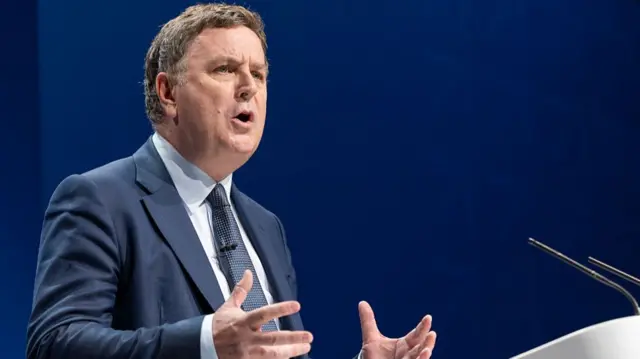
    Mel Stride Shadow Chancellor of the Exchequer delivers a speech to the Conservative Conference on October 6, 2025Image source, Getty Images

    Conservative shadow chancellor Mel Stride says the fall in the UK's inflation rate from 3.3% to 2.8% is "welcome" but that "prices are still rising far too fast".

    "Labour have left our economy weak and exposed to the impacts of the Iran war," he writes on X.

    He says a "recent spike in borrowing costs" show the markets are "increasingly worried" about uncertainty over Labour's leadership and its "economic mismanagement".

    "Only the Conservatives have a leader with the backbone and strong team needed to restore confidence and bring debt down through our golden economic rule," he adds.

  6. 'We have the right economic plan,' says Reeves after fall in UK inflation ratepublished at 07:18 BST

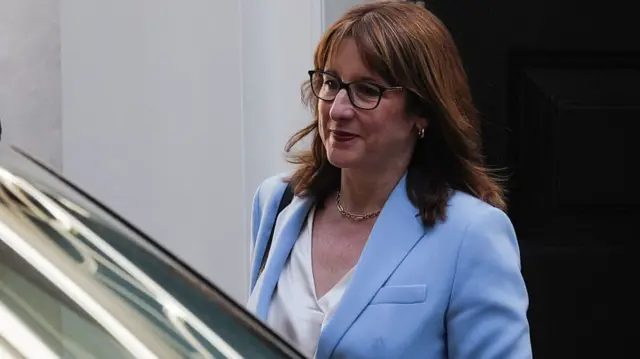
    UK chancellor of the exchequer, leaves 11 Downing Street to attend Prime Ministers Questions in London, UK, on Wednesday, April 29, 2026Image source, Getty Images

    Chancellor Rachel Reeves says "we have the right economic plan" following the fall in UK inflation rate to 2.8%.

    "To change course now would risk our economic stability and leave working people worse off," she says.

    Reeves says the Iran war is "not our war but one we will need to respond to" and says the decisions she took in last year's budget "have kept inflation down as we deal with global instability".

    "We have already taken £117 off energy bills, frozen rail fares, and lifted the two-child limit, and over today and tomorrow I’ll set out the next phase of how we will support UK households," she adds.

  7. ONS chief says April fall led by electricity and gas prices - but chocolate and holidays also a factorpublished at 07:16 BST

    Jennifer Meierhans
    Business reporter

    ONS chief economist Grant Fitzner says the "notable fall" in April's inflation rate "was led by lower electricity and gas prices".

    "This was due to the government's energy bill support package, along with lower global wholesale energy prices before the conflict in the Middle East, which fed through to the reduction of the Ofgem cap," he says.

    But digging into the figures, there were other factors at play too - lower water and sewage bills and vehicle tax than seen last year also helped pull the rate down.

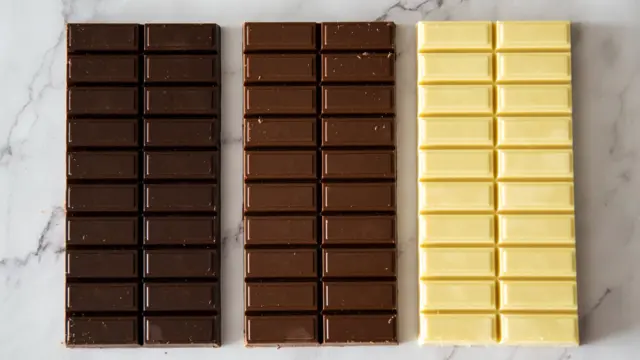
    So did lower food prices, particularly for chocolate and meat, and lower costs for package holidays than the same period the previous year drove it down further.

    However, the "annual cost of both raw materials and goods leaving factories continued to rise, driven again by higher crude oil and petrol prices", Fitzner adds.

    Heap of chocolate bars.Image source, Getty Images
  8. April's inflation rate fall partly due to energy price cappublished at 07:04 BST

    Jennifer Meierhans
    Business reporter

    The fall in the inflation rate in April is more of a drop than analysts were expecting and it's partly down to the energy price cap kicking in.

    On 1 April the government's cap on how much customers can be charged for each unit of gas and electricity fell by £117 a year, or 7%, from the previous cap which applied between January to March.

  9. UK inflation rate falls to 2.8%published at 07:01 BST
    Breaking

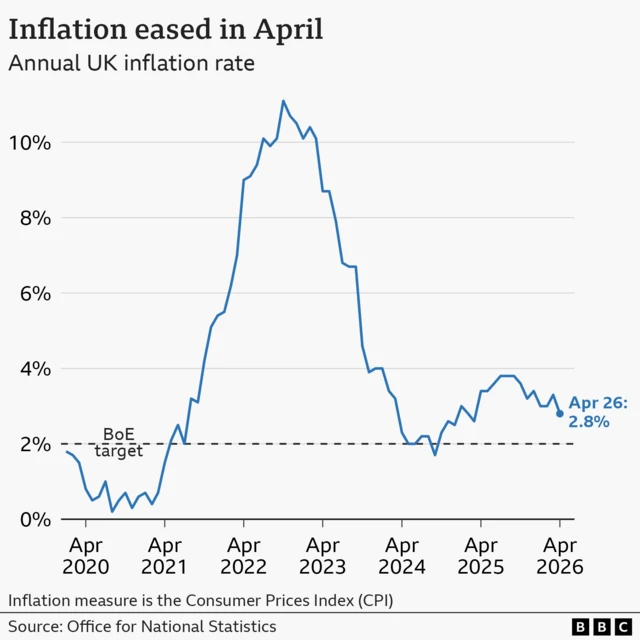
    The UK's inflation rate has fallen to 2.8% in the year to April, the Office for National Statistics (ONS) has announced.

    That's a 0.5 percentage point fall from the 3.3% recorded in the 12 months to March.

    A chart showing the change in the annual rate of inflation from 2020 to now.
  10. Analysis

    Expect a lull before the storm continuespublished at 06:55 BST

    Dharshini David
    Deputy economics editor

    Price pressures may have heated up in some areas - but a fall in the domestic energy price cap in April, set some time before the Iran conflict started, may likely have helped keep a lid on inflation as well as bills last month.

    But other things were creeping up - petrol prices hit 158p per litre in April - up almost a fifth compared to before the war, while diesel rose was up a third as global oil prices rose.

    And higher costs will continue to filter through to other items - from food to flights - but some impacts will take months to come through.

    So this is likely an inflation lull before the storm resumes.

    Economists predict that inflation won't get anywhere near the double-digit rates seen just a few years ago - but how high it goes will go depends on the as yet uncertain path of the conflict.

    For most, incomes are still outpacing inflation, and the support the chancellor is preparing to unveil may help some, albeit, we expect a very limited number. But things will feel more stretched in the coming months.

  11. UK loosens Russian sanctions to tackle rising diesel and jet fuel pricespublished at 06:47 BST

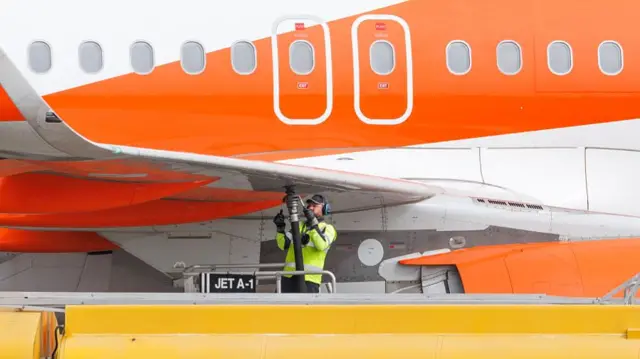
    An EasyJet plane is refuelled ahead of takeoff at Southend Airport on April 17, 2026 in Southend, EnglandImage source, Getty Images

    One method the government is using in an attempt to tackle rising prices is the easing of strict sanctions on Russian oil refined into diesel and jet fuel in third countries.

    However, this change only comes into force today, so will not have impacted the inflation figures set to be announced by the ONS.

    European jet fuel prices more than doubled after the war in Iran started, but are now around half higher while UK pump prices continue to rise.

    While according to motoring firm the RAC, the average price of unleaded petrol reached 152.52p a litre on Monday, the highest since the start of the war.

    The government said that overall sanctions had got tougher but extra flexibility was required. A similar move by the US was widely criticised.

  12. UK inflation rate rose to 3.3% in 12 months to Marchpublished at 06:30 BST

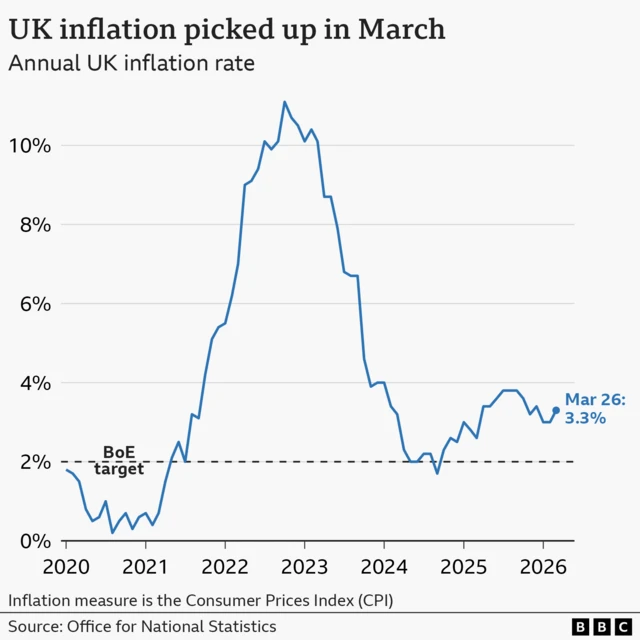
    The latest set of figures published on 22 April saw the UK rate of inflation rising to 3.3% in the year to March - an increase from 3% in the 12 months to February.

    The data, which was collected in mid-March, is thought to have been affected by higher fuel costs from the war in Iran impacting global oil prices.

    Figures due to be published today are expected to show an even greater impact from the Iran war.

    A line chart titled 'UK inflation picked up in March', showing the UK Consumer Price Index annual inflation rate, from January 2020 to March 2026. In the year to January 2020, inflation was 1.8%. It then fell close to 0% in late-2020 before rising sharply, hitting a high of 11.1% in October 2022. It then fell to a low of 1.7% in September 2024 before rising again. In the year to March 2026, prices rose 3.3%, up from 3.0% the previous month.
  13. Government urges supermarkets to limit food pricespublished at 06:25 BST

    Simon Jack and Emma Simpson
    Business editor and business correspondent

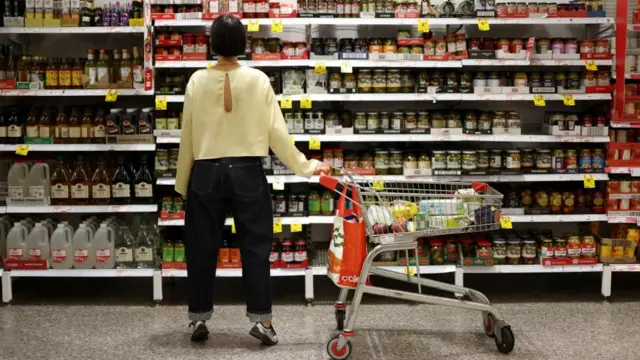
    A woman holds a trolley and looks at a supermarket shelfImage source, Reuters

    The government is urging UK supermarkets to limit food prices on key groceries such as eggs, bread and milk in return for easing regulations, the BBC understands.

    It is understood the Treasury asked retailers to freeze price rises on certain products in exchange for an easing of packaging policies and a potential delay to rule changes around healthy food.

    The British Retail Consortium (BRC), which represents supermarkets, has said the policy would "force retailers to sell goods at a loss".

    A Treasury spokesperson said it wants to do more to keep costs down for families and it "will set out more detail in due course".

    But the BRC has dismissed the policy as "1970s style price controls" while one retailer described the idea as "crazy" and the act of a "desperate" government.

    Helen Dickinson, the group's chief executive, says there is already "fierce competition between supermarkets", which has driven down prices.

    Read the full story

  14. What is inflation?published at 06:19 BST

    Before we get the figure here's a quick reminder of what inflation is and how we keep track of it.

    Inflation is the increase in the price of something over time.

    For example, if a bottle of milk costs £1 but is £1.05 a year later, then annual milk inflation is 5%.

    The prices of hundreds of everyday items, including food and fuel, are tracked by the Office for National Statistics (ONS).

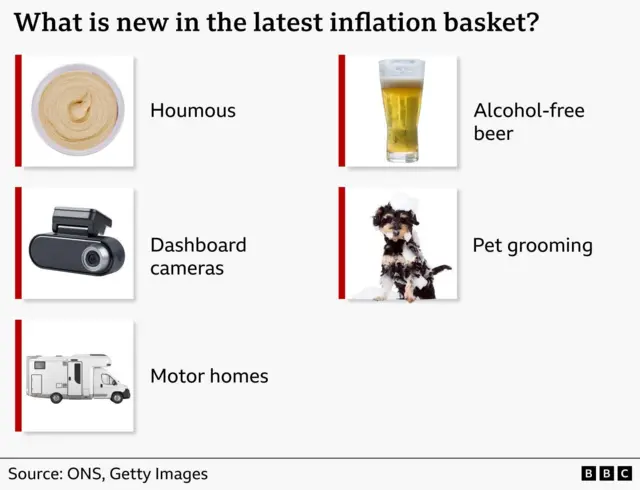
    This virtual "basket of goods" is regularly updated to reflect shopping trends, with alcohol-free beer, dashboard cameras, and pet grooming equipment among items added in 2026, while premium bottled lager, some categories of wine and sheets of wrapping paper were removed.

    The ONS uses price changes in the basket of goods over the previous 12 months to calculate inflation.

    The main inflation measure is called the Consumer Prices Index (CPI), external and the latest figure is published every month.

    Graphic titled “What is new in the latest inflation basket?” showing five items with accompanying images. On the left are images of houmous, a dashboard camera, and a motor home, each with labels. On the right are images of a glass of alcohol free beer and a dog covered in soap suds labelled “pet grooming.” The source is ONS.
  15. Latest UK inflation rate set to be releasedpublished at 06:12 BST

    Jennifer Meierhans
    Business reporter

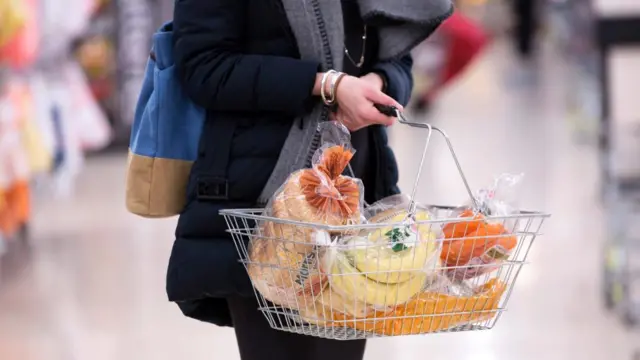
    A woman holding a grocery basket that includes bread, bananas and carrots.Image source, PA Media

    The latest UK inflation figure, which shows how quickly prices are rising, is due to be released this morning.

    The official figure for March was 3.3%, and economists expect April's figure, out today, to fall to 3%.

    Remember, when inflation falls it means prices are rising more slowly than in previous months.

    Economists are predicting inflation will go back up to peak at around 3.5% to 4% this year.

    The Office for National Statistics (ONS) will publish the latest data at 07:00 BST, and we’ll bring you updates as well as analysis from our experts, including what it means for you and your money.