Where did food come from in AD900 Baghdad?
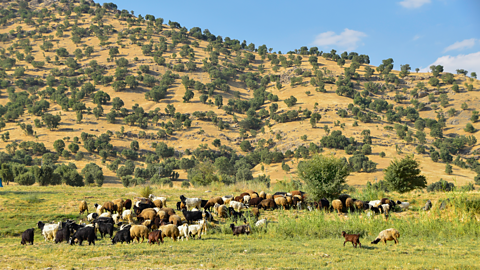
Farmers in Baghdad grew their own food, planting crops (plants that farmers grow to eat or sell) like wheat, fruits and vegetables.
They used water from the Tigris River to help the crops grow.
They also raised animals like sheep, cows and chickens.
Other food came to Baghdad through trade on the Silk Road.
Rice came from China, spices like cumin came from India.
Dates, honey and sugar were also brought from faraway places.
Important words
Important words on what people in the early Islamic Civilisation.
| Keyword | Definition |
|---|---|
| Banquets | Fancy meals with lots of food for special occasions. |
| Crops | Plants that farmers grow to eat or sell. |
| Fertile | Land that is good for growing plants and crops. |
| Merchants | People who buy and sell goods. |
| Trade | Buying, selling and exchanging goods. |
How was food grown?
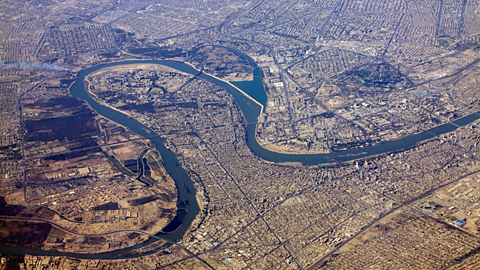
Farming was important for growing food in the early Islamic civilisation.
Baghdad was built close to the Tigris River and the Euphrates River which meant lots of crops could be grown and watered.
Farmers built canals and wells and used waterwheels to bring water to crops.
Wheat and barley were often grown for food.
Farmers changed what they planted each year. This helped the soil stay healthy.
Farmers also raised sheep, goats, cows and chickens.
Where else did food come from?
Baghdad was on the Silk Road. This was not just one road, but many connected roads.
These roads joined China, India, the Middle East and Europe.
Traders brought new foods to Baghdad from faraway places along the Silk Road. This made meals in Baghdad tasty and full of new flavours.
Click the arrows on the slideshow below to see types of food brought from the Silk Road:
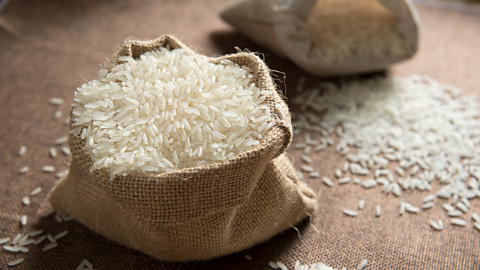
Image caption, The Silk Road allowed new foods to arrive into the early Islamic civilisation, like rice which came from China.
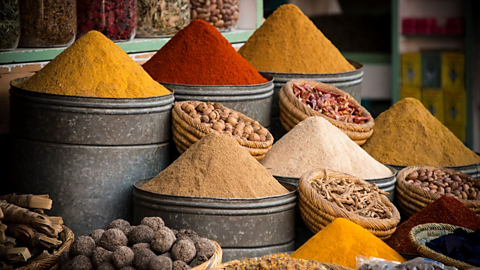
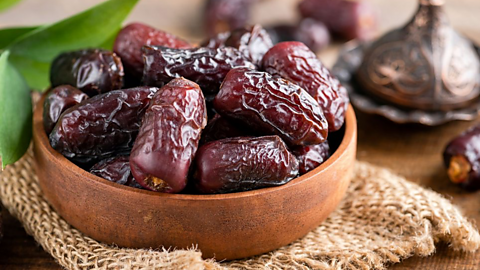
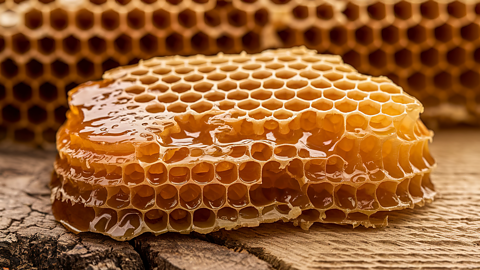
1 of 4
What was the most common food?
People ate food like dates, honey, fish and milk.
Spices like cumin, tarragon, mint and caraway were used to add flavour.
Rich people ate meat such as lamb and goat.
Some foods, like pork, and drinks like alcohol, were not allowed for religious reasons.
Some popular dishes included:
- Tharid - A meat stew with pieces of bread soaked in.
- Asida - A porridge eaten with dates or honey
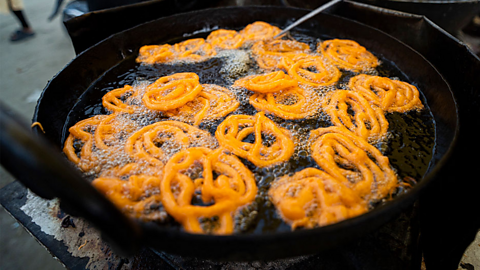
- Zulabiyya - A sweet dessert soaked in honey.
- Luqam – Fried dough balls, dipped in honey or syrup.
How do we know what people ate?
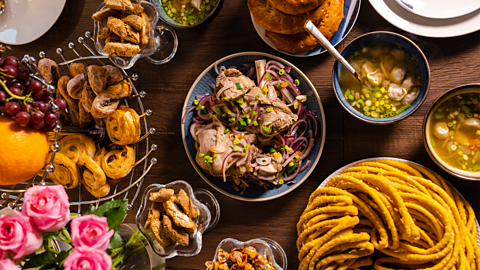
Caliphs (rulers of the Islamic Empire) hosted grand banquets (fancy meals with lots of food for special occasions) in their palaces with lots of food and music.
A writer who went by the name Al-Warraq wrote an Arabic cookbook in the 9th century called Kitab al-Tabikh (The Book of Dishes). It has recipes used for the courts of the Abbasid Caliphate (AD750 - 1258) in Baghdad.
During the month of Ramadan, Muslims would fast. This means they do not eat or drink during daylight hours. At the end of Ramadan, people celebrate Eid al-Fitr, with lots of food and gifts.
Muslims around the world today still participate in Ramadan and celebrate its end during Eid ul-Fitr.
Think like a historian

Have a look at the thinking points below and think about your answer to each question. You could even write them down on a piece of paper or discuss them with somebody else if you want to.
Why was having rivers important for the city?
How was the food grown by farmers different from the food brought by traders?
Which foods did people in Baghdad eat a long time ago that we still eat today?
Did you think about the importance of water and crops? Having rivers was very important for Baghdad because it gave farmers water to grow crops like wheat, barley, fruits and vegetables. The land was good for farming, which meant people could have enough food to eat. The rivers also helped trade, travel and made life easier for everyone living in the city.
Maybe you thought about how the food grown by farmers was simple. Farmers grew most of the food themselves, such as wheat and barley. They also raised sheep, goats, cows and chickens. Traders brought new foods from faraway places, like rice from China, sugar and spices from India and dates and honey from other regions. This meant people in Baghdad could eat both local food and special foods from other countries.
Did you think about the types of food you eat today? People in Baghdad a long time ago ate foods like dates, honey, fish, milk, wheat and barley. These foods are still eaten today in many parts of the world. Some spices they used, like mint and cumin, are also still used to make food tasty.
Activity: Quiz – Early Islamic food
Grown-ups corner
Are you a parent, carer or teacher?
Take a look at some of the links below on KS2 History which are packed full of knowledge, videos, quizzes and activities.
KS2 History: Non-European Societies
BBC Bitesize for Teachers
Baghdad in AD900
BBC Bitesize for Teachers
What did the Maya invent?
KS2 History
Horrible Histories: Raid and Trade game! game
Play Horrible Histories: Raid and Trade KS2 History

More on Islamic civilisation
Find out more by working through a topic