The films cover:
- the feelings a child can experience as a friendship group changes
- how to get to know yourself better and give yourself time to deal with some emotions
- ideas for dealing with difficult situations and some things that can help a child cope with a change like this
The first film looks at Alys’ experience of dealing with her best friend distancing herself from her. The second film discusses some suggestions for coping with a situation like this.
Themes: friends; coping with change; resilience; managing feelings; knowing yourself.
Alys's story: Film 1
Maya and I had been best friends since Year 4. We hung out all the time and would message all evening.
But when Beca arrived, Maya started spending all her time with her. They did all the things we used to do together. And they were posting pics of themselves together all the time.
I tried to act like I didn’t care, but I began thinking there was something wrong with me.
Why had Maya stopped liking me? And I hated Beca for taking Maya away. I kept on getting into fights with my mum and dad. I was sad and angry, and I found it hard to focus at school.
It went on for ages. I knew I wasn’t okay, but I didn’t know what to do about it.
Then one day, my dad gave me a lift home and asked how things were going at school?
I just started crying. I ended up telling him about everything that was going on with Maya and Beca.
He said it was really good that I’d opened up about it and said I could come and talk to him any time I’m feeling down. I agreed that keeping everything to myself hadn’t been helping.
He said there was nothing I could do to change Maya and Beca’s behaviour. They had every right to be friends. But there were some things I could do to try to change how I was feeling.
He suggested I make time to do things for myself instead of focussing on Maya and Beca all the time. Things like getting outside for a walk, meeting up with other mates or doing something I enjoy, like dancing.
All of my feelings didn’t disappear overnight but just telling someone what was going on made me feel so much less alone.
I didn’t realise how powerful feelings could be. But I’ve started to understand there are things I can do to change my mood when I’m angry or sad.
My new dance class really helps me take my mind off things, and I’ve met some nice new people there too.
Me and Dad chat about how I’m feeling most days now. We’re getting on better than we have in a long time.
It’s still hard sometimes seeing Beca and Maya hang out all the time, but I don’t feel so stuck. Things are looking up.
Alys's story: Film 2
Life can be good, but it can also be challenging.
If we don’t take time to notice how we feel, or if we can’t handle our emotions, we might find it hard to deal with stressful situations.
Sometimes we don’t really notice how we’re acting. Especially when we’re stressed or upset about something.
When this happens, we’re lacking what’s known as ‘self-awareness’.
We can get better at being self-aware by just taking a moment to recognise and understand what we’re thinking, and how we’re feeling.
We all feel emotions like anger, stress or sadness from time to time. That’s a normal part of life, and it’s okay to feel that way.
But it’s important to remember that how we feel is not who we are. A bit like the weather, feelings pass and change.
By paying attention to your emotions, by being self-aware, you can recognise when you’re not feeling great and do something about it.
Here are some tips to help improve your mood.
Number one: Make connections.Talking with people you trust and who care about you can help untangle the mess of feelings we can have when we’re upset.
But even when we feel fine, connecting with others can help us laugh and unwind, and can even make us emotionally stronger.
All of this can help us cope better when we’re facing challenging or stressful situations.
Number two: Move your body.Physical activity makes your brain release chemicals called endorphins, which make you feel happier.
It could be walking, cycling, dancing or playing a sport – moving your body is what counts.
Number three: Take notice.Try to pay attention to the things around you.
This can help you focus on the present rather than fixate on worries and anxieties.
Free mindfulness apps and videos can help with this, or you can find your own way of making time each day to relax and live in the moment.
Number four: Challenge yourself.Learning something new can give you a sense of purpose, help you meet new people, and even make you more confident.
It could be learning a craft, singing or giving skateboarding a go - any new skill!
Number five: Lend a hand.Helping others makes you feel more connected to people and feel better about yourself.
Whether it’s helping with jobs around your home, or volunteering for a local charity, acts of kindness large and small, make you feel good.
Struggling through hard times is never much fun. But it can help us understand other people and the challenges they might face.
Everyone has ups and downs – but we should never feel we have to go through difficult times alone.
If you are struggling with a situation or feeling overwhelmed, it’s important that you ask for help.
Possible activities
Activity 1 - Friends: What makes a good friend?
(Health and Well-being; Language and Literacy; Mathematics and Numeracy)
Pupils could be asked, in groups, to consider the statement:
‘What makes a good friend?’
Each group could be asked to create a mind map using words, sentences and/or pictures to build a visual picture of what makes a good friend in their opinion. Each group could show the class their mind map and pupils could be asked to keep a tally of the characteristics common to the groups.
Which characteristic is most common?
Which characteristic is the second most common?
Pupils could then produce graphs showing the data collected about which characteristics the class thinks make a good friend.
Activity 2 - Resilience wheel
(Health and Well-being; Language and Literacy; Digital Competence)
Pupils could be asked, in groups, to create a ‘Resilience wheel’ by: creating a circle on a piece of A3 paper; dividing it into 12 equal parts, and placing an arrow that can spin around at the centre of the circle.
Pupils could then be asked to create a list of 12 activities that help them when they feel sad or down, for example: talking to a friend; listening to music; walking; drinking water; helping a family member; playing with a pet.
After completing the list, they could be asked to place one activity in each of the 12 equal parts on the ‘Wheel’. They could be encouraged to spin the arrow on the ‘Wheel’ and do the activity indicated by the arrow the next time they feel sad.
A variation of this activity would be to ask students to use digital software to create a ‘random selection’ programme (Digital competence).
Activity 3 - Knowing myself
(Health and Well-being; Language, Literacy and Communication)
Pupils could be asked to split a piece of paper or digital document into four parts and place the titles below in each part:
| My strengths |
| My values |
| Personal challenges |
| My hopes |
The meaning of each section could be discussed with the pupils first to check understanding, then they could be encouraged to write four sentences about themselves under each title.
Some language patterns that may be useful when completing the task:
(Keeping going / being organised / helping others)… is one of my strengths.
I think that (honesty / being kind / sharing) is important.
A challenge I have set myself this year is to achieve (red belt in tae-kwon-do).
My hope for the future is to (be able to see the world).
Curriculum links
Health and Well-being
- I can see the benefits of communicating about feelings as one of a range of strategies which can help promote positive mental health and emotional well-being.
- I can understand how and why experiences affect me and others.
Mathematics and Numeracy
- I can represent information by creating a variety of appropriate charts of increasing complexity, including tally charts, frequency tables, bar graphs and line graphs.
Language, Literacy and Communication
- I can interact with others, talking and writing about my thoughts, feelings and opinions showing empathy and respect.

Where next?
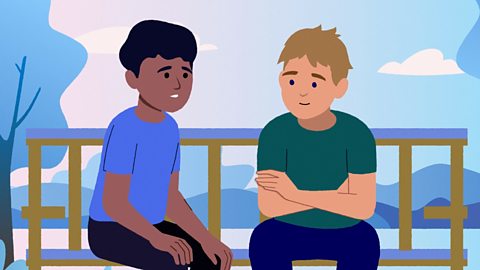
Elis's story. video
Elis's mum died this year. In these films, we see how he adjusts to life without his mum and also learn how someone could help support a friend who is grieving.
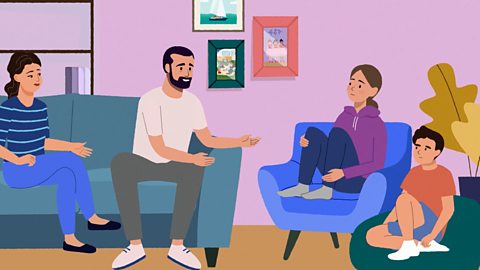
Seren's story. video
Seren's parents have separated. Seren's father is moving away with his partner and having a baby with her. How will she cope with all of this?
Health and Well-being (Wales) 8-11
More English medium resources