Exploring the different layers that make up a deciduous forest.
Video
The world is made up of some amazing ecosystems that make the perfect travel destinations. But sometimes there is no place better than home! The UK has some beautiful deciduous forests. One of these is the New Forest in Hampshire.
By definition deciduous forests are located at roughly 40 to 60 degrees north and south of the equator, throughout much of Europe and in countries such as the USA, Mexico, Canada, Chile, Japan, New Zealand and Australia.
The weather in the UK is described as temperate maritime - meaning that it’s mild and wet most of the year. This helps the plants and trees to flourish.
Similar to a tropical rainforest, deciduous woodland is made up of four different layers.
The bottom layer is the ground layer and then - going upwards - you have the herb layer, the sub-canopy and the canopy.
Depending how wet it is on the ground, you may find mosses, fungi, leaf litter and decaying wood.
The herb layer is made up of plants like brambles, bluebells and wild garlic. You can really smell wild garlic when it’s in season! The pretty bluebells will flower in the early spring sunshine, before the forest floor becomes shaded when the leaves will have grown on the trees. The more open the canopy, the more diverse the herb layer will be.
The next layer, the sub-canopy, is made up of small trees and bushes, such as holly and hawthorn.
And this, final layer, is the canopy. This will typically be made up of the taller and older trees, like oak and horse chestnut. Their leaves form a layer that blocks out light and acts like a giant umbrella, intercepting rain.
Deciduous forests are rich in wildlife.
The smaller birds tend to nest in the sub-canopy, feeding off the insects and berries in this layer. There are many species of bird within the forest, each has evolved differently to survive. They have varying beaks, from finches with short robust beaks - well adapted to eating seeds - through to buzzards, with their sharp hooked beaks. Buzzards are excellent hunters with their eagle eyes, sharp talons and wide wingspan making them predators of small mammals.
This red fox is part of this ecosystem and in common with this species it typically lives in a den, like this one. These dens go deep underground, which keeps it warm in the winter and it also deters predators from trying to kill the pups.
This fox’s reddy-brown fur coat is ideal camouflage against the dried bracken. In winter its coat will get thicker to help it survive the cold. Foxes have large front-facing ears that give them excellent hearing, allowing them the chance to stalk their prey. Foxes are not fussy, they’ll eat almost anything! They are omnivores - meaning they eat both fruits and seeds as well as other animals such as voles, birds and insects.
Other mammals that inhabit deciduous forests like this are deer. It is hard to spot a deer in the woods as they are shy and fast moving animals. Smaller mammals here include squirrels, badgers and the rare pine marten.
The New Forest is also not short of reptiles and amphibians. There are even venomous adders!
Video summary
Download/print a transcript of the video.
Wildlife presenter Ferne Corrigan looks at the layers of the deciduous forest along with the plants and animals.
She first locates the deciduous forest around the world before explaining the different layers of this biome.
She explains how birds such as the finch and buzzard have evolved to survive before turning the focus to the red fox and how it has adapted to survive predators as well as how they have adapted to stalk prey in the forest.
Ferne also highlights a number of other animals living in the deciduous forest.
This clip is from the series Ecosystems and Biomes.
Teacher notes
Download/print the Teacher Notes for this episode (pdf).
Before watching the video
Look at a map of the distribution of the temperate deciduous forest biome. Ask students to look for a pattern in the distribution and discuss why the temperate deciduous forest biome is located where it is.
Ask students about the types of animals that they think might live in the temperate deciduous forests and what type of climate they live in. Students could make predictions, which they could then add to once they have watched the film.
Introduce key terms such as:
Temperate maritime: A type of climate where there are mild winters and cool summers.
Decaying: Rotting or decomposing.
Interception: The process by which precipitation is prevented from reaching the ground by plants and trees.
Bracken: A tall fern plant.
Omnivore: An animal that eats both plants and other animals.
During the video
You may wish to stop at relevant points during this short film to pose questions and check understanding or wait until the end. Useful questions might include:
- Where are temperate deciduous forests found?
- What is the climate like in the temperate deciduous forests?
- How many layers are there?
- What would you find in the ground layer?
- What is found in the herb layer?
- What is found in the sub canopy?
- What is found in the canopy?
- What types of birds and animals live in the temperate deciduous forests?
- How is the fox adapted to living in the temperate deciduous forests?
After watching
Ask students to look back at their predictions, were they right about what they thought they would see in the temperate deciduous forests? Students could complete a spider diagram to note down the basic information about each of the temperate deciduous forest characteristics: location, vegetation, climate and animals.
Give students an image of the layers of the forest and ask them to annotate it with the characteristics of each layer. They should explain what type of plants can be found in each layer, and why they are found there, for example what plants can be found in the herb layer, why are they found there?
Discuss the animals found in the temperate deciduous forest. How was the fox adapted to living in the forest? Students could then design their own plant or animal which could survive in the temperate deciduous forest. This is a great opportunity to investigate different adaptations.
Where next?
Compare the temperate deciduous forests to a contrasting biome such as the tundra.
Students could compare:
- Animals
- Vegetation
- Climate
- Human uses
A case study could be built for the temperate deciduous forest using a real example such as the New Forest. This could form a research task which students could then present to the class.
Students and teachers over the age of 16 can create a free Financial Times account. For a Financial Times article about Britain’s lost rainforests from 2021, click here.
Curriculum notes
This clip will be relevant for teaching Geography at KS3 and GCSE.
This topic appears in OCR, Edexcel, AQA, WJEC KS4/GCSE in England, CCEA GCSE in Northern Ireland, Progression Step 4/5/GCSE in Wales, and SQA National 4/5 in Scotland.
More videos from this series
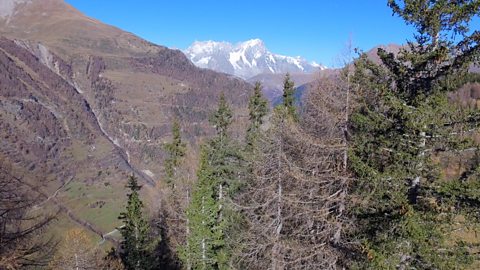
How animals have adapted to live in the Italian Alps. video
How plants, animals and people have adapted to an Alpine mountain region of Italy.
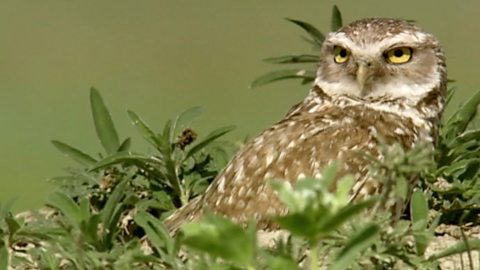
The wildlife and ecosystem of temperate savannas. video
Exploring grasslands to discover how plants, animals and people have adapted to the temperate savanna biome.
How animals have adapted to live in the Arctic tundra. video
How people, animals and plants have adapted to survive the harsh Arctic tundra biome.