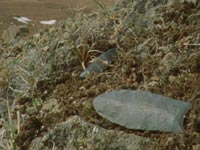
North America's first peopleWho were the first people to enter North America and where did they come from? This question has puzzled archaeologists for a long time. TheoriesTheories as to the identity of the earliest North American cultures come largely from the remains they leave behind. Stone tools such as flint spear points are often discovered and as their shape and design varies between different cultural groups, they reveal quite a lot. Two theories are prominent in The debate over the origins of these first people. Theory 1 - Clovis firstIn the 1930s, archaeologists discovered spear points in the New Mexico town of Clovis, dated at around 13,000 years old. The individuals who made them have since become known as the 'Clovis people' and are believed by many to have been the first people to enter North America. Theory 2 - Pacific coast route In more recent years, the Pacific coast has been seen as an alternative route of entry - possibly at an earlier date than the Clovis. There is little direct evidence to support this, but fossil evidence from the islands of south-east Alaska tell us that this region, or part of it, was free of ice and may have been a refuge for animals throughout the Ice Age. If animals such as bears and foxes lived here then why not people? Fossilised human remains have been found on Alaska's Prince of Wales Island and much further south on the Channel Islands off California. These are thought to be as old as some of the Clovis finds and it may only be a matter of time before older remains are discovered. If people did travel down the coasts between islands, they must have used boats. Although the coastal route still lacks a lot of hard evidence, the relatively recent discovery of a stone tool off the coast of British Columbia has added support to the idea. The debateIt's more than just an argument of who got there first. The origins of the first people may tell us much about the skills they would have had. Proponents of the 'Clovis first' theory believe the first people walked from Siberia over the course of several generations. Supporters of the coastal route suggest they may have come from the other side of the Pacific Ocean - from north-east Asia. To have come across the sea, they would have needed boats and would have been dependent on marine resources. They were evidently skilled land hunters and had some fearsome weapons, including a wooden handheld stick called an atlatl, used to launch spears over tens of metres. Recent discoveries of 'soft technology' or degradable objects such as clothing, tell us that these first people could sew. They were able to make fitted clothing and boots and probably had outfits for different seasons. So, wherever these first arrivals came from, they appear far more advanced and versatile than the cliché of spear-throwing stone-age man would have us believe. Next - Animals past and present
|