

Wednesday 24 Sep 2014
Programme Information
Network Radio BBC Week 14: Wednesday 7 April 2010
BBC Radio 1Xtra Wednesday 7 April 2010
www.bbc.co.uk/1xtra
BBC Radio 1Xtra meets young people who cannot read, write or add up, in two special reports on today's show, at 1.45pm and at 2.25pm.
The CBI (Confederation of British Industry) says millions of school leavers are unfit for working life because they lack basic literacy and numeracy skills.
Leon, 22, left school with no qualifications. He says his illiteracy made it easier for him to fall in with a bad crowd and he nearly got arrested. That's why he's now decided to do something about it and is improving his English and maths skills so he can start a course in graphic design.
Presenter/Max, Producer/Debbie Ramsay
BBC Radio 1Xtra Publicity
BBC RADIO 2 Wednesday 7 April 2010
www.bbc.co.uk/radio2
The A-Z Of AOR Ep 1/6

Bob Harris presents the ultimate rock radio playlist, The A-Z Of AOR, a new series featuring great rock tracks, power ballads, million-selling songs and album gems.
Powered by the West Coast experimental music scene and the release of The Beatles' Sgt Pepper LP, album orientated rock (AOR) first burst onto American radio in San Francisco in 1967. It was a revelation, a tour de force of creative programming which empowered its DJs and provided an antidote to the Top 40 hit radio that just wasn't "hip" anymore. By the mid-Seventies, AOR had become the most successful radio format in America.
From Pink Floyd, Boston, Journey and Apple Tree Theatre to Spirit, Tom Petty, Bruce Springsteen and Santana, The A-Z Of AOR plays the biggest hits and the hidden gems from a genre that drove album sales into the triple millions.
Presenter/Bob Harris, Producer/Neil Myners
BBC Radio 2 Publicity
BBC RADIO 3 Wednesday 7 April 2010
www.bbc.co.uk/radio3
The BBC Symphony Orchestra and soloists give the UK première of Hungarian composer Peter Eötvös's powerful operatic version of Tony Kushner's play about Aids, Angels In America, recorded at the Barbican Hall in London.
The subject is America's late 20th-century nightmare: Aids. Its admission, its concealment and its destructive power is told through a web of dreams and memories which is touched by reality as the lives of two troubled New York couples – Louis Ironson and his lover Prior Walter, and Mormon lawyer Joe Pitt and his wife Harper – become intertwined.
The focus is on passionate relationships and dramatic suspense. Eötvös's wry, dramatic music expresses tenderness and pain through contrasted short scenes of gentle parlando, operatic declamation and American mimicry. Eötvös has created a vibrant, urban sound-world of breathtaking instrumental effects and powerful vocal lines.
David Adam Moore (baritone) is Prior Walter; Scott Scully (tenor) is Louis Ironson; Omar Ebrahim (baritone) is Joseph Pitt; and Julia Migenes (soprano) is Harper Pitt.
The BBC Symphony Orchestra and soloists are conducted by David Robertson.
Presenter/Petroc Trelawny, Producer/Philip Tagney
BBC Radio 3 Publicity
BBC RADIO 4 Wednesday 7 April 2010
www.bbc.co.uk/radio4
Twenty five years ago serious plans were made to simulate a Mars colony on the South Bank of the River Thames.
Such an outrageous idea would be dismissed outright if it hadn't been dreamt up by one of Britain's greatest social reformers, Michael Young.
Lord Young of Dartington, who died in 2002, was committed to building institutions dedicated to social improvement. He played a major role in creating the Consumers' Association and the Open University.
In 1984 he launched the Argo Venture, a collective of Britain's finest scientists, thinkers and space experts who were calling for the planting of human colonies in space. His son, author and journalist Toby Young, asks if the Argo Venture was an idea too far.
Dismayed by President Reagan's militarisation of space, Lord Young called for a European initiative in the peaceful exploration of space. He wished to inspire people to think of space as a place for peace and so he set his sights on establishing a human colony in space.
His cast of volunteers included scientist James Lovelock; astronomer and this year's Reith Lecturer Lord Martin Rees; and science writer Nigel Calder. He made plans for a landmark building on London's South Bank equipped with an anti-gravity ride and exhibits dedicated to space exploration.
Toby Young talks to Lord Martin Rees and Professor Colin Pillinger and hears from passionate advocates of Martian colonisation about what his father was looking for in space.
Presenter/Toby Young, Producer/Barney Rowntree
BBC Radio 4 Publicity
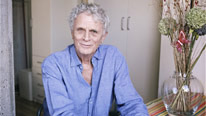
The idea that modernity leads to a lessening religious belief is being abandoned by theorists in American and Europe.
Figures such as Richard Dawkins and AC Grayling argue that, increasingly, religion seeks to impinge on science, and now the first systematic study of European cultural groups predicts that fundamentalists of all religions are out-breeding moderates and atheists, and will eclipse them quite soon.
In Israel the ultra orthodox will form the majority as soon as 2050. Since the birth rate of secular people in the West is way below the replacement level of 2.1, and the birth rate of religious fundamentalists of practically any stripe is far above, roughly between 5 and 7.7 children per mother, through the sheer force of demography Eric Kauffman argues that they will become a much bigger force in the Western world.
Laurie Taylor discusses the anxieties of atheists and the predictions of demography with three theorists of different perspectives: Professor of Contemporary Islamic Studies, Tariq Ramadan of Oxford University; Eric Kauffman, Reader in Politics at Birkbeck College and author of Shall The Religious Inherit The Earth?; and Rebecca Goldstein, philosopher and author of 36 Arguments For The Existence Of God: A Work Of Fiction.
Presenter/Laurie Taylor, Producer/Charlie Taylor
BBC Radio 4 Publicity
Mark Steel's In Town Ep 1/6
Comedian Mark Steel visits six more UK towns to discover what makes them and their inhabitants distinctive.
In the first of this new series, Mark visits Dartford in Kent to find out what gives this town its character.
He creates a bespoke stand-up show for each town and performs the show in front of a local audience. In this first episode Mark talks about the peasants' revolt, gypsy tart, Mick Jagger and what one resident calls the Road To Hell.
As well as shedding light on the less-visited areas of Britain, Mark uncovers stories and experiences that reflect the quirkiness of the British way of life.
During the series Mark also visits Wilmslow and Alderley Edge in Cheshire, Dumfries in the Borders, Penzance in Cornwall, Gateshead in Tyne and Wear and Kirkwall in the Orkneys.
Presenter/Mark Steel, Producer/Julia McKenzie
BBC Radio 4 Publicity
Unreliable Evidence Ep 1/4
Clive Anderson brings together some of the country's top judges and lawyers to discuss the legal issues of the day.
The first programme explores the often controversial interface between English law and religious belief.
Disputes in which articles of faith clash with the law of the land have arisen over the carrying of sacred knives, employment law, adoption, gay rights and cremation.
One of the first acts of the new Supreme Court was to rule that one of Britain's most successful faith schools had racially discriminated against a 12-year-old boy who was refused admission because the school did not recognise him as Jewish.
And the Government's attempts to strengthen the country's equalities legislation provoked the Pope to call on bishops to fight measures which could force churches to hire homosexual and transgender employees.
The programme investigates what kind of oversight the secular courts of the United Kingdom should exercise when individuals choose to have their disputes resolved in religious courts, such as Sharia or Beth Din.
Presenter/Clive Anderson, Producer/Brian King
BBC Radio 4 Publicity
Costing The Earth Ep 1/8
Tom Heap finds out if it's really possible, or desirable, to put a price on nature and if by doing so, policy makers, businesses and individuals would take it more seriously, as the environmental series returns.
Alkborough Flats on the Humber Estuary is a haven for birdlife but has also provided £400,000 worth of flood protection a year. The carbon storage in its sediment is valued at a further £14,500, plus there's additional revenue from recreation and tourism.
Bees are another example. Their services to farming are estimated at £200m a year with the retail value of what they pollinate closer to £1bn.
Upland farming is already heavily subsidised but there's an argument that these farmers should be paid not to farm, but instead to maintain water quality, guard against flooding and maintain wildlife habitats.
What was a theoretical issue is becoming reality. Right now the National Ecosystem Assessment is taking place. Government-sponsored inspectors are actually pricing up the services provided by the environment with a view to embedding them in policy.
Tom Heap meets the economists and leading figures from the world of banking and accounting who could be the unlikely answer to safeguarding biodiversity.
Presenter/Tom Heap, Producers/Alasdair Cross and Helen Lennard
BBC Radio 4 Publicity
BBC RADIO 5 LIVE Wednesday 7 April 2010
www.bbc.co.uk/5live
5 Live Sport

Mark Pougatch has all the day's sports news and, from 7.45pm, live Champions League quarter-final second-leg coverage.
Presenter/Mark Pougatch, Producer/Claire Ackling
BBC Radio 5 Live Publicity
BBC 6 MUSIC Wednesday 7 April 2010
www.bbc.co.uk/6music
Lauren Laverne is joined by Lou Rhodes for a live session in the BBC 6 Music studios.
The singer of the recently reformed Lamb released her new solo record One Good Thing in March and joins Lauren in the studio to perform some songs from the album.
Presenter/Lauren Laverne, Producer/Gary Bales
BBC 6 Music Publicity
Gideon Coe presents Prefab Sprout live in Reading from 1985, and Suede at London's Royal Festival Hall in 2002. His session foursome includes Elvis Costello and The Attractions from 1978, Spooky Tooth a decade earlier, a more recent vintage provided by Silver Jews from 2005 and a rare 1990 session from New York art-grunge trio Barkmarket.
Presenter/Gideon Coe, Producer/Frank Wilson
BBC 6 Music Publicity
Adam Buxton and Joe Cornish offer listeners another chance to catch up on The Wall, a podcast of theirs from April 2008. This will also be available to download as a podcast after the show.
Presenters/Adam Buxton and Joe Cornish, Producer/James Stirling
BBC 6 Music Publicity
BBC WORLD SERVICE Wednesday 7 April 2010
www.bbc.co.uk/worldservice
Heart And Soul – Ganga Ma: Voices Of The River Ep 1/2
In 2008, the Ganges was named India's national river. It is also known as the Hindu mother goddess, Ganga, who gives life and salvation.
From January to April 2010, the Ganges plays host to the world's largest gathering of people, who congregate at the city of Haridwar – the point at which the river descends from the Himalayan plains – for the Hindu festival of Maha Kumbh Mela.
The first programme of this new series focuses on Haridwar, collecting sounds and stories from some of the people who live and work on the river Ganges, day in, day out.
Exploring why so many are drawn to the waters during the Maha Kumbh Mela the programme hears stories from a priest at Har Ki Pauri Ghat (the main bathing area in the city), a Saddhu of the Juna Akhara (a holy man of the religious order) and from individual pilgrims and tourists who have travelled thousands of kilometres to be there.
Producer/Katie Burningham
BBC World Service Publicity
Living With Tourists Ep 1/2
Ros Atkins sets out to explore how attitudes to tourism can vary across the globe.
The tourism industry is the largest in the world, with some predicting that it could be worth $15 trillion by the end of this decade. Few countries can afford to ignore it, yet reactions to hosting tourists vary enormously from place to place.
Ros has personally observed a spectrum of such attitudes in the handful of countries in which he has lived: he perceived a lingering resentment towards outsiders in his native Cornwall and a hunger for visitors in the Bahamas. Trinidad, between the two, seemed more ambivalent.
He embarks upon a journey back to these places, where he lived as a child with his itinerant fisherman father and the rest of his family. Along the way, he talks to top politicians, industry leaders and tourists themselves, looking to discover why tourism's effects can be so disparate and what wider lessons might be drawn from these countries' experiences.
Presenter/Ros Atkins, Producer/Michael Gallagher
BBC World Service Publicity
Programme information
Network Radio
Network Radio – Days
Key
- New
- Live event/outside broadcast

- Interactive programme

- Picture available
BBC iD
BBC iDBBC navigation
BBC links

BBC © 2014The BBC is not responsible for the content of external sites. Read more.
This page is best viewed in an up-to-date web browser with style sheets (CSS) enabled. While you will be able to view the content of this page in your current browser, you will not be able to get the full visual experience. Please consider upgrading your browser software or enabling style sheets (CSS) if you are able to do so.
