

Wednesday 29 Oct 2014
Programme Information
Network Radio BBC Week 14: Tuesday 6 April 2010
BBC RADIO 2 Tuesday 6 April 2010
www.bbc.co.uk/radio2
Jamie Cullum


Jamie Cullum, the UK's biggest-selling jazz artist of all time, showcases his love for all types of jazz and music rooted in jazz, from its heritage to the future, in a new weekly programme for BBC Radio 2.
The series features live sessions and guests from around the world, as well as tracks from the BBC's jazz session archive.
Jamie says: "It's an extraordinary privilege to be able to present an hour of jazz and jazz-related music at such a civilised hour. We're going to present a show that will excite people's ears and bring them into a scene they may not know about."
This week's show features an interview with Ramsey Lewis, one of Jamie's favourite jazz pianists of all time. There is also a live session from Polar Bear, which was recorded at the BBC's Maida Vale studios, featuring tracks from their new album, Peepers.
Presenter/Jamie Cullum, Producer/Karen Pearson
BBC Radio 2 Publicity
Tony Bennett Presents
The Great American Songbook Ep 1/4
Tony Bennett, a legend from the American swing era, guides the BBC Radio 2 audience through his selection of the 40 defining songs from the Great American Songbook in this new four-part series.
Tony has lived the songs, sung the songs and now, in his 60th year as a performer, he offers his personal thoughts, insights and an insider's view on the greatest compositions ever written. Sir Michael Parkinson leads the way through the 10 songs covered each week, as each programme features Tony's anecdotes about the people who created them, the pantheon of singers who have interpreted them and his views about what makes each one special.
The Great American Songbook is an informal phrase, originally coined by Tony himself, which describes the interrelated music of Broadway musical theatre, the Hollywood musical and Tin Pan Alley, in a period that begins in the Twenties. Aside from the enduring popularity of this music in its original context, it also became the central repertoire for jazz musicians.
In the first episode, Tony illustrates the musical and lyrical sophistication in a line-up that includes Billie Holiday's Autumn In New York, Nat King Cole's It's Only A Paper Moon and Judy Garland's Over The Rainbow.
Tony says: "No one will ever sound as good as Judy Garland as far as I am concerned. Just listen to The Man That Got Away that she made for A Star Is Born and you'll believe it."
Presenter/Sir Michael Parkinson, Producer/Phil Critchlow
BBC Radio 2 Publicity
BBC RADIO 3 Tuesday 6 April 2010
www.bbc.co.uk/radio3
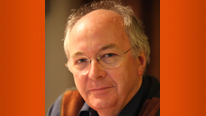
Philip Pullman's name often appears whenever anyone is compiling a list of the best writers in Britain. It also tends to appear whenever there's a reckoning of authors sceptical about organised religion. Even an endorsement a few years ago from the Archbishop of Canterbury, Dr Rowan Williams, of Pullman's most famous work, His Dark Materials, did little to dispel this notion.
Pullman's new book, The Good Man Jesus And The Scoundrel Christ, is a retelling of the Bible story and fulfils a promise Pullman made to the Archbishop to write about Jesus and his place in Christian worship. Pullman uses it to examine the way in which the Christian Church formulated its beliefs and established a canon of scripture and at the same time explores his long-standing fascination with the figure of Christ himself.
Philip Dodd meets Pullman at his home in Oxfordshire for an extended conversation, ranging from religion and literature to contemporary politics and civic duty.
Presenter/Philip Dodd, Producer/Zahid Warley
BBC Radio 3 Publicity
BBC RADIO 4 Tuesday 6 April 2010
www.bbc.co.uk/radio4
Olivia O'Leary is joined in conversation by two coroners, Peter Dean and Christopher Dorries, as the series bringing together people who have had profound and similar experiences continues.
Their job is commonly misunderstood; they do not conduct post-mortems or attend crime scenes. Their role, if a death is sudden or unexplained, is to investigate the cause of death.
Together they discuss what their jobs entail. Olivia asks them how continually dealing with death and bereavement affects them. They also discuss whether the new Coroners And Justice Act coming into force is bringing greater pressure to conduct sensitive inquests in secret.
Currently coroners can have a medical or a legal background, but the new act means that only lawyers will be able to become coroners. This is something that concerns Peter Dean, whose background is in medicine.
Olivia O'Leary gets the inside track on the unique role of the coroner.
Presenter/Olivia O'Leary, Producer/Karen Gregor
BBC Radio 4 Publicity
Saving Species Ep 1/17

Saving Species is a landmark series, led by the BBC's Natural History Unit, broadcasting about the current state of various species, live from around the world.
More people around the globe are recognising and acknowledging that the relationship between human beings and the natural world is changing as the loss of species becomes increasingly apparent.
This season of programmes aims to bring audiences closer to species in the wild and the biologists who study them. Listeners will be also invited to contribute in a special online project where they can upload images and ask questions.
Through the seasons of the year and the seasons of the Earth, the series follows the life histories of chosen species and reports on how wildlife conservation works in the modern era.
The ambitious season of programming has a live studio, based in Bristol, and is working with collaborators in the UK and across the world to take listeners out to where the story is happening.
Saving Species reports on the great and the small, the well known and the totally new and explains why people should care about a cricket as much as an elephant.
Forty programmes will be broadcast in two tranches – from April until July and then from the end of August until February 2011.
The series includes reports on African elephants, Purple Emperor butterflies, African lions, British seabirds, the koala, Australia's Barrier Reef, the South American rainforest, vultures, short-haired bumble bees and wandering albatrosses.
Through the Open University, listeners can communicate with an online project, Ispot, where they can upload their own images and questions about biodiversity.
Saving Species is a collaboration between BBC Radio 4, the BBC Natural History Unit and the Open University. The series will also be working with BBC Two's Springwatch and Autumnwatch.
Presenter/Brett Westwood, Producers/Mary Colwell, Sheena Duncan and Kirsty Henderson
BBC Radio 4 Publicity
Miles Jupp investigates the fictional evil mastermind Fu Manchu's connection to the Scottish capital.
Yellow Peril, Celestial One and Devil Doctor were some of the many aliases under which Dr Fu Manchu traded. Miles sets out to find out exactly from where he received his doctorate.
According to his boast in The Mask Of Fu Manchu, Sax Rohmer's evil genius was an alumnus of three world-famous universities. From the novels it seems as if Fu Manchu must have studied in Edinburgh in the early 1870s.
The 1870s were an interesting time to be in town. Conan Doyle was registered at the University Medical School, studying at the feet of Joseph Bell, the inspiration for Sherlock Holmes. Thomas De Quincey, the "English Opium Eater", had died in the city a few years before but the network by which he sourced his laudanum was still intact, brought by Chinese coolies from the Port of Leith to the drawing rooms of the New Town. There were Chinese students registered on the matriculation rolls of the university, some of them refugees from the Boxer rebellion, and the seamen's missions and city police reports make it clear that there was a thriving Chinese criminal network in Scotland's capital.
Miles investigates the hidden Edinburgh years of the criminal mastermind who fought a war against Western imperialism after learning his trade in one of the West's most esteemed universities.
Presenter/Miles Jupp, Producer/David Stenhouse
BBC Radio 4 Publicity
EM Forster Short Stories Ep 1/3
In The Story Of The Siren – the first of this three-part series of short fiction by EM Forster – a young woman enjoying Italy's beauty is unsettled by a tale about the fate of a young Sicilian. The reader is Susannah Harker.
In Wednesday's story, The Road From Colonus, read by Andrew Sachs, misunderstandings thwart plans for a sojourn in the idyllic Greek countryside.
The final story, The Obelisk, read on Thursday by Ruth Wilson, tells of how a chance encounter leads an unhappily married couple to find solace in forbidden ways.
Though best known for 20th-century classic novels including A Passage To India, Where Angels Fear To Tread and Howard's End, EM Forster was also a prolific writer of short stories. In them he explored many of the themes central to his novels, including the morals and mores of the middle classes in the early 20th century and his fascination with the Mediterranean.
Readers/Susannah Harker, Andrew Sachs and Ruth Wilson, Producer/Elizabeth Allard
BBC Radio 4 Publicity
Great Lives Ep 1/8
Matthew Parris features the life of German writer Bertolt Brecht as he returns with a new series of Great Lives.
Playwright John Godber joins Matthew to discuss the life of Brecht, with the help of drama specialist Professor Michael Patterson.
Bertolt Brecht is the hero and inspiration of John Godber. Both writers have in common an instinct and desire for truly popular theatre which has the power to change fundamentally the perspective of its audiences.
Brecht's own productions were immensely lively and popular and his theatrical legacy, although eschewed by Hollywood devotees of naturalism, stands firm in the work of many of today's greatest writers.
Presenter/Matthew Parris, Producer/Mary Ward Lowery
BBC Radio 4 Publicity

Iraq's Forgotten Conflict is the story of Iraq's religious minorities, which are facing extinction from targeted killings and forced exile.
Since the invasion of 2003, a thousand Christians have been killed, 200,000 have fled, and murder, torture, kidnappings and forced conversions are everyday occurrences.
Edward Stourton reports from Baghdad and surrounding areas, talking to refugees who will never go back there; to Anglican and Catholic leaders who believe life is getting worse every month; and to priests who believe they may be called to be martyrs. He sees for himself evidence of Iraq's Forgotten Conflict.
Presenter/Edward Stourton, Producer/David Coomes
BBC Radio 4 Publicity
Case Notes Ep 1/7
Dr Mark Porter looks at what people do and don't know about the dangers of recreational drugs, as the medical programme returns for a new series.
In little more than a year, mephedrone, also known as miaow miaow, bubble and M-Cat, has become one of the most popular party drugs in the UK. Dr Mark Porter looks at what people know about its potential dangers.
Many young people are using it every week. Health professionals are not sure how harmful to health this new drug is, though anecdotal reports give them cause for considerable concern.
It is the latest so-called "legal high." Currently in mainland Britain, it is legal to import, sell and possess mephedrone. Dr Mark Porter talks to experts about what is known and unknown about the risks from its use.
Mark also looks at what science is saying about the adverse health effects of cocaine and cannabis.
Presenter/Dr Mark Porter, Producers/Andrew Luck Baker, Erika Wright and Deborah Cohen
BBC Radio 4 Publicity
BBC RADIO 5 LIVE Tuesday 6 April 2010
www.bbc.co.uk/5live
5 Live Sport

Mark Pougatch has all the day's sports news and, from 7.45pm, live Uefa Champions League quarter-final second-leg coverage.
Presenter/Mark Pougatch, Producer/Patrick Whiteside
BBC Radio 5 Live Publicity
BBC 6 MUSIC Tuesday 6 April 2010
www.bbc.co.uk/6music
As an extension to the station's Album Of The Day concept, where a different album, old or new, is played throughout the day, BBC 6 Music's Album Of The Day + aims to exclusively showcase a soon-to-be-released album by a key 6 Music artist. Albums previously showcased include Massive Attack's Heligoland and Gorillaz's Plastic Beach.
This month 6 Music presents the second album by Grammy nominated Brooklyn duo MGMT. Tracks from the hotly anticipated album Congratulations play in each show through the day and the band are in conversation with Steve Lamacq from 4pm.
BBC 6 Music Publicity
Lauren Laverne is joined by photographer Liam Bailey. Liam's new Glastonbury exhibition, Glastonbury – 40 Years, opens in April at a London gallery. It documents in photo form how the UK's biggest festival has evolved over the past 40 years.
Presenter/Lauren Laverne, Producer/Gary Bales
BBC 6 Music Publicity
Andrew Collins is joined by Brighton indie-folkers Peggy Sue ahead of the release of their debut album, Fossils And Other Phantoms, which comes out on Wichita Records in April. This is the band's first full album, after almost four years of single and EP releases.
Presenter/Andrew Collins, Producer/Jax Coombes
BBC 6 Music Publicity
As part of Album Of The Day + Steve Lamacq interviews MGMT ahead of the release of their second album, Congratulations. The duo, Ben Goldwasser and Andrew VanWyngarden, talk to Steve about the making of their new album and how the success of their debut album, Oracular Spectacular, changed their lives.
Presenter/Steve Lamacq, Producer/Paul Sheehan
BBC 6 Music Publicity
Gideon Coe's archive gems come from Lisa Hannigan's 2009 set at the Latitude Festival, along with Gorky's Zygotic Mynci in session in 2003. Further treats from the archive are promised via Fairport Convention with their first BBC session; some drone rock from Bastro, who evolved into Tortoise; and an early start for Spiritualized, whose 2003 session can be heard tonight.
Presenter/Gideon Coe, Producer/Frank Wilson
BBC 6 Music Publicity
Adam Buxton and Joe Cornish offer another chance to catch up on their podcast from April 2008 entitled Challenges. This will also be available to download as a podcast after the show.
Presenters/Adam Buxton and Joe Cornish, Producer/James Stirling
BBC 6 Music Publicity
Programme information
Network Radio
Network Radio – Days
Key
- New
- Live event/outside broadcast

- Interactive programme

- Picture available
BBC iD
BBC iDBBC navigation
BBC links

BBC © 2014The BBC is not responsible for the content of external sites. Read more.
This page is best viewed in an up-to-date web browser with style sheets (CSS) enabled. While you will be able to view the content of this page in your current browser, you will not be able to get the full visual experience. Please consider upgrading your browser software or enabling style sheets (CSS) if you are able to do so.
