Summary

  • The new HS2 railway line won't open until between 2036 and 2039, Transport Secretary Heidi Alexander announces

  • She says trains will start from Birmingham to Old Oak Common in west London at some point between 2036 and 2039, while high speed trains to Euston in central London won't begin until at least 2040

  • The first phase of HS2 was initially supposed to open in 2026

  • Alexander adds the line will now cost between £87.7bn and £102.7bn. "Instead of signalling the country's ambition, HS2 became a symbol of this country's decline," she says

  • In 2011, the cost of HS2 was estimated at £32bn (around £49bn in today's prices) - including the now-cancelled Leeds and Manchester legs

  • The transport secretary also says the trains will be slower in order to save money - a maximum of 320 km/h (199mph), down from a previous maximum of 360 km/h (224 mph)

Media caption,

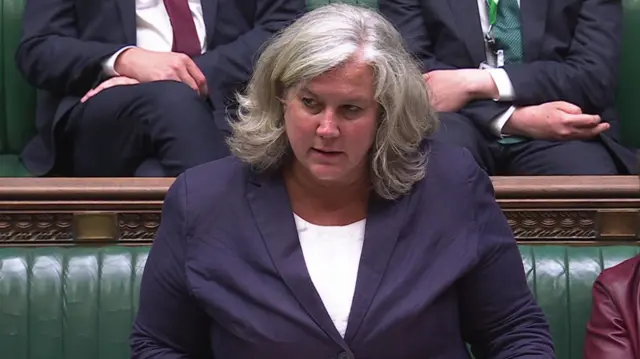
Watch: Transport Secretary Heidi Alexander updates House of Commons on HS2

  1. HS2 to be slower, more expensive and delayed furtherpublished at 15:42 BST
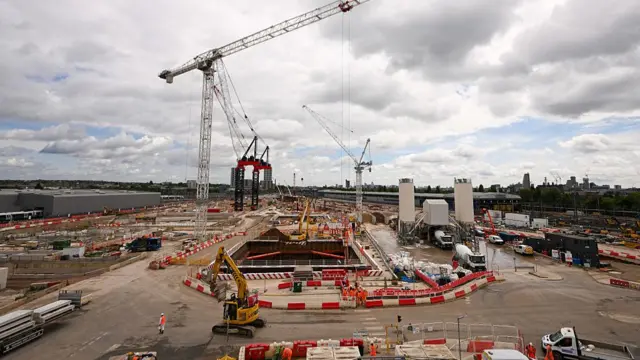
    The HS2 High-Speed railway construction site at Old Oak Common in London, UK, on Thursday, May 29, 2025Image source, Getty Images
    Image caption,

    HS2 trains are expected to start operating from London's Old Oak Common by 2039 at the latest, according to new estimates

    Transport Secretary Heidi Alexander has just announced the delay, increased cost and reduced speed of the HS2 high speed rail project.

    Here are they key takeaways:

    Cost

    It is now estimated that it will cost between £87.7bn and £102.7bn to complete the high speed rail line.

    When the project was approved in 2012, the cost estimate for the entire project, including the since-cancelled Manchester and Leeds legs, was £32.7bn - which works out to about £49.2bn in today's money.

    Speed

    High Speed 2 is getting a little bit slower, with the trains now reaching maximum of 199mph (320 km/h), down from the previously planned 224 mph (360 km/h).

    For reference, most high-speed trains in the UK currently run at around 125 mph (200 km/h) , while HS1 - the Channel Tunnel Rail Link - reaches speeds of up to 186 mph (300 km/h).

    Timeframe

    HS2 has one again been delayed, with trains expected to start running between Birmingham and west London's Old Oak Common between 2036 and 2039.

    Trains are expected to run to London's Euston at some point between May 2040 and December 2043.

  2. Analysis

    If targets slip again, the current government will likely end up in the firing linepublished at 15:23 BST

    Theo Leggett
    International business correspondent

    Heidi Alexander described the increase in costs for HS2 and the delays delivering the project as “obscene”.

    She was able to do so because, at this stage, it is easy for the government to blame any failures linked to HS2 on previous administrations.

    For more than a year, the focus has been on working with the boss of HS2 Ltd, Mark Wild, to come up with a "reset", outlining credible costings and a realistic timeframe for delivery.

    Those figures, stark as they are, have now been agreed.

    HS2 Ltd will be expected to deliver, and if the targets slip any further the current government is likely to find itself in the firing line.

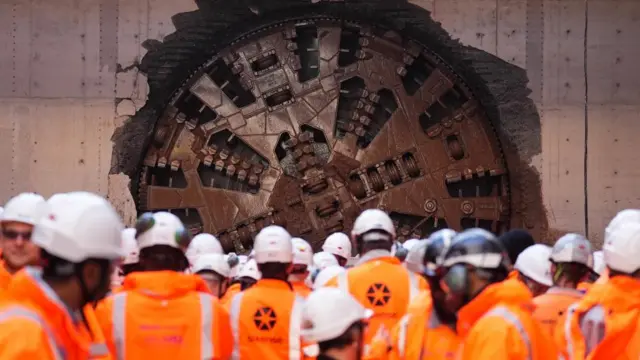
    HS2 workers observing a boring machine on the HS2 project near BirminghamImage source, PA Media
    Image caption,

    HS2 workers observing a boring machine on the HS2 project near Birmingham

  3. Government oversight of HS2 'failed,' says reportpublished at 15:08 BST

    The Lovegrove report also includes detail on the civil service's involvement with the project.

    It says the civil service was "unable to fully assess" or articulate the commercial and financial risks of the project to government ministers.

    It says that while the Department for Transport was not responsible for building the railway, it is and was responsible for overseeing HS2 Limited, the company behind the project.

    The report says that government oversight of the company "failed". It also goes on to say that the civil service "did not have the required capabilities, in sufficient depth, to consistently discharge its responsibilities with regards to HS2".

    It describes HS2 as a project of "national magnitude with unparalleled complexity and scale".

  4. Company responsible for HS2 was 'misguided' in its role, report findspublished at 15:00 BST

    We can now bring you some detail from the Lovegrove report, which was published this afternoon.

    The report says that HS2 Ltd - the company responsible for developing and promoting the line - was "misguided" in its role.

    The management team and board adopted a “fortress mentality” and became “cheerleaders” for the cause of high-speed rail, "repeatedly believing that they would be 'ushering in a new era'", the report says.

    Instead, their role should have been to "deliver a high-speed railway within the scope and cost envelope set by Parliament and government", it adds.

    Where this wasn't possible, it should have expressed what additional resources and time were required "accurately and with well-founded evidence and analysis," the report says.

  5. Alexander announces a delay but a large amount of infrastructure is already builtpublished at 14:48 BST

    Theo Leggett
    International business correspondent

    It’s worth remembering that a significant amount of HS2 infrastructure has already been built.

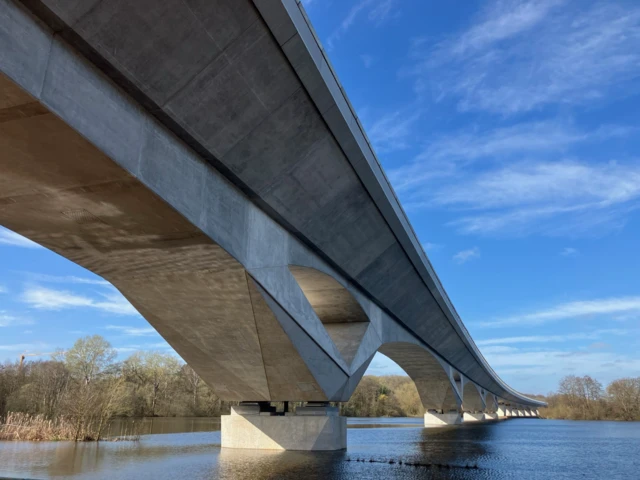
    The Colne Valley viaduct for example, is complete – stretching for more than 2 miles across countryside to the west of London.

    It’s a truly majestic structure, the longest railway bridge in the UK.

    Nearby, the Chiltern Tunnels stretch for 10 miles beneath the Chiltern Hills – their curved and tapered portals carefully designed to minimise noise from trains that will not run through them for another decade at least.

    This is what has been achieved since construction formally began in late 2020. It’s also one reason why cancelling the project would itself be an expensive process, especially if land had to be restored to how it was before construction started.

    View of Colne Valley viaduct taken from the river bank on the right sideImage source, BBC/Theo Leggett
  6. Disruption for Euston locals set to continue for another decadepublished at 14:41 BST

    Tom Edwards
    Transport Correspondent, BBC London

    What has happened in Euston in central London has been called an embarrassment and a lesson in how not to do things.

    The area has seen hundreds of homes demolished, the most on the whole HS2 project. And the project has ruined lives. Businesses and pubs were also destroyed; it was extremely distressing for those impacted by it.

    For the last seven years the area has been blighted by a project with no clear direction. The site cuts the area in half.

    The news that it won't now open until 2040 at the earliest will be met with anger, resignation, and despair.

    Businesses have already suffered, some have already moved on and this further delay won't help. Plans to redevelop the whole area are yet to see the light of day.

    At the moment, locals are living next to a building site and disruption and that looks set to continue for another decade.

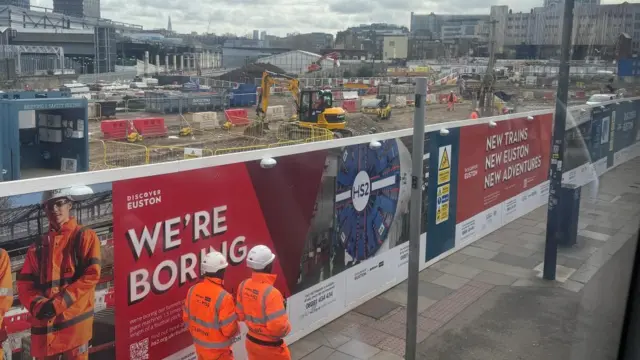
    A general view of work at Euston station
    Image caption,

    Work has been under way at Euston for several years

  7. Service update: A timeline of HS2's delayspublished at 14:30 BST

    This Flourish post cannot be displayed in your browser. Please enable Javascript or try a different browser.

  8. New HS2 cost range includes delivering line to Eustonpublished at 14:28 BST

    We can now bring you a little more detail from a document released by the government after Heidi Alexander's statement in the Commons - this is separate to the Lovegrove report.

    The government says the new cost range announced today includes "the whole programme", including the expected cost of delivering HS2 to Euston.

    It says it has made "significant progress in developing affordable, integrated plans" for the station, which will include six platforms.

    The existing Euston Station will also be redeveloped to deliver a new station concourse.

    The government says it intends to fund some of the cost of the Euston programme "through private finance and other sources".

  9. A £100m curved safety barrier - what's bat all about?published at 14:20 BST

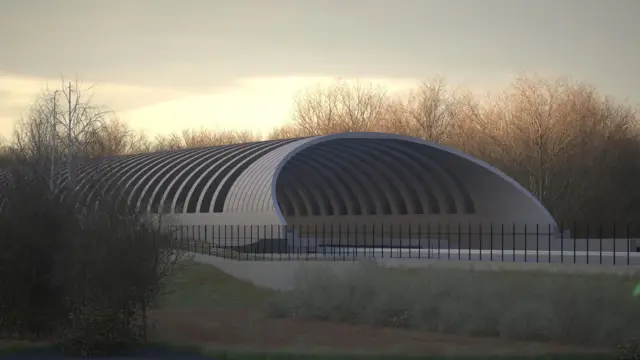
    A curved barrier runs through woods on a trainlineImage source, PA Media
    Image caption,

    An artist's impression of the bat protection structure

    During her Commons statement, Transport Secretary Heidi Alexander promised the government will be "building no more bat tunnels on HS2".

    There was widespread criticism when the then-chairman of the rail line announced £100m would be spent on protecting bats in Buckinghamshire as part of the construction back in November 2024.

    A special 0.6 mile (1 km) curved barrier was needed along tracks in the area to prevent bats being disturbed by high-speed trains. Bats are legally protected in the UK.

    "We call it a shed," then HS2 chairman Jon Thompson said at the time. "This shed, you're not going to believe this, cost more than £100m to protect the bats in this wood."

    Natural England said it had not required HS2 to "adopt this structure", but its role had been to "comment on whether the proposed mitigations will work".

    Now, the transport secretary tells MPs that the government has "changed legislation", which could allow a "different approach" to protected species in the future.

  10. Alexander outlines HS2 costs, start time and speedpublished at 14:14 BST

    Media caption,

    HS2 trains won't run until at least 2036 - transport secretary

    Transport Secretary Heidi Alexander blamed previous governments for a “litany of failure” on HS2 that sent costs soaring and huge contracts handed out without price improvements.

    "Instead of signalling the country's ambition, HS2 became a symbol of the country's decline," she told MPs.

    Here's a reminder of what she said:

    • On the cost she said completing HS2 would now have a price tag of between £87.7bn and £102.7bn, in 2025 prices – in 2011, it was initially estimated to cost £32.7bn.
    • Trains are now expected to start running between Old Oak Common in west London and Birmingham’s Curzon Street station between May 2036 and October 2039 – at least a decade after the initial start date. Services from Euston in central London to Handsacre Junction in Staffordshire are expected between May 2040 and December 2043 - this is where the high-speed trains are supposed to leave their special tracks and join the existing line north
    • On speed, Alexander criticised what she called the "gold-plating" of HS2 – in other words, making the project faster and more sophisticated than needed. Initially, HS2 trains were planned to travel at 224 mph (360km/h), but the secretary of state said they will now run at a maximum speed of 199 mph (320 km/h).
  11. New HS2 cost a 'stark increase' on previous figures, report sayspublished at 14:05 BST

    As we just reported, the cost of HS2 is now expected to be between £87.7bn and £102.7bn (in 2025 prices).

    The new figures are equivalent to £70.9 to £82.2 billion in 2019 terms, according to a government report published alongside Heidi Alexander's statement.

    This is a separate document to the Lovegrove report, which we are also working our way through.

    The report calls this a "stark increase on the previous cost range of £35-45 billion (2019 prices) set under the previous government".

    The range includes the cost of both "works to date" and "future work excluding inflation". It covers the cost of the whole programme stretching from London Euston to Birmingham Curzon Street, as well as the connection to the West Coast Main Line at Handsacre Junction.

  12. Committee chair asks what is being done to protect other transport projectspublished at 13:56 BST

    Alexander says there is provision in the costing she has set out "for the delivery of Euston" and for signalling costs. She says she has also "gone out to market to attract private investment".

    Chair of the transport select committee Ruth Cadbury is up next. She asks what Alexander is doing now to ensure other essential transport projects - including the Lower Thames Crossing and the Northern Powerhouse rail project - do not go the same way.

    Alexander addresses Northern Powerhouse Rail - she says the government is working with local leaders to "agree scope in advance, to agree priorities and sequencing so we know what elements of the overall programme will be delivered first".

  13. Government publishes report on HS2 failurespublished at 13:50 BST

    The Lovegrove report - which has looked into lessons learned from HS2's failures - has just been published.

    We're combing through it and will bring you the key lines shortly.

  14. Trains will run as fast as Japan's bullet trains, says Alexanderpublished at 13:48 BST

    Mayhew asks Alexander what the new cost figures include.

    He asks whether they cover the cost of all of the rolling stock (the trains) and to what extent the funding of Euston station is included.

    "Ultimately the government is right to take steps to reduce costs on this project," he says, adding that "errors were made and should be rectified".

    Mayhew adds that he is glad to see the continued support for HS2 Ltd CEO Mark Wild and his team.

    In response, Alexander says taking credit for the appointment of Wild is bit like "an arsonist demanding praise for calling the fire brigade".

    She adds that reducing the speed of the trains to 320km/h (199 mph) will mean the trains are "running as fast as bullet trains in Japan".

    On bat tunnels, Alexander says no more will be built on the HS2 project, and that the government has changed legislation that will lead to a "different approach to protected species in future".

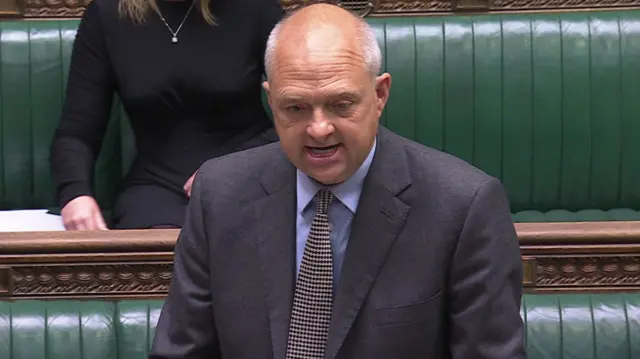
    Jerome Mayhew, speaking for the ConservativesImage source, House of Commons
    Image caption,

    Jerome Mayhew, speaking for the Conservatives

  15. Most recent target date was 2033 - it's now 2036 at earliestpublished at 13:42 BST

    Katy Austin
    Transport correspondent

    The transport secretary has said the first HS2 services are now not expected to run from Old Oak Common to Birmingham Curzon Street until sometime between May 2036 and October 2039.

    The most recent target date had been 2033.

    The full scheme between London Euston and Handsacre Junction is not expected to open until between May 2040 and December 2043.
  16. Conservatives will support actions that can reduce costs, says shadow ministerpublished at 13:39 BST

    Shadow transport minister Jerome Mayhew has responded for the Conservatives.

    He accepts "it is true" that the early years of HS2 were beset with issues, as HS2 Ltd failed to maintain control of the budget - and the government's transport department allowed them to get away with it.

    But he says the appointment of current CEO of HS2 Ltd Mark Wild - under the Tories - has meant the organisation is in better shape.

    Where there are actions that can reduce cost, the Conservatives will support them, he adds.

    But Mayhew urges the government to set out how new measures will save money and deliver against the new timetable, given concerns about trust in the project.

  17. Government will deliver HS2 'to completion'published at 13:36 BST

    Alexander confirms that "it could cost almost as much to cancel the line as it would to finish it, while delivering none of the benefits".

    So, she says, the Labour government will deliver the project "to completion".

    She says previous prime ministers in her view "created the world's most expensive slow-motion car crash and they barely batted an eyelid".

    AlexanderImage source, House of Commons
  18. Lower speeds will lower costs and let project finish sooner, says Alexanderpublished at 13:35 BST

    Alexander now turns to what she calls the "gold-plating" of HS2. She says this included a focus on the "highest possible speeds" resulting in a "bespoke and highly engineered design", describing it as a "massively overspec-ed folly".

    Mark Wild, HS2's CEO, has been asked to remove this "gold-plating" from the project, Alexander says, adding that speed will now reach 320 km/h (199 mph), which she says will lower the cost by £2.5bn and see the project completed one year sooner.

  19. Alexander tells MPs she is 'angry' over state of HS2published at 13:32 BST

    Alexander lets her frustration show.

    "If it seems like an obscene increase in time and costs, it is because it is," she tells MPs.

    "If it seems like I'm angry, it is because I am," she adds.

    She also expresses her frustration on behalf of taxpayers and rail construction workers, as well as passengers who continue wait for new services.

  20. First services to Birmingham expected by 2036 at the earliestpublished at 13:31 BST

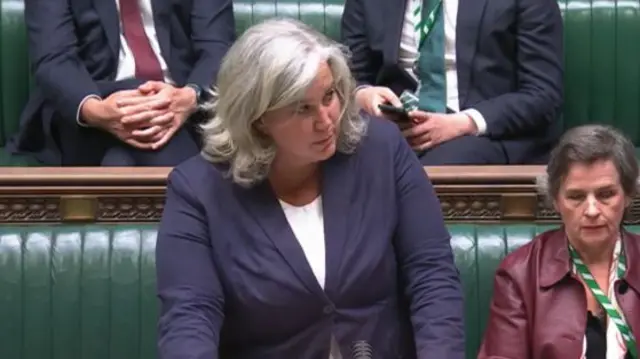
    Heidi Alexander in dark blue blazer looking to her left as she delivers a statement in the Commons. A colleague in red leather jacket sits on the green leather benches of the Commons whilst listening to the ministerImage source, House of Commons

    Alexander says the expected cost of completing HS2 is now between £87.7bn and £102.7bn - priced in 2025.

    She says two thirds of this increase is due to "past misunderstanding of the work required" and "issues within the control of HS2 Ltd, some of its suppliers and previous governments". The remaining third is linked to inflation, she says.

    She says the government expects first services to run from Old Oak Common to Birmingham Curzon Street between May 2036 and October 2039.

    She adds: "Lessons have been learnt from the Stewart review, meaning HS2's costs and schedules are now built on more solid foundations, with credible estimates published as ranges to ensure they better stand the test of time."