Summary

  1. Analysis

    For Gaza, the agreement is unlikely to be a silver bulletpublished at 20:49 BST

    Rushdi Abualouf
    Gaza correspondent, in Cairo

    The deal will not transform the enclave’s devastated reality or rebuild what Israel has destroyed overnight.

    But it could mark a decisive turning point by ending months of political paralysis and uncertainty over Gaza’s future.

    If fully implemented, it could pave the way for a significant increase in humanitarian aid, the start of reconstruction, and the gradual return of more stable civilian governance.

    Whether that happens, however, will depend not only on Hamas’s commitments but also on Israel’s willingness to honour its obligations.

    It will also depend on the mediators’ ability to ensure that both sides implement the agreement simultaneously - something previous agreements have repeatedly failed to achieve.

  2. Remind me, what's in the Gaza peace deal roadmap?published at 20:33 BST

    Yolande Knell
    Middle East correspondent, in Jerusalem

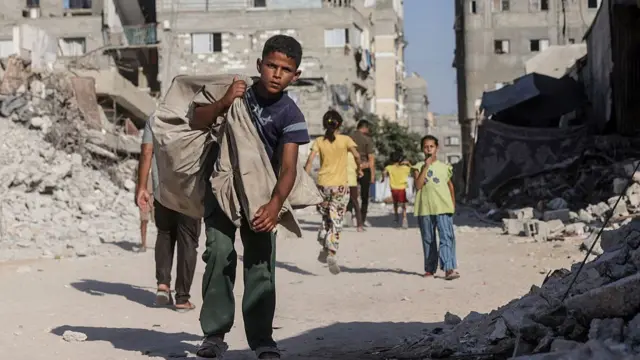
    A Palestinian boy carrying a bag over his shoulder walks through a heavily damaged street in Khan Yunis in the southern Gaza Strip.Image source, Getty Images

    Hamas says it has accepted a disarmament plan for Gaza which will see it lay down its arms - here's what we know so far.

    What does the plan say about Hamas disarming?

    The principles in the roadmap and the document seen by the BBCsay: "A process shall begin to inventory and store heavy weapons, military production sites, weapons depots, and tunnels".

    Can this be done?

    The exact mechanism of how the handover of weapons would work is not clear. It is believed that all heavy weapons – including Hamas's remaining rockets - and other military hardware would be moved into a secure storage managed by the Board of Peace's National Committee for the Administration of Gaza.

    What does Israel make of the plan?

    Israel is deeply sceptical about Hamas' willingness to give up its weapons or its control in Gaza. Israeli officials have insisted that there will be no Israeli withdrawal from the Yellow Line - which demarcates the area it controls - before Hamas is disarmed.

    The plan talks about civil servants – what is this about?

    Hamas wants to ensure that the tens of thousands of civil servants that its government employed in Gaza prior to the war should be compensated or given new jobs - including police and security forces, and also health and education staff.

    Read our full analysis here.

  3. Pakistani PM hails agreement, hopes for Palestinian self-determinationpublished at 20:12 BST

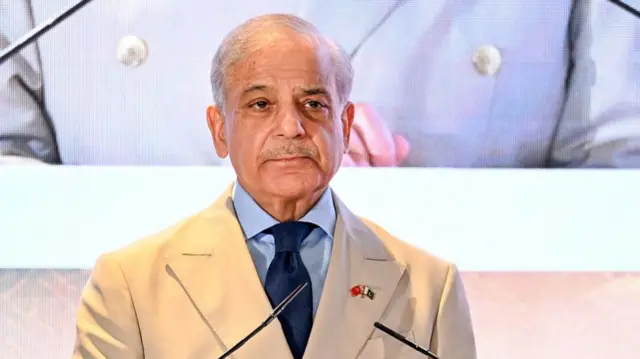
    Shehbaz Sharif is pictured speaking behind a microphone, wearing a tan suit with a light blue shirt and dark blue tie.Image source, Getty Images

    Pakistani Prime Minister Shehbaz Sharif says he welcomes the announcement of a Hamas disarmament agreement.

    "The mediating countries including the United States of America, Egypt, Qatar, and Turkiye, deserve special appreciation for their efforts in achieving this progress," Sharif wrote on X.

    "Under President Trump's courageous leadership, this represents a significant achievement for the Board of Peace."

    Pakistan has also been a key player in negotiations between the US and Iran, with talks held in Islamabad in April.

    "Pakistan expresses the hope that with these developments, concrete steps will be taken towards implementing all commitments under the Gaza Peace Plan," Sharif says.

    He adds that he hopes the developments lead to self-determination for the Palestinian people.

  4. Analysis

    Hamas faced growing political pressure behind closed doorspublished at 19:54 BST

    Rushdi Abualouf
    Gaza correspondent, in Cairo

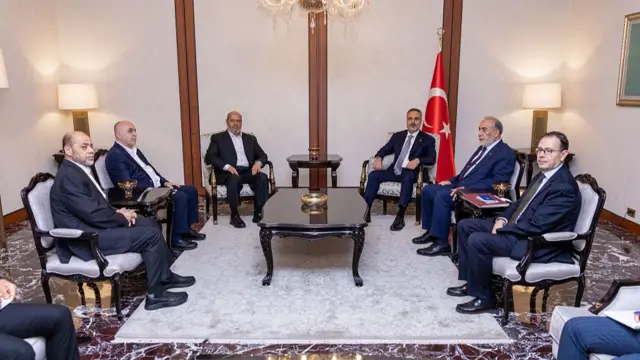
    Six men in suits are shown sitting in chairs around a small coffee table, with a Turkish flag in the background.Image source, Getty Images
    Image caption,

    Turkish Foreign Minister Hakan Fidan, third from right, meets with Hamas's Khalil al-Hayya, third from left, in Ankara on July 29

    The question many Palestinians in Gaza are asking is what has changed since March, when the peace roadmap was first presented, and why Hamas did not accept it then?

    After the last October agreement, Hamas sought to delay difficult decisions in the hope that shifting regional dynamics, particularly those linked to Iran, would improve its negotiating position.

    Those calculations, however, failed to materialise - and at the same time, Qatar, Egypt and Turkey intensified their pressure on the movement.

    Although all three countries continued to host Hamas officials and facilitate their travel, intense negotiations and growing political pressure were taking place behind closed doors.

    According to a source familiar with the talks, that pressure at one stage extended to restricting the movements of Khalil al-Hayya, Hamas’s most senior leader, preventing him from leaving the country where he was staying.

    The move underscored how dramatically Hamas’s room for manoeuvre had narrowed compared with the early months of the war.

  5. Analysis

    A deal announcement that raises more questions than answerspublished at 19:38 BST

    Caroline Hawley
    Diplomatic correspondent

    Donald Trump says it’s a “great breakthrough”.

    But, as the people of the Middle East know only too well, announcing (or even signing) an agreement is very different to fully implementing one.

    The latest deal is, on the face of it, a significant development - but it raises more questions than it answers.

    Chief among them is who moves first, with both Hamas and Israel expecting the other to take the first step.

    The director general of Trump's Board of Peace, Nickolay Mladenov, wrote on X that withdrawal "must move in lockstep with de-commissioning”.

    He said the deal was the results of months of “very difficult negotiations”. At several points, he didn’t believe it could be achieved.

    The announcement took the world by surprise.

    Many observers will be even more surprised if the process now moves ahead smoothly; the route ahead will be strewn with obstacles.

  6. Here's a refresher on what we heard from Camp Davidpublished at 19:22 BST

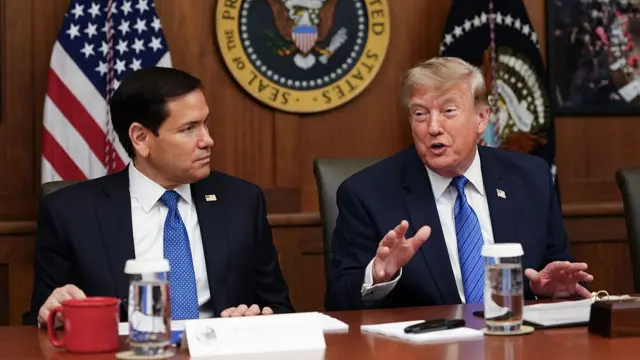
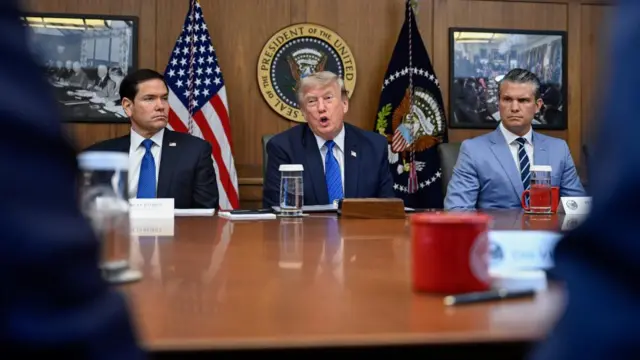
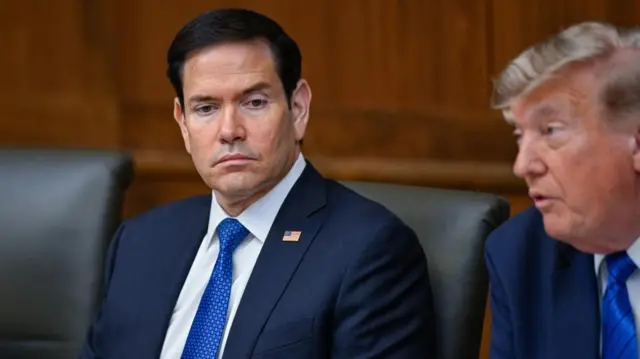
    US Secretary of State Marco Rubio looks on as President Donald Trump speaks during a Cabinet meeting at Camp David in Maryland, on July 31, 2026Image source, AFP via Getty Images

    A short while ago we heard from President Trump and US Secretary of State Marco Rubio at Camp David, where they were attending a cabinet meeting.

    Here are the main lines:

    • Trump said Israel is "very happy" with the plans for Hamas to disarm, after the group said it had accepted an international agreement to put down its weapons in exchange for Israeli withdrawal from Gaza
    • Rubio and Trump both described it "a big step" for peace in the region, but the president was quick to acknowledge the "very complex situation" at play
    • A senior Israeli official, on the other hand, says a full withdrawal is contingent on genuine disarmament of Hamas - when asked which of the two actions should come first, Trump did not provide an answer
    • However, the US president told the BBC that the Board of Peace will take possession of the weapons Hamas hands over
    • The optimism at the presidential countryside retreat stands in stark contrast with the relative silence - or outright criticism - we have heard from Israeli Prime Minister Benjamin Netanyahu's government so far, our White House reporter says
  7. UN secretary-general welcomes peace plan as 'only good news in recent days'published at 19:03 BST

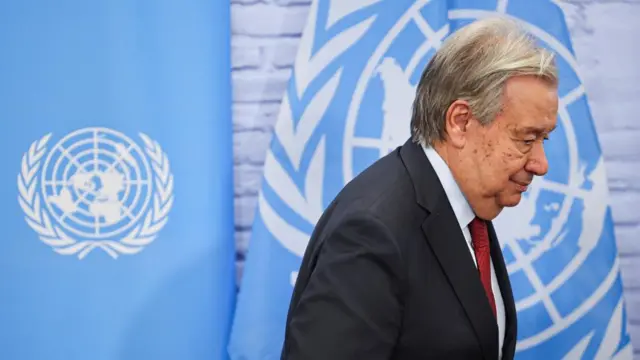
    UN Secretary-General Antonio Guterres is pictured walking in front of United Nations flagsImage source, Reuters

    The plan to disarm Hamas has been welcomed by the UN's secretary-general, as he reflects on challenges across the wider Middle East.

    Referring to the months-long conflict with Iran, Antonio Guterres tells press that the reported Gaza agreement is "the only good news in recent days".

    "Let me be clear: the fighting must stop on all fronts in the region," he says.

  8. Analysis

    Will the deal actually happen this time?published at 18:47 BST

    Rushdi Abualouf
    Gaza correspondent, in Cairo

    No agreement between Hamas and Israel has ever been easy or quick.

    Fragility has been the defining feature of every ceasefire and political deal between the two sides.

    Yet this time, Hamas appears to have reached the conclusion that its future as Gaza’s governing authority, and the survival of its military wing in its current form, are no longer sustainable.

    Regardless of whether the process is described as “inventory”, “collecting”, “storing” or “handing over” weapons, each side will choose language that resonates with its own audience.

    But behind the competing terminology, the end result is likely to be broadly the same: the dismantling of Hamas’s organised military presence in Gaza under Palestinian and international supervision.

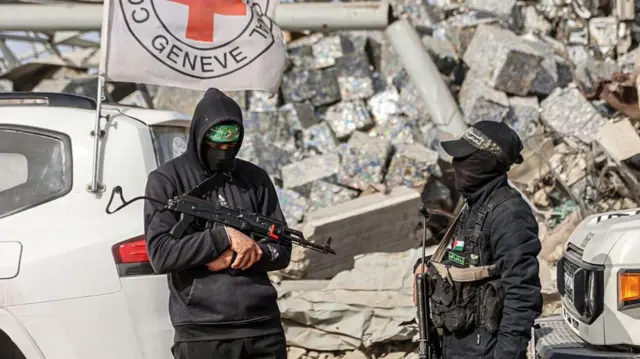
    Two men with firearms dressed head to toe in black are pictured in front of Red Cross vehicles and a pile of rubble.Image source, Getty Images
    Image caption,

    Hamas militants pictured in the Zeitoun neighbourhood of Gaza City last December

  9. Analysis

    Trump will have to stay engaged for this deal to have a chance at successpublished at 18:29 BST

    Jeremy Bowen
    International editor

    Hamas has never agreed to disarm before now. Handled carefully and well, there is a chance now to make diplomatic progress.

    The idea is that as Hamas hands over its weapons, Israel pulls out of the 70% of Gaza that it occupies.

    That may sound simple, but the realities of politics, war, zero trust, the deaths of thousands and the destruction of Gaza make the process very complicated.

    Many Palestinians believe Israel wants to force them out, by making life so insupportable and appalling that they will leave if they get the chance.

    On the Israeli side, there is a strong sense in the Jewish majority of 80% or so that Hamas will remain a potentially deadly threat until it is totally disarmed and stripped of any vestige of power.

    Only a step-by-step agreement, starting small and building confidence, has a chance of working.

    Trump will have to stay engaged, which is far from certain with a war with Iran among a planet full of other challenges.

    Read Jeremy Bowen's full analysis here.

  10. Deal is 'complicated', Trump tells reporterspublished at 18:07 BST

    Bernd Debusmann Jr
    White House reporter

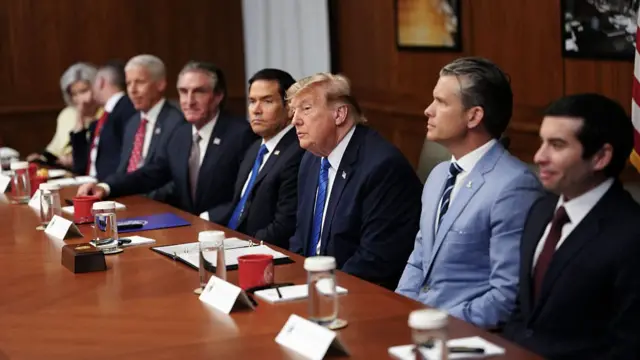
    Donald Trump is pictured speaking at a meeting flanked by members of his cabinet along a wooden table, they are all wearing suits.Image source, Getty Images

    I've stepped out of the meeting room at Camp David, after about an hour in which I was holding my radio microphone over the head of Treasury Secretary Scott Bessent - directly across the table from Trump.

    The first half or so of the meeting was fairly standard for these meetings, with the president going through a long list of his policy achievements and calling on a few of the cabinet members to speak. It was, however, relatively short: these meetings often go two hours or more.

    The question and answers focused largely on Gaza, which he clearly sees today as a foreign policy victory in comparison to negotiations with Iran, or efforts to end the war in Ukraine.

    But many unanswered questions remain.

    For one, it's not clear why he seems so unequivocal in his belief that Israel is fully on board with the plan. That optimism stands in stark contrast with the relative silence - or outright criticism - we have heard from Israel's government so far.

    The mechanics of implementing the deal are also unclear. At one point, for example, I asked him who will take possession of the weapons decommissioned by Hamas.

    "The Board of Peace," he said curtly, before quickly moving onto another topic. It is unclear whether he means the International Stabilization Force, or the new technocratic government.

    Trump did admit that the deal was "complicated", despite his apparent optimism. Neither Marco Rubio nor Steve Witkoff were called to answer questions about the deal.

  11. Trump says Israel 'very happy' over Hamas disarmament deal - a recappublished at 17:47 BST

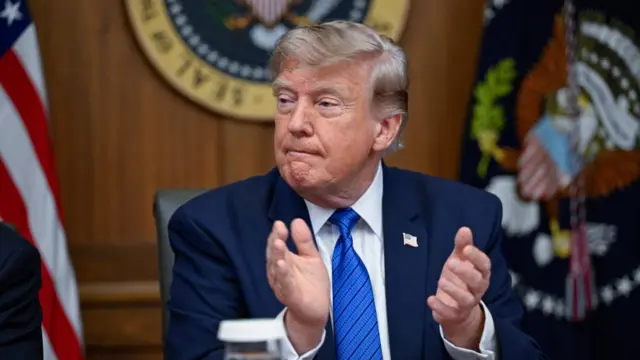
    Donald Trump wears a blue tie and a blue suit as he claps during a cabinet meetingImage source, Reuters

    At a US cabinet meeting at Camp David a short while ago, President Donald Trump said "Israel is very happy" with plans for Hamas to disarm.

    It comes after Hamasaccepted a framework for putting down its weapons in the territory for the first time, but with some conditions, including Israel's withdrawal from Gaza.

    In turn, a senior Israeli official said the Israel Defence Forces would not withdraw from Gaza without "the genuine disarmament of Hamas".

    During the meeting, Donald Trump was asked whether Hamas's disarmament or Israel's withdrawal would come first, but he did not answer.

    It remains too early to tell whether the agreement will be honoured, but if it holds, it could mark the first credible step towards ending the nearly three-year war in the region, writes our Gaza correspondent.

  12. Trump says Board of Peace would take possession of Hamas weaponspublished at 17:28 BST

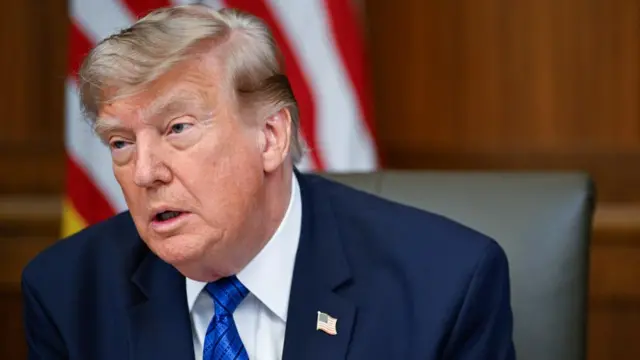
    Donald TrumpImage source, Reuters

    The BBC's Bernd Debusmann asks Donald Trump who would take possession of Hamas's weapons if the disarmament goes through.

    Trump answers that it would be the Board of Peace, adding "it has been led by amazing people".

    Hamas said earlier that heavy weapons it intends to hand over will be stored under the responsibility of the Board of Peace's National Committee for the Administration of Gaza (NCAG) - rather than Israel.

    The media session at Camp David has now finished.

  13. Trump doesn't answer whether Hamas disarmament or Israel's withdrawal comes firstpublished at 17:20 BST

    We can now bring you Donald Trump's latest comments on the Hamas disarmament deal in full.

    A reporter asks President Trump whether he has assurances from Israel that it supports the Hamas disarmament deal, and what comes first - the disarmament or the withdrawal of IDF troops from Gaza.

    Trump says Israel is "very happy" with the deal and that it helped the US. He adds that no one thought an agreement like this with Hamas would be possible.

    "It's a big step for the Middle East," he says.

    But when asked whether the deal will go through, he acknowledges that it is a "very complex situation" in Gaza.

    "The people are very complex and difficult. In many cases wonderful, in many cases not so wonderful."

    He doesn't provide further details on the deal, including what comes first.

  14. Trump says Israel 'very happy' about the dealpublished at 17:15 BST
    Breaking

    Donald Trump at Camp DavidImage source, Reuters

    Asked by the media whether he has assurances from Israel that they are on board with the deal for the disarmament of Hamas, Trump says the US has an "understanding" with Israel.

    "Israel is very happy," he adds.

    We'll bring you more from his comments soon.

  15. Rubio calls Hamas disarmament deal 'another big step'published at 17:05 BST

    U.S. President Donald Trump and Secretary of State Marco Rubio participate in a cabinet meeting at Camp David in ThurmontImage source, Reuters

    We can now bring you a line from the US cabinet meeting at Camp David now.

    Donald Trump has yet to bring up the peace deal, but Secretary of State Marco Rubio has raised the issue of Hamas's conditional disarmament, saying it's "another big step".

    "It's something a lot of people thought would never happen. It needs to happen. But the fact that they even agreed to it is real, achievable," he says.

    • As a reminder, Hamas says the handover of its heavy weapons depends on Israel withdrawing from Gaza, and a senior Israeli official says its troops will not pull back without "genuine" disarmament of Hamas
  16. Analysis

    Unilateral deal announcement another example of strained US-Israel relationspublished at 16:53 BST

    Daniel Bush
    Washington correspondent

    We are still listening to the US cabinet meeting at Camp David. There has been no mention of the latest development in Gaza yet - while we wait, let’s bring you an analysis from our correspondent.

    The Trump administration’s decision to announce the Hamas disarmament deal unilaterally - without waiting for Israel to publicly back the agreement - was yet another example of strained relations between the two allies.

    The unusual rollout comes just one week after the US announced it would give Saudi Arabia access to civilian nuclear technology. That agreement, which was criticised by Israel, is now in limbo over President Donald Trump’s insistence that Saudi Arabia join the Abraham Accords.

    Even so, the nuclear deal showcased Trump’s willingness to forge ahead with his agenda in the region - whether or not Israel is on board.

    The Board of Peace announcement in Gaza may increase tensions even further after months of strained relations between the US and Israel over the war in Iran.

    Trump has criticised Israeli air strikes in Beirut, pushed Israeli Prime Minister Benjamin Netanyahu to back off from further attacks, and bristled at the notion that Netanyahu pushed him into the war with Tehran.

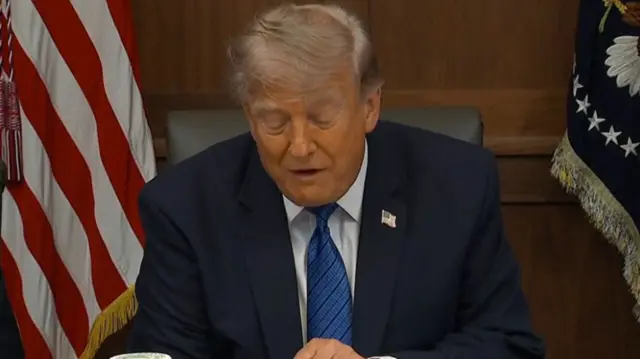
  17. Trump speaking now at Camp Davidpublished at 16:36 BST
    Breaking

    Donald Trump

    US President Donald Trump is speaking at Camp David.

    You can watch live above. We’ll also bring you his remarks if he mentions the latest Hamas disarmament agreement.

  18. Analysis

    Trump might be searching for a fresh diplomatic victory to toutpublished at 16:36 BST

    Anthony Zurcher
    North America correspondent

    With polls suggesting the American public is increasingly souring on an Iran war with no clear resolution in sight, Donald Trump announced this surprise breakthrough in a different conflict.

    This move, if accompanied by an Israeli withdrawal from Gaza, would be the next phase in the ceasefire agreement Trump brokered last year.

    Complicating matters is that neither Israel nor Hamas has issued formal statements acknowledging the disarmament agreement. If this is indeed a breakthrough, it is one that - at the moment - Trump alone is touting.

    This would not be the first time that the American president has attempted to jumpstart a political process by making a big announcement when not all the pieces are in place - essentially trying to create a new reality by the force of his will alone.

    Sometimes his efforts produce unlikely successes. But there is also the risk that this becomes the latest premature celebration in a region full of intractable conflicts.

    The timing and nature of this move could be a sign that Trump is searching for a fresh diplomatic victory to tout and, perhaps, an alternative means of setting the ground for a resolution to the Iran war. He may also be hoping to assure anxious Americans that his Iran war has not derailed larger peace efforts in the region, and that the blood and treasure spent over the past five months has been a worthy effort.

  19. UK foreign secretary urges full implementation of the 20-Point Planpublished at 16:27 BST

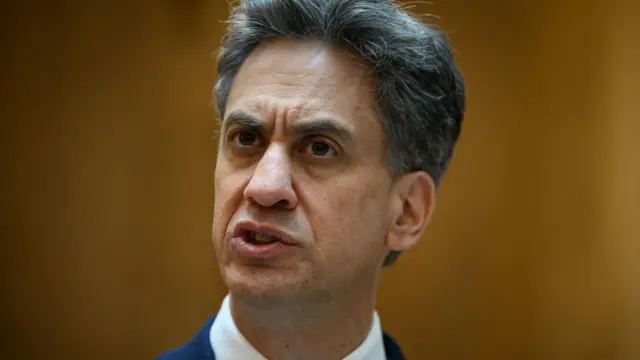
    Ed Miliband is pictured mid-sentence as he wears a blue suitImage source, PA Media

    UK Foreign Secretary Ed Miliband has welcomed news of Hamas's conditional disarmament, and says "the focus must now be on implementing the 20-Point Plan in full".

    In a statement shared on social media, he adds: "This includes the withdrawal of the IDF from Gaza and respect for the ceasefire by all parties."

    Miliband says conditions "remain appalling" in Gaza and Israel "must immediately end the unacceptable restrictions on aid".

    He adds that the UK will continue working with all its partners to "end the conflict in Gaza, and the terror threat from Hamas".

  20. 'Disarmament means the weapons are out of Gaza,' says Israel's ambassador to the UNpublished at 16:17 BST

    Lisa Lambert
    Live reporter

    Permanent Representative of Israel to the United Nations, Danny DanonImage source, EPA

    We've just heard from Israel's ambassador to the UN, Danny Danon, in a CNN interview.

    He says Israel is "looking forward to implementing it", although he also expresses some scepticism, saying of Hamas: "We have to verify what they are doing, not what they are saying."

    Specifically, that means disarmament, he says, going into detail about suspicions that Hamas is "playing games" by moving weapons around and not getting rid of them.

    "Disarmament means the weapons are out of Gaza," he says, adding that it also means Hamas doesn't have control of the weapons.

    He is also asked about the creation of a Palestinian state.

    "After October 7 no one is discussing the option of a Palestinian state today in Israel," he says. "We are concerned about our security. We want to see the Palestinians offer a better life and a moderate regime.

    "The idea of a state - it's not on the table."

    Hamas has said the handover of its heavy weapons is contingent on Israel withdrawing its forces from Gaza, and on a guaranteed right to "self-determination, establishing an independent Palestinian state".

    The group also says the heavy weapons handed over will be stored under the responsibility of the National Committee for the Administration of Gaza (NCAG), rather than handed over to Israel.