Summary

  1. US-Iran talks yet to be confirmed as Wednesday's ceasefire deadline loomspublished at 22:56 BST 20 April
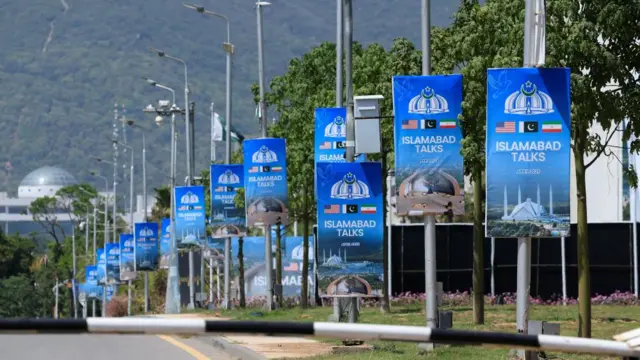
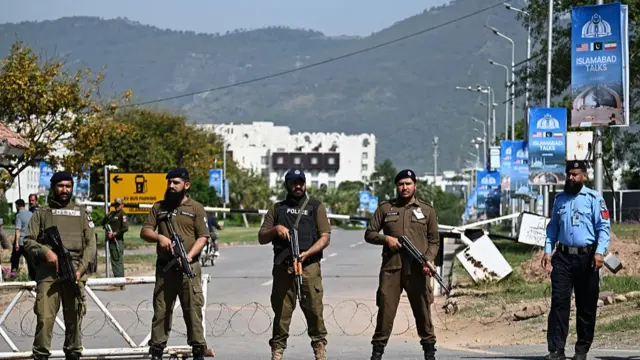
    Posters which say 'ISLAMABAD TALKS' with the US, Pakistani and Iranian flags attached to several lamp postsImage source, Reuters
    Image caption,

    Roads have sealed and security heightened around the Pakistani capital Islamabad - though it's not clear if talks will occur

    There's a growing sense that talks between Iran and the US in Islamabad will take place, chief international correspondent Lyse Doucet reports, but still no confirmation from either side.

    President Trump has denied he is under pressure to make a deal, while a source familiar tells the BBC that a US delegation headed by Vice-President Vance will travel to Pakistan "soon".

    On the Iranian side, an Iranian foreign ministry spokesperson said Iran has "no plans for the next round" of talks. President Masoud Pezeshkian said "every rational and diplomatic route should be used to reduce tensions" - but there's a question over how much power Pezeshkian comparatively holds, writes our BBC Persian senior reporter Ghoncheh Habibiazad.

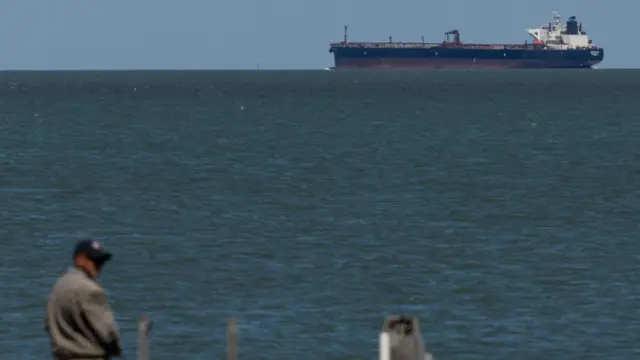
    It all takes place against the backdrop of the Strait of Hormuz, which the US continues to blockade, as well as the seizing of an Iranian-flagged cargo ship on Sunday.

    Iran and the US are accusing each other of ceasefire violations and exchanging various threats, South Asia correspondent Azadeh Moshiri reports.

    The Israel-Lebanon ceasefire is fragile at best, reports Jon Donnison from Jerusalem, but a second round of talks is set to take place on Thursday - according to a US official.

    That's the end of our live coverage for today - thank you for joining us - you can read more about the conflict in the Middle East here: Trump says US will not lift Hormuz blockade until deal made with Iran

  2. 'We do not accept doing negotiations under the shadow of threat’ - Iran top negotiatorpublished at 22:38 BST 20 April

    Ghoncheh Habibiazad
    Senior reporter, BBC Persian

    Mohammad Bagher Ghalibaf, Iran's parliament speaker who was the head of the delegation in the previous round of talks with the US in Islamabad, has said in a post on X that Iran does “not accept doing negotiations under the shadow of threat”, and “over the past two weeks” Tehran has “prepared to play new cards on the battlefield".

    Ghalibaf has said that Donald Trump, by "imposing" a naval "blockade" and "violating the ceasefire, seeks, so he imagines, to turn this negotiating table into a table of surrender, or to justify a renewed outbreak of war".

  3. Tehran's two main airports given permission to operate passenger flights againpublished at 22:30 BST 20 April

    Ghoncheh Habibiazad
    Senior reporter, BBC Persian

    An airplane belonging to an Iranian airliner is photographed at Mehrabad Airport in western Tehran, Iran, on October 16, 2024Image source, Getty Images
    Image caption,

    Tehran's Mehrabad airport, pictured here in 2024, has been given permission to once again operate passenger flights, along with Imam Khomeini airport

    Tehran’s main international airports, Imam Khomeini and Mehrabad, have been given permission to operate passenger flights again starting today, according to the country’s Civil Aviation Organisation.

    Mehrabad airport was targeted during the recent war, with Israel previously saying it had "destroyed" several aircraft there.

    The organisation has also said that passenger flights in 10 other airports located in other cities across Iran will be possible from Saturday.

  4. Trump is offering a very optimistic view of America's negotiating positionpublished at 22:10 BST 20 April

    Sarah Smith
    North America editor

    President Trump has not appeared in front of any TV cameras or microphones today. But that has not stopped him keeping us well informed as to how he is feeling about peace talks with Iran, scheduled to begin in Pakistan this week.

    He has posted a dozen times on his social media site, Truth Social, about the conflict with Iran, insisting he has the upper hand in any negotiations.

    "I’m winning a War, BY A LOT, things are going very well," he said in one post.

    "The DEAL that we are making with Iran will be FAR BETTER than the JCPOA," he said in another, referring to the deal President Obama struck in 2015.

    He also insisted he is not in a hurry to do a deal - "I read the Fake News saying that I am under 'pressure' to make a Deal. THIS IS NOT TRUE! I am under no pressure whatsoever, although, it will all happen, relatively quickly!"

    Trump did not offer much evidence or explanation of why he is so optimistic that a deal is in sight when it's not even certain right now if the two sides will even meet for talks.

    Other than to say - in another post - that the US naval blockade of the Strait of Hormuz is costing Iran $500m a day, which Trump says is destroying Iran.

    Trump is also under economic pressure to get the strait opened and allow international shipping to resume. And there is little appetite among the American public to resume the war on Iran.

    But in his posts that are untroubled by any inconvenient news or facts, Trump is offering a very optimistic view of America's negotiating position.

  5. BBC Verify

    Strait of Hormuz shutdown boosts demand for US crudepublished at 21:50 BST 20 April

    A tanker in the Gulf of Mexico (file pic)Image source, Getty Images

    By Marco Silva

    The effective closure of the Strait of Hormuz by Iran after the start of the war with the US and Israel has driven a surge in demand for American crude oil, shipping and trading analysts say.

    The Strait of Hormuz is a critical transit chokepoint for Middle Eastern oil, but shipping has been severely disrupted since 28 February.

    Unable to access Middle Eastern crude oil through the strait, importers have had to look for alternative suppliers.

    Data from marine analytics firm Kpler suggests 71 oil tankers known as Very Large Crude Carriers (VLCCs) are headed to the US to take on cargo compared with an average of 27 on any given day last year.

    “Buyers from Europe and Asia saw oil loading out of the Atlantic basin — including from the US Gulf coast — as an accessible, plentiful solution to fill the supply gap,” says David Haydon, head of US crude tanker freight pricing at Argus Media, a market intelligence firm.

    This appears to be driving an increase in US crude exports.

    Maritime research consultancy Drewry says that, in the week ending 10 April, shipments reached 5.2 million barrels per day - the highest level in seven months.

  6. 'The blockade within the blockade' of the US's strategy with Iranpublished at 21:32 BST 20 April

    Azadeh Moshiri
    South Asia correspondent, reporting from Islamabad

    Returning shipping levels in the Strait of Hormuz to pre-war levels, and wresting control from Iran and its attacks, are key priorities for the United States.

    Former British Royal Navy commander Tom Sharpe has described the current US strategy as “the blockade within the blockade,” telling me the White House is trying to inflict “sufficient pain” on Iran to force it to negotiate.

    “Is it squeezing oil production out of Iran to the point where that pain would bring them to the negotiating table? It is hard to see what that pain level would look like and I don’t think we’re seeing it yet.”

    The problem Sharpe is pointing to is that Iran has shown it is willing to absorb a high level of damage to ensure the regime’s survival.

    No single individual, government, economy, or piece of vital infrastructure is more important than the Islamic Republic’s ideology, and this confrontation with the US is one it has been preparing for since its inception.

    On top of that, Iranian officials insist their “sovereignty” over the Strait of Hormuz should be recognised.

    They have learned that their ability to disrupt global energy markets is a powerful strategic deterrent, and even a profitable avenue should they impose long-term tolls for safe passage.

    It is hard to see any Iranian negotiators willing to give that card up.

  7. Death toll in Lebanon rises to 2,387 - state mediapublished at 20:59 BST 20 April

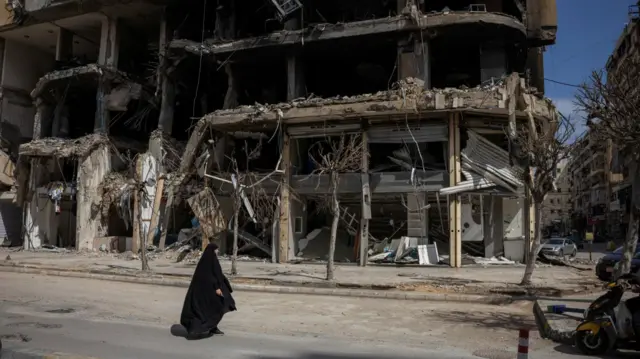
    A woman walks past damaged buildings amid a 10-day ceasefire between Lebanon and Israel, in the southern suburbs of Beirut, Lebanon, April 20, 2026Image source, Reuters

    Over in Lebanon, the death toll has risen to 2,387 since the outbreak of the war, the country's state-run National News Agency reports, citing figures from the Lebanese government's Disaster Risk Management Unit.

    This is an increase of 93 deaths compared to the figure last reported by the Lebanese health ministry on Friday.

    The news agency also reports that a further 7,602 have been wounded throughout the conflict.

    It follows reports earlier on Monday from Iran's Islamic Revolutionary Guard Corps (IRGC)-affiliated Mehr news agency that 3,375 had been killed in Iran over the same period, citing the head of Iran's Forensic Medicine Organisation.

  8. Growing sense that Islamabad talks will take place, but concerns remainpublished at 20:44 BST 20 April

    Lyse Doucet
    Chief international correspondent, reporting from Tehran

    There's still radio silence from Iranian officials as to whether they will go to Islamabad for a second round of high-level, high-stakes negotiations.

    But with every hour that passes, there is a growing sense that the talks will take place. Iranians had to make their point, even before the latest incident in the Strait of Hormuz.

    When we speak to officials here they say they have their reservations about this negotiating process, even though President Trump continues to talk about great progress, a deal within days even.

    There is still concern here that the way the negotiations are taking place tend to be demands made of the Iranians that they are not ready to make.

    But they do want this process to continue, so at the end of the day there may well be talks in Islamabad this week - we just have to wait for that confirmation from both sides.

    • The BBC's chief international correspondent Lyse Doucet is reporting from Tehran on condition that none of her material is used on the BBC's Persian Service. These restrictions apply to all international media organisations operating in Iran
  9. Questions over talks comes as end of ceasefire approachespublished at 20:35 BST 20 April

    The anticipation over a potential second round of talks between the US and Iran in Islamabad comes at a crucial moment.

    The temporary ceasefire between them is due to end on Wednesday, two weeks after Donald Trump announced a pause in hostilities as both sides pressed their conditions to bring the conflict to an end.

    The first round of talks, attended by US Vice-President JD Vance and Iranian Parliament Speaker Mohammad-Bagher Ghalibaf, took place over the weekend of the 11 and 12 April.

    It was unsuccessful - the teams came out of it unable to reach a deal.

    Vance said the US "could not get to a situation where the Iranians were willing to accept our terms", whereas Iran's foreign ministry called on Washington to refrain from "excessive demands and unlawful requests".

  10. 'Interference' with Iranian vessels among diplomatic obstacles, foreign minister sayspublished at 20:23 BST 20 April

    Ghoncheh Habibiazad
    Senior reporter, BBC Persian

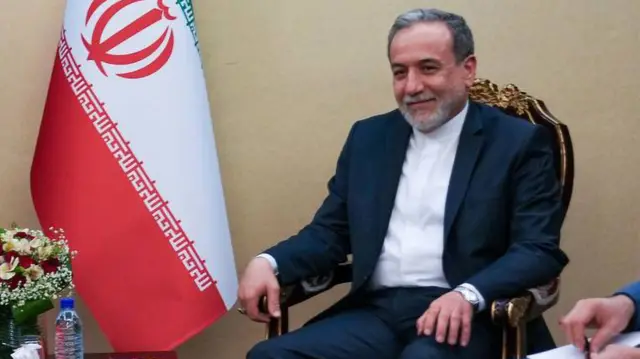
    Iranian Foreign Minister Abbas Araghchi (R) pictured in Tehran, Iran on April 15, 2026Image source, Getty Images

    In a phone call with his Pakistani counterpart, Iranian Foreign Minister Abbas Araghchi has said Iran will consider "all aspects and decide about the way forward" when it comes to the US.

    Araghchi says the obstacles to the "continuation of the diplomatic process" include "provocative actions and repeated violations of the ceasefire" by the US.

    He says "threats against and interference" with Iranian commercial vessels, and "contradictory positions and threatening rhetoric towards" Iran are among those actions.

    In a separate phone call with his Russian counterpart today, Araghchi has said that Iran will “monitor the actions” of the US and “take the appropriate decision to protect its interests and national security".

    In both readouts, Araghchi did not say if Iran will participate in talks with the US in Islamabad.

  11. Uncertainty surrounds peace talks as Iran still not confirmed to attendpublished at 20:06 BST 20 April

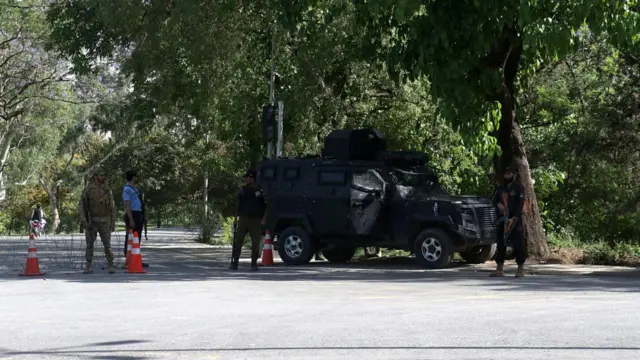
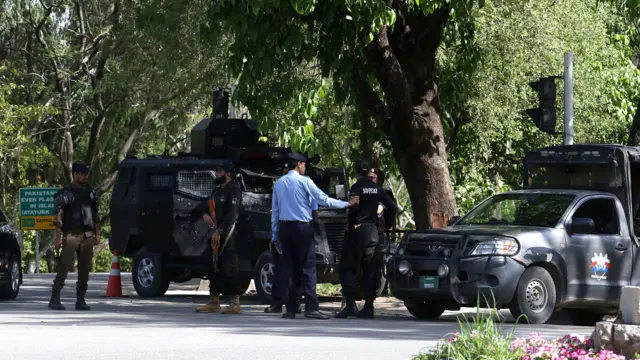
    An armed black car parked on a road which is blocked by traffic cones and barbed wire. On the road stand army officers and police holding large gunsImage source, EPA/Shutterstock
    Image caption,

    Islamabad faces increased security amid rumours of further negotiations in the Pakistan capital

    It remains to be seen as to whether or not the US and Iran will make it to Pakistan for the next round of peace talks in Islamabad. As anticipation builds, here's a round up of the latest updates:

    • The Iranian top military headquarters, Khatam al-Anbiya, has vowed that Iran will respond to the seizure, calling it a "violation of the ceasefire"
    • Iran's foreign ministry spokesperson has said “so far….we have no plans for the next round of negotiations”. That leaves the door open for a last-minute decision to travel to neighbouring Pakistan – Iran has always played a long game of give and take, Lyse Doucet writes
    • It's been confusing messaging from the US too. The US delegation has not left yet, after earlier reports that it had. A source familiar told the BBC that the delegation is expected to leave "soon"
  12. Analysis

    Iran war turns into a test of wills - and timepublished at 20:00 BST 20 April

    Bernd Debusmann Jr
    White House reporter

    Not long ago, Trump penned a Truth Social post in which he said that time is not his "adversary" during the Iran war, and the ongoing efforts at a negotiated settlement.

    In the post, external, Trump favourably compared the six weeks of Operation Epic Fury to previous longer US conflicts, including Iraq, Vietnam and both world wars.

    It's difficult, however, to compare military conflicts and their timelines.

    Iraq is a prime example. While Trump correctly said that US military involvement there lasted over eight years, in 2003 the US military toppled Saddam Hussein's government in about three weeks.

    Just a few weeks later, then-President George W Bush famously declared "mission accomplished", only for US forces to find themselves in an extremely messy counter-insurgency campaign with, at best, mixed results.

    Trump campaigned specifically against this sort of protracted conflict abroad, which complicates matters for him politically.

    Despite his comments, there is clearly a time factor at play. Americans are growing increasingly anxious about petrol prices, and Trump has repeatedly said he believes prices will go down very soon.

    His own energy secretary, Chris Wright, has undermined this message, telling CNN on Sunday that it may take months to bring gas prices down. Trump has since said he believes Wright is incorrect.

    Iran, for its part, will be hoping the cumulative domestic pressure of those hoping for low prices and a quick, clean end to the conflict will give it leverage at the negotiating table.

    Trump believes that the threat of renewed strikes and a blockade-enforced economic stranglehold will pressure Iran to make a deal the US sees as positive.

    The unanswered question then becomes: who will blink first?

  13. What is the JCPOA as Trump calls it 'one of worst deals'?published at 19:49 BST 20 April

    Ghoncheh Habibiazad
    Senior reporter, BBC Persian

    As we've just been reporting, Donald Trump has posted a flurry of messages on his Truth Social platform. In one of them, he criticised the JCPOA - but what is it?

    Iran and the US did have a nuclear deal years ago, called the 2015 Joint Comprehensive Plan of Action, commonly referred to as JCPOA. Trump abandoned the deal during his presidency back in 2018.

    JCPOA limited Iran to enrich uranium - which can be used to produce nuclear weapons - at 3.67% in exchange for sanctions relief.

    When the US, on Trump's orders, withdrew from the JCPOA in 2018, Iran began openly escalating its enrichment levels.

    Weapons-grade uranium is enriched at 90% or more. Iran has always maintained that its nuclear programme is peaceful.

    By the time of the 12-day Iran-Israel war back in June last year, Iran was enriching to 60% and had amassed a stockpile of over 400kg enriched uranium at this level, according to the International Atomic Energy Agency (IAEA).

    The US got involved in that war and hit three key Iranian nuclear sites.

    The UN sanctions on Iran from before the JCPOA were reinstated on 28 September last year after three European partners to the deal - the UK, France and Germany - activated a so-called "snapback" mechanism.

    Tehran does not recognise the legitimacy of the reinstatement of these sanctions.

  14. Analysis

    Trump lashes out at the media in latest postpublished at 19:38 BST 20 April

    Bernd Debusmann Jr
    White House reporter

    We've just had another Truth Social post from Donald Trump. This time, he has set his sights on the US media.

    Specifically naming the "failing" New York Times, the "digusting" Wall Street Journal and the "almost defunct" Washington Post, Trump used the post to, essentially, accuse the media of sabotaging the US war effort by causing Tehran to be "confused".

    This is nothing new from Trump, who often attacks the media for what he perceives as a bias against his administration, and a failure to recognise what he believes are its accomplishments. In this case, he is referring to the significant degradation of Iran's military capacity.

    Notably, Trump vowed that the naval blockade on Iranian ports will continue until a deal is reached.

    That is different from what he told PBS earlier today: that "bombs start going off" if the ceasefire expires.

    It's hard to parse out the president's intentions from the brief phone calls and Truth Social posts.

    Some sources I have spoken to have speculated that this may all be a negotiating tactic to try to pressure Iran to a quick deal - a tactic we've seen from Trump multiple times in the past.

  15. Trump says blockade in Strait of Hormuz will remain until deal's reachedpublished at 19:29 BST 20 April

    In another post on social media, Trump writes that he is winning the war with Iran "BY A LOT", adding that "things are going very well" and the US military has been "amazing".

    Trump then criticises the US media's portrayal of the war, naming the New York Times, the Washington Post and the Wall Street Journal.

    He goes on to talk about the US blockade on all ships entering or exiting Iranian ports, which he says is "absolutely destroying Iran" and which the US "will not take off until there is a 'DEAL,'".

    "They are losing $500 Million Dollars a day, an unsustainable number, even in the short run," he says, referring to Iran.

  16. Analysis

    Few concrete details in Trump's latest postspublished at 19:06 BST 20 April

    Bernd Debusmann Jr
    White House reporter

    Donald Trump's most recent posts give little indication of the substance of any talks in Pakistan, or what the US hopes to achieve, exactly.

    In the post, Trump strongly criticises the Joint Comprehensive Plan of Action, or JCPOA, which saw the P5+1 countries - the US, UK, France, China, Russia and Germany - provide sanctions relief for Iran in exchange for restrictions on its nuclear programme.

    Trump often criticises that deal, which was signed during the administration of Barack Obama.

    The president's post, however, gave little indication of what exactly the US is looking for in a deal. While Trump has repeatedly said that Iran can never have a nuclear weapon, it is unclear what concessions the US is willing to make in exchange for that commitment.

    In a separate post, Trump said that while the deal will happen "relatively quickly", time is not his "adversary".

    Despite Trump's comments, people close to the White House have repeatedly warned that time is very much an issue he has to contend with.

    The war has never been particularly popular domestically, and many Americans - even those who broadly support the administration - are growing weary of elevated prices at the petrol pump.

    It is worth noting that while US officials are insistent these talks will happen and end successfully, we have received no official word of the negotiating team leaving for Islamabad.

  17. Trump says deal with Iran will happen 'relatively quickly'published at 18:57 BST 20 April
    Breaking

    In a separate post the US president says a deal with Iran will happen "relatively quickly!".

    He also denies that he is under "pressure" to make a deal.

    "THIS IS NOT TRUE!" he adds.

  18. A US-Iran deal will be 'far better' than previous attempts, Trump sayspublished at 18:55 BST 20 April

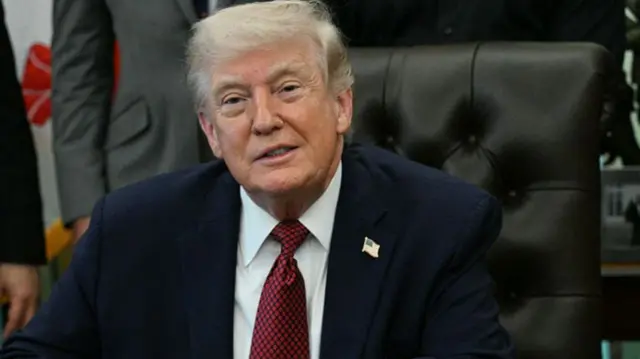
    US President Donald Trump speaks after signing an executive order in the Oval Office of the White House in Washington, DC on April 18, 2026Image source, Getty Images

    Donald Trump has just posted on Truth Social, asserting the US is currently forming a deal with Iran that will be "far better" than agreements signed by previous US presidents.

    He refers specifically to the Joint Comprehensive Plan of Action (JCPOA) between Iran and the US, UK, France, China, Russia and Germany in 2015.

    Trump calls this "one of the Worst Deals ever made having to do with the Security of our Country", adding that it was "a guaranteed Road to a Nuclear Weapon", which "will not, and cannot, happen", he says.

    Trump pulled the US out of the agreement during his first term.

    He claims if he hadn't terminated that deal that nuclear weapons would have been used "on Israel, and all over the Middle East".

  19. Roads closed and security heightened as Islamabad prepares for potential US-Iran talkspublished at 18:44 BST 20 April

    Roads have sealed and security heightened around the Pakistani capital Islamabad ahead of the expected arrival of the US delegation ahead of further talks with Iran.

    However, it's not exactly clear what, if any, talks will occur.

    Donald Trump told US media earlier that Vice-President JD Vance is "headed over now" with the US delegation, but there has been no formal announcement of this. A source familiar with arrangements also told the BBC the delegation was expected to leave "soon", though no further information was provided.

    Iran has also still not yet confirmed that it will participate in the talks, with officials remaining vague or silent on the topic.

    Security personnel stand guard at a security checkpost along a road temporarily closed near the Serena Hotel at the Red Zone area in Islamabad on April 20, 2026Image source, Getty Images
    Pakistani security officials guard a road ahead of the expected arrival of a US delegation in Islamabad, Pakistan, 20 April 2026Image source, EPA/Shutterstock
  20. Outrage over Israeli soldier's vandalism of Jesus statue in Lebanonpublished at 18:30 BST 20 April

    Yolande Knell
    Middle East correspondent, in Jerusalem

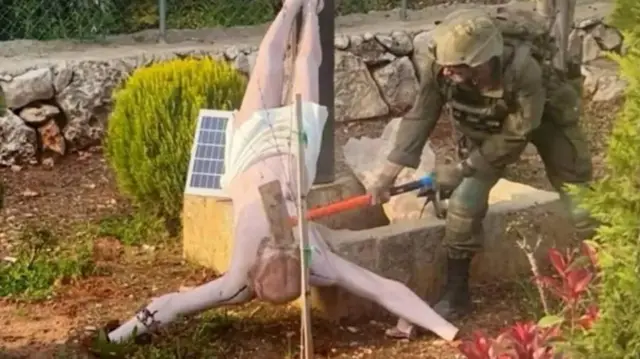
    IDF soldier strikes a statue depicting a Jesus Christ figure with a hammerImage source, Reuters

    There has been widespread condemnation after an image of an Israeli soldier apparently hitting a statue of Jesus with a sledgehammer in southern Lebanon went viral.

    Israel's prime minister said he was "stunned and saddened". Its foreign minister said: "We apologise for this incident and to every Christian whose feelings were hurt."

    Locals say the statue was on a crucifix outside a family home on the edge of Debel, one of the few villages where residents have remained during Israel's war with Hezbollah.

    The Israel Defense Forces (IDF) said it viewed the incident "with great severity and emphasises that the soldier's conduct is wholly inconsistent with the values expected of its troops".

    The head of Debel's congregation, Father Fadi Flaifel, told the BBC: "We totally reject the desecration of the cross, our sacred symbol, and all religious symbols. It goes against the declaration of human rights, and it doesn't reflect civility." He claimed similar acts had happened before.

    The IDF said "appropriate measures will be taken against those involved" and that it was working with the Christian community to "restore the statue to its place".

    The US ambassador to Israel, Mike Huckabee, a Baptist minister, said on X that "swift, severe, & public consequences are needed".