Election

Scottish Parliament results

65 seats for majority
129 of 129 seats
  • Scottish National Party 58 seats 6 seats lost
  • Labour 17 seats 4 seats lost
  • Reform UK 17 seats 17 seats gained
  • Scottish Green 15 seats 6 seats gained
  • Conservative 12 seats 19 seats lost
  • Liberal Democrat 10 seats 6 seats gained
Change since 2021

Summary

  • Scottish Labour leader Anas Sarwar says he will stay as leader to "hold the party together" after "hurtful" election results

  • Labour finished joint second with Reform as the SNP won its fifth consecutive election

  • Speaking to the BBC's Sunday Show, Sarwar says he takes his share of responsibility for the party's performance and will not "recoil" from his call for UK leader Keir Starmer to resign

  • SNP leader John Swinney said yesterday that he will talk to opposition leaders over the coming days, except Reform UK

  • The SNP's Màiri McAllan argues on The Sunday Show that Reform's views are "divisive and inciting hatred in our communities"

  • Newly-elected Reform MSP Thomas Kerr says it is "ridiculous" and "anti-democratic" that Swinney will not talk to his party

  • Scottish Green co-leader Gillian Mackay says: "I don't think any of us should deal with Reform"

  1. The headlinespublished at 12:34 BST

    As people around Scotland come to terms with a seismic Scottish Parliament election, here are the headlines that emerged this morning.

    Our live coverage of the reaction is now drawing to a close.

    The editor today was Katy Scott. The writers were James Delaney, Craig Hutchison and Benjamin Russell. Thank you for joining us.
  2. Who will be the newbies at Holyrood?published at 12:31 BST

    Kirsten Campbell
    BBC Scotland political correspondent

    Sanne Dijkstra-Dowie is a new face in Holyrood but has been a councillor for the last four yearsImage source, EPA
    Image caption,

    Sanne Dijkstra-Dowie is a new face in Holyrood but has been a councillor for the last four years

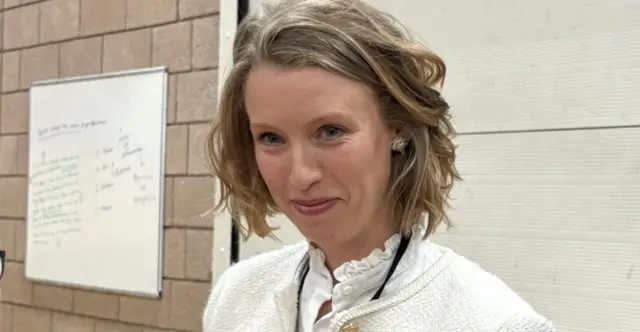
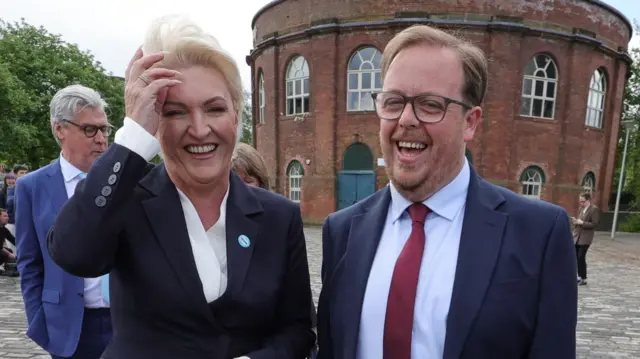
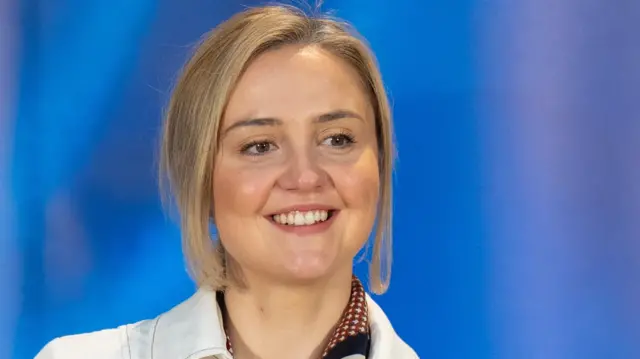
    Among the new MSPs is Sanne Dijkstra-Downie, who won the new seat of Edinburgh Northern for the Liberal Democrats.

    She grew up in the Netherlands and moved to Edinburgh as a student. She's been a councillor in the city for the last four years.

    Hannah-Mary Goodlad pulled off one of the biggest wins of the election
    Image caption,

    Hannah-Mary Goodlad pulled off one of the biggest wins of the election

    Hannah-Mary Goodlad is SNP MSP for Shetland Islands. It's the first time any politician other than a Liberal has represented the islands since 1950.

    She works for a Norwegian energy company and runs a mobile sauna.

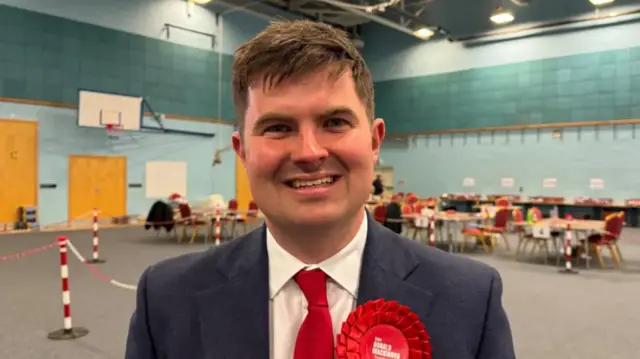
    Scottish Labour's Donald MacKinnon gained the Western Isles seat from the SNP
    Image caption,

    Scottish Labour's Donald MacKinnon gained the Western Isles seat from the SNP

    The new Labour MSP for Na h-Eileanan an Iar is Donald MacKinnon, who took his seat from the SNP against the backdrop of the ferry crisis.

    He's a crofter who works in community development.

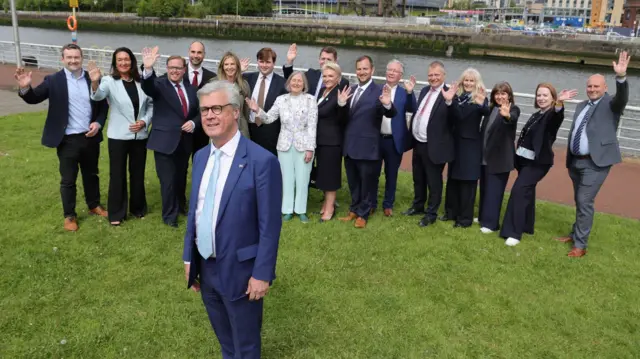
    Malcolm Offord with his new Reform UK MSPsImage source, PA Media
    Image caption,

    Malcolm Offord with his new Reform UK MSPs

    Sixteen of Reform UK's intake are new to the Holyrood chamber including the party leader Malcolm Offord, elected on the West Scotland list and Senga Beresford who won her seat on the South Scotland list.

  3. When will the new Scottish Parliament officially start?published at 12:19 BST

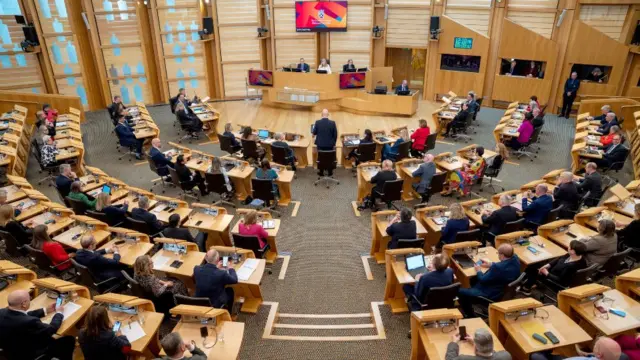
    A general view of the Holyrood chamber.Image source, PA Media
    Image caption,

    New MSPs will learn how to submit questions and table moions in the Holyrood chamber

    There is also the far more serious matter of declaring interests, including outside earnings such as ownership of rental properties.

    The new MSPs will have to learn how to submit questions and table motions for debate, and how to work the app used for voting on parliamentary business.

    They will be provided with information on what expenses they are allowed to claim and how to set up their constituency office.

    The traditional “Kirking of Parliament”, a church service to mark the opening of parliament, will take place at St Giles Cathedral.

    Then there is the business of selecting a new first minister.

    The SNP is the largest party, so it almost certain that will be John Swinney, but an official vote to confirm that is pencilled in for 19 May.

    And finally, a new presiding officer will be selected in a secret ballot of all 129 MSPs.

    There is no app for that one, though. Instead, it is done with traditional pen and paper so the new head of parliamentary business does not know who did or did not support them.

    Only after all of that can running the country for the next five years officially get under way.

  4. First day of schoolpublished at 12:12 BST

    Kirsty Rafferty smiling straight at the camera
    Image caption,

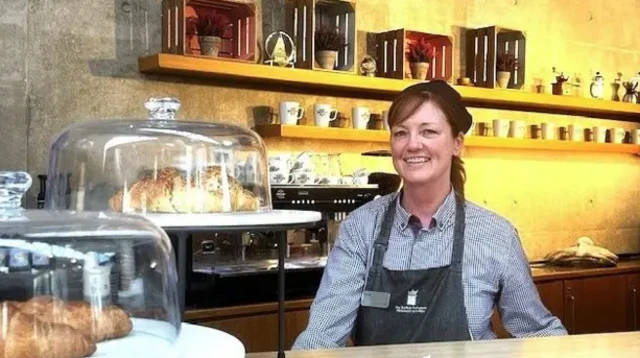
    Holyrood barista Kirsty Rafferty will have 64 new coffee orders to learn

    Monday at Holyrood might feel like the first day of school for the cohort of brand new MSPs.

    All 64 of them will have their pictures taken for security passes, new logins issued for the computers and buddied up with veteran MSPs to show them the ropes.

    In the cafeteria, award-winning barista Kirsty Rafferty will get to know their coffee orders for the next five years.

    And offices will be allocated to those arriving, with a premium placed on those with striking views of the Salisbury Crags.

  5. Scottish election results in maps and chartspublished at 12:05 BST

    SNP MSPs on a hillImage source, PA Media
    Image caption,

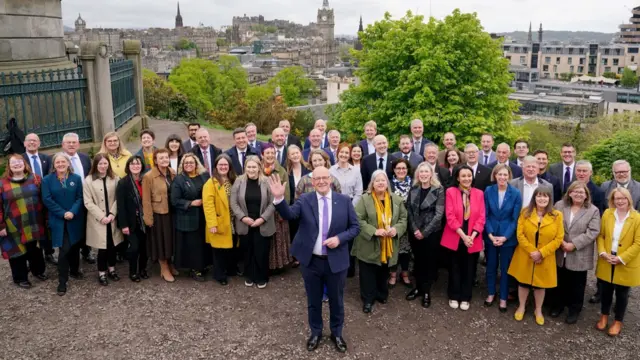
    The SNP won the election

    BBC Scotland News has examined how party support varied around the country in maps and charts.

    The make up of the Scottish Parliament's has changed, turnout was down and the regions proved crucial for most parties.

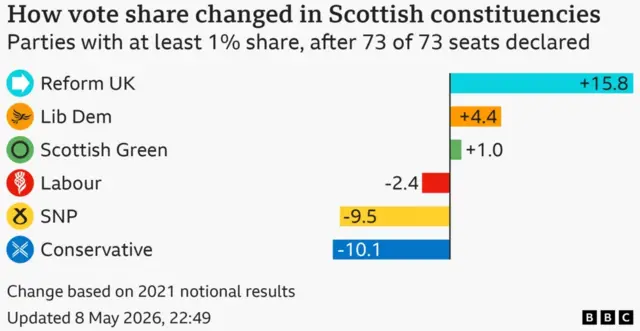
    Reform and the Greens made gains, while the constituency map remains a sea of yellow.

    You can look the results in more detail here.

    Share of the vote
  6. How the polls stacked up with election resultpublished at 11:49 BST

    Pollster Mark Diffley has given his view of how the election played out in the numbers.

    He tells The Sunday Show the polls were “broadly right” in projecting an SNP win, though some predicted an overall majority.

    Others varied in the number of seats won by the party, but Diffley said that is partially down to the proportional system in use at Holyrood.

    He says the use of Multilevel Regression and Post-stratification (MRP) polls needs to be considered.

    These combine large polling data with other sources, such as the census, to estimate the popularity of parties in each constituency, giving seat predictions.

    Diffley says some were “variable” in performance, but others were “quite a way out”.

    He says the polling industry needs to look at their use going forward.

  7. Analysis

    Labour unhappiness over campaign strategypublished at 11:39 BST

    David Wallace Lockhart
    Political correspondent

    I understand Scottish Labour MSPs and MPs are having an online meeting shortly to discuss the election results.

    The agenda doesn't seem clear, but some in the party are unhappy about the strategy that was pursued for last Thursday's vote.

    It may be an opportunity for some to vent their unhappiness.

  8. Analysis

    Reform says voters are 'scunnered and angry'published at 11:30 BST

    Andrew Kerr
    BBC Scotland political correspondent

    The two opposite ends of the political spectrum were brought together on the Sunday Show.

    I don't know if it was deliberate that Gillian Mackay, the Greens' co-leader, was on the left - and Reform UK's Thomas Kerr was on the right.

    Reform's exclusion from the first minister's talks on political co-operation was dismissed by Kerr as "political posturing before we set foot in the chamber."

    He was saying how "scunnered and angry people are."

    But the Green co-leader was blunt, saying: "I don't think any of us should deal with Reform."

  9. Kerr: Reform MSPs 'will not be media trained'published at 11:22 BST

    Senga Beresford and Thomas KerrImage source, PA Media
    Image caption,

    Senga Beresford and Thomas Kerr are new MSPs from Reform UK

    Kerr says Reform’s MSPs “will not be media trained” and expects them to disrupt the natural order in the Scottish Parliament.

    He backs Senga Beresford, the Reform list MSP for South Scotland, over some of her controversial social media posts and says he is looking forward to her “standing up for issues she cares about” at Holyrood.

    He says Reform’s MSPs will “speak as much as they want,” but adds it is not about “disrupting or insulting” anyone.

    Mackay says it will be "interesting" having Reform in the chamber, but adds that her cohort of newly elected Green MSPs show that policies that attack migrants and minorities "won't play out in Scotland".

  10. Mackay says Greens will help newly elected MSP with visa processpublished at 11:19 BST

    Q ManivannanImage source, PA Media
    Image caption,

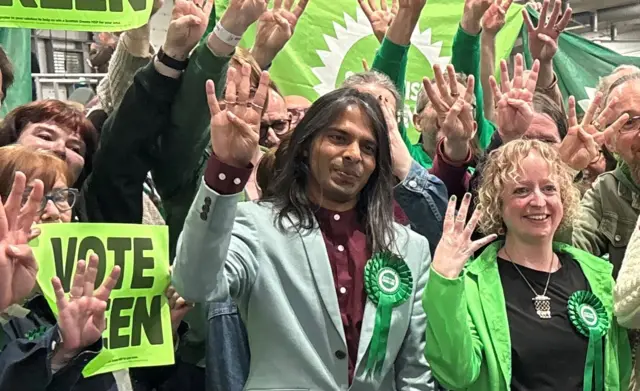
    Q Manivannan (centre) is among the newly elected Scottish Green MSPs

    Gary Robertson highlights the Greens new intake includes two transgender MSPs - the first to be elected to Holyrood.

    He asks Gillian Mackay about the issue of one of the new MSPs - Q Manivannan, who represents Edinburgh and Lothians East and has a student visa.

    Manivannan uses they/them pronouns and describes themselves as a "queer Tamil immigrant".

    Robertson asks whether Manivannan will be able to stay in Scotland for the full parliamentary term.

    Mackay explains: "There will have to be a renewal of Q's visa."

    The Scottish Green co-leader says the parliament explicitly chose to permit everyone with the right to live here to stand in elections, including new Scots on visas.

    She adds Manivannan will have to go through the visa process in this parliament and the Greens will support them through that.

  11. Clash over free bus travelpublished at 11:11 BST

    Kerr says he would prefer a “better organised bus service” over “handing out” free bus travel - one of the Green's headline policies.

    He says people should have “more money in their pocket” rather than subsidising public transport for others.

    Scottish Greens co-leader Gillian Mackay argues that free bus travel will allow people to keep more of their own money, and will help tackle the climate crisis.

    She says bus services need to be available longer, citing the example of allowing nurses to get to and from their shifts.

    She argues that wealthier people, pointing to Reform leader Malcolm Offord, should be taxed more.

  12. Thomas Kerr criticises Swinney's refusal to talk with Reformpublished at 11:09 BST

    Thomas Kerr, a former Tory councillor who became one of Reform's most prominent figures in the media, took second place in Glasgow Baillieston and Shettleston and claimed 26% of the vote share.

    He became a Glasgow MSP on the regional list and says around 400,000 Scots are listening to his party and voted for Reform in Scotland.

    "I'm not in this to try and please John Swinney and Anas Sarwar, if both those politicians want to ignore the electorate, Reform MSPs have been elected democratically alongside any other MSP."

    He says if they want to ignore Reform's views that's up to them, and he accuses the other parties of political posturing before anyone has set foot in the chamber.

    Kerr adds it's "ridiculous" and "anti-democratic".

    Scottish Green co-leader Gillian Mackay counters that point, saying: "I don't think any of us should be dealing with Reform, given some of the tactics they've employed across the country."

  13. Some parties vying to be kingmakerspublished at 11:09 BST

    Andrew Kerr
    BBC Scotland political correspondent

    Greens co-leader Gillian Mackay and Reform UK's Thomas KerrImage source, PA Media

    The Scottish Greens co-leader and Reform UK Scotland’s deputy leader have just appeared in a debate on the Sunday Show.

    Gillian Mackay and Thomas Kerr will be significant players in the new parliament - at complete opposite ends of the political spectrum.

    The pushing and pulling to the outer boundaries of politics away from the centre is a fascinating new feature in both Scottish and UK politics.

    The Greens and Reform both have sizeable contingents and they will have strong voices - but how much will they actually be able to influence policy at the centre?

    The Greens may work with the SNP - but Reform have been frozen out by the first minister's discussions on any future co-operation.

    The lesser-placed Liberal Democrats might end up having a bit more actual influence in budgets and policy, particularly as John Swinney made clear overtures to them in one of the TV debates.

  14. Analysis

    McAllan says Scotland needs 'protected' from Faragepublished at 11:06 BST

    Andrew Kerr
    BBC Scotland political correspondent

    The SNP's Màiri McAllan argued during the Sunday Show interview that independence was necessary to "protect ourselves" from the possibility of Nigel Farage becoming prime minister.

    She said we are "hurtling towards" the possibility of the Reform UK leader entering No 10.

    The SNP didn't manage to get a majority - which she said would have been the "quickest and most effective way to break the logjam".

    But the argument is this is the largest pro-independence majority the Scottish Parliament has ever had, with McAllan saying: "That is democracy and it must be respected."

    It was put to McAllan that the SNP have cited a number of so-called "triggers" for independence over the years, such as Brexit and Boris Johnson becoming PM.

    McAllan replied that the triggers could stretch back to Margaret Thatcher's poll tax - and that there was a "democratic deficit" which had "made life more difficult and has held us back".

    However, she tried to highlight what she sees as the real dangers of Reform - saying they would be damaging for minorities, the NHS and the Holyrood itself "which he wants to abolish."

    Pro-union politicians, such as Labour's Anas Sarwar, are already saying the SNP are changing the goalposts and taking up the same old tricks and playing the same old games in their fight for independence.

  15. SNP 'will not speak to Reform'published at 11:04 BST

    Mairi McAllan speaking on a stage with a blue backgroundImage source, PA Media

    Màiri McAllan said the SNP had “great experience of running minority governments” and that leader John Swinney had been setting out his intention to speak with all party leaders - except Reform.

    She said this was because of the party's views, which she described as "divisive and inciting hatred in our communities”.

    Asked if she thought the 380,000 people who voted for Malcolm Offord’s party were divisive or peddling hatred, she said they had supported for Reform because they were “angry or had been made to feel scared”.

    She said the SNP would “work to improve their lives” but would not engage with Reform in parliament.

  16. 'Things will be different' says SNP's McAllanpublished at 10:57 BST

    Speaking earlier on the Sunday Show, the SNP's Màiri McAllan said her party would draw on its experience in government - but that things would "be different" this time.

    She said the SNP was committed to responding to the needs of the people in Scotland.

    “Whether that’s continuing to turn a corner in terms of NHS recovery, addressing the core issues people are facing in the cost of living, all of these things will be top of our agenda,” she said.

  17. Analysis

    Sarwar insists he will stay on as leaderpublished at 10:50 BST

    James Cook
    Scotland editor

    Scottish Labour leader Anas Sarwar says he is "absolutely" staying in post after the party’s worst ever Holyrood election results.

    But he refused to say how long he would remain in the job, and did not commit to leading his party into the next election.

    "I see my job as holding my party together,” he told The Sunday Show.

    Sarwar said he took his "fair share" of responsibility for the result but insisted there had been "a national wave" in Thursday’s elections across Britain which he had been unable to overcome.

    He said he stood by his call for the prime minister, Sir Keir Starmer, to resign and described the outcome in Scotland as "disappointing and hurtful.”

    Sarwar added that he had believed the Scottish party "could cut through the national noise" but admitted it had "failed to do so".

  18. No Labour backing for independencepublished at 10:48 BST

    Sarwar responds to a final question on independence, saying that the route to “saviour of the Labour party” should not be backing a new referendum.

    He says the argument he tried, and failed, to make during the election campaign was that the Scottish Parliament needs to “work for everyone”.

    Sarwar adds the country needs change and maintains his belief that Scotland needs a “different kind of government”.

  19. Scottish Labour will 'hold the SNP's feet to the fire'published at 10:46 BST

    Sunday Show presenter Gary Robertson asks if Sarwar had won, would he have invited Reform for talks?

    "No," is the succinct reply from the Scottish Labour leader.

    He criticises some of the language used by Reform which was "weaponised" by his opponents.

    Sarwar does not believe Reform can hold the SNP to account and make them deliver on their promises.

    "It's my intention, working with other political parties who share those same views, to make sure there is a credible opposition that holds the SNP's feet to the fire," he adds.

  20. Sarwar accepts his campaign strategy failedpublished at 10:45 BST

    Sarwar with other constituency candidatesImage source, PA Media
    Image caption,

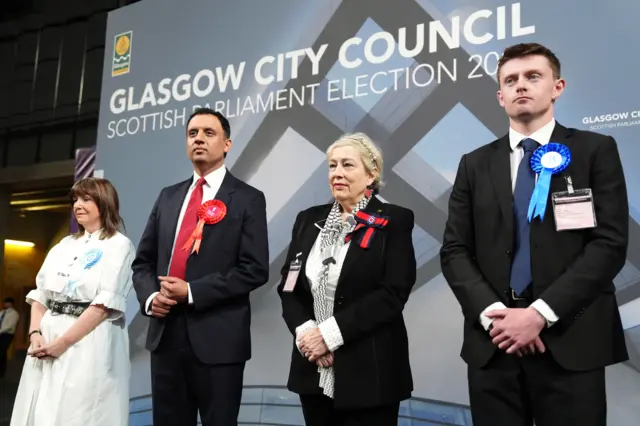
    Sarwar lost his bid for a constituency seat and instead held his regional seat

    The Scottish Labour leader says it is his responsibility now to hold his party together and to hold the newly elected SNP government to account on their record and promises.

    This will make sure we have a parliament and a democracy that functions in Scotland, Sarwar adds.

    He goes on to say he is more interested in the outcomes for people rather than personalities.

    Sarwar says he wanted to replicate what happened in Hamilton, where Labour celebrated a close win in a Holyrood by-election in June 2025, but he takes full responsibility for the strategy of this campaign.