Summary

  1. Sun and World Cup boost GDP but experts warn of challenges aheadpublished at 09:13 BST

    Alex Daniel
    Business reporter
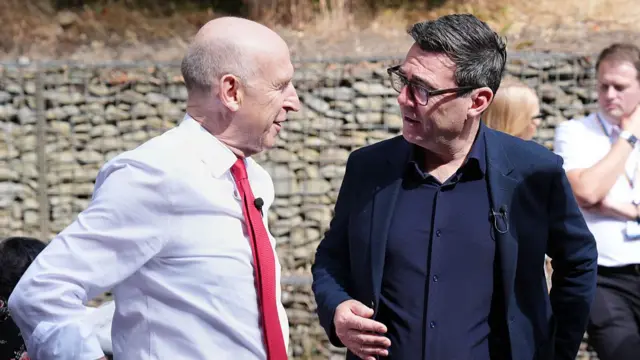
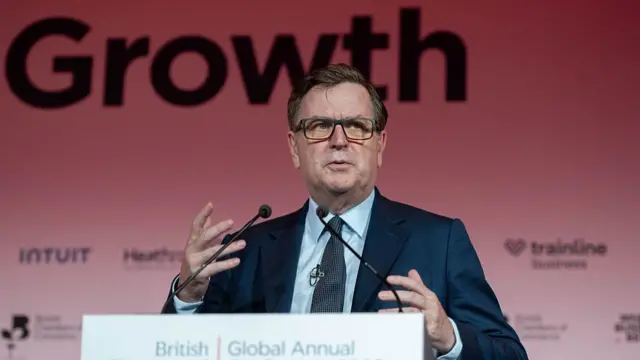
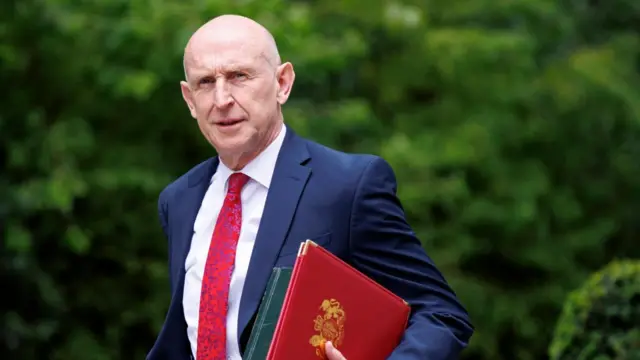
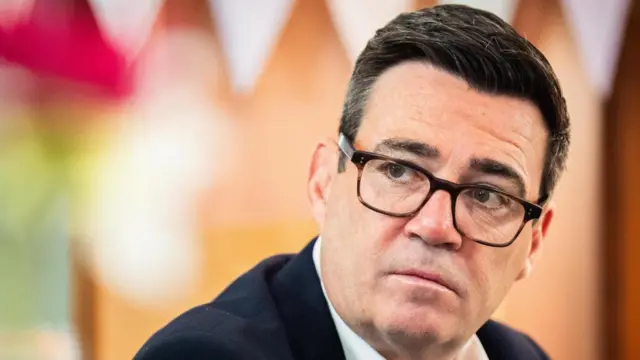
    Chancellor John Healey (L), a bald man in a white shirt with a red tie, speaks to Prime Minister Andy Burnham (R), a dark haired man in a black jacked and shirt.Image source, Getty Images
    Image caption,

    Chancellor John Healey praised the latest growth figures, but experts say challenges lie ahead

    It was a sunny three months that also included a World Cup, and that has shown up in some strong economic growth figures this morning. Here are the headlines:

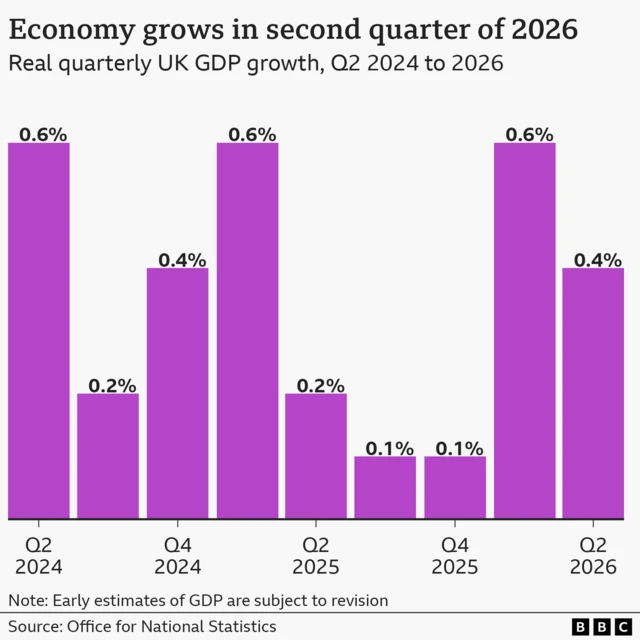
    • GDP grew by 0.4% in the second quarter, from April to June
    • It was down from 0.6% growth in the January-March period, but experts say consumers weathered recent shocks “remarkably well"
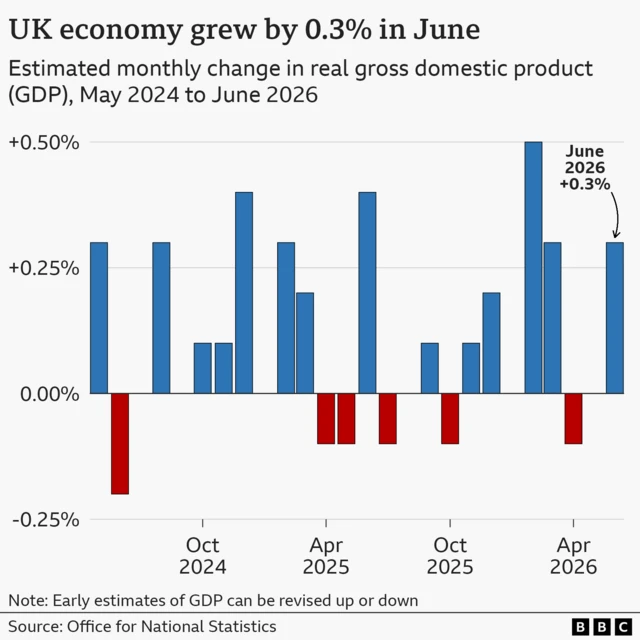
    • Economists were even caught off-guard by the figures for June, a bumper period for pubs with the World Cup, which showed growth of 0.3% in that month alone
    • Chancellor John Healey says the UK has seen the "fastest growth in the G7 this year" but now needs to "double down and drive growth in every postcode"

    However, economists warn that things could worsen from here, as Healey and Prime Minister Andy Burnham's approach their first Budget in October.

    That is mainly because Iran is still a concern for businesses, and many will fear rising energy prices as the year goes on.

    Perhaps, the state of play is best summed up by Healey's predecessor Rachel Reeves, who says this morning: "Lots done, more to do".

    We're ending our coverage shortly but you can catch up with the latest in our story.
  2. Figures we've received today are an estimatepublished at 09:02 BST

    The figures we've received today are an estimate, meaning they could be revised up or down at a later date.

    "We make revisions when more detailed information becomes available," the ONS says.

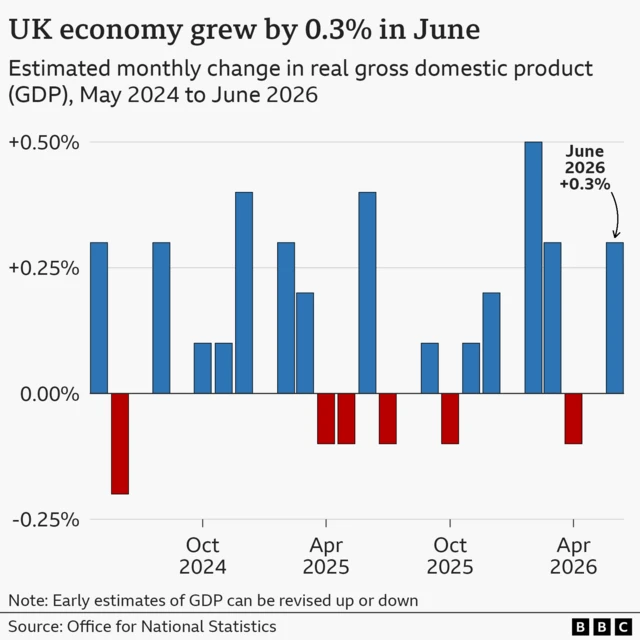
    For example, in today's report, the ONS says it has revised the monthly GDP figure for May. This was originally reported as 0.1% growth, but has been revised down to 0%.

    The ONS also warns that monthly growth rates can be "volatile" and says this indicator should be used "with caution and alongside other measures, such as the three-month growth rate".

    A bar chart showing the growth of the UK economy. In June 2026, it is estimated to have grown by 0.3% after revised figures showed no growth in May, down from a previous estimate of 0.1%
    Image caption,

    The figures for May were revised down from 0.1% to 0%

  3. 'Britain needs a plan to get our economy growing,' says Lib Dem deputy leaderpublished at 08:45 BST

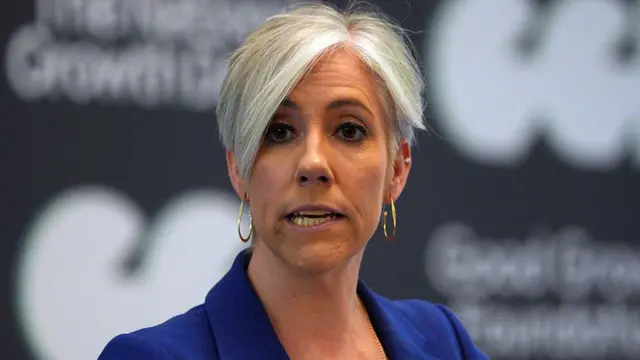
    Deputy leader of the Liberal Democrats, Daisy CooperImage source, Getty Images

    Lib Dem deputy leader Daisy Cooper has called today's figures "little to celebrate" with "costs continuing to rise" and ongoing uncertainty from the Iran war.

    "Britain needs a plan to get our economy growing," she says, urging the government to "slash energy bills" and cut fuel duty.

    "After Labour’s two anti-growth Budgets, Burnham needs to urgently get a grip on the economy and get Britain growing again, supercharging economic growth through a new trade deal with the EU, including joining the single market," she says.

  4. Energy crisis will 'likely catch up' with households next quarter - economistpublished at 08:35 BST

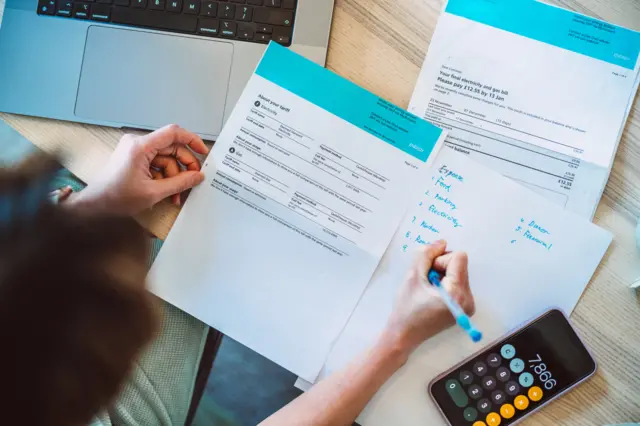
    A person writing down notes on a piece of paper while holding an energy bill, the calculator app open on a nearby iPhoneImage source, Getty Images

    Deutsche Bank's chief UK economist Sanjay Raja says that although the economy has been "on a tear lately", a slowdown looks likely going forward.

    The energy crisis will "likely catch up" with households and businesses in the third quarter of the year as bills rise, he says.

    Household energy prices rose by 13% a year in July, driven by the Iran war.

    The October energy price cap - impacting bills in the final quarter of the year - will be announced later this month.

    Raja says higher prices at the petrol pump will also "continue to squeeze" incomes, while Budget-related uncertainty could "dampen spending" going into the Autumn.

    Deutsche Bank thinks quarterly growth in the second half of the year will be closer to 0.1%, but Raja caveats that the UK continues to "defy growth expectations".

  5. What the GDP figures could mean for mortgagespublished at 08:23 BST

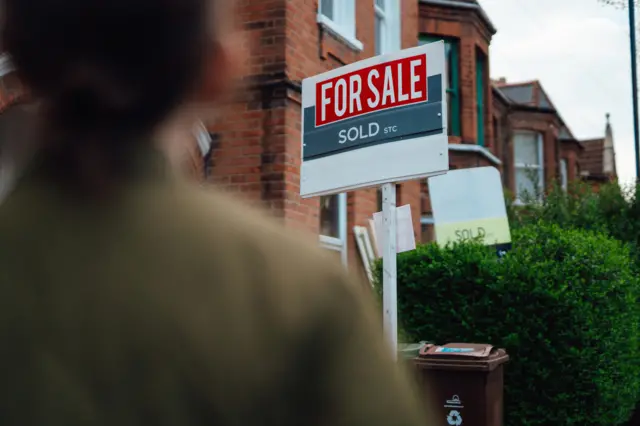
    A person stands with their back to the viewer with a for sale sign behind, and a row of redbrick houses behind that.Image source, Getty Images

    While this morning’s numbers have been resilient, many experts fear that growth will slow as the year goes on.

    That could be significant for mortgages, which are heavily dictated by the Bank of England (BoE)'s base interest rate.

    Thomas Pugh, an economist at RSM, says the likelihood of growth getting slower this year “should allow it [the Bank] to keep interest rates on an extended hold this year”.

    The base rate, currently sitting at 3.75%, also influences how expensive it is for people to take out a loan.

    The BoE usually raises it to curb inflation, while it cuts the base rate to spur more growth. Here's more on how it works.

    However, GDP is only one piece of the puzzle, and Pugh added that interest rates will also be heavily dependent on "how energy prices evolve over the rest of the summer”.

  6. Economists focus on resilience, but express pessimism about months aheadpublished at 08:12 BST

    Theo Leggett
    Business correspondent

    There seems to be a widespread consensus among experts that the UK economy has so far proved resilient in the face of "headwinds" such as uncertainty over tariffs and the impact of the conflict in the Middle East.

    But equally, there is no shortage of measured pessimism about the months to come.

    There have been plenty of warnings this morning that growth is likely to slow over the next few months as cost pressures mount for households and businesses.

    There are also worries that uncertainty over the direction of new Prime Minister Andy Burnham’s government may prompt businesses to sit on their hands ahead of the Autumn Budget - for example, as they wait to see what changes to tax rules could come in.

    That too could restrict growth, at least in the short term.

  7. In brief: What the figures showpublished at 08:01 BST

    Let's recap on what this morning's figures tell us:

    • Two key figures: The economy grew by 0.4% in the second quarter of the year and 0.3% in the month of June
    • Good or bad? "Relatively robust" - those were the words used by the ONS' director of economic statistics. Today's quarterly figure was in line with economists' expectations but behind the 0.6% growth seen in the first quarter
    • What's driving growth? The services sector - including areas like computer programming and advertising - was the main driver of growth during the quarter
    • What next? Chancellor John Healey says the UK needs to "double down and drive growth in every postcode". But the government has been warned the economy could barely grow next year if disruption from the Iran war continues
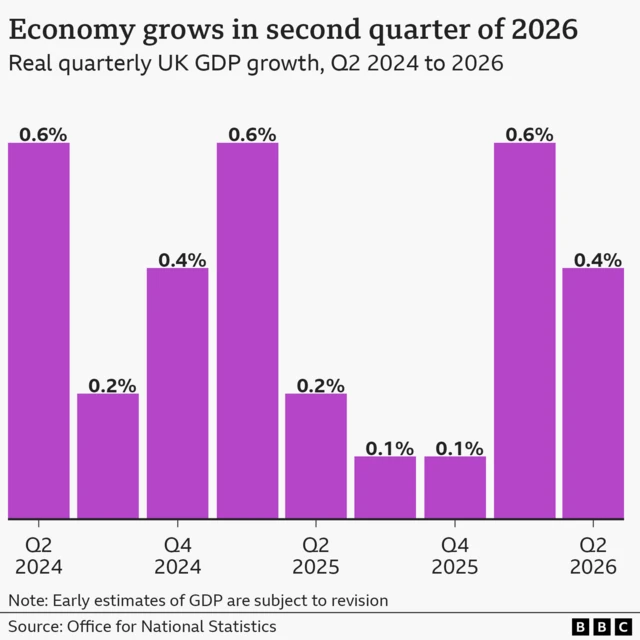
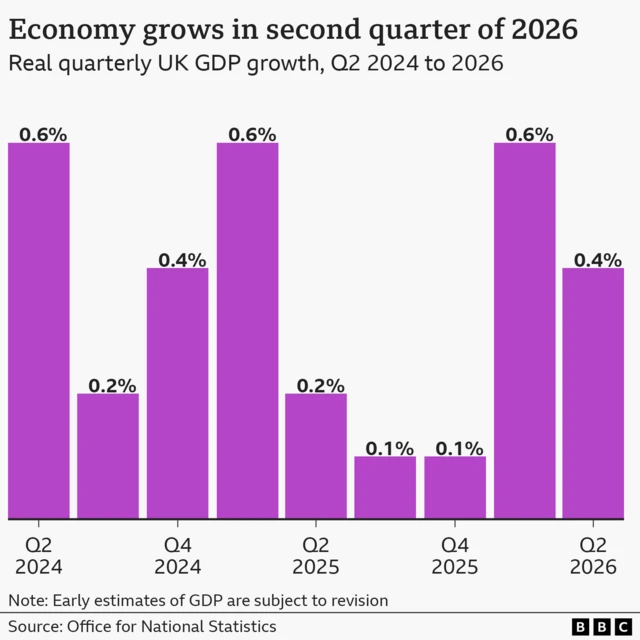
    A bar chart showing real quarterly growth in UK gross domestic product from Q2 2024 to 2026. The latest figure shows that the UK economy grew by 0.4 in the second quarter of 2026. Compared with the equivalent quarter in previous years, this was higher than the equivalent period 2025, when growth was 0.2%.
  8. Shadow chancellor says the economy is 'struggling'published at 07:50 BST

    Shadow chancellor Mel Stride in a dark suit, shirt and tie mid-speech while delivering an address on stageImage source, Getty Images

    Shadow chancellor Sir Mel Stride accuses Labour of making the economy worse, saying that this morning's GDP figures suggest it's "struggling".

    "Labour have mismanaged the economy with their tax and borrowing spree, leaving it weak and vulnerable to the effects of shocks like the Iran war.

    He also claims that Prime Minister Andy Burnham is "gearing up to tax and borrow even more, doubling down on those failures".

    "Labour need to realise that it’s their poor decisions which have stifled growth and made the cost of living worse."

  9. 'Resilience with an asterisk': Experts say it'll be difficult to keep momentum goingpublished at 07:40 BST

    Alex Daniel
    Business reporter

    Experts are generally agreeing that the consumer side of the economy - things like shops, pubs and other businesses - have done surprisingly well in the face of things like the Iran war.

    That could be partly to do with the good weather this summer, according to Yael Selfin, chief economist at KPMG, who says consumers have weathered economic shocks “remarkably well".

    But experts also broadly agree that it will be difficult for this momentum to continue, especially with positives like the World Cup out of the way.

    Suren Thiru, chief economist for the Institute of Chartered Accountants in England and Wales, calls this “resilience with an asterisk”, pointing out that these are all temporary factors rather than “genuine momentum”.

    He says the “growing financial squeeze” sparked by the Iran war means this upturn will be “difficult to sustain”.

  10. 'Strong growth' numbers 'not inevitable', says former chancellorpublished at 07:31 BST

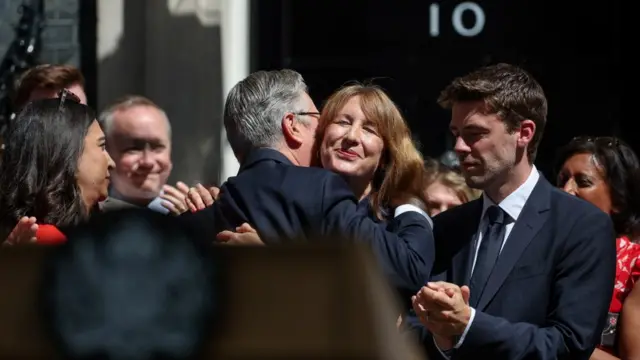
    British Prime Minister Keir Starmer embraces Chancellor of the Exchequer Rachel Reeves after delivering a statement outside 10 Downing Street before resigningImage source, Reuters
    Image caption,

    Reeves was replaced as chancellor when Andy Burnham became prime minister last month

    Former chancellor Rachel Reeves - who was in Number 11 during the period covered by this morning's report - has called the growth figures "strong", adding that this was "not inevitable".

    "It is because of the resilience of the British economy and the responsible action taken since the election to deliver stability, investment and reform," she writes on X.

    "Lots done, more to do," she adds.

    Reeves was replaced by John Healey when Andy Burnham became prime minister last month.

  11. Economy could 'continue to lose momentum' in second half of year, says economistpublished at 07:23 BST

    The growth figures are a “reflection of an economy that has remained resilient in the face of global headwinds - namely trade conflict and geopolitical volatility - and a period of political turbulence at home”, says Joe Nellis, the head of economic research the accountancy and advisory firm at MHA.

    “But forecasts suggest that the economy will continue to lose momentum as we enter the second half of 2026, and the new chancellor faces a number of challenges as we head towards the Budget in October," he adds.

    “Consumer spending remains constrained, businesses continue to adjust to higher costs and investment spending is vulnerable to uncertainty over taxation, regulation and the ongoing tensions in the Middle East.”

  12. We need to 'drive growth in every postcode': Chancellor responds to figurespublished at 07:19 BST

    Responding to today's figures, Chancellor John Healey says the UK has seen the "fastest growth in the G7 this year" but now needs to "double down and drive growth in every postcode".

    "I know people are worried about the impact of the conflict in the Middle East on their cost of living, which has been too high for too long and it has added pressure on British businesses," he says.

    He calls Burnham's government "active" and "hands-on", putting "British interests first" and "giving breathing space to those feeling the strain".

    A bar chart showing real quarterly growth in UK gross domestic product from Q2 2024 to 2026. The latest figure shows that the UK economy grew by 0.4 in the second quarter of 2026. Compared with the equivalent quarter in previous years, this was higher than the equivalent period 2025, when growth was 0.2%
  13. Service sector was main driver of growth with possible World Cup effectpublished at 07:14 BST

    Theo Leggett
    Business correspondent

    The UK economy grew by 0.4% in the three months from April to June.

    That was slower than in the first quarter - with no growth at all in May - but was still described as "relatively robust" by the ONS’ director of economic statistics, Liz McKeown.

    The main driver was services - in other words, things like banking, insurance, restaurants and hotels.

    McKeown says some businesses were reporting that "good weather and sporting events" might have had a positive impact in June.

    In other words, there may have been a World Cup effect.

  14. Today's figure is below 0.6% growth seen in first quarter of yearpublished at 07:10 BST

    Dearbail Jordan
    Business reporter

    Economic growth slowed to 0.4% between April and June, this data shows.

    The figure - in line with economists' expectations - is below the 0.6% growth for the first three months of this year.

  15. Growth was 'relatively robust' in second quarterpublished at 07:05 BST

    Commenting on today's GDP figures, ONS director of economic statistics Liz McKeown says: "Growth slowed in the second quarter of the year, following a strong start to 2026, but remained relatively robust.

    "Services were once again the main driver of growth, while production was broadly unchanged and construction also grew."

  16. Economy grew by 0.3% in Junepublished at 07:01 BST
    Breaking

    GDP rose by 0.3% in June, the latest figures show.

    As a reminder, we also had the second-quarter figure from the Office for National Statistics (ONS) this morning - details on that in our previous post.

    A bar chart showing the growth of the UK economy. In June 2026, it is estimated to have grown by 0.3% after revised figures showed no growth in May, down from a previous estimate of 0.1%.
  17. UK economy grew by 0.4% in second quarterpublished at 07:00 BST
    Breaking

    The UK economy grew by 0.4% in the second quarter of the year, official figures show.

    Stick with us for analysis, including what this means for you.

    A bar chart showing real quarterly growth in UK gross domestic product from Q2 2024 to 2026. The latest figure shows that the UK economy grew by 0.4 in the second quarter of 2026. Compared with the equivalent quarter in previous years, this was higher than the equivalent period 2025, when growth was 0.2%.
  18. Latest GDP figures to be released shortlypublished at 06:57 BST

    In just a few minutes, at 07:00 BST, we'll get the latest GDP figures from the Office for National Statistics (ONS), showing how much the UK economy grew in the second quarter of this year.

    Economists are expecting growth of 0.4% for the three months from April to June.

    Businesses have been finding ways to cope with the effects of the Iran war, with manufacturers stockpiling to mitigate against supply shortages and price rises.

    The period also included political uncertainty in the run-up to Sir Keir Starmer’s resignation as Prime Minister in June and the first of several summer heatwaves in May, putting some industries under pressure.

    We'll bring you the figures - as well as the monthly GDP estimate for June - and analysis shortly. Stay with us.

  19. Businesses 'sit on hands' in second half of each year amid Budget speculation, economist sayspublished at 06:50 BST

    Britain's Chancellor of the Exchequer John HealeyImage source, EPA
    Image caption,

    John Healey has said his first Budget in October will be "built on fiscal discipline"

    There has been a "very clear seasonal pattern" over the past decade of growth doing well in the first half of the year, before slowing down in the second half, says Simon French, chief economist at Panmure Liberum.

    While it could be a "statistical anomaly", he tells Radio 4's Today programme that events in the second half of the year - including the Budget - cause businesses to "sit on their hands".

    "Every year, speculation over changes in tax and spending have caused a delay in activity," he says.

    This year's Autumn Budget is due on 28 October.

  20. Burnham warned Iran war could hit UK growth next yearpublished at 06:41 BST

    Close up of PM Andy Burnham in a dark blue suit and white shirt. He appears to be sitting down, his head slightly angled to the rightImage source, PA Media

    Today's figures come at a time of growth concerns as disruption as the Iran war continues.

    Prime Minister Andy Burnham has been warned the UK economy could barely grow next year, if disruption in the Strait of Hormuz continues until the end of 2026.

    Treasury sources have confirmed internal modelling presented to the PM and chancellor - representative of a reasonable worst-case scenario - suggests UK GDP growth could be as low as 0.3% in 2027, as first reported by Bloomberg.

    Under the modelling, inflation would peak at 4.3% in the first three months of next year. It currently stands at 2.6%.

    Government officials say they routinely plan for all possible scenarios.