Summary

  1. US says Navy and merchant vessels have passed through strait - recappublished at 15:07 BST
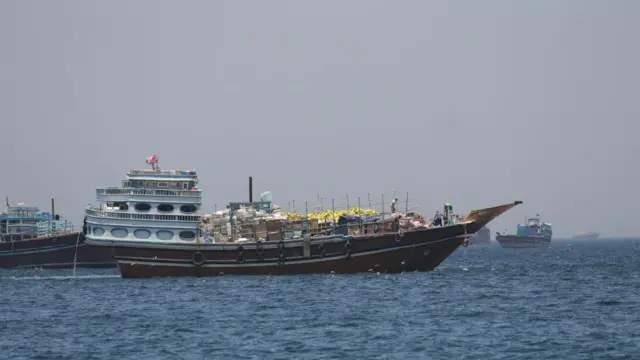
    A small ship in the strait of hormuz.Image source, Reuters

    Donald Trump says the US military will guide ships through the Strait of Hormuz - but Iran insists any ships wanting to cross the crucial shipping passage will need its permission.

    Here’s what else to know:

    Centcom says plan is working: In an update, it says two US-flagged merchant ships have crossed the strait - Iran has yet to comment.

    Conflicting messages: Iran says it stopped a US destroyer from entering the strait. US Central Command (Centcom) denies this, saying none of its ships have been struck.

    Thousands still trapped: Sailors have been trapped in the waterway since the start of the war - with supplies said to be dwindling, our international correspondent reports.

    Oil prices rise again: Oil prices have jumped after Iran said it hit a US destroyer, soaring to $114 per barrel - a 5% rise from the market opening.

  2. UAE residents receive missile alertpublished at 14:43 BST

    Frank Gardner
    Security correspondent

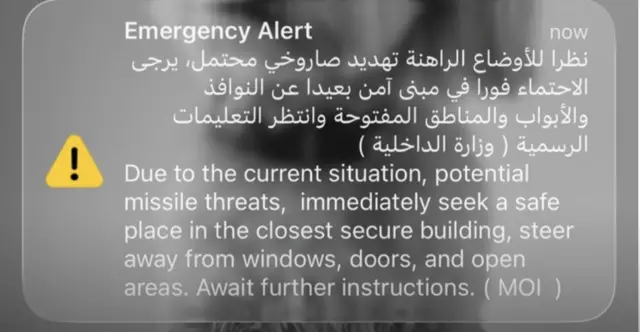
    United Arab Emirates residents have just received a missile alert from the Ministry of Interior.

    Shortly afterwards, an all clear message was sent, telling residents "the situation is currently safe" and that normal activities can resume.

    It's not yet clear what triggered the warning.

    A screengrab of an alert message in UAE
  3. Escorting ships through Hormuz strait is a risk, says former US navy captainpublished at 14:30 BST

    Kevin Eyer speaks to the BBC via video link. He is wearing a suit and tie and positioned in front of a wall with various framed pictures.Image source, BBC News

    Any plan to escort ships through the Strait of Hormuz comes with "significant risk", says a retired US navy captain.

    Kevin Eyer, who previously commanded three warship cruisers, tells the BBC News channel that it's unclear whether the US intends to "guide and coordinate, or to actually go in and do a classic convoy situation".

    "The difference between these two things is the difference between night and day. The active escort is the most dangerous and fraught solution," he says.

    Eyer points out that Iran still has a number of anti-ship ballistic missiles, as many as 1,000 anti-ship drones, and "hundreds of fast patrol boats which can be armed with rockets".

    The US says navy destroyers and US-flagged merchant ships have sailed through the Strait of Hormuz. Iran's military earlier said it would attack US forces if they entered the strait.

  4. Centcom says US Navy and US-flagged merchant vessels pass through straitpublished at 13:41 BST

    US Central Command (Centcom) has issued a short update.

    It says two US-flagged merchant vessels have "successfully transited through the Strait of Hormuz".

    Centcom adds that US Navy guided-missile destroyers are operating in the Gulf after transiting through the Strait.

    "American forces are actively assisting efforts to restore transit for commercial shipping," the update says.

    Centcom has not provided the names of the vessels which it says have successfully sailed through the strait.

  5. Recap: Iran and US issue conflicting reports on American warship strikepublished at 13:19 BST

    Iran's claim that it hit a US Navy vessel earlier has been rejected by the American military - here's how the conflicting narratives emerged:

    • Iranian state media put out reports that Iran had prevented a US Navy destroyer from entering the Strait of Hormuz
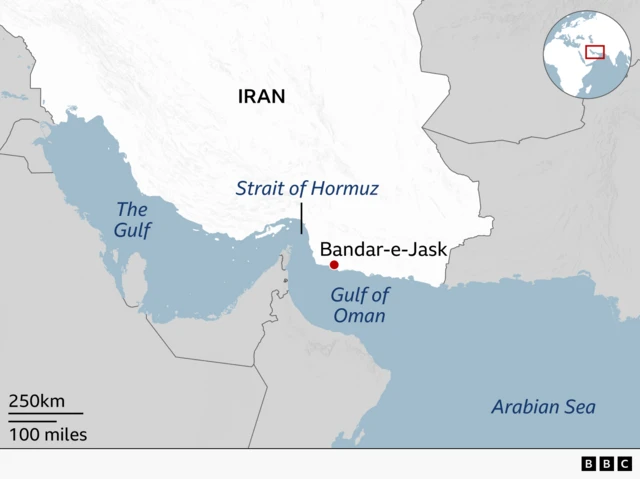
    • The reports included a claim from the Iranian military that it hit an American ship with two missiles, near Bandar-e-Jask on the Iranian coast
    • US news outlet Axios then cited an unnamed senior US official as denying that a US ship had been hit
    • Soon after, US Central Command (Centcom) put out a statement, echoing this denial. It said no US ships had been struck and that US forces were supporting the operation "and enforcing the naval blockade on Iranian ports"
    Map showing Iran’s southern coast and the Strait of Hormuz between the Gulf and the Gulf of Oman. Iran is labelled, with Bandar‑e‑Jask marked on the coast near the eastern entrance to the strait. The Arabian Sea lies to the south east, and an inset globe highlights the location in the wider region.
  6. UAE says its tanker in Hormuz strait has been hit, with no injuries reportedpublished at 12:43 BST
    Breaking

    The United Arab Emirates says a tanker affiliated with Adnoc, its state-owned oil company, has been hit in the Strait of Hormuz.

    No one has been injured, the country's foreign ministry says in a statement, adding:

    "This attack constitutes a flagrant violation of UN Security Council resolution 2817, which affirmed the importance of freedom of navigation, and rejected the targeting of commercial vessels or the obstruction of international maritime routes.

    "Targeting commercial shipping and using the Strait of Hormuz as a tool of economic coercion or blackmail represents acts of piracy by Iran's Revolutionary Guard Corps, and constitutes a direct threat to the stability of the region, its peoples, and global energy security."

    The UAE has called for Iran to stop the attack and "ensure its full commitment to an immediate cessation of all hostilities, and the complete and unconditional reopening of the Strait of Hormuz".

  7. 'A serious warning' - IRGC reportedly says it'll strike vessels entering strait without permissionpublished at 12:38 BST
    Breaking

    Ghoncheh Habibiazad
    Senior reporter, BBC Persian

    Fars Plus, an outlet associated with Iran’s semi-official Fars News Agency, has published two voice notes attributed to the Islamic Revolutionary Guard Corps (IRGC).

    In them, warnings are issued in Persian and English to vessels in the Gulf, the Strait of Hormuz and the Sea of Oman saying the Strait "remains closed".

    I've listened in and this is what the messages say:

    "This is a serious warning from the naval forces of the IRGC. The Strait of Hormuz remains closed, and passage through it without the permission of the Islamic Republic of Iran and outside the designated route is prohibited.

    "If any vessel passes without permission at longitude 56°00′ East in the Persian Gulf and latitude 25°40′ North in the Sea of Oman, it will be struck and destroyed."

  8. Oil prices jump as Iran claims to have hit US ship - followed by Centcom denialpublished at 12:24 BST

    Ben King
    Business reporter

    Oil prices spiked sharply in response to reports from Iranian state media that two missiles hit a US warship as it tried to enter the Strait of Hormuz.

    The Brent crude benchmark price soared by more than $4 per barrel within minutes of the news breaking, to hit $114, more than 5% up on the day's opening price.

    It fell back slightly after the US denied the strike took place.

    Late last night, Donald Trump announced a plan to guide stuck vessels out of the Gulf, calling it a "humanitarian gesture".

    If the attempt to sail ships through the straits leads to another outbreak of hostilities, that would reduce the chances of flows of oil and gas resuming and be likely to send oil prices soaring even further.

  9. US denies Iranian claim it struck American warshippublished at 12:06 BST
    Breaking

    US Central Command (Centcom) denies that one of its warships has been struck by two Iranian missiles.

    In a post on X, Centcom says "no US Navy ships have been struck". It adds: "U.S. forces are supporting Project Freedom and enforcing the naval blockade on Iranian ports."

    The Iranian military earlier claimed that it had prevented a US Navy destroyer from entering the Strait of Hormuz.

    Fars, the semi-official Iranian news agency, said a vessel was hit by two missiles as it was sailing through the Strait of Hormuz "in violation of traffic and shipping security".

  10. What we know - and what we don't - about US plan to 'guide' ships out of the straitpublished at 11:58 BST

    Donald Trump speaks at a podiumImage source, AFP via Getty Images

    On Sunday, Donald Trump announced plans for the US to "guide" stranded ships out of the Strait of Hormuz. Dubbed "Project Freedom", here's what we know - so far.

    What we know

    • In a Truth Social post on Sunday, the US president said the operation would begin "Monday morning, Middle East time"
    • US Central Command said it would support the action with 15,000 personnel, guided-missile destroyers and more than 100 aircraft
    • Trump has threatened to deal "forcefully" with any "interference" with the operation
    • Iran has since claimed to have prevented a US destroyer from entering the strait - but a senior US official has reportedly denied that one of its ships was hit by Iran. The BBC has contacted US Central Command and the Pentagon for clarification

    What we don't know

    • Whether the operation has actually started - it is now the afternoon in Iran
    • Which countries will be receiving US support to get out of the strait - Trump has said the operation will help "ships from areas of the world that are not in any way involved" in the war
    • The logistics of helping ships out the strait - reports say that the US initiative does not necessarily involve the US Navy escorting commercial vessels through the Strait of Hormuz, but rather advising them on safe maritime routes and staying close to prevent any Iranian attacks
    • What this could mean for for the weeks-long ceasefire between the US and Iran - earlier, a senior Iranian official said "any American interference" would be "considered a violation of the ceasefire" while Trump called it a "humanitarian process"
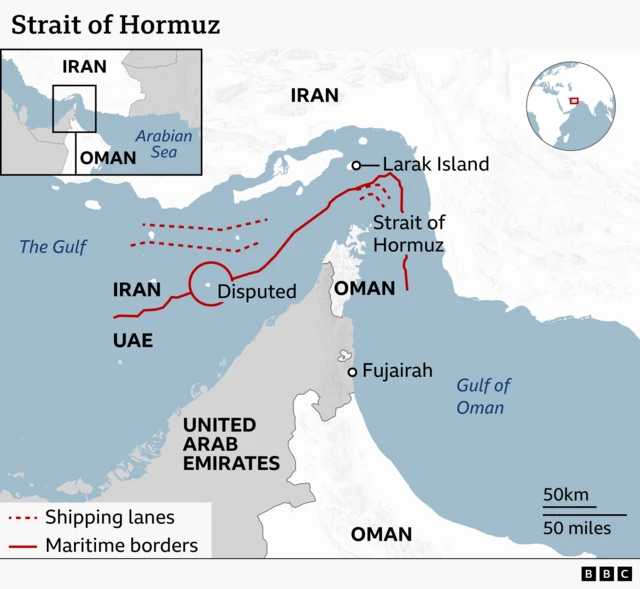
    The Strait of Hormuz, a narrow shipping route in the Gulf region, is one of the world's most important shipping routes. Bounded to the north by Iran and to the south by Oman and the United Arab Emirates (UAE), the Strait of Hormuz connects the Gulf with the Arabian Sea. The strait is deep enough for the world's biggest crude oil tankers, and is used by the major oil and gas producers in the Middle East - and their customers.
    Image caption,

    The UN has said that 2,000 ships and 20,000 seafarers are currently stuck at sea in the strait

  11. US reportedly denies its ship was hit by Iranpublished at 11:49 BST
    Breaking

    A reporter from US outlet Axios says a senior US official - who isn't named - has denied one of its ships was hit by Iranian missiles.

    The Iranian military earlier claimed it had prevented a US Navy destroyer from entering the Strait of Hormuz.

    Fars, the semi-official Iranian news agency, says a vessel was hit by two missiles as it was sailing through the Strait of Hormuz "in violation of traffic and shipping security".

    According to claims by Fars, an American ship was "forced to retreat and flee the area".

    The BBC has contacted Centcom and the Pentagon for clarification.

  12. Analysis

    While a lot remains unclear about the US' plan, this could be a dangerous momentpublished at 11:36 BST

    Joe Inwood
    World news correspondent

    The president’s plan to guide ships out of the Strait of Hormuz - announced as so often via social media - raised many questions.

    First among them was whether it was being done with Iran’s consent - or over their heads. The initial post said it was "a humanitarian gesture on behalf of the United States, Middle Eastern countries but, in particular, the country of Iran".

    A statement read on Iranian State TV appeared to answer this, saying the strait was "under the control of the armed forces of the Islamic Republic of Iran".

    Thousands of sailors have been trapped in the waterway since the start of the war - with supplies said to be dwindling. The US president says it will be a one-way journey - implying this is not about unblocking the Strait of Hormuz - but rather saying it is a "humanitarian gesture", calling the sailors "innocent bystanders".

    The statement from US Central Command, which usually offers more clarity, did not specify what form this support would take, simply saying US forces would "support merchant vessels seeking to freely transit" the Strait.

    There is a vast difference between offering information and guidance to a ship - and actually providing a military escort. If they propose to do the latter, it could well bring them back into direct military confrontation with Iran.

    The statement from the IRGC about their response was unequivocal: "We warn that any foreign armed forces - especially the aggressive U.S. military - that intends to approach or enter the Strait of Hormuz will be targeted."

    This operation, which Trump called an act of "goodwill", has the potential to become a dangerous flashpoint.

  13. Iran says it's stopped US destroyer from entering Strait of Hormuzpublished at 11:06 BST
    Breaking

    The Iranian military is claiming it has prevented a US Navy destroyer from entering the Strait of Hormuz.

    Iranian state media reports that the public relations arm of the army says: "With a firm and swift warning from the Islamic Republic Navy, the entry of American and Zionist enemy destroyers into the Strait of Hormuz was prevented."

    This comes hours after Donald Trump said the US military would begin helping stranded ships out of the vital passage. US Central Command (Centcom) has explained how it plans to support the operation - read more on that here.

    We're working to find out more about this claim and will bring you the latest when we have it.

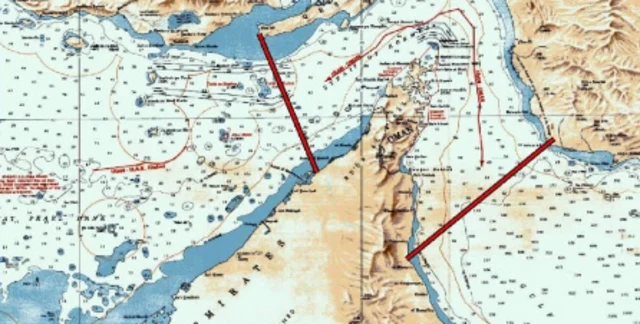
  14. IRGC releases map showing area of Hormuz strait it says Iran controlspublished at 10:55 BST

    Iranian state media is reporting that the Islamic Revolutionary Guard Corps (IRGC) has issued maps showing the "new area" of the Strait of Hormuz, which it claims is controlled by Iranian forces.

    The IRGC is reported to have said that the controlled areas are indicated by the line drawn between Mount Mubarak in Iran and south of Fujairah in the UAE and the other line between the tip of Qeshm Island in Iran and Umm Al Quwain in the UAE.

    The US is yet to respond to the maps and what they claim to show.

    Map shared by IRGC showing area of Hormuz strait it says Iran controlsImage source, Fars
    Image caption,

    This map was shared by Iranian state media - the US is yet to respond to what it claims to show

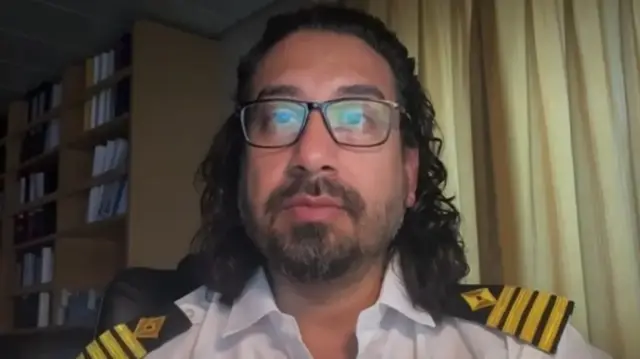
  15. We're counting the days until we can go home, oil tanker captain tells BBCpublished at 10:30 BST

    Captain Ramoon Kapoor sits inside a ship, with a drawn curtain and shelving unit visible behind him

    As we've been reporting, a UN agency says an estimated 20,000 seafarers on 2,000 ships have been stuck in the strait since the US-Iran war began in February.

    The BBC spoke on Sunday to oil tanker captain Ramoon Kapoor, who is one of those trapped - he described witnessing "various attacks, various missiles, explosions" and said the situation had been "pretty tense".

    He also said his crew had experienced significant stress and anxiety.

    Though they're "very happy" attacks have stopped since the calling of the temporary US-Iran truce, "everyone is counting the days" until they can go home, Kapoor said. He added that people have started packing their stuff so they "don't waste time" if they're suddenly permitted to leave.

    Another seafarer - who has since managed to return home - described "total chaos" and "panic" on board his ship after the war broke out.

    In his interview with the UN's shipping regulation agency, the International Maritime Organization (IMO), on 24 April, he spoke of "missiles getting intercepted and there were some fireworks in the sky". He added: "It was very stressful, most of the crew on board were not able to sleep".

  16. Analysis

    Until the situation in the strait changes, we're unlikely to see oil prices change drasticallypublished at 10:22 BST

    Nick Marsh
    Asia business reporter, in Singapore

    There was a time when an announcement like this from Donald Trump would have seen oil prices plummet.

    On more than one occasion, traders have got excited at the prospect of tankers moving freely once again through the Strait of Hormuz and world supplies returning to normal.

    But more than two months into this war, the response to the president's latest post was basically a shrug. Prices have hardly moved. A barrel of Brent crude is still worth well over $100 (£74) - more than 50% higher than before the war.

    The reason is that little has changed on the ground. It's not the first time Trump has suggested using a US naval escort to see ships through the strait. He raised the possibility early on in the conflict, and military experts cast doubts on its feasibility then.

    There's little to suggest anything's changed since, meaning there's heavy scepticism as to how exactly "Project Freedom" would work, without a major escalation in the war.

    As it stands, the Strait of Hormuz remains under Iranian control and most ships remain afraid to cross it. If and when that changes, we'll see oil prices react accordingly.

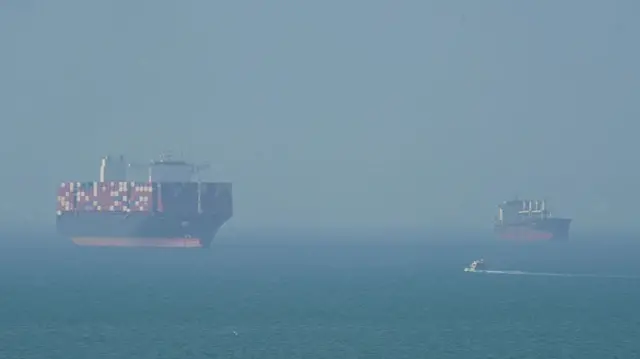
  17. UK maritime authorities warn of 'critical' threat level in Hormuz straitpublished at 10:03 BST

    Two commercial ships are shown anchored in the Strait of Hormuz.Image source, Getty Images

    Ships attempting to transit the Strait of Hormuz face "critical" security threats, the UK Maritime Trade Operations Centre warns, due to "ongoing regional military operations".

    In an update, issued after Donald Trump's Truth Social post, UKMTO says vessels need to be aware of "the proximity and dangers of any reported mines or threats along intended transit routes".

    "Transit via or in close proximity to the Traffic Separation Scheme should be considered extremely hazardous due the presence of mines that have not been fully surveyed and mitigated."

    The Traffic Separation Scheme is an international agreement that has designated shipping lanes through the Strait of Hormuz since 1968.

    • As a reminder: The US has repeatedly accused Iran of laying mines along the Hormuz strait in a bid to control the shipping through it. When the US announced its blockade of Iranian ports last month, Trump said the US planned to begin destroying these mines.
  18. In a new statement, Iran says it's ready to 'respond to US threats'published at 09:22 BST

    We're hearing again from Iran about President Trump's announcement that the US military will start guiding stranded ships out of the Hormuz strait from "Monday morning, Middle East time".

    Iran's foreign ministry says it is ready to "respond to US threats" in the strait.

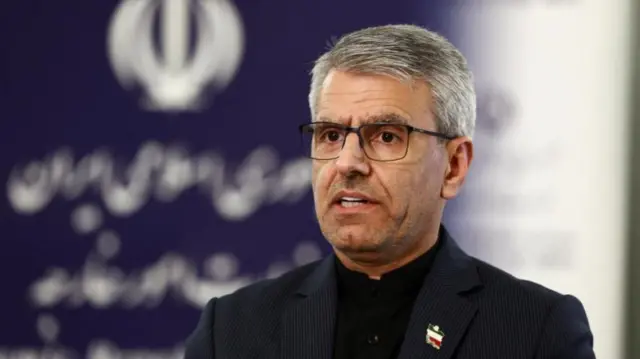
    In a statement shared by the semi-official Mehr news agency, spokesperson Esmail Baghaei says Iran remains the strait's "guardian and protector". He adds: "Ships and shipping companies well know that ensuring their security requires coordination with the competent authorities of the Islamic Republic of Iran."

    Baghaei says there's no reason for countries who follow the rule of law to follow "illegal actions" by the US.

    Earlier, the head of Iran's central command said it would attack "any foreign armed force" that tries to approach or enter the strait, "especially, the aggressive US army".

    Esmail Baghaei is pictured wearing glasses and a black shirt and suit jacket. He is wearing an Iran flag pin on his left lapel.Image source, Reuters
    Image caption,

    Baghaei has been the Iranian foreign ministry's spokesperson since 2024

  19. What you need to know about the Strait of Hormuzpublished at 09:01 BST

    The Strait of Hormuz is a vital shipping lane in the Gulf, through which roughly one-fifth of the world's oil and liquefied natural gas (LNG) typically passes.

    It also sees through about one-third of the world's fertiliser trade, as well as vital imports to the Middle East, including food, medicines and technological supplies.

    Iran has severely limited traffic through the vital shipping route since the war began in February, while the US has launched its own rival blockade on Iranian ports.

    An estimated 20,000 sailors have been trapped in the Gulf since the start of the war with Iran. There has been growing concern over dwindling supplies and the effects on sailors' physical and mental health.

    This Flourish post cannot be displayed in your browser. Please enable Javascript or try a different browser.

  20. Analysis

    It's not yet clear what US's Hormuz plan will look like - but Iran warns against violating ceasefirepublished at 08:57 BST

    Yolande Knell
    Middle East correspondent, in Jerusalem

    Reports say that the US initiative - which President Trump calls Project Freedom - does not necessarily involve the US Navy escorting commercial vessels through the Strait of Hormuz, but rather advising them on safe maritime routes and staying close to prevent any Iranian attacks.

    US Central Command describes its mission as "giving support" to restore freedom of navigation through the vital waterway, while maintaining America's own blockade of Iranian ports.

    The new Iranian statement makes clear the risk of new military confrontations - and a possible escalation endangering the three-week long ceasefire between the US and Israel and Iran - if the US Navy enters the strait.

    "We have repeatedly said the security of the Strait of Hormuz is in our hands," the statement says, adding that "the safe passage of vessels needs to be co-ordinated" with Iranian armed forces.

    There are currently hundreds of international merchant vessels with some 20,000 crew on board that have been stuck in the area since the start of the Iran war two months ago.