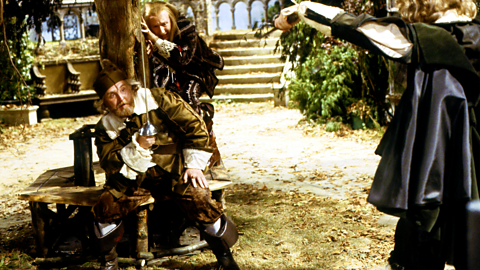
A note on context
In your controlled assessment, it is important you consider the context of Twelfth Night. References to context should be relevant both to the play and to the argument/theme of your essay. Context should be explored throughout your essay and not simply ‘stuck on’ at the beginning or the end.
Below are several aspects of context which you may wish to consider in the preparation of your essay.
Biographical context
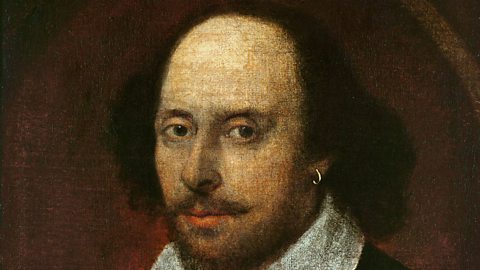
Shakespeare lived from 1564-1616.
He went to a grammar school – a privilege not afforded to all. Here he would have learned about classical literature – evidence of which we can see in the play such as the mythological imagery of Cupid and Roman comedic structures (twins, disguise and trickery).
Twelfth Night was written around 1601-1602, during the final years of Queen Elizabeth I’s reign. By this stage Shakespeare was an established and well-known playwright. He wrote plays for the Lord Chamberlain’s Men and his plays would have been performed in the royal court. Given that his audiences would have included the Queen and other wealthy patrons, Shakespeare had to be mindful of his content. He wanted to entertain his audience but also flatter and not offend!
Social context
Gender
This play was written around 1601-1602; at this time there were strict gender roles and men held most of the power. Women were expected to be obedient, modest and silent in public life. Viola’s disguise as Cesario allowed her more freedom in the society of the play. This challenged the norms of the times, as the audience would have been aware that Cesario was a female character who was a close companion to the Duke. However, to add to the confusion, all female roles at the time were played by young men before their voices had broken!
Viola proves herself to be a resilient and capable heroine – could the strong female character be a nod to the Queen Elizabeth I at the time?
Marriage
Marriage was seen as a social contract and often based on social status rather than love. Shakespeare’s Comedies often conclude with marriage – in Twelfth Night there are three marriages at the end: Duke Orsino and Viola, Olivia and Sebastian, and Sir Toby Belch and Maria. This would have been pleasing to the audiences of the time as the marriages represented a return to social order after the chaos of the play.
Class
Society adhered to a hierarchy at the time where the class system is clearly defined. Shakespeare’s play contains nobility, including Duke Orsino, Olivia, Viola and Sebastian. This class represented social order and expectation as well as authority.
Another class is the Lower Gentry/Knightly Class represented by Sir Toby Belch and Sir Andrew Aguecheek. These characters are titled but don’t have much wealth, intelligence, or influence. Shakespeare uses these characters to satirise the idle gentry.
The play also has a class of characters which could be defined as the courtly servants. These include Malvolio, Maria, Fabian and Feste. These characters work for the nobility but unlike the lower gentry they have influence and are intelligent.
A final class of characters are the lower class, represented in the play by the captain, servants, officers and attendants. These have minor roles and limited power but often have the most common sense.
By including different classes in his play, Shakespeare is representing society at that time. Notably, Malvolio, who tries to raise his social position in his attempt to woo Olivia, is mocked which reinforces the strict social order. However, this would have been enjoyable to audiences of the time who enjoyed seeing the norms overturned or questioned in comedy.
Historical context
Elizabethan era
Twelfth Night was written during the The 'Golden Age' of the reign of Queen Elizabeth 1st in Britain from 1558-1603., a time which was strictly order with clear expectations about class, gender, and behaviour. This was a time of relative peace and prosperity which helped theatre thrive.
The Twelfth Night of Christmas
The title of the play refers to the Twelfth Night of Christmas (5 January). This was traditionally a time of celebration, revelry, role-reversal and breaking rules! This is reflected in the play through the themes of disguise, mistaken identity and challenging social norms.
The Great Chain of Being
This was a belief held by the contemporary society. They believed that everything in the universe had a specific place in a hierarchy. This fixation with social order is reflected in the play, where after the chaos of the play, there are three marriages and everyone resumes their rightful place.
Literary/Theatrical context
Genre
Twelfth Night is a Comedy. Unlike a modern understanding of comedy, this was a genre of play which was lighter in nature (compared to a A type of drama in which characters undergo suffering or calamity and which usually ends with a death. A sad or catastrophic event causing suffering or death.or History). Shakespeare’s comedies show a change from confusion to clarity, conflict to harmony, and social disorder to social order. They usually have a happy ending which was satisfying to the audience at the time – in this case, characters return to their original roles and there are three marriages. Comedy was a major part of Shakespeare’s repertoire, and Twelfth Night is considered one of his most festive and playful comedies.
Literary influences
Twelfth Night blends the comic traditions of Roman playwrights like (c. 254–184 BC) A Roman playwright who wrote comedies featuring characters, such as the "clever slave" and the "braggart soldier," which influenced later writersand (c. 195–159 BC) A Roman playwright and former slave from North Africa whose six surviving comedies are known for their realistic characters (who write about twins, disguises, and clever servants) as well as the themes of transformation and irrational love found in (43 BC – 17/18 AD) was a Roman poet best known for his epic work Metamorphoses, which retells classic myths about people changing shape.. Shakespeare also shows influences of Italian Renaissance comedy and chaos during the festive period – in Twelfth Night identity, desire and social order are turned upside down!
Theatre
Theatre was a popular form of entertainment during Shakespeare’s time. All classes of society attended plays. Twelfth Night contains a mix of society so audience members could identify with different characters and it contains themes such as disguise, mistaken identity and humour which were of great interest to the audience of the time. Audiences of the time would have been lively and enjoyed the chaotic nature of the situation and the humour in the subplot (think about Malvolio appearing in yellow A fashion of wearing garters both above and below the knee, with the ribbons crossed in an 'X' shape behind the leg to hold up stockings during the Elizabethan era. stockings with a permanent grin on his face).
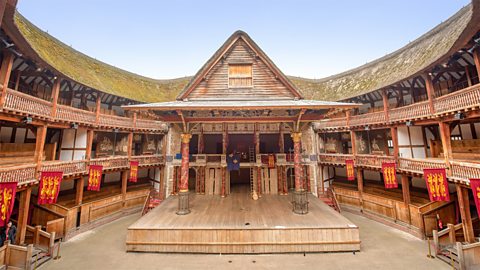
At the time, theatres were open-aired (see The Globe Theatre) and contained a mixture of seating and standing areas. Scenery and props were minimal so the language had to communicate a strong sense of setting. This is evident in the play where Shakespeare uses strong visual imagery. An example of this is the description of Olivia’s grief “Like a cloistress she will veiled walk.” (Act 1, Scene 1).
Actors
It is interesting to note that females were not allowed to act on stage during the Jacobean era. Female roles were played by young males whose voices had not yet broken! Imagine the confusion and the costumes needed, especially for Cesario – a boy playing a girl dressed as a boy!
Further study
The study of Shakespeare, controlled assessment guidance. activity
Unit 3 of the CCEA GCSE English Literature qualification is a controlled assessment unit based on the study of a play by William Shakespeare.
In Our Time - Twelfth Night, or What You Will. audio
Melvyn Bragg and guests discuss one of the great comedies of world literature.
Opening Lines - Twelfth Night audio
John Yorke explores one of Shakespeare's best loved comedies, Twelfth Night
Twelfth Night performed
Drama on 4. audio
A 400th anniversary production of Shakespeare's wonderful comedy of mistaken identities and unrequited love, starring Toby Jones as Malvolio and Giles Terera as Orsino.
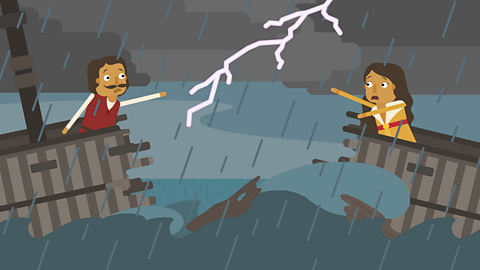
KS3 English Literature. revision-guide
An animated version of William Shakespeare’s Twelfth Night in a retelling of the classic play set to modern music.
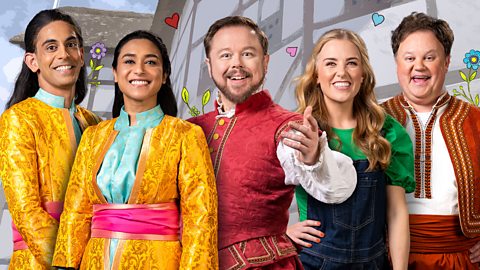
CBeebies Twelfth Night at Shakespeare's Globe. video
A host of CBeebies stars and actors take to the world’s most famous stage to perform William Shakespeare’s Twelfth Night.
More on Twelfth Night
Find out more by working through a topic
- count5 of 5
- count1 of 5
- count2 of 5
- count3 of 5