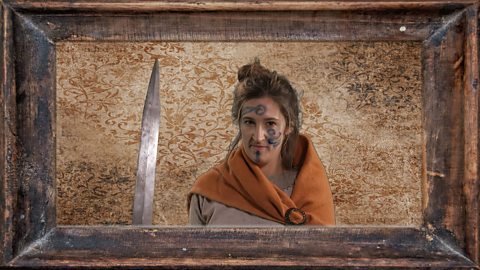
Who were the Romans?
The Romans lived over 2,000 years ago, so how do we know so much about them?
Much of the information we have about the Romans comes from books and diaries that were written at the time. In addition, archaeologists - people who dig in the soil to find ancient things to help us better understand history – have found many ruins and artefacts that the Romans left behind.
These include:
- dishes and bowls
- jewellery
- household decorations
- weapons
- vehicles
- stones
- ruins of houses
The Romans travelled from Italy to Wales to expand the Roman empire.
An empire is new land governed by another country.
The Romans wanted to reign over many other countries and territories and control them from Rome. And this included Britain and Wales.
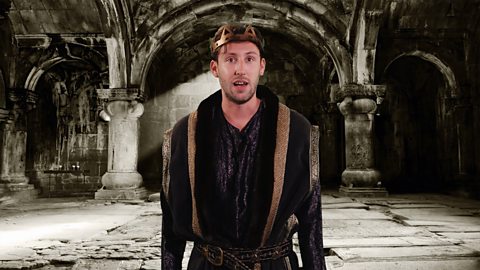
Video - The Romans
Speaker 1: Hi, History Hunters! What's out there for us to explore today?
Well, I've come across this—it was written almost 2,000 years ago by a Roman after a battle.Sounds gruesome… but also cool.
The soldiers would have been wearing something like this. Imagine running around in this on a hot day—it would have probably weighed around a ton. Well, maybe not a ton, but very heavy when trying to fight off the enemy. I know one thing—I'm glad I wasn't a Roman back in the day. Not easy.
Anyway, let's go back in time to discover more about these amazing and fierce people.We're going back to the year 47 AD.
Speaker 2: Did you know a lot of what we know today about the Romans comes from what was written about them at the time? One of these writers was a very busy man called Tacitus—a Roman historian and politician. It's thanks to him we know so much about the Romans in Britain because he wrote everything down!
Thanks, Tacitus!
Tacitus: You're welcome. Back in my day, things were very, very different, you know.
Speaker 2: OK, Tacitus, that's enough from you—we have to move on.
Speaker 3: So, what do we know about the Romans? They came to Wales wanting to expand the Roman Empire, gaining new territories governed from Rome. They fancied ruling as much land and as many people as they could. And they were pretty unstoppable, so they decided to try and conquer the whole of Britain—including Wales.
Speaker 4: The Romans first arrived in Wales in 47 AD—nearly 2,000 years ago! But a full invasion took a long time. It was another 30 years before they took over from the Celts, a group of tribes that ruled Wales at the time.
Speaker 5: The Celts certainly put up a good fight—using weapons like these and even chariots! These mountains helped them too. The Romans weren’t used to climbing, but the Celts were great climbers and pretty good at hiding too—so it gave them a head start.
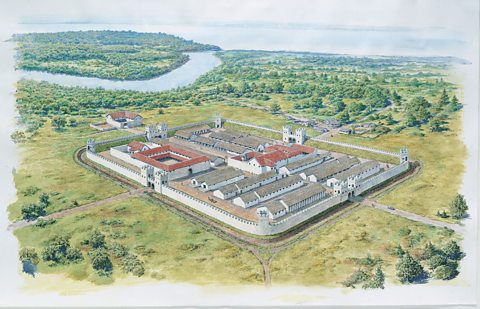
Speaker 4: The Romans were clever and quick thinkers. One way they tried to keep control of the Celts was by building Roman forts across the land—like this one in Caernarfon, which they called Segontium.
They shielded themselves from the Celts using these forts and wore a lot of protective clothing. Over a thousand Roman soldiers ended up coming to Segontium to stay. They used it to keep a watchful eye on their enemy—the local Celts, a tribe called the Ordovices. Segontium. Sorry, I just like saying it.
Speaker 5: Our knowledge of Romans doesn’t just come from books—some of it comes from the bin. Seriously! We know a lot because of what people have found digging around in the earth. The Romans were good at throwing out things when they were broken, so archaeologists have learned loads from Roman rubbish tips.
Speaker 3: When the Romans first left Rome, they packed their favourite foods—just in case Celtic cuisine was rubbish. They really liked wine, olive oil, leeks, and grapes. They even shared some of their food with the Celts.
Oi, mate.
Speaker 2: Appearances were really important to the Romans—from how they looked to how they decorated their homes. Even their gardens had to be spotless. They were ahead of their time and used gardens to relax and meditate.
Speaker 4: The Romans took fashion seriously. They wore clothing like this—togas were bang on trend, along with jewellery and head accessories.
Oh yes, I’m loving this look. Very me.
Speaker 3: As well as being clever, the Romans were pioneers. They built really long roads—one from Caernarfon to Chester, around 69 miles.
Are we there yet?
Talking about miles—the Romans invented milestones, placed at the side of the road to show distances. Very handy—they knew how far they had to travel and how much water and snacks to packf ro the journey.
Speaker 4: As well as inventing milestones and building roads, the roads were special—do you know why? Well, they were straight roads! It was a great way to move soldiers across the country. No one likes travelling on a windy road, do they? The straighter the road, the better. Very clever indeed! Another one of these long Roman road leads to Caerleon, the HQ of the Romans in Wales.
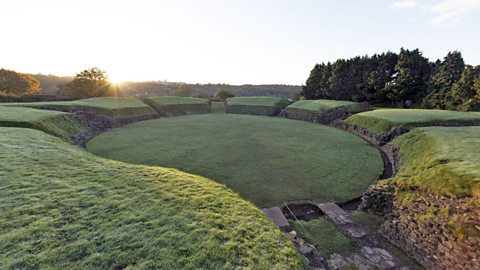
Speaker 3: Caerleon had an amazing amphitheatre that held around 6,000 people. They came to watch gladiator trials. I quite fancy myself as a gladiator! The amphitheatre wasn’t the only impressive build here. Caerleon also had an impressive fort, market, and port.
Speaker 4: Wales has four amphitheatres in total—in Caerleon, Carmarthen, Caerwent, and near Trawsfynydd. That’s quite a lot considering there are only 230 known amphitheatres across the Roman Empire. Impressive.
Speaker 2: Did you know, the Romans were obsessed with health and keeping fit and clean. In Caerleon, you can still see the communal baths they used. They even had a natatio there—an open-air swimming pool. Sounds very nice!
Speaker 3: And while they didn’t live forever, some lived a long time. This gravestone tells us exactly how long. The letter C means 100, so it’s likely this person died when they were 100 years old. That’s pretty old—even by today’s standards.
Speaker 2: Did you know the Romans wouldn’t have spoken Welsh—Shwmae—nor English—Hello—nor Italian—Ciao bella? They spoke Latin. Oh. I don’t know that one.
Latin was the main language spoken in Rome and Italy. As the Romans moved through Europe, so did Latin. Although it’s no longer spoken today, we still see Latin influences in other languages.
Take the word school, which comes from scola. Or bonus, which comes from Latin meaning good. The list is endless.
Caesar: Buongiorno! We Romans love our phrases. One of the most famous is: Veni, Vidi, Vici – I came, I saw, I conquered. Basically, I’m a very influential general in the Roman Empire. I am Caesar. No, not the salad. I was the first to cross the English Channel—that stretch of water between southern England and northern France. I crossed it—go me! So, I came and saw Britian and conquered it!
Speaker 4: But not all Emperors were power-hungry. Magnus Maximus was a popular Roman Emperor who became a hero to the people in Wales for eventually handing power back to the locals. But what brought him here? The story goes that Magnus had a dream of a lovely maiden in a wonderful far-off land—North Wales, of course. He searched the world for her. Magnus didn’t rest until he found her in Segontium of all places. She was called Elen. Magnus and Elen married and started a new chapter of Welsh history—by forming new kingdoms including Powys and Gwent Soon afterwards, the Romans stationed here started leaving the area. Cool, huh?
Speaker 2: It’s fair to say the Romans were pretty impressive and they were one of the most influential civilizations in world history. During that time, the Roman Empire grew to rule most of Europe, including Wales, as well as western Asia and northern Africa. They certainly did conquer the world!
Let’s take a look at what we’ve learned about the Romans:
Tacitus wrote everything down.
They tried new and successful ways of fighting.
They brought over their own food.
They were obsessed with appearances.
They built straight Roman roads and impressive buildings like the amphitheatre in Caerleon.
They spoke Latin.
We still remember what Caesar had to say.
And they ruled for over 1,000 years.
Phew!
The Romans arrive in Wales
The Romans reached Wales around AD 49.
At the time Wales was inhabited by Celts. The Celts fought hard against the Romans. But after 30 years, the Romans conquered the Celts.
One way the Romans managed to control the Celts was by building Roman forts across the country.
They built one fort in Caernarfon.
The Romans called Caernarfon Segontium. The name of the local Celtic tribe was the Ordovices.
Culture
Food

Ports were important places for the Romans to bring food from abroad into Wales. They also exported Welsh goods to countries overseas.
We know that the Romans liked the following food and drink and brought them to Wales:
- wine
- olive oil
- leeks
- grapes
Dress
How they looked was very important to the Romans. This meant:
- wearing smart clothes
- decorating their houses
- keeping their gardens clean and tidy and using them as places to relax
The Romans liked to wear a toga, and sometimes they would also wear a headdress. A toga was a white garment made from wool that looked like a bed sheet. The Romans wore a toga over a simple tunic.
It was the men who usually wore a toga, although some women did as well.
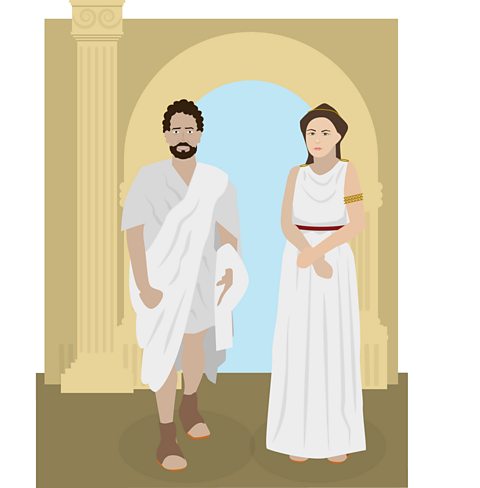
Later, women preferred to wear a stola, a long, pleated dress. A stola could be colourful - red, yellow or blue. Women would tie the dress with a belt, ribbons or ornaments, such as brooches.
Health
The Romans believed that health was very important, and they enjoyed keeping fit, healthy and clean.
In Caerleon today, you can see the remains of the luxurious Roman public bathhouses. There is even a natatio, an outdoor swimming pool.
Keeping fit and health meant that some Romans lived for a long time. A Roman gravestone has been found with the letter C on it. The C stands for the number ‘one hundred’ - which shows how old the person was when they died.
Language
The Romans spoke Latin.
No one speaks Latin today. The language has been dead for centuries. But to this day, Latin’s influence can be seen in many other languages, including Welsh.
Some examples include:
- fossa > ffos (ditch)
- candela > cannwyll (candle)
- liber > llyfr (book)
- ecclesia > eglwys (church)
- stabellum > ystafell (room)
- scola > ysgol (school)
- fenestra > ffenestr (window)
- tristis > trist (sad)
- dolor > dolur (pain)
- pons > pont (bridge)
Leading the way
The Romans were responsible for building infrastructure in Wales. They were very good at building very straight and long roads. Prior to this, Wales had rough tracks full of mud and stones.
The Romans built a road from Caernarfon to Chester. There is also Sarn Helen which runs from Caernarfon to Ceredigion and then east to Brecon.
These long and straight roads were a very effective way of moving soldiers across the country.Excellent roads were among the most important things left behind by the Romans when they left.
Caerleon
One of the Roman roads led into the town of Caerleon in south Wales. Caerleon had an amazing amphitheatre. The amphitheatre could hold nearly 6,000 people. This is where the Roman soldiers watched gladiators fighting each other for entertainment.
These could also be found in Caerleon:
impressive fort
headquarters
market
port
hospital
barns
practice fields
Mosaics
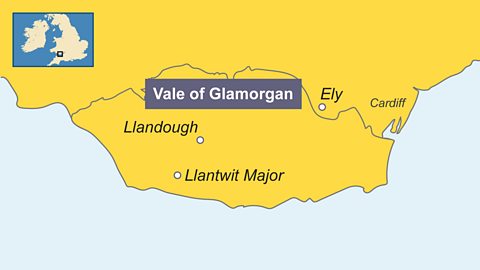
In the Vale of Glamorgan, several large farms and villas were built by wealthy farmers, for example:
Ely
Llandough
Llantwit Major
There, new crops were introduced into Wales, for example:
apples
oats
carrots
leeks
A villa is a large grand house. In these villas there were baths, central heating and characteristic Roman mosaics. A mosaic is a pattern or picture made from small pieces of stone or glass.
The Romans leave Wales
The Romans had probably left Britain by AD 410.
So, after 400 years, the Roman empire was over.
Quiz – True or False?
Maths 8-11
Videos and activities
Welsh Second Language 8-11
Exciting videos and activities for learning Welsh

Sustainability 8-11
A collection of lessons for pupils aged between 8 and 11

More on History
Find out more by working through a topic
- count4 of 5
- count5 of 5
- count1 of 5
- count2 of 5