Why was Baghdad important during the Abbasid caliphate?
During the Abbasid Caliphate (750–1258), Baghdad became a place for learning.
People travelled from far and wide to study at the House of Wisdom and share their knowledge. Discoveries were made in astronomy, maths and medicine.
Important words for the Islamic civilisation
| Keyword | Definition |
|---|---|
| Translation | Changing words from one language into another. |
| Preservation | Keeping something in good condition so it doesn’t get damaged. |
| Algebra | Using letters like x or y to represent numbers we don’t know yet, so we can solve maths problems. |
| Observatory | A building or place where people look at the sky, stars and planets to learn about space. |
| Astronomers | Scientists who study stars, planets and space. |
Watch: What did early Islamic scholars achieve?
Learn about the amazing achievements of scholars in the early Islamic civilisation.
The Islamic civilisation began in the Middle East over a thousand years ago.
In these lands, scholars – people who study in search for knowledge – gathered ideas from many places. They asked meaningful questions and made discoveries that still make a difference to our lives today.
In maths, scholars built on a number system from India and helped share it with the world. They also worked on new ways of using numbers like algebra – ideas that were developed, and still play a role in things like computer games and apps today.
In astronomy, the study of the stars and planets, people like Mariam al-Astrulabi designed astrolabes to show star positions and help guide people on their journeys.
Ibn Sina wrote the Canon of Medicine – a collection of books that doctors used for hundreds of years.
In the city of Baghdad, the House of Wisdom was like a giant library and academy. It was a place where ideas from many ancient peoples, including the Greeks and Romans, were built upon and shared.
With the support of their rulers, scholars built on old knowledge to make new discoveries that help people count, heal, and understand the world in different ways.
The Golden Age of Islam
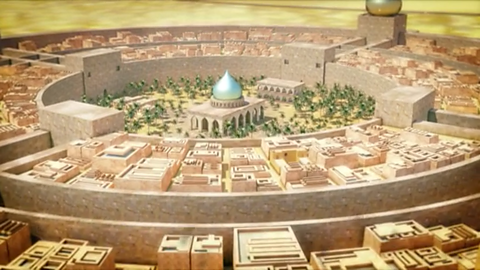
During the Abbasid Caliphate (750 -1258), men and women worked together to create thousands of inventions and discoveries that changed the world. Baghdad became the centre for science, medicine, maths and more!
The Islamic civilisation spread over three continents - from Spain and Northern Africa through to the Middle East and China. It brought new ideas, discoveries and inventions to the world.
This early Islamic period is sometimes called the Golden Age of Islam because there were so many inventions in science and the arts at this time. The city of Baghdad was home to a number of libraries, universities, hospitals and schools.
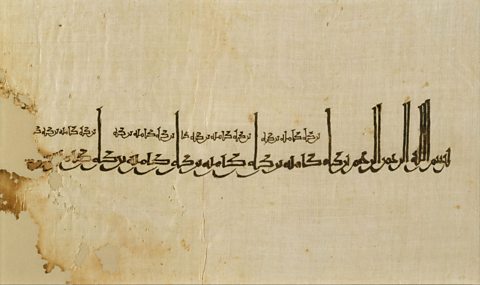
The Abbasid caliphs (leaders) wanted people to learn. They encouraged the translation and preservation of ancient texts.
What was the House of Wisdom?
The Bayt Al-Hikma or House of Wisdom was an academy where people from far and wide came to study. It was established in the 8th century by Caliph Harun Al-Rashid as a library and later taken over by his son Al-Ma'mun.
It had a huge library with books on every subject written in many languages.
It also had an observatory, which is a building where people could look at the night sky. It was easier to observe planets and stars with the naked eye because there were no city lights.
Experts translated ancient Roman and Greek texts into Arabic so more people could read and understand them.
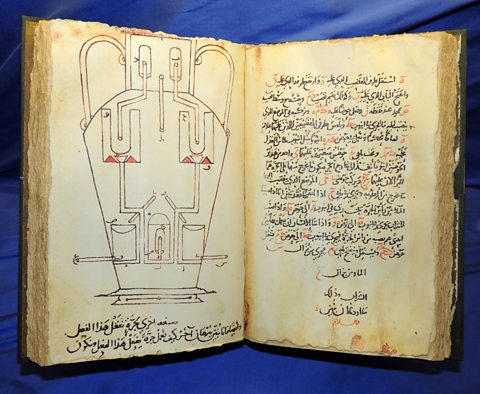
Astronomy
Caliph Al-Mamun built an observatory in Baghdad so that astronomers could work and study together in one place. An observatory is a building where scientists called astronomers could look at the sky, stars and planets to learn more about space.
Islamic astronomers improved the astrolabe which was a device that allowed travellers to find their way, a bit like a compass.
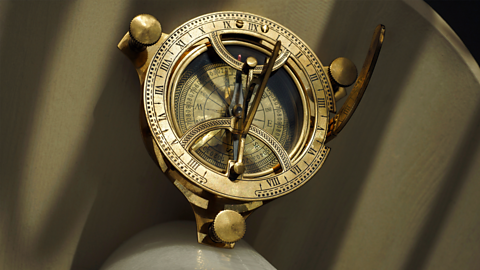
People used astrolabes to tell time, calculate sunrise and sunset and plan their journeys. Muslims needed to know the direction of Mecca and prayer times, which led to improvements in the astrolabe.
Maths and science
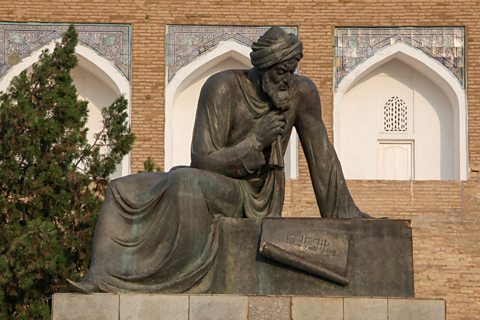
The Hindu-Arabic number system, created over a thousand years ago in India, gave us the ten digits we use today: 0, 1, 2, 3, 4, 5, 6, 7, 8, and 9. These numbers made calculations much easier than the Roman numerals, which used letters like I, V, X and M.
This system was introduced to Europe by mathematicians from the early Islamic world, such as Al-Khwarizmi.
An important mathematical development from the Islamic civilisation was algebra. It changed the way people looked at numbers.
Algebra is where we use letters (like x or y) to represent numbers we don’t know yet. Al-Khwarizmi wrote a lot about algebra, which was new to the European world!
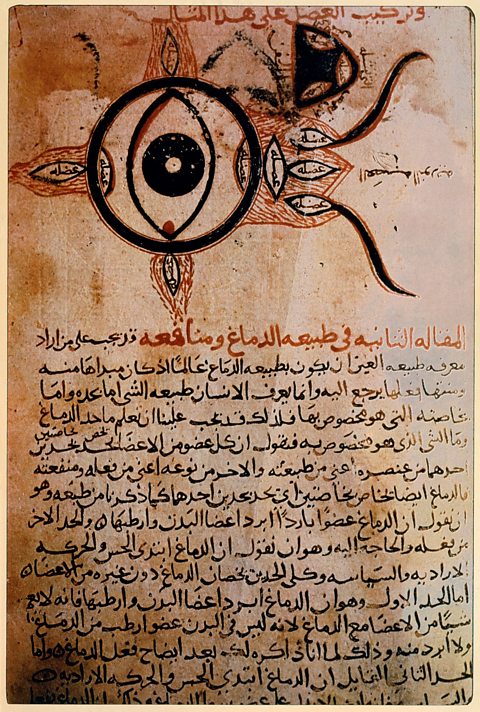
Ibn al-Haytham was a scientist who carried out experiments. He studied how the human eye worked and figured out that we see things because light enters our eyes. He also invented an early type of camera that helped explain how the eye sees.
Ibn al-Haytham wrote a book, which helped people to understand how light works and how we see things.
Medicine
Hospitals were built in cities like Baghdad, Isfahan and Cairo. The Ahmad ibn Tulun Hospital, is thought to be the first major hospital built in Cairo between AD872 and AD874. During the Islamic civilisation, medical care was free for everyone.
Doctors were required to have medical training in a teaching hospital, much like doctors today! Records or written notes were kept about what was happening in the hospitals. They also had special hospitals for teaching.
Doctors studied the body and how to treat it for different diseases. They wanted to find out more about organs like the heart and how they worked.
Look at the table below to find out more about important figures in early Islamic medicine.
| Name | What did they study and write about? |
|---|---|
| Al-Razi | Studied diseases and was the first to describe the difference between measles and smallpox, leading to its treatment. |
| Ibn Sina | Wrote an encyclopedia looking at lots of areas of medicine. It was used in universities. |
| Al-Zahrawi | Wrote a textbook about surgery and described how to use different medical tools. |
| Ibn Nafis | Studied how the heart worked and how blood moved round the body. |
Think like a historian

Have a look at the thinking points below and think about your answer to each question. You could even write them down on a piece of paper or discuss them with somebody else if you want to.
Why was translation important during the Abbasid Caliphate and what happened as a result?
How did the invention of the astrolabe change lives in the early Islamic civilisation?
How were hospitals in the early Islamic world different from hospitals now?
Did you think about how texts were written in different languages? Translation helped people change books from different languages into Arabic, so more people could read and learn from them. This caused knowledge to spread, which led to new discoveries in science, maths and medicine.
You might have thought about how the astrolabe changed people’s lives. It helped astronomers study the stars. It was used to tell time, know when the sun would rise or set, find the direction of Mecca for prayers and plan journeys.
Perhaps you thought about how hospitals in the early Islamic world did not have the machines we have now. Doctors had to train before working there, just like today. But they didn’t have modern machines or medicines we use now.
Activity: Quiz – Early Islamic inventions
Grown-ups corner
Are you a parent, carer or teacher? Take a look at some of the links below on KS2 History which are packed full of knowledge, videos, quizzes and activities.
Baghdad in AD900
BBC Bitesize for Teachers
KS2 History: Introducing Ancient Sumer
BBC Bitesize for Teachers
What did the Maya invent?
KS2 History
Horrible Histories: Raid and Trade game! game
Play Horrible Histories: Raid and Trade KS2 History

More on Islamic civilisation
Find out more by working through a topic
- count1 of 5
- count3 of 5