What did people wear in early Islamic Baghdad?
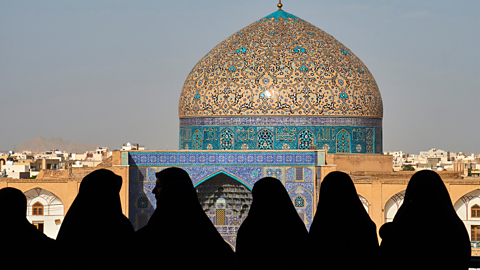
In early Islamic Baghdad, people wore clothes that reflected their wealth and the climate.
Men wore long garments, with a cloak and turban.
Women wore tunics (a long shirt or dress that goes down to your knees or ankles) and headscarves or veils.
Wealthy people could afford silk and damask (cloth with patterns on it, often shiny and smooth) while poorer people wore plain wool or cotton clothing with fewer layers.
Important words
Important words about clothes in the early Islamic Civilisation.
| Keyword | Definition |
|---|---|
| Damask | Cloth with patterns on it, often shiny and smooth. |
| Embroidery | Patterns or writing sewn onto fabric using thread. |
| Modest | Clothing that covers the body in a way that is respectful. |
| Trade | Buying, selling and exchanging goods. |
| Tunic | A long shirt or dress that goes down to your knees or ankles. |
What did people wear?
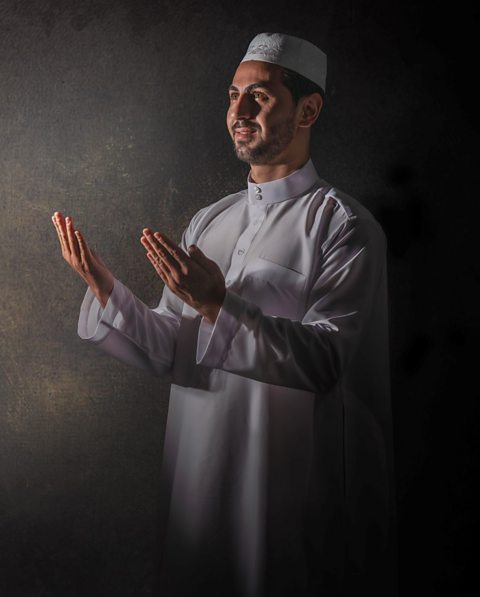
Men started wearing a long one-piece garment with sleeves called a thawb. This was a long shirt that went down to the ankles. Over this, they sometimes wore a cloak (ridā). Men also wore turbans (a long piece of cloth wrapped around the head). One reason for this was to protect themselves from the sun.
In the Umayyad Caliphate (AD661 - 750) designers started making them patterned or striped.
Like men, women wore long tunics (qamīs) that reached their ankles, made of linen or silk for wealthy women. Many women wore a headscarf or a veil to cover their faces
Wealthy people in Baghdad could afford high-quality, patterned clothing. These were made from silk, brocade and damask (a patterned silk named after Damascus in Syria). Their clothes were brightly coloured or patterned.
Poor people would have worn cheaper fabrics like wool. Their clothes would be plain and have no bright colours or patterns. They would also wear fewer layers than wealthier people.
During the Abbasid Caliphate (AD751 - 1258), Caliph Al-Mansur made court officials wear black robes for special events. Black became the official colour of the Abbasids. People in China called them the “black-robed ones”. Black became a popular colour for clothes because it represented wealth and high status.
In the early Islamic civilisation, it was traditional to dress modestly (clothing that covers the body in a way that is respectful) and cover the body. It was disrespectful if your clothing trailed on the ground or if under garments were past the ankle in length.
What were clothes made from?
The weather in cities like Baghdad was hot and dry, so people needed clothes that kept them cool and protected them from the sun.
Common fabrics were linen, cotton and wool.
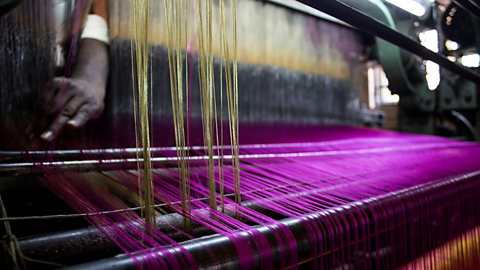
Shoes and sandals were made of leather.
Trade from other countries brought new fabrics to the Islamic world.
This included silks from China, which was very expensive.
Silk and brocade also came from places like Persia and Central Asia and were very fancy.
Cotton came from India and was soft and comfortable.
Linen was used for everyday clothes, especially in hot weather.
Wool came from sheep and camels and was used by nomads (people who move from one place to another).
Because the Islamic Empire was so big, these fabrics travelled long distances, making Baghdad full of different types of clothes and styles.
What clothes were special?
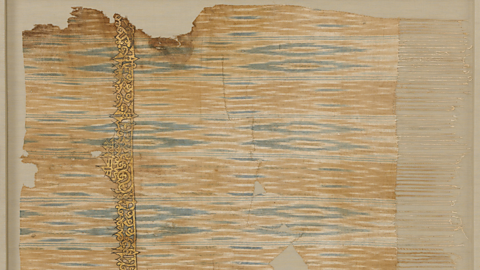
The word tiraz comes from a Persian word that means embroidery (patterns or writing sewn onto fabric using thread). Tiraz was a band of fabric sewn onto clothing with patterns or writing on it.
On tiraz robes, these bands often had the name of the caliph, blessings or messages of loyalty, making the clothes special and showing who wore them and why. They were given to important people who worked with the Caliph as a sign of honour.
They were made of linen, wool or cotton and some were dyed yellow, green, or brown. Many had diamond patterns, and the writing would have been embroidered (sewn) onto the fabric.
What made perfumes special?
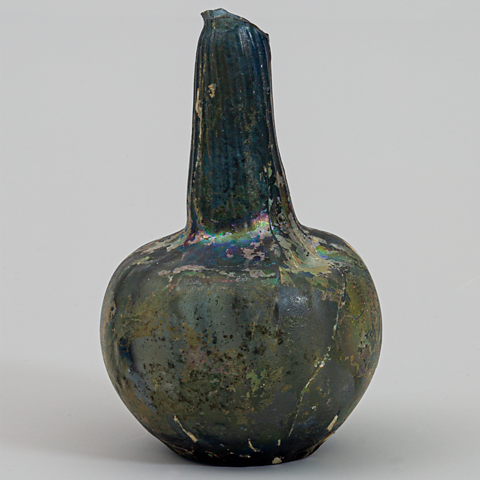
Perfumes were very popular, especially among the wealthy.
People had access to many spices and oils to make perfume.
Popular ingredients included roses, orange blossoms and water lilies.
Scientist Al-Kindi experimented with plants and oils to create new scents (smells).
He wrote a book on perfumes. It was full of recipes for fragrant oils, creams and perfumes.
Perfumes were used on clothing, hair and skin, and sometimes during religious ceremonies.
They were often stored in beautifully crafted glass bottles.
Think like a historian

Have a look at the thinking points below and think about your answer to each question. You could even write them down on a piece of paper or discuss them with somebody else if you want to.
How were the clothes of rich people different from the clothes of poor people?
Why did trade bring new fabrics to Baghdad?
Why were tiraz robes important in showing loyalty or status?
Did you think about how wealthy people would have been able to afford expensive clothes? Rich people in Baghdad could afford clothes made from expensive fabrics like silk, brocade or damask. Their clothes were brightly coloured or patterned and they wore more layers. Poor people wore cheaper fabrics like wool, with plain colours and no patterns. They also wore fewer layers than rich people.
Perhaps you thought about trade coming from different countries in the empire. Trade brought fabrics from faraway places like China, India and Persia. Trade connected Baghdad to lots of other countries, so new ideas, materials and goods could travel to the city. These new fabrics made clothes more colourful and fancier.
Did you think about the importance of the tiraz? Tiraz robes were special clothes with patterns or writing embroidered on them. They showed that the person wearing them worked for the caliph or had an important role. The designs and embroidery made it clear who was loyal and important.
Activity: Quiz – Early Islamic clothing
Grown-ups corner
Are you a parent, carer or teacher?
Take a look at some of the links below on KS2 History which are packed full of knowledge, videos, quizzes and activities.
KS2 History: Non-European Societies
BBC Bitesize for Teachers
Baghdad in AD900
BBC Bitesize for Teachers
What did the Maya invent?
KS2 History
Horrible Histories: Raid and Trade game! game
Play Horrible Histories: Raid and Trade KS2 History
More on Islamic civilisation
Find out more by working through a topic
- count1 of 5