What is the Pacific Trash Vortex?
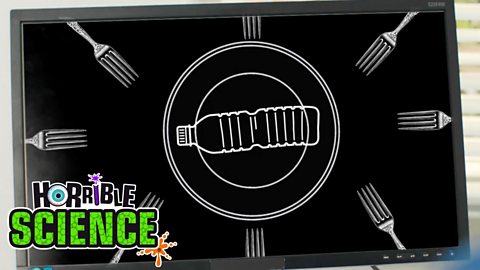
The Pacific Trash Vortex is a huge area of floating plastic and rubbish located in the Pacific Ocean – between the coastal American state California and the American island state Hawaii.
It is estimated to cover about 1.6 million km². That’s around seven times the size of the UK!
It is mostly made up of plastic waste such as plastic bottles, fish nets and packaging.
Watch: Earth goes to the doctor's
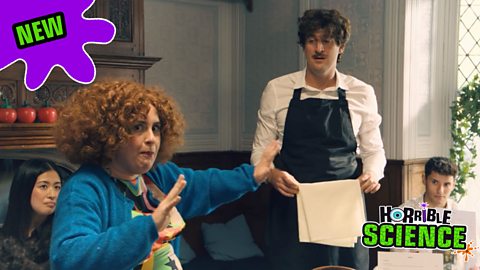
Earth has popped to see her doctor about a troubling growth, hopefully he can help her… and she can get out of his office without knocking everything over!
SPEAKER: Next patient, please.
EARTH: Oh, doctor. Oh.
DOCTOR: What is it this time? Cold in your Arctic? High temperature in your equator?
EARTH: I'm under the weather, doctor.
DOCTOR: We've talked about this. You're supposed to be under the weather. Where else is it supposed to go?
EARTH: Bleurgh. I'm all bunged up in my Pacific Ocean. All the way from Hawaii to California.
DOCTOR: Ah, is that single use plastic?
EARTH: Ah, maybe.
DOCTOR: Let's take a look at your Pacific region.
I'll just get my scanner.
Right, okay …
Ah, it's, as I suspected, your problem's a load of rubbish.
EARTH: Huh, so there's nothing wrong with me. Oh.
DOCTOR: No, actual rubbish. Turn around. Look, it's called the Great Pacific Garbage Patch.
EARTH: Urrgh! Do I need a cream?
DOCTOR: When plastic gets thrown away, it often finds its way into the sea, where it gets stuck in swirling ocean currents.
There it can build up and create a giant trash heap like this one in the Pacific Ocean.
EARTH: Giant.
DOCTOR: Three times the size of France. And a lot of these big chunks of plastic can get broken down into tiny microplastics.
EARTH: Ooh, great. Tiny is good, right?
DOCTOR: No it's not a good thing.
These plastics can release chemicals and get into our food systems.
EARTH: Oh, I'm doomed.
DOCTOR: Calm down. It's okay. It's not necessarily all the bad news Earth.
EARTH: Really?
DOCTOR: One organisation are using a massive net to try and collect rubbish.
They're aiming to get rid of 90% of floating ocean plastic by 2040.
So they don't need you adding to it with that plastic bottle.
EARTH: I feel bad now.
DOCTOR: Just try to use less single use plastic and recycle the plastic you do use.
EARTH: Oh, oh slam dunk!
Missed.
But… thanks, doc. I'm feeling better already.
DOCTOR: Please don't bring that with you again next time.
EARTH: Understood.
Why is single-use plastic bad for the environment?
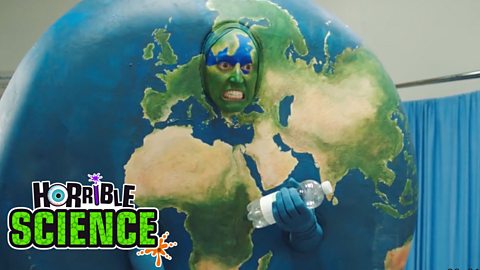
As their name suggests, single-use plastics are often used only once before being thrown away.
It is estimated that as much as 12.7 million tonnes of plastic is thrown into our oceans every year. That’s the same weight as 2 million elephants or 1,200 Eiffel Towers.
They don’t biodegrade, which means they can’t be broken down naturally by living things like bacteria or fungi. Instead, they only degrade, breaking into smaller and smaller pieces called microplastics. These tiny bits don’t disappear. They spread into soils, rivers, and oceans.
Microplastics can then harm the animals that live in these places and even enter our food chain.
Many animals are injured or killed by single-use plastics because they mistake it for food or become tangled in it.
Producing and burning plastics also releases greenhouse gases, which is causing global warming.
Horrible Science fact
The Pacific Trash Vortex is also known as the ‘Great Pacific Garbage Patch’.
Quiz
How to use Horrible Science in the classroom
If you're looking to bring energy, humour and curriculum-aligned content into your science lessons, Horrible Science might just be your new secret weapon.

More on Horrible Science
Find out more by working through a topic
- count19 of 50
- count20 of 50
- count21 of 50

- count22 of 50