What is the rock cycle?
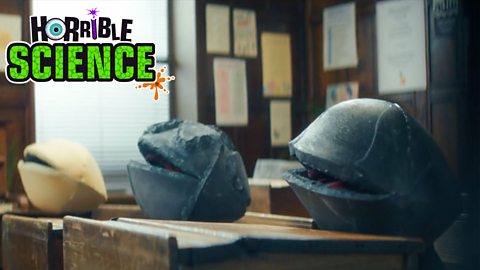
The rock cycle is how rocks change from one type of rock to another.
Rocks change between igneous, sedimentary, and metamorphic types.
These changes happen through processes such as melting, cooling, applying heat and pressure, weathering, erosion and cementation.
Watch: Cycle of Rock
Rock out with Mack Slack and see how different types of rocks are formed and change over time.
VOICEOVER: A stone cold hit musical that rocks hard.
ROCKS: Whoa!
MACK SLACK: Look at all you little rocks.
Sitting there looking up at me, not knowing where you came from or what you're gonna be. Well, let me teach you the oldest story on the planet. The rock cycle baby.
IGNEOUS ROCK: What's the rock cycle?
MACK SLACK: The rock cycle is how you guys turn from one form of rock into another in three main steps.
ROCKS: Ooh.
MACK SLACK: You melt and cool to become igneous rocks.
IGNEOUS ROCK: Whoa.
MACK SLACK: Squished together become sedimentary rocks.
SEDIMENTARY ROCK: Oooh, yeah.
MACK SLACK: Heated and pressurised. Boom.
Metamorphic baby!
METAMORPHIC ROCK: Yeah.
MACK SLACK: And then you do it again.
It's a cycle of rock. The rock cycle. It's a cycle that rocks, it goes around and around. Yeah, but it never stops.
IGNEOUS ROCK: Which one am I?
SEDIMENTARY ROCK: What about me?
MACK SLACK: Okay, okay, calm down, my rocky friends.
Let's start with you granite.
IGNEOUS ROCK: Yeah.
MACK SLACK: You are igneous rocks. You were born from magma. Yeah you cooled real quick.
ROCK: I'm cool.
MACK SLACK: You're volcanic and tough. And if that ain't rock enough, my friend, you are a granite brick.
IGNEOUS ROCK: Ner ner ner ner. Yeah, man.
IGNEOUS ROCK: I'm igneous.
SEDIMENTARY ROCK: I wanna be igneous!
MACK SLACK: You were once my sandstone friend. Sedimentary rocks you contain loads of stuff like sand, fossils, minerals and shells.
SEDIMENTARY ROCK: Oh, nice.
MACK SLACK: You're tightly compact. Yeah, that's a rock cycle fact. And the weather has eroded you well.
IGNEOUS ROCK: I want to be sedimentary now.
MACK SLACK: You will be one day granite.
IGNEOUS ROCK: Cool.
MACK SLACK: Just give it a few million years.
IGNEOUS ROCK: What?
MACK SLACK: The rock cycle. It's a cycle that rocks.
METAMORPHIC ROCK: Hey man, what am I?
MACK SLACK: You know what you are marble. You're metamorphic. Once a sedimentary pile, but after pressure and heat you change your style. You shimmer, shine, with crystals or stripes. Could be a smooth marble top or a slate roof tile.
METAMORPHIC ROCK: I really am smooth! Sometimes I slide right off the aargh…
MACK SLACK: Igneous.
IGNEOUS ROCK: Yeah.
MACK SLACK: Sedimentary.
SEDIMENTARY ROCK: Yeah.
MACK SLACK: Metamorphic.
METAMORPHIC ROCK: Yeah.
MACK SLACK: The cycle of rock. Round and around. Yeah. The rock never stops.
VOICEOVER: A School of Rocks.
VOICEOVER: Rated R for rock.
MACK SLACK: And that's how you rocks Rock and Roll. Now pack up your bags 'cause school's out for summer.
MACK SLACK: Whoa!
METAMORPHIC ROCK: It's November.
IGNEOUS ROCK: Yeah. I don't think he was a real teacher.
How are different rocks formed?
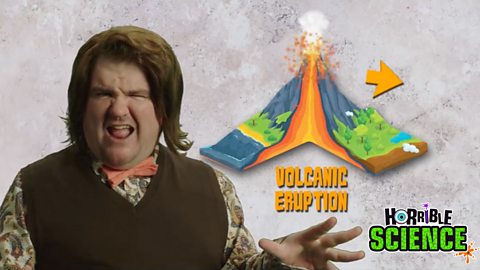
An igneous rock is formed when magma (molten rock that is found below the earth's surface) cools down.
Over time, this igneous rock is broken down into tiny pieces through weathering and erosion.
Weathering is when rocks are broken down into smaller pieces by water, ice, wind, or temperature changes. Erosion is the movement of those broken-down materials from one place to another by natural forces like wind, water, ice, or gravity.
A sedimentary rock is formed when these tiny pieces (called sediment) are then pressed and squashed tightly together.
This rock may become buried deep underground, where it is heated and pressed to become a metamorphic rock.
Eventually, this metamorphic rock might melt again into magma and the cycle begins again.
Explore the main types of rock
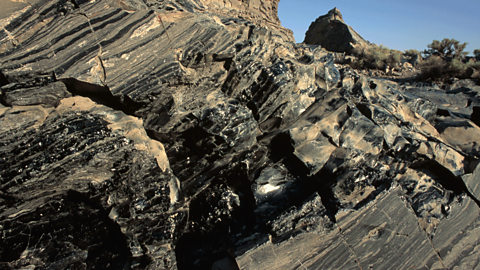
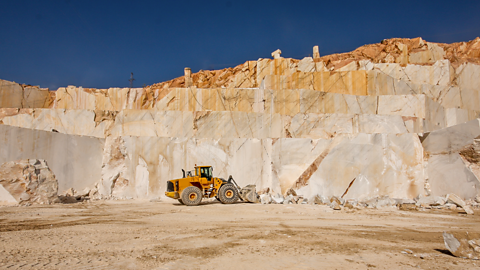
Image caption, Igneous rocks
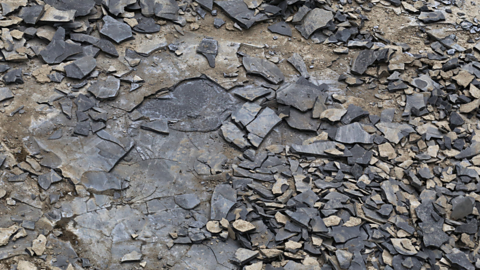
Igneous rocks form when molten (melted) rock, from beneath the Earth’s surface, comes to the surface and solidifies (becomes solid). Granite, obsidian and pumice are examples of igneous rocks. Granite makes up most of the Earth’s continents.
1 of 3
Horrible Science fact
It takes millions of years for rocks to form and go through the rock cycle. However, humans are unlikely to ever run out of rock as the rock cycle just keeps on going.
Find out more about the different types of rocks.
Quiz
How to use Horrible Science in the classroom
If you're looking to bring energy, humour and curriculum-aligned content into your science lessons, Horrible Science might just be your new secret weapon.

More on Horrible Science
Find out more by working through a topic
- count25 of 50
- count26 of 50

- count27 of 50

- count28 of 50