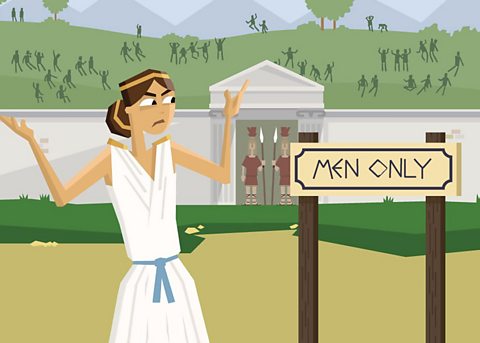
What did the Greeks enjoy?
The ancient Greeks enjoyed many kinds of art and entertainment. They watched plays in theatres, admired statues and temples, painted detailed pottery and joined in lively festivals.
Sport, music and dancing were also important. These activities were not only fun but also brought communities together and honoured the gods.
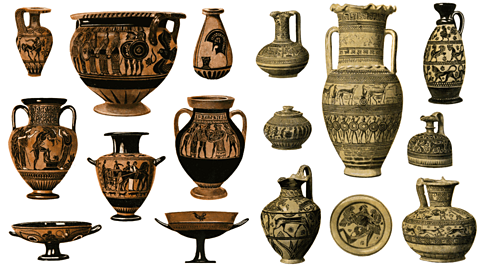
The Greeks had style! Their red and black pottery was very famous.
They were great builders too. The Greeks built grand temples to their gods and superb sculptures of brave heroes.
They pretty much invented the theatre as well.
Thousands of people watched plays by famous writers like Sophocles, Euripides and Aeschylus.
The Greeks had big festivals. There was music, dancing and feasting in honour of their gods.
Important words for the ancient Greeks
| Keyword | Definition |
|---|---|
| Theatre | A place where people watch plays and performances. |
| Olympic Games | Sporting contest first held in Olympia to honour Zeus. |
| Pottery | Decorated clay vessels used for storage, drinking and art. |
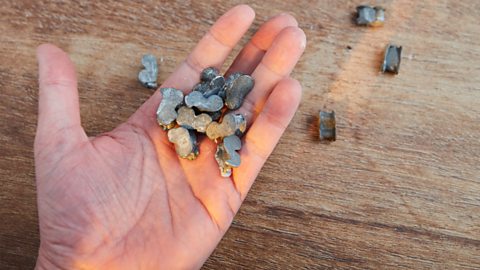
| Knucklebones | A game played by children with small animal bones or stones. |
| Epicureanism | A Greek philosophy that taught real pleasures come from simple living and self-control. |
| Festivals | Celebrations held to honour the gods, often with music, food and games. |
Watch: Ancient Greek theatre
Find out about the topsy-turvy world of the ancient Greek theatre.
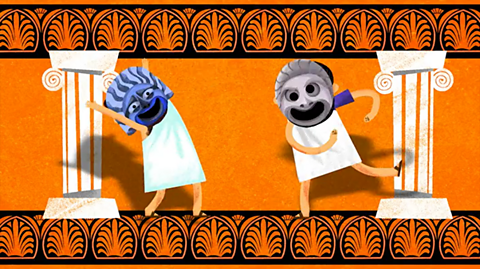
The Greeks loved theatre. They brought incredible stories to life with drama, music and dance. So, in ancient Greece, theatres were everywhere.
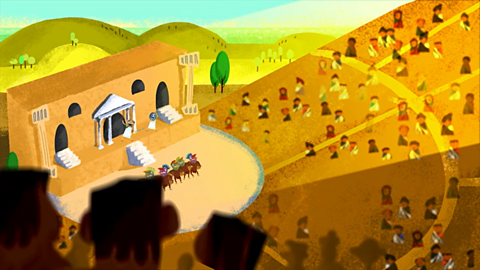
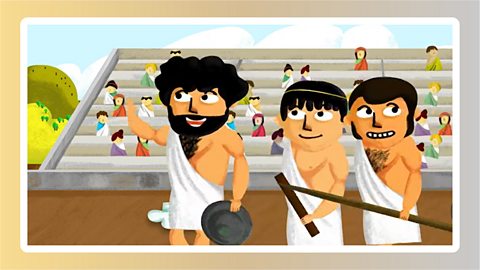
Every town had a big bowl-shaped arena, usually on a hillside, where thousands would flock to sit on hard stone seats and watch the latest play.
The most successful Athenian playwright was Sophocles, who won so many Greek theatre competitions that he became a big celebrity.
There were three types of plays – comedies, tragedies (which were sad, serious plays), and satyrs (a rude kind of play involving naughty half-men, half-goat characters).
Audiences could make a play a success by cheering and stamping their feet or a miserable failure by throwing food at the performers.
But if the audience were getting too rowdy, the theatre staff had big sticks to keep them quiet.
Actors in ancient Greece were all men… apart from that one… oh no, that’s a man too.
Actors changed the way they looked by wearing masks, wigs and padded costumes.
The chorus, standing below the stage, told the audience what was going on in the story. Lots of the time they delivered their lines in beautiful song and dance.
Their costumes could be even stranger than the actors with animal skins and bird heads!
So next time you see a play, a film or are even just sitting at home watching TV, remember that it all started with the Greeks and their masks.
Just don’t try and throw your dinner at the telly!
What were buildings and statues like?
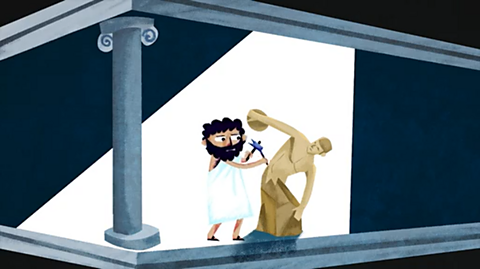
The Greeks carefully designed and measured their buildings, making sure they got all their angles, shapes and sizes right.
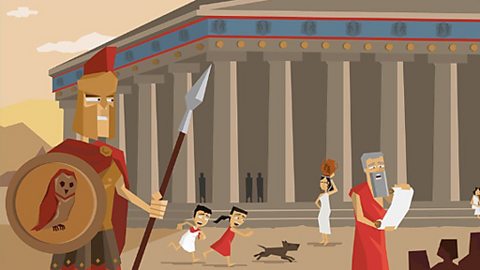
Their temples were held up with stone columns and sometimes decorated with stone carvings of famous battles from Greek myths.
The Greeks were really good at making statues too.
Sculptors carved lifelike marble statues and decorated them with brightly-coloured paints.
What role did music and dance play in ancient Greece?
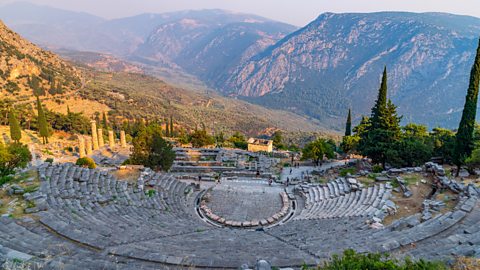
Dance was very important in Greek life, especially in festivals and plays. It helped the art form of theatre to grow and develop.
Plato, a Greek philosopher, believed that singing and dancing were part of being well-educated. He thought that they could shape a person's character.
Greek children were taught to sing and play instruments as part of their schooling.
What did ancient Greek pottery look like?
What did the ancient Greeks eat?
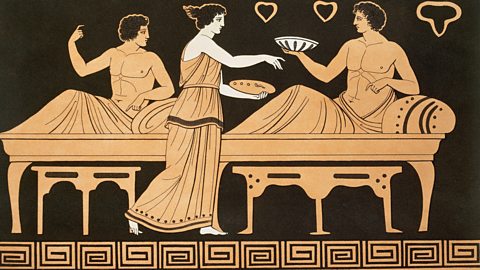
Ancient Greeks meals were simple, based on bread, olives, cheese and fruit. Meat was rarely eaten except at festivals or sacrifices.
Rich citizens enjoyed more meat and seafood but even they valued simple, balanced meals over luxury.
At special festivals, communities shared food in feasts to thank the gods and bring people together. Athenians believed meals should feed the mind as well as the body.
At banquets, people reclined on couches and enjoyed music, poetry and dancing.
Greek thinkers linked food with philosophy. Epicureanism taught that real pleasure comes from self-control and simple living and not eating excessive amounts.
What games and sports did ancient Greeks enjoy?
The Olympic Games began in Greece in 776BC and were held every four years to honour the Greek god Zeus.
The Greeks also organised other important athletic festivals such as the Pythian, Nemean and Isthmian Games.
Children played games such as knucklebones which was a popular toy where they tossed small bones or pebbles and caught them skilfully.
What Greek festivals were there?

The Greeks loved big celebrations for their gods.
Every four years, Athens held the Panathenaic Games in honour of the god Athena.
There were competitions for athletics, poetry reading and music. The Games ended with an enormous all-night banquet.
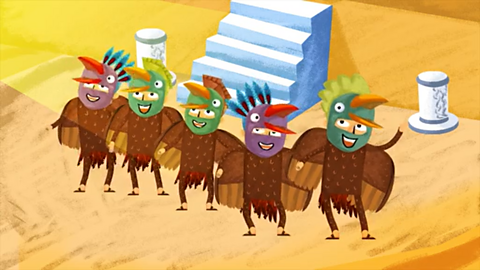
- Athens put on a drama festival called the Dionysia in honour of the god Dionysus.
- He was the god of the theatre and wine.
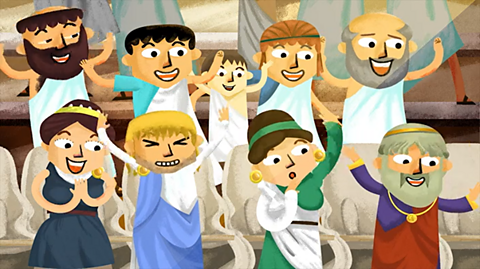
Judges gave prizes for their favourite tragedy and comedy performances.
The Pythian Games were held in Delphi for the god Apollo.
Think like a historian
Have a look at the thinking points below and think about your answer to each question. You could even write them down on a piece of paper or discuss them with somebody else if you want to.
Why do you think the Greeks linked their entertainment (like theatre, music and games) with religion and the Gods?
What do the Olympic Games tell us about what the Greeks valued in people?
How might simple games like knucklebones have been just as important for children as great festivals were for adults?
The Greeks believed the Gods were part of every part of life, so even fun activities became ways to honour them.
The Olympic Games show that the Greeks admired strength, skill and competition and wanted to bring glory to their city.
Children’s games helped them practise skills, make friends and feel part of their community, just like adults did in festivals.
Quiz
Grown-ups corner
Are you a parent, carer or teacher?
Take a look at some of the links below on KS2 History which are packed full of knowledge, videos, quizzes and activities.
What was Anglo-Saxon art and culture like?
KS2 History
What were games like in Ancient Egypt?
KS2 History
The Olympic Games
BBC Bitesize for Teachers
Game: The Argo Odyssey
Are you a parent, carer or teacher?
Take a look at some of the links below on KS2 History which are packed full of knowledge, videos, quizzes and activities.
More on Ancient Greece
Find out more by working through a topic
- count7 of 8
- count8 of 8
- count1 of 8
- count2 of 8