Something doesn't look quite right with these films...
These days, our phones are glued to our hands almost 24/7. Around the world, computer screens seem to dominate every school, office and home.
But that hasn't stopped Hollywood sometimes getting things hopelessly wrong - especially when it comes to representing technology in films. How many errors have you spotted?
Here, BBC Bitesize takes a look at five mistakes from silver screen classics.
1. Swordfish (2001)

Hacking always looks incredibly exciting in the movies. A good example is the tech-thriller Swordfish, in which Hugh Jackman plays a skilled hacker recruited to infiltrate secure computer systems…
Sadly, though, in real life hacking just looks like someone typing endless lines of code into a computer - or even the computer running on its own, trying to find a way into whatever the hacker wants to access.
That would hardly make for great cinema, so it's no wonder movies like this depict frenzied keyboard-bashing, ticking timers and file systems represented on the screen like video games.
2. Jurassic Park (1993)
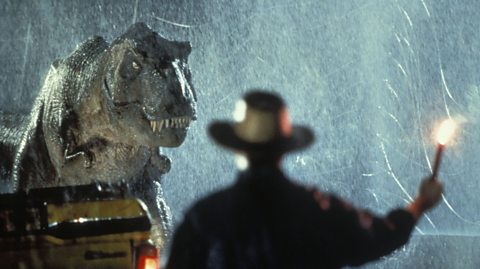
We've all seen films where the hacker works feverishly to gain access to a network only to be met with an ominous 'access denied' screen. More often than not, the words are in huge letters on an alarming red background.
Then, after a bit of Olympics-worthy typing, success - and an equally huge 'access granted' screen. Jurassic Park contains one of the best-known examples of this.
But when did you last get a message like that? Never, that’s when. A friendly 'have you forgotten your password?' prompt is more likely, without any red-screened drama.
3. Blade Runner (1982)
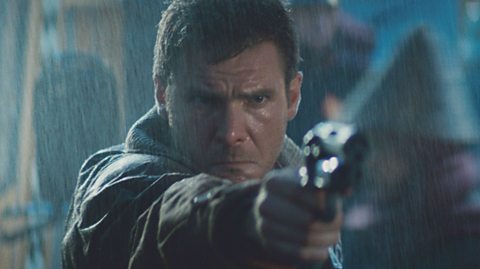
This technology error began with Ridley Scott's classic science fiction film Blade Runner, and is now incredibly common.
The main character stares intently at a blurry picture, often a suspect's face or piece of unreadable text. "Enhance the image," she demands, and suddenly a pin-sharp picture is revealed.
In reality, digital pictures are made up of tiny dots of colour called pixels. Low-resolution images have far fewer pixels than high-resolution ones, and there’s no reliable way of recovering detail that wasn’t captured by the camera in the first place.
Even though software has improved massively since 1982, the ability to zoom and enhance images into high resolution still isn't possible - that face is going to remain blurry, unfortunately.
4. Independence Day (1996)
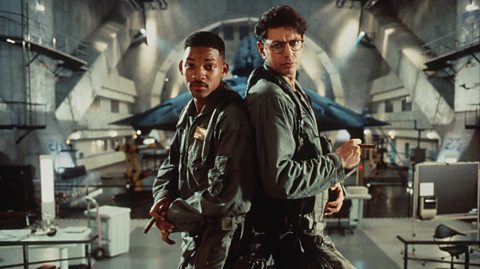
One of the most well-known movie techno-goofs occurs in 1996's alien invasion film Independence Day, but is everything quite as it seems?
Jeff Goldblum plays a brilliant scientist who writes a deadly computer virus in just a few hours - which is pretty much impossible in itself - before uploading it to the aliens' mothership. The invaders are destroyed and Earth is saved. Hooray!
The problem? Viruses are written for specific operating systems, so Windows viruses are written for machines running Windows and so on. Unless the character had in-depth knowledge of the aliens' computer systems, it would be virtually impossible to write a virus that would completely corrupt them.
However, the film's writer and producer, Dean Devlin, has since explained how Goldblum's character managed it. The aliens' ship was programmed using [binary code] - a language made up of ones and zeroes. The scientist swapped out the zeroes for ones and the ones for zeroes, which is why their system short-circuited.
As for why the aliens didn't have security measures in place to protect against humans, we still don't know…
5. 2001: A Space Odyssey (1968)
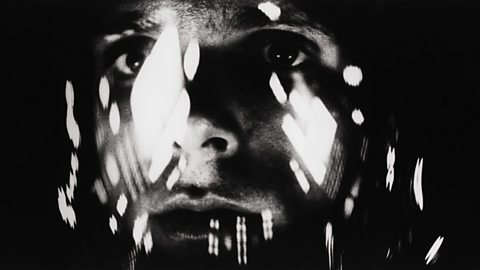
Stanley Kubrick’s 2001: A Space Odyssey, Ridley Scott’s Alien (1979) and Steven Spielberg’s Jurassic Park (1993) all feature computer monitors so bright you can almost read what’s on them projected onto the face of whoever’s using the computer. It’s a visually stunning idea, so you can see why directors like it.
But in reality, a screen so bright would be so dazzling it would be very difficult to use. Secondly, it wouldn’t project words or images sharply enough for anyone watching to be able to read them.
This article was published in June 2019 and updated in July 2026.
