The 'inspiration' behind Disney's hit films
Founded over a century ago by Walt Disney, The Walt Disney Company has brought a whole world of animation to generations across the globe. In many of their films, Disney loosely reference myths, legends and fairy tales.
The Lion King, for example, was inspired by Shakespeare’s Hamlet and the story of Moses from the Bible. Others are more obvious, and less dark, renditions of old stories.
Here, BBC Bitesize takes a look at some of the stories behind your favourite Disney classics, but be warned - not all of them have a Hollywood happy ending. You can also test your knowledge of these stories in our IYKYK quiz below!
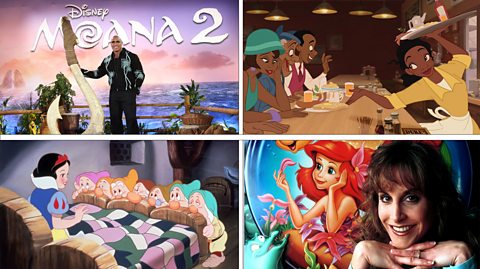
Quiz: Which stories were these Disney films inspired by?
Snow White and the Seven Dwarfs (1937)

Let’s start at the very beginning. Snow White was the first animated feature film Disney ever made, and the raven-haired princess has had a place in countless people’s hearts ever since.
The inspiration for the film comes from a story published in Grimms’ Fairy Tales, a collection of some of the best known fairy tales in the world, put together by the German brothers Jakob and Wilhelm in 1812. Like a lot of the tales the brothers penned, it’s thought the story of Snow White has been around since the Middle Ages, but only passed down through word of mouth.
The film has actually stayed faithful to the tale: an evil stepmother tries to have Snow White killed for being prettier than her, but instead the princess ends up living with seven dwarfs. Her stepmother discovers her and, disguised as an old lady, feeds her a poisoned apple which seems to kill her.
Enter stage left - a handsome prince, who comes to Snow White’s rescue and revives her. One of the only embellishments Disney adds is the quirky and individual personalities of the dwarfs - there’s no reference to any of them being Dopey or Grumpy in the book.
The Little Mermaid (1989)
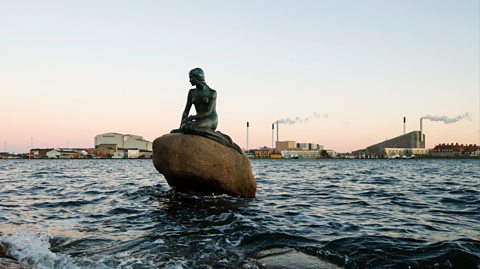
The Little Mermaid is another firm favourite with Disney fans. The animated musical fantasy film was first released in 1989 and in 2023, a live-action adaptation starring Halle Bailey in the lead hit cinemas.
It tells the story of a teenage mermaid who loves to sing and longs to live on land. She stumbles across the ship of a handsome prince, with whom she falls in love, and in order to win his affections she seeks the help of a sea witch to turn her into a human.
The witch obliges, but on one condition - she has to give up her voice. This is all in line with the original, a fairy tale written by the Danish author Hans Christian Andersen in 1837.
However, in his story, it’s a little bit more gruesome, as she not only has to give up her voice but her tongue as well. Not only that, it’s not exactly a happy occasion when she finds she can walk, as it feels as though she’s constantly walking on knives.
It gets worse. The witch tells her that if she doesn’t get the prince to fall in love with her, she’ll dissolve into sea foam. As it turns out, the prince falls in love with a woman from a neighbouring village, so the poor mermaid does in fact have a foamy demise. Not quite the happy ending Ariel gets in the film.
Hercules (1997)
The story of Hercules (or Heracles) is probably one of the best known legends that Disney has chosen to bring to the big screen. It comes from Greek and Roman mythology, and the man in question has quite a challenging life.
The Disney story keeps some elements of his fabled early years: he was the son of Zeus, but in the original legend his mother is Zeus’ mistress Alcmene. Hera, Zeus’ wife, was so enraged with jealousy at the thought of Zeus having a child with another woman, that she sends two snakes to kill Hercules in his crib.
The plan ultimately fails, as Hercules turns out to be super-strong, offs the snakes before they have the chance to kill him. This also happens in the Disney movie, although it’s Zeus’ brother Hades, lord of the underworld, that puts the hit on Hercules.
Going back to the legend, Hera isn’t quite done making Hercules’ life miserable, so she casts a spell on him that causes him to kill his entire family. This part is not exactly PG, so you can see why it didn’t make the cut on screen.
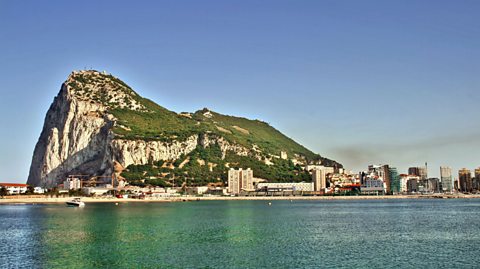
To absolve his guilt, Hercules performs 12 almost impossible labours - feats so difficult they seemed impossible. There is actually physical evidence of one of them: have you ever been to Gibraltar?
If you have, then you’ve visited the site of one of the pillars of Hercules, that he installed to mark the completion of one of the 12 tasks. The other pillar is thought to be either Jebel Moussa in Morocco, or Mount Hacho which is held by Spain.
Atlantis: The Lost Empire (2001)
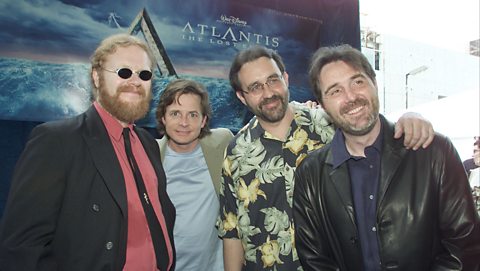
Although it’s one of Disney’s more forgotten films, it’s based on one of the most compelling legends the world has ever known. Atlantis: The Lost Empire is a tale of adventure and discovery.
It sees a bumbling museum cartographer Milo Thatch set out to find the lost city of Atlantis, an island that was supposed to have sunk in the sea thousands of years ago. In the film, they do end up finding it, and are surprised to find it inhabited.
The myth itself goes back thousands of years, and the man responsible for it is the Greek philosopher Plato. He wrote about an island that was extremely powerful, because its kings descended from Poseidon, god of the sea.
Eventually, however, the island’s god-like nobility started mixing with mere mortals, and so they became less powerful. There was a huge war with their former allies in Athens, and this led to the destruction of the island, which sank to the bottom of the sea.
As much as he wrote about this glorious place, he skimmed over the detail of where it actually was. Many believe it to have lain somewhere between the Strait of Gibraltar (remember the pillars of Hercules? Between those), and some scientists have even found ‘proof’ that it existed as a land bridge that aided the migration of people between Europe and Africa. At any rate, no one on Earth has managed to find it, except of course Milo Thatch.
The Princess and the Frog (2009)
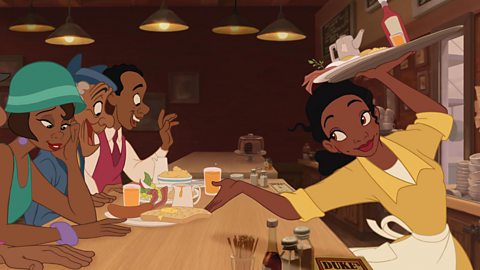
Disney’s first Black princess was a long time coming for lots of people, and she was a hit - the film was nominated for three Oscars. You may be aware of the fairy tale, that a princess meets a frog who eventually persuades her to kiss him.
He then turns into a prince and voila - they live happily ever after. Disney however takes a slightly different tack.
Tiana, a waitress in New Orleans, works all hours of the day to save up for her dream: to own her own restaurant. At the same time, Prince Naveen arrives in the city to try to find a way to make some money after his parents cut him off.
An enchanter turns Prince Naveen into a frog and at a party, Tiana finds him. Having heard the fairy tale from her mother, she reluctantly kisses him, but instead of turning him back into a prince, she’s turned into a frog too. Hilarity ensues.
Disney took inspiration for Tiana’s character from a real-life chef from New Orleans called Leah Chase, who died in 2019. Leah cooked classic Creole food that was loved by many, and she served countless VIPs, including Martin Luther King Sr (who apparently loved ribs) and Barack Obama, who had to be prevented from putting hot sauce in her signature gumbo - a cardinal sin.
The other inspiration comes from the trusty brothers Grimm again. The original tale is called The Frog Prince and it has a bit more of a gruesome twist than the story you might be familiar with. Essentially, the frog pesters the princess to kiss him so much, that she gets tired of him and throws him against a wall. Instead of killing him though, he turns into a prince, and surprise, surprise, she sees the error of her ways and they live happily ever after.
Moana (2016)
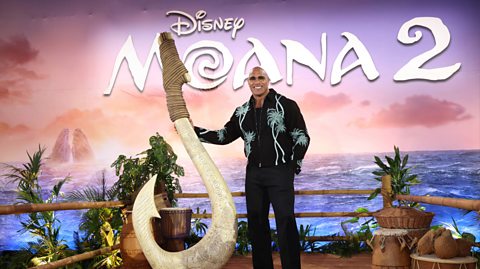
Moana was another first for Disney, as she is their only Polynesian heroine. In the film, Moana defies her father’s wishes and takes to the ocean to return the heart of Te Fiti, who turns out to be an island goddess.
Along the way, she finds demi-god Maui, who at first is reluctant to help her, but they end up making a great team. Moana then returns to her people and convinces them to stop being afraid of the ocean, and it ends with the islanders returning to their seafaring roots.
Moana’s journey is quite fitting, as her name means ‘large body of water’ or ‘ocean’ in Hawaiian and Maori. But it’s not her character that’s inspired by ancient folklore - it’s Maui’s.
Maui is an important figure in Hawaii, Polynesia, Tahiti and elsewhere. He features heavily in stories of creation - he’s thought to have created the islands in that part of the world by hauling them up with his fish hook, and taming the sun using his sister’s hair to lasso it, and eventually convincing it to give them long days in summer and short days in winter.
However he looks slightly different - in the myths he’s depicted as a skinny teenager just coming of age, whereas in the Disney movie he’s built more akin to the person who voices him, Dwayne ‘The Rock’ Johnson. In other words, he’s hench.
In 2024, the Disney story continued as sequel Moana 2 was released. On 10 July 2026, ten years on from when the original Moana film hit cinemas, the live-action adaptation is coming to our screens and will see Dwayne ‘The Rock’ Johnson reprise his role as demigod Maui.
Alice in Wonderland (1951)
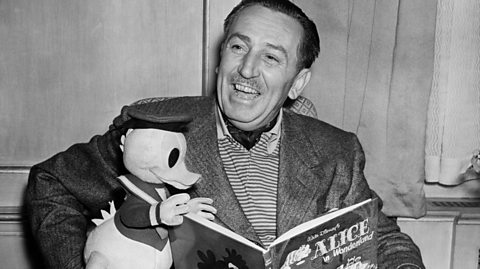
Disney's Alice in Wonderland first came to the big screen in July 1951 and in 2026, the classic animated film will celebrate its 75th anniversary. The fantasy follows a young girl named Alice who is bored and follows a rushing White Rabbit down a rabbit hole to a new bizarre world - Wonderland.
There, she meets iconic characters such as the Mad Hatter, the Cheshire Cat and the Queen of Hearts, but also has to get her head around the nonsensical world she is now in. But the film is actually inspired by one of the most famous books in children’s literature - Alice’s Adventures in Wonderland.
Written by author Lewis Carroll (real name Charles Lutwidge Dodgson) and published in 1865, the title role of Carroll’s famous work is also widely believed to have taken inspiration from a real-life girl named Alice. In 1871, a sequel was published by Lewis Carroll entitled Through the Looking-Glass, and What Alice Found There, followed by numerous film adaptations in the decades that followed.
In the 2010s, the stories entered their live-action era at Disney with Alice in Wonderland (2010) and Alice through the Looking glass (2016). The 1951 Disney film weaves together elements of the original book and its sequel, but stand-out differences include the commission of book characters like the Mock Turtle and the Gryphon.
This article was published in July 2019 and updated in June 2026
