What were the origins of the transfer test?
The transfer test has been part of school life in Northern Ireland for generations, but it has changed over the decades.
The first system appeared in 1947 and was known as the 11-plus, a government-run exam that decided who could go to grammar school.
This transfer test remained in place until 2008, when the final 11‑plus was held and the system was officially ended.
The system ends - but selection remains
But grammar schools didn’t stop selecting pupils by academic ability.
With no government test to use, grammar schools created their own private exams.
Two different groups of schools set up their own versions of the transfer test:
AQE (Association for Quality Education) – mainly used by controlled and voluntary grammar schools
PPTC (Post Primary Transfer Consortium) – mainly used by Catholic grammar schools
What do critics of the transfer test say?

The transfer test has always sparked strong opinions.
Critics argue it puts too much pressure on children at just 10 or 11 and that a single score shouldn’t shape someone’s future.
Fairness is another concern: some families can afford private tutoring while others cannot, which makes the system feel uneven.
A paper from Queen's University Belfast published in 2022 claimed that academic selection perpetuated division in wider society in Northern Ireland and "disadvantages the already most disadvantaged".
What is the view of supporters?
They argue that the test provides a fair, standardised opportunity for pupils to show their ability, regardless of background.
Many families choose grammar schools because of their reputation for high achievement.
What was the road to SEAG?
In 2021 tests were cancelled due to the Covid-19 pandemic.
In 2022, over 60 grammar schools in Northern Ireland agreed to move to a single test and formed the Schools’ Entrance Assessment Group (SEAG).
The tests are run not by schools but by an external professional assessment body.
The first SEAG tests were held in November 2023.
The majority of Northern Ireland's 190 post-primaries do not use the tests to decide which pupils to admit.
What can pupils who sit the SEAG test expect?
Taking the SEAG test is optional, and many families choose schools that don’t use academic selection.
For those who do take it, families register, pick a test centre and prepare for the kinds of questions likely to appear.
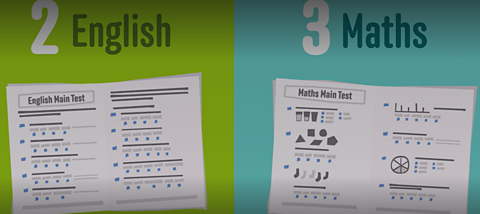
Pupils sit two one hour papers, over the course of two Saturdays.
When do pupils receive their results?
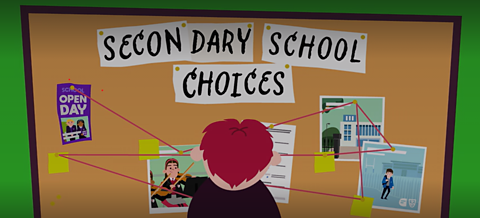
Results are released in January, giving families time to decide which schools to apply to.
For some pupils, the outcome fits long-held plans; for others, it opens new choices.
Teachers often remind pupils that the transfer test is only one path - and that young people can thrive in many different schools across Northern Ireland.
KS2 revision resources
The transfer test covers English and Maths.
Whether you sit the test or not, we've collected lots of resources and interactive activities to help refresh your knowledge and practise the skills you've learnt throughout KS2.