Choosing a secondary school

There are lots of choices when it comes to picking a secondary school.
You might want one with a great art department, brilliant sports team, or an amazing library - or maybe you’re all about science or drama!
To help you decide, you might visit some schools and chat with your family, friends, or teacher about what feels right for you.
You might also hear about something called the transfer test, or SEAG.
It’s an optional test that some P7 pupils in Northern Ireland take, and some grammar schools use the marks from it to choose who to offer places to.
The majority of schools don't use the test, so not everyone will do it, but if you do, then we’ve got lots of useful information below about what happens before, during, and after, so you know what to expect.
KS2 revision resources
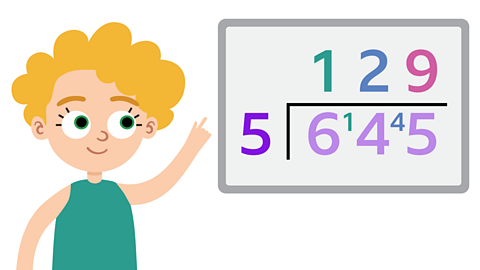
The transfer test covers English and Maths.
Whether you sit the test or not, we've collected lots of resources and interactive activities to help refresh your knowledge and practise the skills you've learnt throughout KS2.

What is the transfer test?
This video helps explain what the transfer test (SEAG) is all about, and how it fits into choosing a secondary school in Northern Ireland.
What is the SEAG test?
The Seeeag test
The Sayag test?
The Seeaaag test?
The S.E.A.G. test?
Whatever way you say it, the SEAG test is used by most grammar schools in Northern Ireland to select which pupils are admitted to their school.
The letters stand for Schools' Entrance Assessment Group.
63 schools in Northern Ireland got together to agree the best way to assess P7 pupils' academic ability, to see if they are suited for a specific type of school, these are called Grammar Schools.
You don't have to take the test, but some secondary schools only take pupils that have done it.
And for some people that's fine! They know which school they want to go to and they don't need to do the test. All good!
But if you want to take the test there are a few things you need to know.
You have to register your details and apply online at seagni . co . uk
Your parent or guardian will do that for you on the website.
You will need to select where to sit the test. There are many different assessment centres, most of which are bigger secondary schools.
Where you sit the test has no impact on which school you eventually go to, but if you want to do it in a school close to you, it's best to apply early!
There is a small charge, but your parent or guardian might pay this if you ask them nicely!
You might want to remind them they'll need a recent photo of you and your birth certificate.
That means that you can get a Pupil Card to print out and bring with you on the day.
This proves you are really you. No imposters!
Once you've registered and applied, you're good to go.
Let preparations begin!
How to prepare
This video shares some simple, sensible ways to prepare.
Although the SEAG test is an important event for those who are taking it, school life in P6 and the first months of P7 will go on as per usual.
However, if you want to put in a few extra hours of preparation, then practice test papers are available on the SEAG website.
Your teacher may also give you some resources to help you get ready.
Most P6 pupils begin practice tests in school to help build confidence and good technique.
This will let you get used to the format of the test and the type of questions you'll be asked.
Don't worry if you don't get all the questions right, practicing will help you figure out what to focus on as you go along.
Many secondary schools will offer familiarisation days. They're worth doing.
It means you can visit the school and see the room that you'll be in. You might even be able to see exactly where you're going to sit!
But, while it's a good idea to do as much as you can to prepare for the test, try not to obsess about it!
The best way to demonstrate your ability on the day of the test is to show up fit, relaxed, healthy and focused.
So, get a good sleep every night. Take plenty of exercise and eat well.
It may seem tempting to practice non-stop, stay up late, and talk about the test 24/7, but nothing is more likely to stop you performing at your best.
Yeah, the test will be a big part of your life for a while, but not the only part. It's all about balance.
When you're practicing - focus hard. But when you're not practicing - focus just as hard on walking the dog, kicking a ball, dancing, playing the tuba or whatever it is that makes you the happiest person you can be.
The test is about finding the best school for the wonderful and unique person that is you.
So, keep enjoying life!
What is on the test?
Take a closer look at how it all works.
OK, let's get down to the details.
What is actually on the test?
So, there are two tests that take place on two separate Saturday mornings.
Each test consists of three parts.
First, there is a practice section to let you warm up your brain and get in the mood.
This has five English and five maths questions.
This bit isn't scored, so don't panic if you find something tricky.
Just brush it off and get ready for the real thing!
In the actual test, there is an English section and a maths section.
The English section includes multiple-choice questions on your punctuation, grammar and spelling.
It also contains a piece of writing that you have to read carefully.
Then you answer some questions about it.
Make sure you read the text in detail.
It can be easy to rush through the questions without taking enough time to understand it properly.
Especially when you are already nervous, or excited, or keen to show off how good you are!
Everyone can make mistakes, so double-check that the answer you are giving matches what is actually in the passage you have read.
The maths section contains multiple-choice questions as well as some written answer questions.
Again, it's easy to make silly mistakes, so check your work carefully and don't leave any multiple-choice questions unanswered!
You can do the maths or English first — it's up to you.
But you have 60 minutes in total to complete all the questions, so be careful not to take so much time on the first section that you have to rush the second section.
Whatever order you do it in, make sure you fill in the answer page.
Yes, that's really important!
You can make notes on the test itself or on rough work paper, but you must write your answers on the answer page!
If you have time left, take an opportunity to check over your work; you might realise that you left a question out or flicked past an entire page.
It's always worth checking.
You'll probably have done loads of practice, so you'll know the drill!
What happens on the day of the test?
Take a look at what the day will be like and what to expect.
So, it's the day of the test.
You wake up after dreaming all sorts of stuff - it's a bit of a weird feeling, but once you get breakfast, you're ready to go!
Some people wear school uniform so that they are in their “school zone.” Others wear their PE kit or just whatever they feel comfortable in.
Your school might advise you on what to wear, but remember: it's not a fashion parade - you don't get extra points for style!
Make sure whoever is bringing you to the assessment centre knows how to get there and where to park.
The last thing you need is to be going around in circles worrying about being late.
Give yourself plenty of time in case of unexpected delays.
Once you get there, say your goodbyes and get focused.
Stay in the zone but try to relax - that's when you do your best work!
It can feel a bit strange in the hall with loads of others, but try to remember that you've practised it all before and it's just the same stuff.
Nobody's trying to trick you!
There will be adults there called invigilators telling you what to do.
They are there to help, so if you need paper or a pencil or want to go to the bathroom - just ask.
They're not monsters!
There will be a clock in the room. It's your friend!
Use it to check that you're not spending too much time on a section, and try to leave yourself enough time to have a go at all the questions.
The invigilator will also give you updates on what time is left.
Once you've finished, go get a treat - a donut, bubble tea, a pancake stack, sushi, whatever you're into.
You deserve it.
Oh, and don't look back - tomorrow is another day!
After the test
Find out what happens after the SEAG test is over.
Once it's all over, you can take a deep breath and look forward to a life without any of the moments of anxiety caused by the SEAG test.
You can start to worry about your results instead! Only kidding!
There's lots of time before the results come out, so have some fun!
Reward yourself for all that hard work with whatever floats your boat.
A day out with your mates. A trip to your Granny's. A pamper session with your besties. Or just some "me" time doing whatever you feel like.
You can also go visit some schools on their open days.
Yeah, because soon it will be time for you to select the schools you would like to go to.
So have a chat with your friends, family and teachers, and make your choices.
And listen, when the time comes to get your results, don't stress.
Let's face it, there's nothing much you can do to affect the outcome.
You've done your best and that's all that matters.
And all that effort will help prepare you for secondary school anyway, wherever you end up choosing.
Your time in P7 will then turn towards helping you get ready for your new school… and Year 8!
In no time you will know which schools have offered you a place.
And soon you'll be buying a different uniform and getting ready for a whole new life in learning.
But that's a different story!
Wellbeing resources for pupils


Wellbeing resources for parents



More on Transition
Find out more by working through a topic
- count3 of 6

- count4 of 6

- count5 of 6