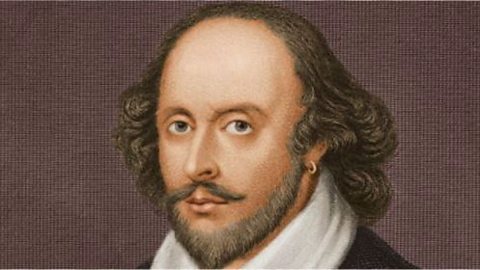
Aim
To celebrate the life and work of William Shakespeare on 23 April (widely recognised as Shakespeare's birthday despite historians not being able to confirm the exact date), and to consider the impact of his work on the world, language and storytelling.
The video
Did you know that the 23rd April is William Shakespeare’s birthday? It’s the date that we mark Shakespeare Day. Born in 1564, he was a poet, a writer, but above all England’s greatest dramatist.
But he lived and worked over 400 years ago - so why do we still celebrate him?
Yes, why do half of the world’s population study his plays and sonnets? How did he inspire generations of writers, artists and film makers? And why do we consider him the UK’s greatest cultural export?
Well the answer is simple. Because his stories are timeless. His words still speak to us. They shape how we see ourselves, how we understand others, and even who gets seen at all.
From epic battles and forbidden love to witches, ghosts, and backstabbing royals, Shakespeare's 38 plays have it all. And they’re still just as powerful, dramatic, and fun as when they were first performed.
As an actor Shakespeare is an essential for me because I believe you’ve got to know where you come from before you begin.
Like many, I first encountered Shakespeare in high school when studying a play called Romeo and Juliet.
Shakespeare was born in Stratford which is actually a few miles from my home town.
Turns out we’re both Midlands boys. What’s not to love?
I’m here at The Globe theatre in London - this is a replica of the original, which saw its first performance in 1599. And just like today, people in the 1600s would have flocked to theatres to see plays like MacBeth, Twelfth Night or Othello.
People who came to see the plays in those days would have been packed in. With up to 3,000 people watching a single performance.
They don’t let as many through the doors these days.
But some of the audience still stand, they’re called the Groundlings.
And as it has no roof, they still brave the elements, just as they would have back in the day.
Audiences came for the plays about histories.
The comedies… Ha ha ha ha!
And the tragedies. Oh…
They were part of Shakespeare’s world. They could explore his characters and their relationships, be challenged by his rich language, its form and structure, to share his emotions.
And this is why Shakespeare’s plays still resonate. Because he wrote about the feelings we all still experience in our day to day lives - the things that make us human.
Macbeth is about the lust for power and the consequence of unchecked ambition.
Romeo and Juliet’s is all about the intensity and impulsiveness of first love, parental control and community division.
And Othello deals with racism, misogyny and the dangers of gaslighting.
All very contemporary themes but not only this - his language lives on too.
He invented hundreds of words and phrases. You may have even used some yourself. Words like…
Gloomy…
Lonely…
Swagger…
…They’re all his!
And as the man himself once said “All the world's a stage”.
So let’s get out there because Shakespeare is part of our cultural legacy. He is in the things we say, the stories we tell, even the jokes we make!
“Knock Knock.”“Who’s there?”“Toby.”“Toby who.”“To be or not to be.”
Sorry. ‘Knock Knock, Who’s There’ - that’s one of his too.
So if you’ve ever been on ‘a wild goose chase’, ‘not slept one wink’, or had ‘too much of a good thing’, you’re using Shakespearean idioms - first used in his plays centuries ago.
It’s over four hundred years, and he’s still living.William Shakespeare, the gift that keeps giving.He flipped the script, wrote plays so brave.Slipped in slang audiences crave.
“Heart of gold,” “in a pickle”, all his creation,“Bedazzled” our language, pure inspiration.From “mum’s the word” to “come what may.”From “it’s all Greek to me” to “forever and a day.”
From The Globe to the street, his words still speak.They vibe through time, week after week.He shaped our speech in his own bold way.
Respect to the Bard on Shakespeare’s Day!
Video summary
Shakespeare Day is celebrated on 23 April every year, marking his birth in 1564.
In this video, actor and poet Kaya Ulasli looks at the legacy of Shakespeare and how his works and storytelling still influence our lives today. He analyses why we celebrate William Shakespeare and his works, and also looks at the history of The Globe Theatre in London which is a replica of the original that saw its first performance in 1599.
And just like today, people in the 1600s would have flocked to theatres to see plays like MacBeth, Twelfth Night or Othello. Kaya also explores how Shakespeare’s plays still resonate today, because he wrote about the feelings we all still experience in our day to day lives - the things that make us human.
Video questions
Ask students to name examples of Shakespeare plays (the more obscure the better). Can students name how many plays he wrote? (38)
Locate where Shakespeare was born on a map (Stratford-upon-Avon)
What would life be like for people living in the 16th and 17th centuries? How would it compare to ours?
Discuss with students the importance of plays and stories in the 1500s and 1600s as the main source of publicly accessible entertainment; can students think of any others?
Why did plays need to entertain audiences, instead of just informing them?
Ask students if they think his work is still relevant today and compare this to their responses after the assembly.
Context
William Shakespeare was born in Stratford-upon-Avon in 1564 and married Anne Hathaway in 1582. They had three children.
He spent most of his professional life with an acting company in London, the Lord Chamberlain’s Men. In 1599, the acting company built the Globe Theatre.
Shakespeare’s plays are still performed all over the world and have inspired many films, ballets, musicals and operas.
Shakespeare wrote different types of plays – histories, tragedies and comedies, as well as some mixtures called ‘problem plays’. He drew on many different sources to create his unique plays. Some of them were based on the history of the kings of England – Elizabeth’s ancestors. These plays did not necessarily tell the truth, but the version that was most acceptable to the queen or king.
The politics of the court and what people on the street were talking about also inspired Shakespeare. When James I came to the throne, Shakespeare wrote his Scottish play, Macbeth, which featured the witches James was interested in. The character of Banquo was portrayed as good and wise – because James was descended from him.
Shakespeare set some of his plays, such as Twelfth Night and The Merchant of Venice, in Italy – which was far enough away to be a kind of fantasy world for the English.
Shakespeare used stories from older books of all sorts for his non-historical plays. He borrowed from Latin and Greek authors as well as adapting stories from elsewhere in Europe. Hamlet is borrowed from an old Scandinavian tale, but Romeo and Juliet comes from an Italian writer writing at the same time as Shakespeare. Adapting the work of other writers was very common at the time. Although he borrowed plots, Shakespeare made the details his own, and often combined different plots.
Key terminology
Introduce key terminology, including:
- dramatist: a person who writes plays
- sonnet: a type of poem of 14 lines that uses regular rhyming
- cultural export: the sharing of artistic ideas around the world
- groundlings: theatre spectators that could not afford seats; they stood in the pit area
- contemporary: modern, new or happening now
- gaslighting: psychologically manipulating someone to question their own reality or doubt themselves.
After watching the video
Ask students to name examples of Shakespeare plays (the more obscure the better). Can students name how many plays he wrote? (38)
Locate where Shakespeare was born on a map (Stratford-upon-Avon).
What would life be like for people living in the 16th and 17th centuries? How would it compare to ours?
Discuss with students the importance of plays and stories in the 1500s and 1600s as the main source of publicly accessible entertainment; can students think of any others?
Why did plays need to entertain audiences, instead of just informing them?
Ask students if they think his work is still relevant today and compare this to their responses after the assembly.
Resources
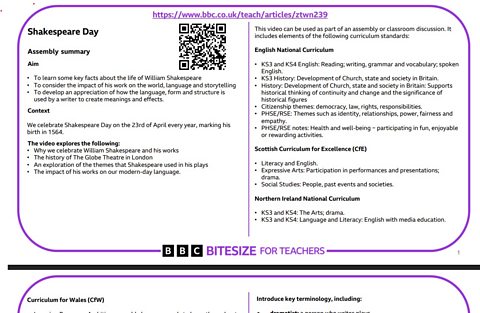
Related links
Shakespeare Week - Teaching Resources. collection
All of our Shakespeare-themed classroom resources in one place.
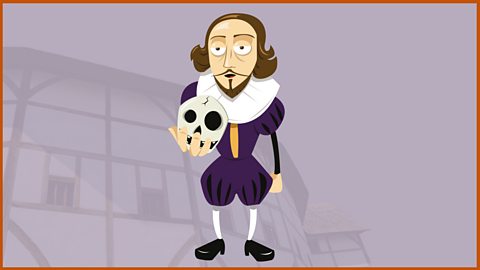
Shakespeare Themes. collection
These short classroom videos explore some of the themes that span Shakespeare's plays (for example, love, power, and the supernatural), improving students' understanding of his most popular works and the society in which they were written.
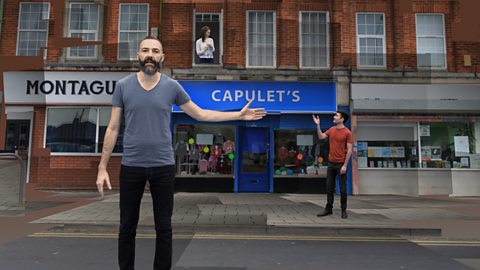
Shakespeare's life, work and legacy. collection
A collection of interactive articles about the life, work and legacy of William Shakespeare.