A complete lesson
Other Side of the Story is the media literacy project from BBC Bitesize aimed at 11-16-year olds. Other Side of the Story encourages teens to look behind the clickbait and the sensationalist stories to really examine and investigate what is true and what is fake news.
This lesson can stand alone or be used as one of three lessons designed to cover the main aspects of media literacy.
This complete downloadable 40-minute lesson is designed to give KS3 and KS4 students a deeper understanding of fake news, the terminology associated with it and the different forms of fake news you can find. Using real world examples, it includes:
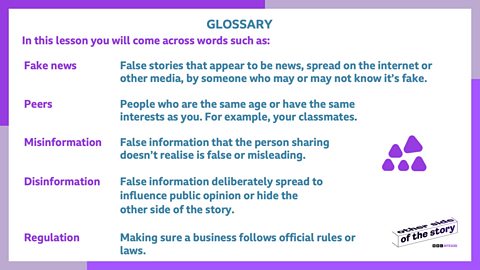
- A glossary of media literacy terms
- Statistics showing why learning about fake news matters
- Discussion points and prompts around which news sources are trustworthy
- Real life examples of misinformation and disinformation
- Discussion points around deepfakes, with real life examples
- Teachers notes in the "Notes" section of the Powerpoint
Students will learn to differentiate between misinformation and disinformation, critically analyse real-world examples, and develop strategies to identify false information. Through discussions, they will articulate their understanding and challenge each other's viewpoints, fostering a deeper comprehension of the topic.
Curriculum links
These lessons are designed to align with the KS3 and KS4 National Curriculum, which emphasises the critical role of spoken language in pupils' cognitive, social, and linguistic development. They aim to enhance students' media literacy, while simultaneously developing their spoken language skills through structured discussions.
English - Pupils use their reading comprehension to analyse different types of media and explore how media uses different techniques and language to influence opinions.
Computing - Pupils are taught how to evaluate, create, and interact with media content, and they learn about the ethical implications of digital interactions.
PSHE - Pupils learn how media affect attitudes toward self, body image, relationships, and societal norms and how it can shape public opinion and effect the democratic process.
Printable resources
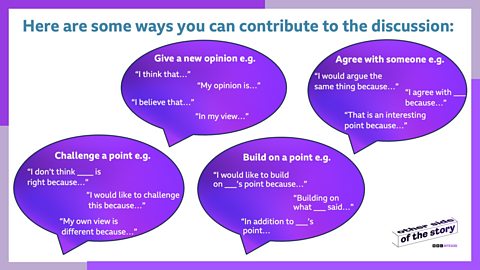
This glossary of media literacy terms can be printed to help students who might need visual stimulus and the discussion prompts can be used to encourage students to contribute to the debates in a respectful and assertive way.
Fake News Glossary
A printable glossary of key terms
Discussion prompts
Printable discussion prompts
Other media literacy lessons from Other Side of the Story
Related resources
Fake news and AI assembly
A complete assembly in powerpoint format
Solve the Story
An exciting six-part series from the Other Side of the Story
Other Side of the Story home page
Explore the trending social media topics affecting your pupils