The Wye Valley
David Attenborough reveals how tawny owls, badgers, dormice and bumblebees have made a home in a beautiful woodland garden hidden at the bottom of a steep-sided Welsh valley.
Hidden in a Welsh woodland at the bottom of a steep-sided valley, an old cottage is home to Robin, Laura and their two boys. The trees hide a wealth of wildlife – this is one of the most biodiverse places in Britain. But the woodland keeps its secrets close, and the family only catches glimpses of the animals that share their world.
Aspect and light are important to every garden, but here the sun’s movements are more consequential than usual. For four months over winter, direct sunlight never reaches the valley floor. Many animals spend these dark, cold times hidden away.
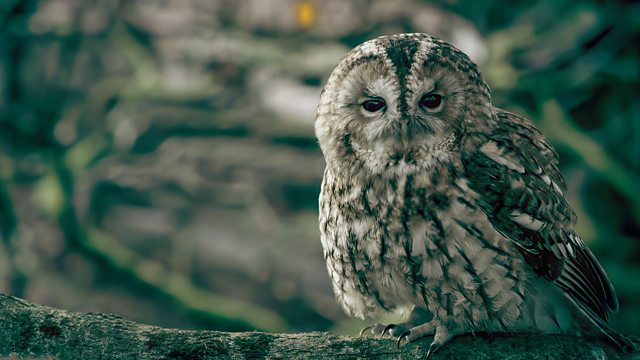
Beneath a pile of leaves, a tiny dormouse survives in deep hibernation, her heartbeat and breath barely flickering. It’s best she stay hidden – a tawny owl is on the hunt, searching for rodents drawn to the garden bird feeders. But catching mice is not the only thing on his mind. Tawny owls nest early, and this male is already courting his long-term mate.
When the sun finally spills into the valley, the woodland wakes. Wild garlic pushes through cold soil, and a queen buff-tailed bumblebee emerges from a winter underground and prepares to build a new colony.
Hidden in the trees, a badger mother brings her young above ground for the first time. They search for invertebrates hidden in the leaf litter, but a year-old cub wanders off alone and heads toward the garden, attracted by its abundant food.
The bumblebee queen’s colony is growing fast, fed by tireless worker bees. They are at risk of being attacked by the adventurous badger cub, but the presence of humans keeps him at bay.
Down by the stream that runs beneath the house, a dipper dives through the fast-flowing water, her transparent eyelids acting like goggles as she hunts aquatic insects for her hidden brood of hungry chicks.
High in a large, carefully positioned nest-box, the tawny owls are raising a family. Their owlets are growing fast, and one is already using its extra size to bully its smaller brother out of the way at mealtimes. This sibling rivalry could have fatal consequences. Eventually, hunger drives the smaller owlet to push his brother out of the box and down to the ground – where badgers and other predators prowl.
As light levels and temperatures rise, the woodland canopy comes alive with insects. Flycatchers that have travelled thousands of miles from west Africa arrive in time to feast. But poor water quality in the Wye watershed means that the dipper family faces a shortage of aquatic food. So, Robin provides a timely offering of mealworms that helps the dipper chicks survive.
After seven months of hibernation, the dormouse awakes to feast on ripened redcurrants in the fruit cage. It is precious fuel, as she needs to double her weight before winter returns.
As autumn arrives, leaves fall in their millions, forming a golden-brown blanket across the garden. An army of invertebrates emerges to break it down, returning vital nutrients to the soil. Earthworms rise from deep underground to help turn the leaf litter into next year’s fertiliser.
In the bumblebee colony, the queen is exhausted after laying hundreds of eggs. She loses her hold over her colony. Her newest larvae become super-sized and will be the next generation of queens. When the old queen finally dies, they depart to carry on her legacy.
As cold returns, birds fall quiet, insects vanish and many mammals retreat underground. The gardeners, too, hunker down.
Last on

More episodes
Credits
| Role | Contributor |
|---|---|
| Presenter | David Attenborough |
| Executive Producer | Martha Holmes |
| Executive Producer | Mark Brownlow |
| Executive Producer | Grant Mansfield |
| Series Producer | Bill Markham |
| Director | Matthew Clements |
| Director | Alex Minton |
| Production Company | Plimsoll Productions |

Discover and support the wildlife on your doorstep
Top tips on finding and supporting nature, with The Open University.
The making of Secret Garden and top wildlife gardening tips
From filming otters and owls to composing the music, learn how Secret Garden was made.
