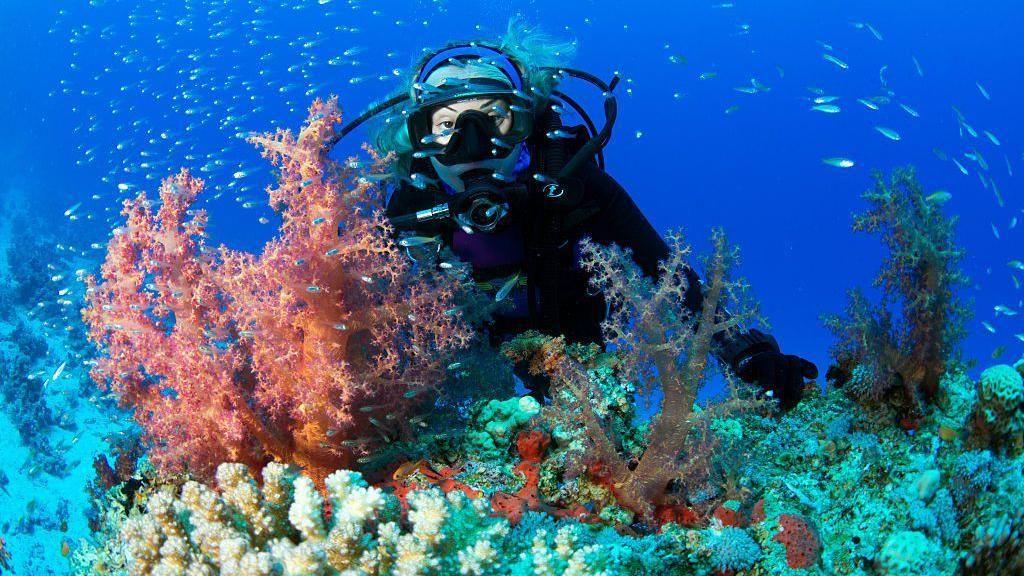
How are scientists around the world trying to save coral reefs?

Coral reefs are home to lots of different types of marine life
- Published
Coral reefs are really important for the planet's biodiversity.
Although they cover less than 1 percent of the ocean floor, they are home to a quarter of all known marine species.
These habitats are under threat from pollution, climate change and some fishing techniques.
One of the big problems is warming seas. Ocean heatwaves can lead to coral bleaching which can kill the coral.
So what is being done by scientists around the world to try and help protect and restore these vital underwater environments?
The issue is being explored in a new special episode of Steve Backshall's Deadly 60.
He went to meet people who are using innovative techniques to try and make a difference.
Steve Backshall said : "This work is so worthwhile, to provide a future for the coral and everything else that relies on it."
Coral spawn collection

This coral is releasing an egg into the water in order to reproduce
Professor Peter Harrison discovered that coral have a mass spawning event once or twice a year, depending on where they are.
During this time the corals release reproductive cells into the water, all at the same time.
These cells meet up and develop into tiny young coral, called larvae, which then float in the water before dropping to the ocean floor to grow.

Steve met up with Prof Peter Harrison from Southern Cross University to find out about his research
Prof Harrison and his team collect the cells and help mix them together in small floating pools so that they are up to 90 percent more likely to develop into coral.
By harvesting the young coral larvae, they can then reintroduce them into areas that have been previously damaged.
The corals that survive bleaching events have a higher tolerance to warmer water, so the young of these individuals are used to repopulate dead reefs.
He said: We're running out of corals on the planet, they're not replacing themselves naturally fast enough.
"They don't have time to recover before the next major bleaching event."
Transplanting coral to restore reefs

Steve dived down to visit a coral nursery with Sakinah Yusuf from the Coral Catch team
A team of women called the Coral Catch is working to restore lost reef in Gili Matra, a Marine Protected Area in Indonesia.
They have a coral nursery where young corals are grown, then bits of the fast-growing coral are taken and attached to special underwater frames in the areas which need to be restored.
They've built hundreds of frames and moved thousands of coral fragments.
In this way, 850 square metres of underwater habitat have been restored over a four year period.
The group trains up local women so that they can help protect coral near where they live.
It also wants to encourage them to start careers in marine conservation.
Sakinah Yusuf from Coral Catch organises training for women. She told Steve: "When they go back to their home they can apply any knowledge they get here to make the ocean a better place."
How can sound help restore reefs?

This listening device monitors the underwater environment, if it is noisy, with lots of different sounds, it means that the reef is healthy
Marine Biologist Professor Steve Simpson from Bristol University has found out that coral larvae actively choose where to settle and develop.
They can move through the water using tiny hairs on their surface to push themselves along.
He has also found that they are attracted to the sounds of a healthy reef, so if a thriving underwater soundtrack is played in the water, the coral larvae are more likely to land and start growing.
Using this technique, they can attract the larvae to the areas that need to be restored.
He told Newsround: "If you create safe places for coral to survive they are in a position to grow back into the area where they've been lost."
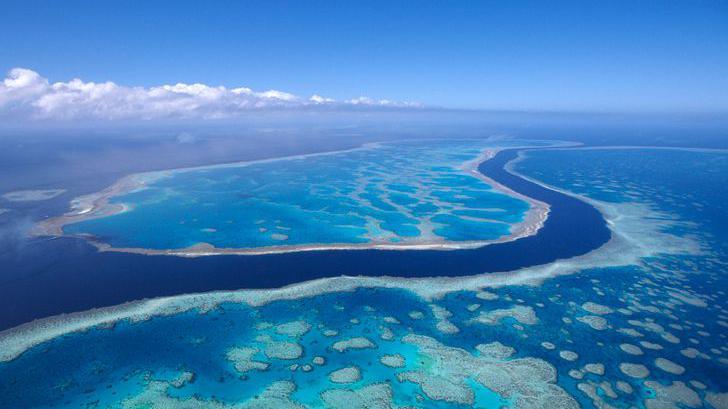
He has teamed up with Prof Harrison and they have been working together to try and boost coral on the Great Barrier Reef, near Australia.
It is the largest coral reef in the world and has been badly affected by coral bleaching.
Prof Simpson told Newsround that even damaged reefs can bounce back with human help but that the underlying causes of climate change also need to be tackled.
He said: "We're working with nature to keep coral reefs alive while also tackling climate change."
"We're not just hoping for a better future, we're making hope happen," he added.
Deadly 60: Saving Coral Reefs is available on BBC iPlayer.
- Published24 January 2025
- Published16 October 2025