Summary

  • The US government has indicted former Cuban president Raúl Castro on charges of conspiracy to kill US nationals over a fatal attack on two planes in 1996

  • Cuban military jets shot down two civilian planes operated by exiles from the country, killing four people

  • Castro, who was armed forces minister at the time, is also charged with destruction of aircraft and four counts of murder

  • If found guilty, he could face life in prison - here's a closer look at the charges

  • It's "never too late" for justice, Cuban Americans tell the BBC outside the Miami centre

  • The Trump administration has been ramping up pressure on the communist government in Havana, but our White House reporter asks - what's in this for Donald Trump?

  • Cuba has been hit by widespread power outages after the US effectively blockaded the island by threatening sanctions on those who supply it with fuel

  1. Raúl Castro's long-lasting influencepublished at 20:40 BST

    The Global Story

    The indictment of Raúl Castro is incredibly symbolic for the Cuban revolution - and Washington's latest move to intensify pressure on its communist system.

    The veteran leader is still considered the de-facto leader of Cuba, despite Miguel Diaz-Canel being the current president.

    He has been referred to by communist officials as a “symbol of security” for the nation – especially in relation to Washington.

    In 2015, during his time in office, Raúl Castro led a historic diplomatic rapprochement with the US under Barack Obama, officially ending a 54-year stretch of hostility. That thaw was later reversed by Donald Trump.

    The indictment comes amid an intense US campaign aimed at forcing political change in Cuba, which has included a crippling oil blockade.

    It is a move long called for by many conservative Cuban Americans.

    Why now? A bargaining chip which carries heavy weighting.
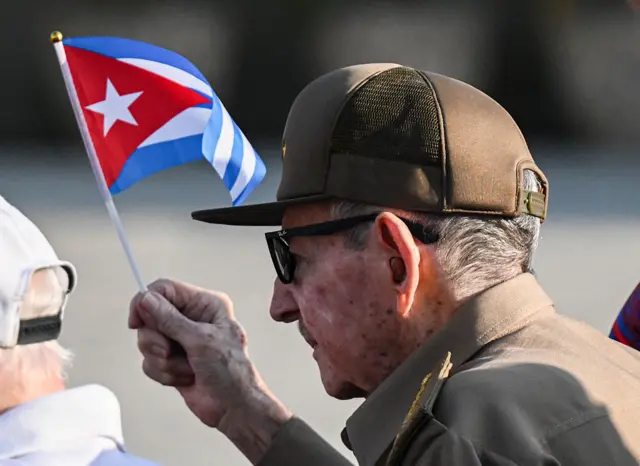
    Raul Castro in a cap and dark glasses waves a small Cuban flagImage source, Getty Images
  2. Castro joins list of current and former leaders targeted by the USpublished at 20:22 BST

    Daniel Bush
    Washington correspondent

    With the indictment of Raúl Castro, the US has now targeted three current or former heads of state in recent months - an unprecedented level of foreign interventionism that may be difficult for President Donald Trump to sell to voters ahead of the November midterms.

    The former Cuban leader joined a list that includes former Venezuelan President Nicolás Maduro, who was removed from power in a daring US raid in January, and Ali Khamenei, the former leader of Iran who was killed by air strikes in the early days of the US-Israeli war with Iran.

    The cases of Venezuela, Iran and now Cuba are different, of course.

    But they share one thing in common: a willingness by Trump in his second term to intervene in the internal affairs of other countries, after running in 2024 on a promise to end America's entanglements abroad.

    With Venezuela and Iran, Trump argued the countries posed a direct national security threat to the US. It's unclear how he'll explain the threat posed by Castro, a 94-year-old who will likely never be tried in a US court.

  3. Trump says he expects no further escalation with Cubapublished at 20:13 BST

    While speaking to the media after departing Air Force One, President Donald Trump said he did not foresee any further escalation with Cuba.

    "I don't think there needs to be," he said. "The place is falling apart."

    "We're here to free up Cuba."

  4. Trump's nod towards his Cuban-American supporterspublished at 20:06 BST

    Bernd Debusmann Jr
    White House reporter

    We've just heard from US President Donald Trump, who is headed back to Washington after visiting the US Coast Guard Academy in New London, Connecticut.

    In brief remarks to the travelling press pool, Trump directly addressed the political benefit of today's indictment, which will be enormously popular among Cuban-Americans.

    "A lot of those people are related to me in the sense that I've had such a great relationship with Cuban-Americans," he said. "On a humanitarian basis, we're here to help."

    Trump claimed that he had 94% support among Cuban-Americans, although in Florida - the heart of the Cuban exile community in the US - the statistic was closer to 70% in the last presidential election.

    That support, however, had appeared to slip once he returned to the White House.

    One poll, released last month, suggested that 68% of Cubans and Cuban-Americans in South Florida disapproved of the administration's moves to deport some Cuban nationals.

    However, 67% of those polled said they approved of Trump's handling of the island - a figure which is likely to spike in the wake of the indictment.

    The president is not on the ballot in the upcoming midterm elections, but strong support among Cuban communities will benefit the Republican Party.

  5. Will the US try to take Castro the way they captured Maduro?published at 20:00 BST

    Kayla Epstein
    US reporter

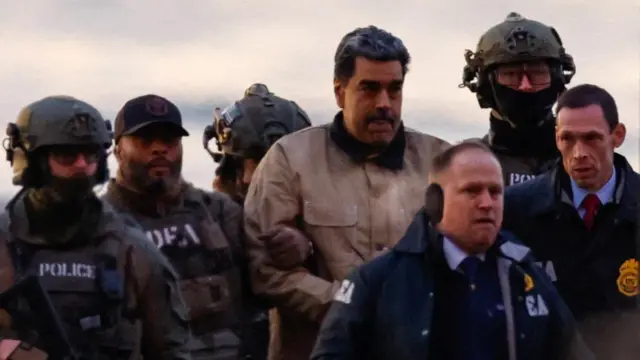
    In January, the US staged a military operation to capture Venezuelan President Nicolas Maduro and bring him to the US, after the justice department indicted him.

    "The key question is whether the Trump administration will use this indictment in a similar way... as a justification to carry out a military operation under the cover of a law enforcement action," Roxanna Vigil, an international affairs fellow at the Council on Foreign Relations, tells the BBC.

    Blanche did not confirm whether the US would try to capture Castro, but said, "we expect he will show up here, by his own will or another way".

    "I think they’d prefer not to do it, but are prepared to do it if the Cubans don’t surrender at the bargaining table," William LeoGrande, an expert on Latin American politics at American University, says.

    "It is aimed at increasing the pressure at the bargaining table, but I would not put it past the US to actually try to replicate the seizure of Maduro."

    However, he cautioned, bringing Castro to the US to face charges would likely not have the same effect as Maduro's capture in Venezuela, which transformed the country's relationship with Washington.

    "Raul Castro retired almost a decade ago. He’s not running the country on a day to day basis," LeoGrande noted.

  6. Cuban Americans in Miami say 'justice has been served'published at 19:48 BST

    Cecilia Barría
    Reporting from Miami

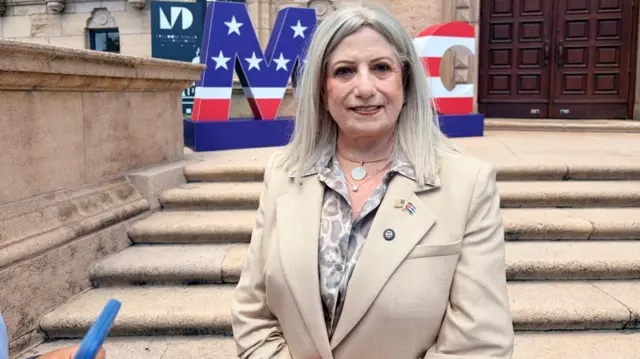
    A woman stands in front of a building in Miami. She wears a beige suit jacketImage source, BBC/Cecilia Barría
    Image caption,

    Isela Fiterre

    The Miami centre where US officials announced the indictment of Raúl Castro was full of Cuban Americans.

    Speaking to BBC Mundo in Spanish, many of them described being thrilled by the news.

    "It was time, 67 years of that murderous regime," says Isela Fiterre. "Raúl Castro did not merely kill four individuals. Over the course of many years, he has killed countless people," Fiterre says.

    She says it's never too late for justice and she is grateful to the Trump administration for taking this step.

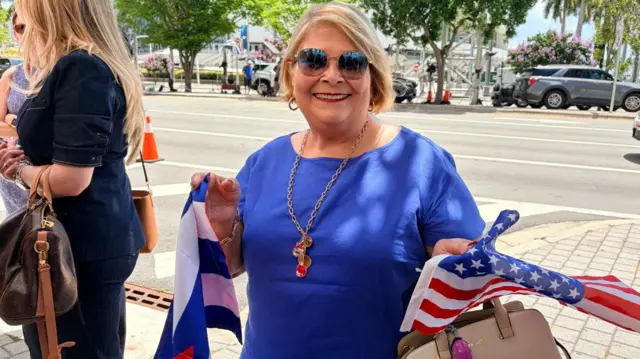
    Another attendee, Mercedes Puid-Soto, echoes those sentiments.

    "I feel very happy. Justice has been served," she says. "It's very important that the families can close that chapter, and we Cubans too."

    A woman stands outside in Miami. She wears a blue shirt and holds an American and a Cuban flagImage source, BBC/Cecilia Barría
    Image caption,

    Mercedes Puid-Soto

  7. Analysis

    Castro charges are part of Trump administration’s 'maximum pressure' on Cubapublished at 19:39 BST

    Pascal Fletcher
    Latin American Specialist, BBC Monitoring

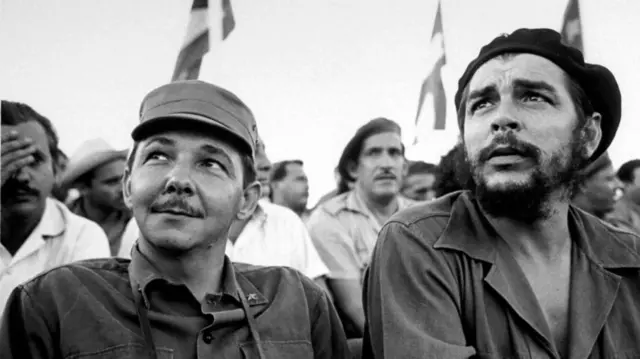
    A 1964 photograph showing Raúl Castro (left), sitting besides Che Guevara (right)Image source, Getty Images
    Image caption,

    A 1964 photograph showing Raúl Castro (left), sitting besides Che Guevara (right)

    Castro's charges of conspiracy to kill US nationals and murder takes aim at a key figurehead of Cuba's communist leadership while it faces intense US pressure to make significant political and economic reforms.

    Nearly 95 years old, and the brother of late Cuban revolutionary leader Fidel Castro, Raúl is acknowledged on the island as the surviving "leader of the Cuban Revolution". He remains an influential and symbolic figure, even though he relinquished his government and party roles some years ago.

    He presided with Barack Obama over a short-lived 2015-2016 thaw in US-Cuba relations.

    The charges levelled against him by the US Justice Department under the Trump administration are clearly part of the latter's "maximum pressure" strategy against Cuba, seeking change to the one-party communist rule there.

    The US indictment of Castro looks like a major "stick" being applied by US authorities against a key lynchpin of the Cuban leadership structure, and it follows the recent tightening of multi-layered US sanctions against the island.

    US and Cuban representatives, including Castro's grandson Raúl Guillermo Rodriguez Castro, have held "conversations" in recent months, but the US charges against Raúl were unlikely to smooth or help these contacts.

  8. Charges against Castro 'devoid of legal foundation', Cuban president sayspublished at 19:30 BST

    The current president of Cuba, Miguel Díaz-Canel, has posted on social media and denounces the US charges against his predecessor Raúl Castro.

    He calls the charges a "political" manoeuvre, and says they are "devoid of any legal foundation".

    "The U.S. lies and distorts the events surrounding the downing of the planes," Díaz-Canel wrote on social media in a message translated from Spanish.

    He alleges the humanitarian organisation Brothers to the Rescue whose planes were shot down were a "narco-terrorist" group.

    "Cuba acted in legitimate self-defense within its jurisdictional waters, following repeated and dangerous violations of our airspace by notorious terrorists," he says.

    His message also calls out US forces for targeting vessels in the Caribbean and Pacific.

  9. Would Castro be seized like Maduro?published at 19:19 BST

    Captured Venezuelan President Nicolas Maduro arrives at the Downtown Manhattan Heliport, as he heads towards the Daniel Patrick Manhattan United States Courthouse for an initial appearance to face U.S. federal charges including narco-terrorism, conspiracy, drug trafficking, money laundering and others in New York City, U.S., January 5, 2026.Image source, REUTERS/Eduardo Munoz
    Image caption,

    Venezuelan President Nicolas Maduro was captured by US forces and brought to New York to face charges

    Blanche is asked whether Raúl Castro could be captured in Cuba in a similar way to how the US seized Nicolás Maduro in Venezuela.

    The acting attorney general says he is not going to compare cases, adding that the way the US gets people who are indicted varies.

    He is also asked whether there is any connection between the timing of the indictment announced today and the CIA director's recent visit to Cuba.

    Blanche says he is not getting into the details of why the indictment was unsealed, adding that it happened in late April and it is now mid-May.

    The news conference has now ended.

    We will bring you a recap of the most important things we learned shortly.

  10. Will other members of the Castro family face charges?published at 19:12 BST

    Blanche is asked if there are other members of the Castro family who may be indicted.

    The acting attorney general says an investigation of this nature is "never over", though he didn't share specifics on what other indictments may happen.

  11. Castro will face US court 'by his own will, or by another way', Blanche sayspublished at 19:10 BST

    Blanche is asked what the prospects are of getting Raúl Castro to the United States to face justice.

    The acting attorney general says that the US indicts people outside of the country "all the time".

    He adds that individuals are indicted because the US wants them in the country to face justice in front of a jury of their peers.

    Blanche says this is not a "show indictment", adding that Castro will "show up here by his own will or by another way".

    He says that would not be his area of responsibility and would be under the purview of the president.

  12. Blanche asked why charges were announced nowpublished at 19:09 BST

    Acting Attorney General Todd Blanche is now taking questions from reporters, including one who asks him why the justice department is bringing charges now.

    He asks if there was a recent breakthrough in the case.

    Blanche says he can't justify why no charges were brought decades ago, but he says much work went into gathering the evidence needed to present to a grand jury, which he says was done in April.

  13. If found guilty, Castro could face life in prisonpublished at 19:07 BST

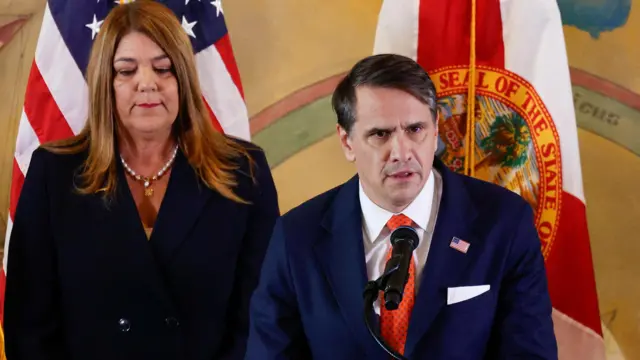
    Florida senator Ashley Moody praises the work of the Department of Justice for bringing the charges announced today.

    The senator reads out the penalty sheet for Raúl Castro, which includes one count of conspiring to kill US nationals. Moody says this carries a maximum term of life in prison.

    Counts two and three, regarding the destruction of US aircraft, each include a maximum term of imprisonment of five years on each count, Moody says

    Moody says charges four to seven are murder charges, the maximum penalty for each being death or life imprisonment.

    These charges must be argued in a US court, and all individuals are deemed innocent until proven guilty.

  14. We never stopped hunting for the truth, FBI official sayspublished at 19:00 BST

    Next to speak is FBI Deputy Director Christopher Raia, who says the actions of the Cuban regime were reckless.

    He says that there were 16 FBI teams working on the incident over the past 30 years.

    "We never stopped hunting for the truth," he says, adding that the US will "come after" anyone who spies on, or harms, US citizens.

    Raia says the issue is "deeply personal to him" because he worked for the Coast Guard in Miami helping on humanitarian missions to rescue Cuban refugees who were trying to escape.

  15. A standing ovation when charges are announcedpublished at 18:55 BST

    Cecilia Barría
    Reporting from Miami

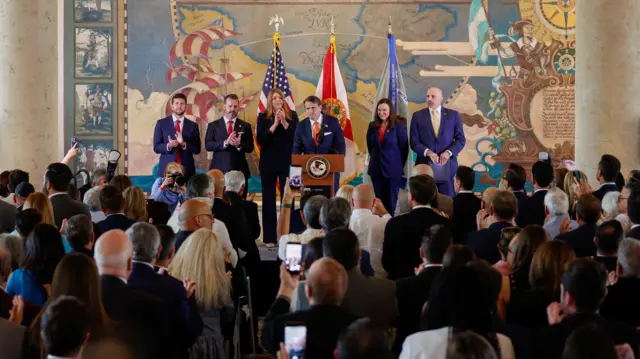
    Acting U.S. Attorney General, Todd Blanche speaks, while with U.S. Attorney for the Southern District of Florida, Jason A. Reding Quinones, President of Miami Dade College Madeline Pumariega, Co-Deputy Director of the FBI, Christopher Gilbert Raia, U.S. Senator Ashley Moody (R-FL) and Florida Attorney General James Uthmeier, as the U.S. Department of Justice announces criminal charges against former Cuban President Raul Castro, during a ceremony to honor the victims of the 1996 shootdown of Brothers to the Rescue aircraft incident, at Freedom Tower in Miami, Florida, U.S., May 20, 2026.Image source, Reuters

    The hall here is packed with Cuban Americans who gave a standing ovation to the announcement of charges being filed against former President Raúl Castro.

    Most of the guests represent Cuban exile organisations that have, for decades, led opposition of the Cuban government from within the United States.

    Photographs of the four individuals who lost their lives in the 1996 incident are displayed.

    The majority of guests have expressed their emotion over a day they consider historic.

  16. Castro oversaw chain of command when humanitarian planes were downed, US official sayspublished at 18:48 BST

    Next to speak is US Attorney Jason A. Reding Quiñones.

    He says Raúl Castro oversaw the chain of command when Cuban aircrafts fired missiles that took down the two humanitarian planes, killing four people.

    "Today is a step toward accountability," he says. "The passage of time does not erase murder."

    He says that this is the first time in more than 70 years that a senior leader in the Cuban regime has been charged with acts of violence that resulted in the deaths of Americans.

  17. US will not forget its citizens, Blanche sayspublished at 18:41 BST

    Acting U.S. Attorney General, Todd Blanche speaks, as the U.S. Department of Justice announces criminal charges against former Cuban President Raul Castro, during a ceremony to honor the victims of the 1996 shootdown of Brothers to the Rescue aircraft incident, at Freedom Tower in Miami, Florida, U.S., May 20, 2026. REUTERS/Marco BelloImage source, Reuters

    After naming the four victims, Armando Alejandre Jr, 44, Carlos Alberto Costa, 29, Mario Manuel de la Peña, 24, and Pablo Morales, 29, Blanche says the indictment against Castro and his co-defendants came from a federal grand jury.

    Blanche tells reporters that no matter how much time has passed, the Trump administration is committed to pursuing justice against those who kill Americans.

    "The United States does not and will not forget its citizens," he says.

    He says nations and their leaders cannot be allowed to target Americans and not face accountability.

  18. Castro charged with conspiracy to kill US nationals, murder and destruction of an aircraftpublished at 18:38 BST
    Breaking

    Acting Attorney General Blanche is now speaking.

    He announces that Raúl Castro and others are being indicted on charges of conspiracy to kill US nationals.

    Blanche says Castro and the others are also charged with destruction of aircraft and four counts of murder.

    He says the families of the four people who died when Cuban military jets shot down two civilian planes in 1996 have waited decades for "justice".

  19. Press conference begins - watch it live abovepublished at 18:35 BST

    Madeline Pumariega, the president of Miami Dade College, is now speaking from the briefing at Miami's Freedom Tower.

    She says the venue is an important place for those who fled the "tyranny and oppression" in Cuba for the US.

    Pumariega adds that today is about commemorating the four men who died on 24 February 1996, as well as the "countless victims" who have suffered under the Cuban regime.

    Acting Attorney General Todd Blanche will speak next.

    You can watch live at the top of this page.

  20. What is an indictment?published at 18:20 BST

    The Department of Justice has filed what is known as an indictment against Castro.

    In the US justice system, an indictment is a legal document that contains a list of charges, and often the allegations that support them.

    Under US law, indictments are considered accusations that prosecutors must later prove in court. Defendants are considered innocent until proven guilty.

    We do not yet have the full details of this indictment, and will bring you further details when we have them. We're expecting the Attorney General will outline the charges in an imminent news conference.

    You can watch that live at the top of this page.