Summary

  • Donald Trump says he will extend the ceasefire with Iran until talks between the two countries have progressed

  • The US president says the blockade of Iranian ports will also continue until Tehran presents a "unified proposal"

  • The status of the US-Iran talks is unclear - US Vice-President JD Vance did not depart for Islamabad as expected on Tuesday, while Iran has yet to officially respond to Trump's remarks

  • In Pakistan's capital Islamabad, our correspondent reports that arrangements remain in place for another round of talks, but hopes of a meeting this week appear, for now, to have faded

  • With this ceasefire extension, Trump has bought himself more time and indicates he is increasingly interested in ending this conflict, our Washington correspondent writes

  1. China lowers petrol pricespublished at 08:12 BST

    China is lowering prices of petrol and diesel at the pump for the first time since the Iran war started to reflect changes in global oil markets, according to the National Development and Reform Commission.

    The commission, which acts as China's top economic planner, sets petrol prices every 10 working days, based on international crude oil figures.

    The price drop will save drivers about $3 (£2.22) to fill a 50-litre tank of 92-octane petrol.

    Beijing has raised the maximum retail prices for petrol and diesel multiple times since the start of the war, which has sent the value oil soaring.
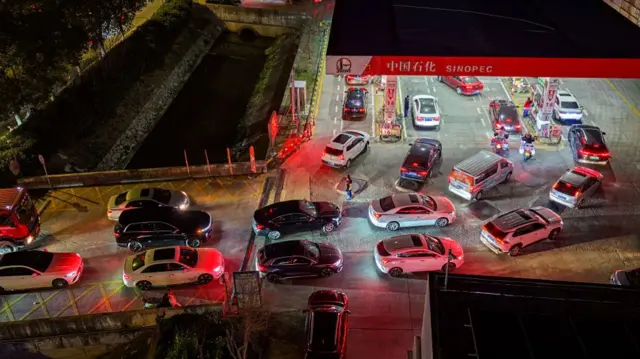
    Dozens of cars queue at a Sinopec station in China at nightImage source, Getty Images
  2. IRGC 'gun boat' fires at container ship in Strait of Hormuz - UKMTOpublished at 07:28 BST

    The Iranian Revolutionary Guard Corps (IRGC) has reportedly fired at a container ship in the Strait of Hormuz, according to the UK Maritime Trade Operations Centre (UKMTO).

    The British Royal Navy-led UKMTO says the incident took place 15 nautical miles northeast of Oman.

    It says an IRGC "gun boat" approached the vessel, there was "no VHF challenge", meaning there was no radio warning or hail, and then the gun boat "fired upon the vessel", causing "heavy damage to the bridge".

  3. Lebanese state media say one killed in Israeli strikepublished at 07:08 BST

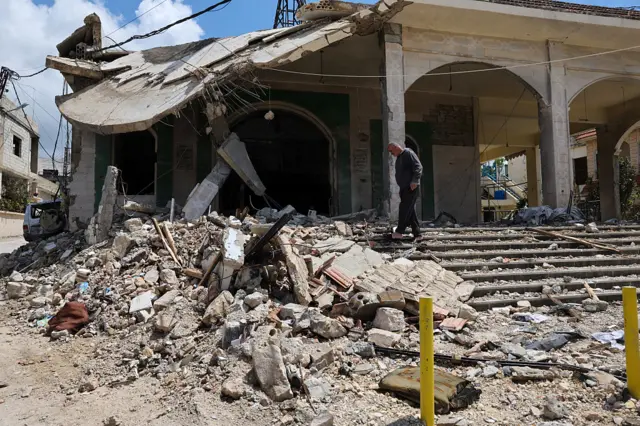
    A man inspects the damage at a mosque that was targeted in an Israeli strike in the southern Lebanese village of Kfar Sir on April 21, 2026Image source, AFP via Getty Images
    Image caption,

    An Israeli strike on a village in southern Lebanon yesterday damaged a mosque

    One person has been killed and two others wounded in an Israeli strike in Western Bekaa, around 25 miles (40km) south-east from Beirut and near the Litani River, according to Lebanese state-run National News Agency (NNA).

    The agency says the strike took place at dawn. A separate NNA article says Israeli forces are clearing roads in Wadi al-Salouqi and "demolishing" houses and shops in Aita al-Shaab, both in southern Lebanon.

    Yesterday, the Israel Defense Forces issued a warning to residents to stay away from the Litani River, Wadi al-Salouqi and Wadi al-Salhani, citing "ongoing terrorist activities of Hezbollah".

    Lebanon and Israel agreed to a ten-day ceasefire last week, and Washington is due to host ambassador-level talks on Thursday.

    The terms of the deal specify that Israel retains its "right to take all necessary measures in self-defence, at any time, against planned, imminent, or ongoing attacks" and that Lebanon must take "meaningful steps" to prevent Hezbollah and all other "rogue non-state armed groups" from carrying out attacks against Israeli targets.

    Last night, Hezbollah said it had fired rockets at northern Israel in response to ceasefire violations from the Israeli military, while Israel's ambassador to the US, Yechiel Leiter, accuses Hezbollah of violating the ceasefire agreement.

  4. Hopes of peace talks in Pakistan are fadingpublished at 06:38 BST

    Paul Adams
    Diplomatic correspondent in Islamabad

    Men on motorbikes on a streetImage source, Reuters
    Image caption,

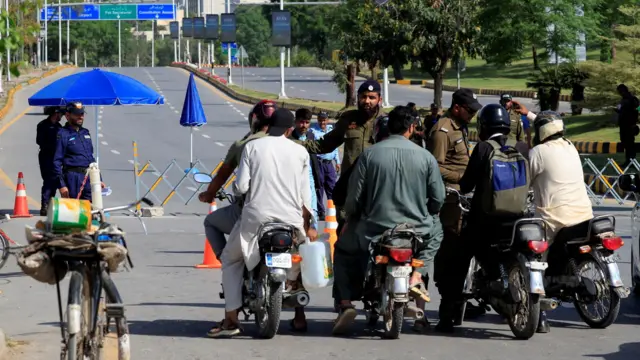
    Road blocks have been set up around Islamabad in recent days amid preparations for possible peace talks

    Donald Trump has boasted of regime change in Tehran but is now dealing with what he himself is calling regime fracture.

    Now that so many of Iran’s top leaders are dead, the question of who’s in charge there is a real one, making the job of diplomacy that much more difficult. It’s probably a little early to gauge the impact of the president’s latest move, but the immediate signs from Tehran are not positive.

    An adviser to the speaker of parliament and lead negotiator Mohammad Bagher Ghalibaf, said Trump was buying time for another surprise attack.

    A military spokesman repeated a warning that Iran was willing to strike back if that happened.

    Here in Islamabad, arrangements remain in place for another round of talks, with parts of the city still sealed off. But hopes of a meeting this week appear, for now, to have faded.

  5. 'No decision' from Iran on joining next round of peace talks with US, spokesman sayspublished at 05:25 BST

    Media caption,

    'No decision' on joining Islamabad peace talks, says Iranian spokesman

    Before Donald Trump's announcement that he would be extending the ceasefire, Iran's foreign ministry told the BBC that Tehran has still not decided whether it will attend a new round of peace talks with the US later this week.

    In an interview with the BBC's chief international correspondent Lyse Doucet, spokesman Esmail Baghaei said Iran had gone into the first round of Islamabad talks "with good faith and sense of seriousness, but you have a negotiating party that has shown its lack of seriousness, lack of good faith".

    He also pointed to "flip flops, threats of war crimes" by the US, a reference to Trump's series of social media posts and interviews over the past two days where he again threatened to "knock out every single power plant, and every single bridge" if Iran did not accept what he called the US's offer of a "very fair and reasonable deal".

    The White House confirmed on Tuesday night that Vice-President JD Vance's trip to Pakistan for a second round of peace talks has been cancelled.

    Here's our full interview with Iran's foreign ministry spokesman.

  6. In just 24 hours, from the threat of renewed strikes to an extended ceasefirepublished at 04:23 BST

    Grace Eliza Goodwin
    Reporting from New York

    Another day, another unexpected development in the conflict in the Middle East.

    We began Tuesday here in New York expecting the US-Iran ceasefire to expire tomorrow, under the looming threat that the US would then resume its strikes on Iran.

    That all changed with an 11th hour post from President Trump announcing he'd be extending the ceasefire until Tehran could present a "unified proposal" to move peace negotiations forward.

    Here's what happened and where things stand now:

    • Earlier today, our White House correspondent said it was unclear when, and if, Vice President JD Vance and the rest of the US negotiating team would head to Islamabad for talks with their Iranian counterparts
    • Meanwhile, Iran had yet to decide whether to send a delegation to Pakistan for US talks, a foreign ministry spokesperson told the BBC
    • Iran’s UN Ambassador Amir Saeid said Tehran had received some signs that the US was ready to end its blockade of Iranian ports, adding that the next round of negotiations would only take place when that happens
    • In an interview with CNBC, Donald Trump said Iran has "no choice but to send" delegates to Pakistan, adding that he "expects to be bombing" if progress is not made
    • Then, with no sign of the US delegation was departing for Islamabad, the situation abruptly changed when Trump announced he'd be extending the ceasefire, and continuing the US navy blockade of Iranian ports until Iran's leaders can submit a "unified proposal" and discussions are concluded
    • Trump said he made the decision at the request of Pakistan, whose prime minister then thanked him for it
    • The White House confirmed that Vance's trip to Pakistan for peace negotiations has been cancelled

  7. BBC Verify

    Strait of Hormuz shutdown boosting demand for US oil, experts saypublished at 03:34 BST

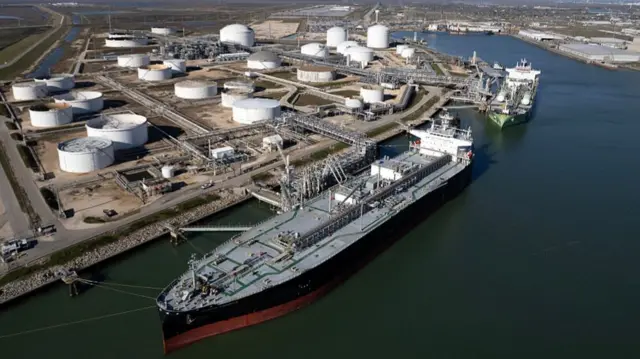
    Two oil tankers are seen docked at the Freeport oil terminal in the US (file pic)Image source, Getty Images

    By Marco Silva and Joshua Cheetham

    In a post on his Truth Social platform on Monday night, President Donald Trump said the Iranian leadership has “forced hundreds of ships” towards oil-rich US states, such as Texas, Louisiana, and Alaska.

    While it is unclear the type of ships he was referring to, shipping and trading analysts tell BBC Verify that the closure of the Strait of Hormuz by Iran has indeed driven a surge in demand for US crude oil.

    The strait is a critical transit chokepoint for Gulf oil, but shipping has been severely disrupted since the start of the US-Israel war with Iran on 28 February.

    Unable to access crude oil from the Middle East through the strait, importers have had to look for alternative suppliers.

    Data from marine analytics firm Kpler suggests 71 oil tankers known as Very Large Crude Carriers (VLCCs) are headed to the US to take on cargo compared with an average of 27 on any given day last year.

    “Buyers from Europe and Asia saw oil loading out of the Atlantic basin — including from the US Gulf coast — as an accessible, plentiful solution to fill the supply gap,” says David Haydon, head of US crude tanker freight pricing at Argus Media, a market intelligence firm.

    This appears to be driving an increase in US crude exports.

    Maritime research consultancy Drewry says that, in the week ending 10 April, shipments reached 5.2 million barrels per day - the highest level in seven months.

  8. Analysis

    A frantic day of diplomacy in Washingtonpublished at 02:58 BST

    Daniel Bush
    Washington correspondent

    Tuesday began as a frantic day of diplomacy in Washington, with Air Force Two ready to fly Vice President JD Vance to Islamabad for another round of peace talks between the US and Iran.

    Several hours later, Air Force Two hadn't taken off and the negotiations were postponed. President Donald Trump announced that he would extend the ceasefire with Iran, set to expire on Wednesday evening, to allow the regime more time to create a "unified proposal" to end the war.

    In between, Trump weighed his options as the world waited to see if the countries were any closer to ending the war. Trump's decision marked the second time in as many weeks that he has backed off a threat to escalate the war, buying himself more time to wind down a conflict as it approaches the two-month mark.

    Read more here.

  9. Oil prices fluctuate as status of peace talks remains unclearpublished at 02:05 BST

    Global oil prices fluctuated in early Asian trading on Wednesday as the status of peace talks between the US and Iran remains unclear.

    On Tuesday, US President Donald Trump said he will extend a ceasefire with Iran until talks between the two countries have progressed. He added that the US will continue to blockade Iran's ports until Tehran presents a "unified proposal".

    After opening higher, Brent crude dipped by 0.2% to $98.32 (£72.73) a barrel, while West Texas Intermediate was down by 0.3% at $89.41.

    Energy markets have been volatile since the US and Israel attacked Iran on 28 February and Tehran responded with threats to target shipping in the key Strait of Hormuz waterway.

    Read more here.

  10. What were the terms of the ceasefire currently in place?published at 01:23 BST

    As President Donald Trump says he will extend the ceasefire between the US and Iran until negotiations conclude, here's a reminder of the terms of the ceasefire agreement between the two countries.

    • Iran and the US agreed to a conditional two-week ceasefire on 8 April, which was due to expire on Wednesday
    • President Trump said the deal was agreed on the condition that Tehran reopens the Strait of Hormuz, a vital shipping route for oil and other exports from the Gulf
    • Iran agreed to allow vessels through the Hormuz Strait for two weeks, with their passage coordinated by the Iranian military
    • US Vice President JD Vance travelled to Pakistan for peace talks but ultimately came back to Washington empty-handed after hours of negotiations
    • With no deal reached, the US began imposing a naval blockade of Iran while officials also increased economic pressure including warning of secondary sanctions on foreign banks

    There has also been a ceasefire in a separate but related front of the conflict - between Israel and Lebanon, the base of Hezbollah.

    • President Trump announced a 10-day ceasefire between Israel and Lebanon on 16 April, following the first direct talks between the two countries since 1993
    • Iran's foreign minister said that "in line with the ceasefire in Lebanon" the Strait of Hormuz had been "declared completely open" - Tehran abruptly closed it again the following day when the US did not end its blockade
    • The terms of the deal specify that Israel retains its "right to take all necessary measures in self-defence, at any time, against planned, imminent, or ongoing attacks"
    • It also states that Lebanon must take "meaningful steps" to prevent Hezbollah and all other "rogue non-state armed groups" from carrying out attacks against Israeli targets
  11. US sanctions 14 entities for links to Iranpublished at 00:39 BST 22 April

    Bernd Debusmann Jr
    White House reporter

    Ahead of President Trump's announcement that he would extend the ceasefire with Iran, the US has sought to maintain its economic pressure campaign on the government in Tehran.

    In an announcement sent to reporters this afternoon in Washington, the US Treasury Department's Office of Foreign Assets Control, OFAC, said it was sanctioning 14 people, entities and aircraft based in Iran, Turkey and the UAE "for their role procuring of transporting weapons or weapons components" on behalf of Iran's government.

    In practice, this means that all property and interests in property of those designated that are in the US, or in the possession of Americans, are blocked, and must be reported - along with any entities owned, directly or indirectly, 50% or more by each of the entities.

    US citizens, as well as non-citizens in the US or even passing through, are also banned from any transactions with those entities.

    According to the US government, these entities have been working to help Iran reconstitute its capacity to build drones and ballistic missiles, which were hard hit by the US and Israeli strikes during Operation Epic Fury.

    The announcement forms part of a wider campaign, dubbed Operation Economic Fury, that seeks to cut off Iran's access to global financial markets and, the administration hopes, help pressure Iran to come to a deal the US sees as workable.

  12. UN Secretary General commends ceasefire extensionpublished at 00:06 BST 22 April

    United Nations Secretary General António Guterres welcomes President Trump's announcement to extend the ceasefire, a spokesperson for his office says.

    "This is an important step toward de-escalation and creating critical space for diplomacy and confidence-building between Iran and the United States," spokesperson Stéphane Dujarric says.

    The secretary general's office encourages all parties to build on the momentum by not violating the ceasefire and participating constructively in negotiations.

    Guterres supports Pakistan's role in facilitating the talks and hopes that the country's efforts will help create the conditions for a "comprehensive and durable resolution to the conflict", Dujarric adds.

  13. Treasury Secretary gives new details on blockade and renews threat of sanctionspublished at 23:44 BST 21 April

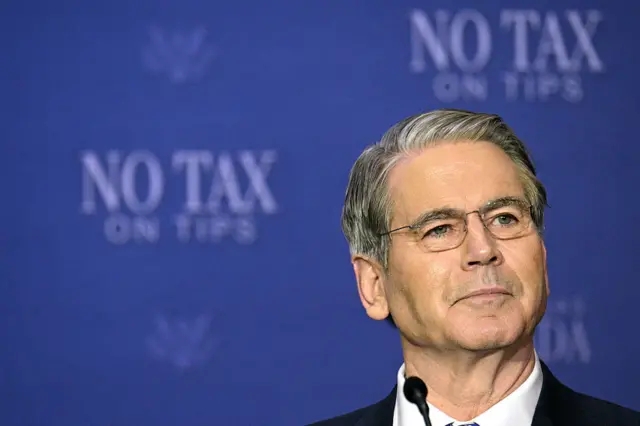
    Scott Bessent in glasses against a backdrop the reads 'no tax on tips'Image source, Getty Images

    US Treasury Secretary Scott Bessent is giving some more detail on the US's continued naval blockade of Iranian ports.

    He says in a post on X that "in a matter of days", Iran's oil storage facility on Kharg Island will be completely full and the "fragile Iranian oil wells will be shut in".

    "Constraining Iran’s maritime trade directly targets the regime’s primary revenue lifelines," he says, adding that the US Treasury "will continue to apply maximum pressure through Economic Fury to systematically degrade Tehran’s ability to generate, move, and repatriate funds".

    Anyone who secretly skirts around the US chokehold on Iranian trade risks getting sanctioned, he adds.

  14. Negotiating with US ‘irrational’ from now on - Iranian MPpublished at 23:10 BST 21 April

    Ghoncheh Habibiazad
    Senior reporter, BBC Persian

    It's a little after 01:35 in Tehran but Iranian officials have been posting on social media since President Trump's announcement, perhaps giving us some indication of the mood in Iran.

    Mahmoud Nabavian, an Iranian member of parliament who was part of the delegation in the first round of talks between Iran and the US in Islamabad, has said on X that “from now on”, negotiating with the US is “purely detrimental and irrational”.

    Separately, spokesperson for Iran’s Khatam al-Anbiya headquarters, Iran’s top military command, has warned that Iran’s forces, in case of an attack against Iran, will “strike pre-determined targets delivering another, even harsher lesson” to the US and Israel.

    In both Nabavian’s post and Khatam al-Anbiya’s statement, there was no mention of an extension to the ceasefire, though both were reported by Iranian outlets after Donald Trump’s announcement.

    We have yet to see any reaction from Iran’s Foreign Ministry or its officials, or from Iran’s parliament speaker and top negotiator, Mohammad Bagher Ghalibaf himself.

  15. Vance trip to Pakistan cancelledpublished at 22:47 BST 21 April

    The White House has now confirmed Vice President JD Vance's trip to Pakistan for peace negotiations has been cancelled.

    Vance was expected to travel to Islamabad for the second time this month, arriving on Wednesday in hopes of finalising a deal with Iranian officials.

    "Any further updates on in-person meetings will be announced by the White House," an administration official says, according to CBS, the BBC's US partner.

    The cancellation comes after President Trump announced he had agreed to a request to extend the US-Iran ceasefire indefinitely.

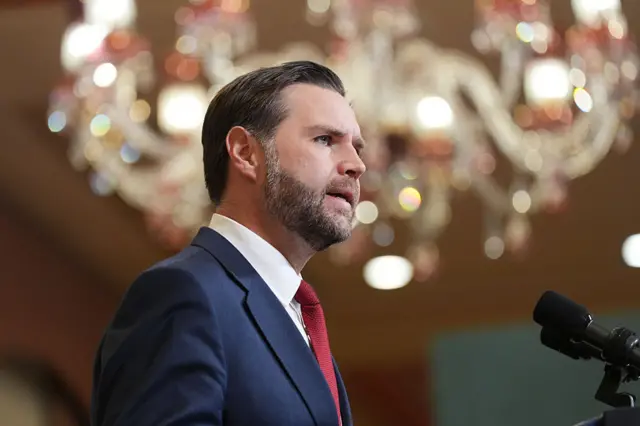
    JD Vance, wearing a blue suit and red tie, stands before a microphone with a large chandelier behind himImage source, Getty Images
    Image caption,

    JD Vance in Islamabad earlier this month

  16. Pakistani prime minister thanks Trump for extending ceasefirepublished at 22:34 BST 21 April

    Pakistan's Prime Minister Shehbaz Sharif has thanked Trump after the US president announced an indefinite extension of the ceasefire with Iran shortly before it expired.

    "I sincerely thank President Trump for graciously accepting our request to extend the ceasefire to allow ongoing diplomatic efforts to take their course," he says in an online statement.

    "With the trust and confidence reposed in, Pakistan shall continue its earnest efforts for negotiated settlement of conflict," the statement adds. "I sincerely hope that both sides will continue to observe the ceasefire and be able to conclude a comprehensive ‘Peace Deal’ during the second round of talks scheduled at Islamabad for a permanent end to the conflict."

  17. Iran displays missiles in several pro-government ralliespublished at 22:28 BST 21 April

    Ghoncheh Habibiazad
    Senior reporter, BBC Persian

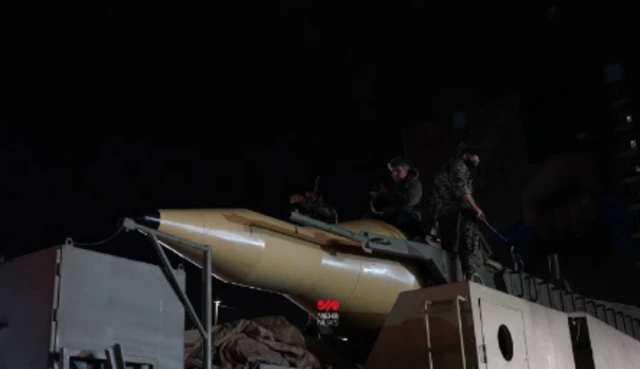
    Close up of a cream-coloured missile with three uniformed officers around itImage source, Telegram/Mehr News

    We're still waiting for official reaction from Iran, where tonight there were pro-government rallies featuring displays of ballistic missiles.

    Iran’s Ghadr ballistic missile was on full display tonight during a nightly pro-government rally in a main square in Tehran, where those gathered chanted “Death to America” and hailed IRGC (Islamic Revolutionary Guard Corps) Aerospace Force commander Majid Mousavi, calling on him to “target Tel Aviv”.

    In a separate instance in the capital, the Khorramshahr-4 ballistic missile was displayed in another major square in Tehran.

    A photo attached to the missile stated that the target is Qatar’s RasGas, a liquefied natural gas company.

    These displays were not limited to Tehran tonight. In the southern city of Shiraz, northwestern city of Tabriz and central city of Zanjan, missiles were also put on display.

    These pro-government rallies have been held every day in main squares across Iran since the start of the war on 28 February, with Iranian officials and state TV urging people to participate.

    Usually held at night, these rallies not only project an image of public support for the government with people waving the Islamic Republic’s flag, but also make it more difficult for opponents to gather in main squares after dark.

  18. Trump doesn't mention Iranpublished at 22:23 BST 21 April

    Despite the fact that Trump made a major announcement just before the NCAA event, he did not end up mentioning the war in Iran during his speech to college athletes.

    At a number of other White House events, he has commented on the situation in Iran even when the event is unrelated. At the White House Easter Egg Roll, he discussed the war while standing beside a nodding Easter Bunny.

  19. Trump is speaking at the White Housepublished at 22:07 BST 21 April

    President Trump is speaking at a White House event honouring NCAA Collegiate National Champions Day.

    We're monitoring for any mention of the war in Iran.

  20. Analysis

    Trump's announcement is quite a turnaround from just hours earlierpublished at 22:06 BST 21 April

    Sarah Smith
    North America editor

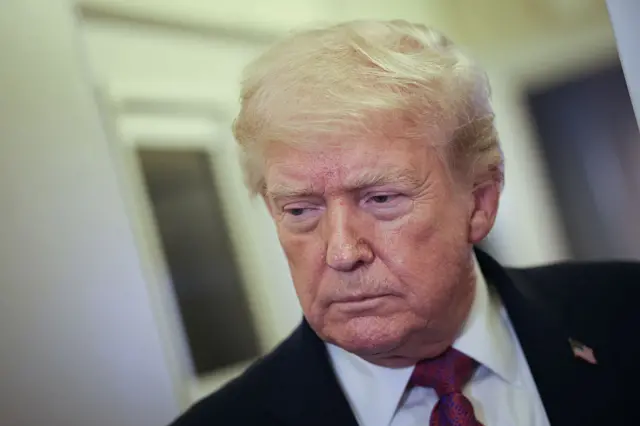
    Close up photo of President Donald Trump speaks to members of the press aboard Air Force One on April 17, 2026Image source, Getty Images

    The announcement from Donald Trump that he has agreed to extend the ceasefire with Iran – indefinitely – is quite a turnaround from his position just a few hours earlier.

    Speaking to CNBC this morning, Trump said “I expect to be bombing” and said the military was “raring to go.” He also repeated his threat to destroy every bridge and power plant inside Iran.

    Now, with just hours to go before the existing ceasefire would expire he has agreed to and open ended end pause in hostilities. Saying he has done so at the request of the Pakistani government.

    Donald Trump has tried to intimidate the Iranian regime with bellicose threats throughout this conflict. Now it looks like he really does not want to start attacking Iran again.