Summary

  • From today, tenants in England have more rights as part of a huge shake-up to the rules on renting

  • Changes include: Making it harder for landlords to evict tenants, and banning "bidding wars", limiting how often rent can be increased - a brief guide

  • The changes are designed to give tenants in England more security, but there's debate over whether this includes financial security, writes our cost of living correspondent

  • While some landlords say the reforms bring extra complexity to the sector, including "uncertain" costs

  • Will more landlords sell and can you get a pet? Our housing correspondent and panel of experts have been answering your questions

  • Most changes only apply to England, but new rental discrimination rules will also apply in Scotland and Wales

  1. The biggest shake-up to renting for decades comes into force in Englandpublished at 16:46 BST

    A row of houses with 'to let' signs posted outsideImage source, Bloomberg via Getty Images

    Today, new laws have given renters in England more rights, as part of what has been described as the biggest shake-up to renting for more than 30 years.

    New Section 21 - or "no-fault evictions" - are banned under the Renters' Rights Act and any private renters on fixed-term contracts will move to periodic, or rolling, contracts - which the government says will give renters greater security.

    Tenants who want to leave will need to give two months' notice, while landlords can now only evict for specific reasons - for example if they want to move into the property - and must give four months' notice.

    Although there are cases where evictions can be fast-tracked, such as with instances of anti-social behaviour.

    There are many more changes being introduced and our housing correspondent and panel of experts answered your questions about how they will affect you, and what the reaction has been from renters and landlords.

    Listen back to the panel on iPlayer here and browse their analysis here.

    We're ending our live coverage now, but you can read our explainer about the changes to the rental sector here.


  2. What the ban on fixed-term tenancies means for renterspublished at 16:40 BST

    Fixed-term tenancies are those where renters are tied into contracts lasting for a set period, say 12 or 24 months. These are banned under the new rules that have come into force in England today.

    Instead, properties will be rented on a "periodic" or rolling basis.

    The government says the change will provide renters with greater security. It means tenants who wish to remain in a property can do so.

    Meanwhile, those who want to leave can do so by giving two months' notice rather than being trapped paying rent until their contract ends (or they reach a break clause).

    It doesn't mean landlords can evict tenants whenever they want.

    From today, a landlord deciding to evict a tenant must have a valid legal reason to do so. This could include selling up or moving into the property themselves. But they can't do this within the first 12 months of a tenancy, except in rare circumstances.

    Landlords need to give four months' notice when they have a valid reason to evict a tenant - although the timelines can differ for rental arrears or antisocial behaviour.

  3. Anti-social behaviour can lead to eviction - but what does that mean?published at 16:13 BST

    Tarah Welsh
    Housing correspondent

    Anti-social behaviour is one of the very few legal reasons a landlord can give for evicting someone, so we have had quite a few questions about what it actually is.

    It’s quite a wide definition, so it does vary. But it tends to be a pattern of behaviour that’s causing a nuisance to neighbours like noise, verbal abuse, harassment and threats, issues with pets or criminal behaviour like vandalism or drug dealing.

    It’s not minor disputes over issues like parking.

    A landlord can go straight to court to get possession if they believe their tenant is behaving in such a way, but the renter will have an opportunity to defend themselves.

    A landlord does not have to give four months’ notice like they would with some of the other legal reasons for eviction.

  4. Landlords will still be able to evict tenants if certain problems arisepublished at 16:05 BST

    Tarah Welsh
    Housing correspondent

    We’ve heard concerns from private landlords on how stricter regulations will impact their ability to evict problematic tenants.

    If a tenant behaves in an anti-social way, a landlord can go to court as soon as they have given notice, rather than wait four months before they legally seek possession.

    If a tenant is in serious arrears, a landlord will only need to give four weeks’ notice.

    And if a landlord has handed a valid eviction notice before the Renters Rights Act is introduced on 1 May, the notice will still apply.

  5. Some students will still be able to enter fixed-term agreementspublished at 16:02 BST

    Tarah Welsh
    Housing correspondent

    We've been receiving a lot of questions about how the changes will affect students.

    Tenants who live in purpose-built student accommodation - often owned by universities or large companies - will still be able to enter fixed-term tenancy agreements.

    Students in these homes will have security for the duration of the academic year. However, they can be given two weeks' notice to leave once the fixed-term agreement has ended.

    Private landlords who rent to students will be able to serve four months' notice with a move-out date between June and September.

    This is to allow time to find new tenants for the next academic year. This only applies if everyone on the contract is a student.

  6. My tenant owes £15,000 in rent, but I can't get them out of the propertypublished at 15:51 BST

    Tarah Welsh, Larissa Tairo, Naresh Puri and Alastair Reid
    BBC News

    A woman in a peach hijab and glasses stands in a modern grey-hued kitchen

    Rongmala became an "accidental" landlord when her disabilities meant she could no longer live alone.

    She moved in with her children and rented out her south London maisonette.

    But last year, her tenant stopped paying rent.

    Rongmala, 57, eventually sent an eviction notice and began court proceedings, but several months later the tenant is around £15,000 in rent arrears and refusing to leave.

    Court delays are holding up the removal of the tenant, leaving Rongmala feeling "broken".

    Although a judge awarded a court order for her to take possession of the property, only court-appointed bailiffs can remove a tenant. The family has been told this could take up to 11 months.

    Rongmala's son, Marouf, says the toll it is taking on his mum is "heartbreaking".

    Groups representing landlords say property owners like Rongmala will become increasingly reliant on the courts to handle repossession claims now the new law has come into force, and warn the government has not done enough to relieve pressure on the system.

    Read more about Rongmala's story in the full piece.

    A red banner with the words ‘Your Voice’ written in white with a lighter red graphic paintbrush effect behind it
  7. 'If I wanted to move out I would struggle', says 19-year-oldpublished at 15:46 BST

    Jared Evitts
    BBC Newsbeat

    In Ipswich, Salma Osman tells BBC Newsbeat she recently had to move out because her landlord served her with a Section 21 notice - in other words, a "no fault" eviction.

    The 19-year-old says it was "difficult finding something so quickly", and thinks the ban on Section 21 evictions "will help out a lot of people".

    But Salma - who's currently living in rented accommodation with her mum - thinks there’s still issues with how expensive rent is for younger people.

    "At my age now finding a property that’s decent rent is probably quite difficult," she says. "The cheapest option is house sharing but that’s not something I want to do. If I wanted to move out I would struggle."

    Salma Osman and Alicia Hassan stood next to each other on a high street. Salma is on the left and is wearing a grey t-shirt with black jeans. Alicia is on the right and is wearing a purple top with white polka dots on it and blue jeans. Both women have sunglasses on top of their head and are smiling for the camera.
    Image caption,

    Salma Osman (left) and Alicia Hassan have both had issues renting in Ipswich

    Alicia Hassan is in a similar position. The 21-year-old is renting back in the town after living away from home at university.

    But she's had some issues, with things like garden maintenance and parts of the house being damaged before she moved in.

    She says some of her housemates "dropped out then still had to pay the whole year in rent".

    "At the end there was quite a lot of things that came up that we needed to pay for," she says.

  8. Housing experts answer your questions on renters' rights - recappedpublished at 15:44 BST

    A graphic which says "your voice"

    We've now finished bringing you updates from our live question-and-answer session. Here's a quick recap:

    • How do rent rises work now? Landlords can now only raise rent once a year, giving two months' notice. There is "no set limit" on the size of the increase but it needs to be in line with similar homes in the area, says Graham Hayward, managing director at Housing Hand. Tenants can challenge unreasonable rises through a tribunal
    • Do I have to move if my landlord sells? Under the new rules, landlords need a valid legal reason to evict a tenant. This can include wanting to sell - but not within the first 12 months of a tenancy
    • The rules on pets: A tenant has the right to request a pet, and a landlord cannot say no unreasonably, says the BBC's Tarah Welsh. Reasonable grounds might include a tenant requesting a massive dog in a small studio flat, she suggests, but tenants can challenge decisions they deem unfair
    • What about properties in poor condition? Existing rules offer some protection, but the government is looking to bring in greater protections in the future to ensure minimum standards in private rentals, says Julie Ford, a director at Lettings Advice Service, who suggests raising serious problems with the council
    • Do the new rules affect social housing? No, says Shelter housing adviser Nadeem Khan. "Council tenants already have strong secure rights that are not changed by the Renters' Rights Act"

    We're continuing to receive your questions - we'll have more on some of the key issues shortly.

  9. What's the best way to challenge my landlord if I think they're breaking the rules?published at 15:28 BST

    Your Voice red banner

    What's the best way to challenge your landlord if you think they aren't following the rules properly?

    Julie Ford, director at Lettings Advice Service, which advises landlords and agencies on property law, says "communication is key".

    "If you've received a notice or if you think your landlord is acting in a way they shouldn't, try and have a conversation person-to-person first of all," she says, as "sometimes this actually resolves things before we need to take formal steps."

    If that doesn't work, tenants can use a mediation service, or take formal steps. For example, she says, if a tenant believes a rent increase notice or an eviction notice isn't correct, these can be challenged at either the tribunal for the rent increase or in court once it gets in front of a judge/

    She says housing charity Shelter and your local council are "there to provide advice on what compliance looks like".

    Ford adds that in 2028, there will be a new housing ombudsman "that landlords will have to be a member of", and who "will give tenants another avenue of redress if something isn't going quite right for them".

  10. Will I have to move if my landlord decides to sell?published at 15:17 BST

    Your Voice banner

    Stephanie, a long-term renter in London, asks if she might have to keep moving every 12 months if her landlord decides to sell the property or move back in.

    Graham Hayward, a managing director at Housing Hand - a rent guarantor and advice service - says: "The landlord cannot evict you unless there are grounds. One of those grounds is that they want to sell.

    "So it is something that they've got to take seriously, but it doesn't unfortunately really protect the tenant from those landlords that want to sell up."

    BBC housing correspondent Tarah Welsh adds that what's been abolished from today is eviction by a two-month notice period without the need for a reason, known as Section 21 notices. But she says there have been reports of landlords evicting tenants ahead of the changes.

    Julie Ford, director at Lettings Advice Service, says solicitors have seen an influx of landlords wanting to issue Section 21 in the last four weeks.

    Graham Hayward says that unless there's a reason - like the tenant giving two months' notice or the landlord wanting to sell - tenancies continue. Some tenancies, such as those for students going to university, are exempt.

  11. How will this affect social housing?published at 15:07 BST

    You Voice red banner

    Jenny, a council tenant, asks whether the new act will affect council and housing association tenants?

    Shelter housing adviser Nadeem Khan says it does not. "Council tenants already have strong secure rights that are not changed by the Renters' Rights Act".

    He says the act applies to the private sector, where the property is the tenant's main home, the landlord does not live there, the tenancy started after February 1997 and rent is under £100,000 a year.

    "If you live with your landlord and you're a lodger... your rights will remain exactly the same way," he says

    Khan adds that the changes won't be applied to housing associations until late 2027.

  12. Will there be rules on the condition of private rental properties?published at 15:04 BST

    A red banner with the words ‘Your Voice’ written in white with a lighter red graphic paintbrush effect behind it

    "Yes there will," says Julie Ford, direction at Lettings Advice Service.

    She says the Decent Homes Standard (DHS) has been in place in the social sector for more than 20 years. The government is looking to bring this into the private sector, she adds, to ensure a "minimum standard of condition across the board".

    But recent consultations say this won't be implemented until 2035-7, so there are "nine years to wait", she says. We also don't know whether future government changes could impact this, she adds.

    But various existing laws set out obligations, and tenants can go to the council and get support from environmental health officers - "so there is support out there", Ford says.

    The BBC's housing correspondent Tarah Welsh then references Awaab's Law, which exists in the social housing sector and requires landlords to fix certain health hazards within a strict time frame.

    The government has said this will be extended to the private sector but that it needs to consult first. There is "no date for actual implementation", but consultation should happen at the end of this year, Welsh says.

  13. What are the rules for joint tenancies?published at 15:00 BST

    Your Voice banner

    Managing director at Housing Hand, Graham Hayward, says under the new rules "notice by one tenant will be notice for all".

    "Clearly there's some practicality around that", he says. If one tenant gives notice and the other parties want to stay, "there's an opportunity to talk to the landlord". But, Hayward adds, "legally that tenancy will end after two months unless there's a different arrangement put in place".

  14. What if the property isn't appropriate for a pet to live in?published at 14:56 BST

    Tarah Welsh
    Housing correspondent

    Your Voice banner

    A landlord asks what the rules are on pets, and whether she has to allow tenants to have them, even if it might not be realistic in an apartment.

    This is a really interesting one because it's not a blanket acceptance of having a pet.

    A tenant has the right to request a pet, and a landlord cannot say no unreasonably. So a landlord has to consider that request reasonably.

    I think there will be some common sense here. I think if it's a studio flat and someone wants a massive dog and there's no garden, that may seem like a reasonable grounds to refuse that request.

    There will still be things to consider - for example, if it's a house share and someone else has an allergy.

    But tenants will be able to challenge decisions if they think they are unfair.

    And again, common sense, a landlord will be able to refuse if the pet is illegal.

  15. Are more landlords now selling their properties?published at 14:51 BST

    Your Voice red banner

    Are more landlords selling as a result of these new laws?

    Julie Ford is a director at Lettings Advice Service, which advises landlords and agencies on property law. She says she has been seeing a "huge spike" in landlords selling recently, but "certainly not tenants being evicted because of it".

    She says over 80% of landlords in the sector are over the age of 45 and going into retirement - she calls them "amateur landlords", who normally have "one or two properties".

    Ford says she has seen a spike in these types of landlords selling but simultaneously not wanting to make their tenants homeless.

    "What we're actually seeing is an off-market transaction. So larger, more, professional landlords are actually snapping up these tenant-in-situ properties, so these properties don't then come back onto the rental market but also that tenant doesn't lose their homes."

  16. A landlord asks: Can I still raise the rent if it hasn't increased for a while?published at 14:49 BST

    A red banner with the words ‘Your Voice’ written in white with a lighter red graphic paintbrush effect behind it

    Robert, a landlord of two properties, asks how the process for putting up rent works. What if his prices are below market rates and he hasn't raised rent in a while?

    Graham Hayward, managing director at Housing Hand, says there is "no set limit" on how much landlords can increase rent each year, but the rent should be around the same as similar homes in area - "market rent".

    This can only be considered once a year, he adds.

    You don't have to agree if you're a tenant, he says. You can refer your case to a tribunal but that may involve a "small fee", he says. Landlords cannot implement the notice until the tribunal is completed, he adds.

    The BBC's housing correspondent Tarah Welsh adds that bidding wars are no more, so new renters cannot be asked to pay more than the advertised price.

  17. We're answering your questions - watch livepublished at 14:37 BST

    A BBC graphic which says "your voice"

    Our panel of experts is now answering your questions. We've got:

    • BBC housing correspondent Tarah Welsh
    • Managing director at Housing Hand, a rent guarantor and advice service, Graham Hayward
    • Director at Lettings Advice Service, which advises landlords and agencies on property law, Julie Ford
    • Housing advisor at housing charity Shelter Nadeem Khan

    Hit watch live at the top of the page to follow along, and we'll have updates here too.

  18. There's debate over whether the changes will affect the cost of rentingpublished at 14:26 BST

    Kevin Peachey
    Cost of living correspondent

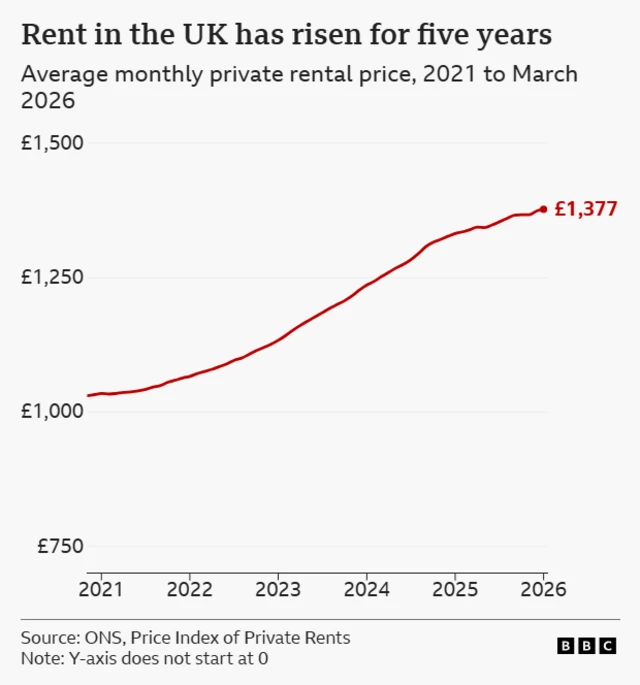
    The changes are designed to give tenants in England more security, but there’s debate over whether this includes financial security.

    Landlords can increase rents once a year to the market rate, which is the price they would get if the property was newly advertised to let.

    Tenants will be given at least two months’ notice of a rise, and can challenge excessive increases. Landlords say their costs are rising so the market rate is likely to go up too. For new tenants, "bidding wars" will end, so new renters cannot be asked to pay more than the advertised price.

    Some campaigners have called for a rent cap.

    They were given some hope by reports that the chancellor was keen on a one-year rent freeze, but Downing Street subsequently said this was not government policy.

    Line graph showing increase in rent prices since 2021
  19. Landlords could receive hefty fines if they don't comply with new rulespublished at 14:21 BST

    Tarah Welsh
    Housing correspondent

    The changes happen automatically - a fixed term contract will automatically become rolling, the tenant doesn't need to do anything.

    But landlords really need to be across the detail because hefty fines come with not complying with new rules.

    People with insecure incomes may have previously been asked to pay several months upfront to secure a home, but that is now illegal.

    Only a month’s rent can be asked for in advance. That means landlords are likely to be much pickier about who they let their properties out to, says Julie Ford, director of the landlord advice service.

    She says, "landlords won’t take the risk on people that can’t outweigh their risk by paying in advance".

    "I think this will have a direct effect on students and overseas students, as nine times out of 10, they would normally have paid rent upfront," she adds.

    Other landlords have told me that an unintended consequence of the act is that landlords will only rent to those who are good "on paper" and there will be fewer homes available as landlords sell up.

  20. Nervous landlords say their costs will risepublished at 14:09 BST

    Kevin Peachey
    Cost of living correspondent

    Some landlords say these reforms bring extra complexity to the sector, and with complexity comes cost.

    The National Residential Landlords Association (NRLA) has been warning of the "uncertain" costs facing their members, in addition to extra taxation and regulation that they’ve faced.

    That could ultimately be passed on to tenants through higher rents, they say.

    Many landlords are supportive of the aim to improve the sector to recognise landlords who are professional and responsible, but they say they are operating on very thin profit margins.