Summary

Are you out of work or education?

  1. Nearly a million young people not in education, employment or training as government awaits findings of key reportpublished at 13:56 BST

    Hazel Shearing
    Education correspondent

    Thank you for joining us today as we reported on the latest official data that suggests 981,000 people aged 16 to 24 were not in education, employment or training between April and June.

    That's lower than the number of so-called Neets for January to March, but 3% higher than for the same period last year.

    We've been hearing from young people about their experiences of applying for jobs and facing multiple rejections. Many of them have gone on to develop skills and confidence through charities and job coaches, but there are also those who say they feel stuck.

    We've also dug into the figures to find that the increase in the number of young people who are Neet since last year is largely among men.

    They were just one group highlighted in an initial report in May by former Labour minister Alan Milburn, who has been commissioned by the government to investigate the issue.

    We're expecting his next report, which should include recommendations for tackling what Milburn has described as a "moral crisis", in the coming weeks. Stay tuned.

    We've ended our live coverage. Read the story here
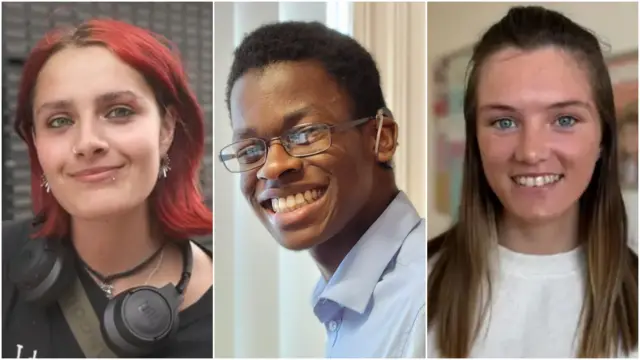
  2. Dreams of a promotion and years out of work: Young people describe their struggles and hopepublished at 13:44 BST

    A composite image of El, Barney and Neala - all smiling
    Image caption,

    El Cousins, Barney Konneh and Neala Sheils have all been keen to secure work after leaving full-time education

    Today we've been hearing from young people about their experiences in the job market.

    Muhammed, 22, has been looking for work for more than three years. Receiving rejection emails after rejection email has been "really demotivating", he says, adding that he just needs "that first opportunity".

    Barney Konneh is autistic, has ADHD and is deaf. He believes that if it wasn’t for an internship, he’d have struggled to get work. The 22-year-old told the BBC he loves his job at Liverpool City Council and hopes to "possibly get a promotion".

    Glasgow resident Neala Sheils spent two years applying for jobs before securing work in a hotel last month. The 20-year-old said support from the job centre was hampered by seeing a different work coach at almost every appointment.

    Our reporters bumped into El Cousins while she was physically handing in her CV at North Bar in Leeds. She said she liked to meet potential employers face to face because "they get an idea of your personality".

    And a 29-year-old man from Yorkshire, who has depression and anxiety, told us he hasn't been able to secure work or training for a decade. "It’s tedious as hell watching the world move on," he said.

  3. Amid the Neets crisis, all eyes are on one manpublished at 13:38 BST

    Erica Witherington
    Disability reporter

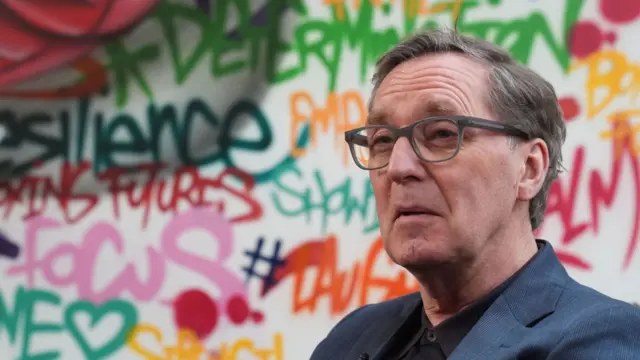
    Alan Milburn is pictured in front of a graffitied wallImage source, PA Media

    When it comes to addressing Britain’s Neets crisis, all eyes are on one man.

    You’ll have seen his name in earlier posts here - Alan Milburn. The former Labour minister has been tasked with investigating why nearly a million young people are out or work, education or training.

    In his interim findings, Milburn wrote young people are not lacking effort, but opportunity and support.

    “It would be easier to blame one thing,” he wrote in May, “smartphones, benefits, schools, employers, parents or young people themselves.

    “The evidence does not support a single explanation. It supports something harder to accept: that the institutions we built to support young people into adulthood are no longer fit for that purpose, and that the country has known this for some time.”

  4. Analysis

    Why the Neet crisis is increasingly a disability storypublished at 13:27 BST

    Erica Witherington
    Disability reporter

    For years, the debate about young people who aren’t in education, employment or training (Neet) has largely focused on jobs and qualifications.

    But it’s become clear that disability and ill-health are now a key factor.

    "Health has become central to who becomes Neet and who stays Neet," former minister Alan Milburn said earlier this year as he delivered the first stage of his report on the issue.

    He found 45% of young people who were Neet in 2024-25 reported a disability - more than double the proportion for 2013-14.

    Mental health has been the main driver of that increase. There’s a picture emerging of increasing numbers of young people with anxiety and depression, as well autistic people, and those with ADHD.

    Some may have struggled at a school or found that workplaces wouldn’t accommodate their needs.

    Today’s figures will add urgency to the question of how young people’s health and disability needs can be met much earlier - long before they’ve become detached from education, work and wider society.

  5. ‘I decided to give something outside mainstream education a try,' says Tyler, 18published at 13:24 BST

    Tyler looking at the camera with a blank facial expression, with his fringe above his eyesImage source, Tyler Le-Claire

    Tyler Le-Claire, 18, from Dorset, spent around eight months not in employment, education or training after missing the deadline to apply for his second year of college.

    He had struggled with English throughout school and had failed the subject several times.

    “I was failing English at secondary school and college, so I decided to give something outside mainstream education a try," he says.

    Tyler joined a study programme, where he says he was given more support to find his own motivation. He passed his English in about two months.

    While he was Neet, Tyler applied for around 50 jobs but did not get a single interview, nor did he get any feedback from employers.

    He says repeated rejection can affect young people’s confidence, but he is still looking for part-time work alongside a music course which he is due to start in September.

    “Sometimes people need support finding the motivation, building their confidence or working out what they actually want to do," he says.

  6. Scotland's figures delayed - but questions over how they measure statistics remainpublished at 13:10 BST

    Katy McCloskey
    Senior producer, Scotland education

    In Scotland, Neet stats for the ages of 16-24 are not available - the Scottish government doesn't publish them.

    Instead, the metric used here is called the Annual Participation Measure (APM), which covers 16-19 year-olds.

    The figure comes out at the end of every August and last year was 93.3%.

    This year however, we’ve been told that the publication is delayed due to "additional data processing" and "quality assurance activities" which are to be completed.

    We don’t yet know when the new figure will be available.

    And will the figure increase?

    The figure of 93% is seen as a measure of success and is something the Scottish government has frequently cited this past year.

    However, statistically, those over the age of 19 are more likely to be Neet, so economists have questioned the logic of a metric which stops before young people are more likely to be a Neet.

  7. Competition for degree apprenticeships quadruples as university costs risepublished at 13:01 BST

    Hazel Shearing
    Education correspondent

    A young man in a factory using a machine.Image source, Getty Images

    We've been hearing a lot from young people about what it's like to be rejected from roles this morning.

    Last week, we published a story revealing that competition for degree apprenticeships in England has quadrupled over the past three years.

    Data seen by the BBC suggests there have been 11.3 applications for every Level 6 apprenticeship position through the government's Find An Apprenticeship service in the current academic year, compared to 2.8 in 2023-24.

    Applicants said they applied to university as a "backup" because competition was so fierce, with employers cutting back on hiring because of high employment costs and economic uncertainty.

    The Department for Work and Pensions (DWP) said it was "backing employers who take on young apprentices".

    Read the story here.

  8. Part-time, not Neet, but 'the situation is demoralising'published at 12:45 BST

    Bernadette McCague
    Your Voice

    We've been hearing your thoughts and experiences around being out of work, education, and training.

    One message we've received says that junior entry roles either require experience or are "disappearing entirely".

    “My niece,19 and nephew, 21 are not classed as Neet, but both only have part-time jobs in shops," that person says.

    Despite the two applying to hundreds of jobs and apprenticeships, they've been unable to secure a work placement where they would hope to build a future career in.

    "They are both hard working, focused young people that want to learn and have a full time job. The situation is so demoralising for them”.

    BBC Your Voice banner
  9. Neet figures have been rising and falling, but situation today 'more entrenched'published at 12:36 BST

    Miguel Roca-Terry
    Data journalist

    The longer term trend puts today's figure in context - the number of young people who are Neet has been rising and falling for at least the past 25 years.

    The Neet rate peaked in 2011 at 16.9% after the global financial crisis, and fell during the Covid pandemic to 9.7% in early 2021 because of extraordinary circumstances like furlough.

    But rates have been growing since then, and former minister Alan Milburn's first report this year said the issue today "is more entrenched because it is less responsive to cyclical economic improvements".

    This Flourish post cannot be displayed in your browser. Please enable Javascript or try a different browser.

  10. Get neurodivergent young people into work and 'their self esteem will shoot through the roof' - expertpublished at 12:28 BST

    Erica Witherington
    Disability reporter

    "It didn’t work when they were kids. It’s not going to work now." That’s the verdict of one neurodiversity expert on sending young people into the same kind of education he says already failed to support them.

    Roger Broadbent, co-founder of Empowerment Passport, says teaching and employment support must be adapted to people with autism, ADHD, dyslexia and other forms of neurodivergence.

    The interim Milburn report, external said young people with special educational needs and disabilities are 80% more likely to be Neet.

    Broadbent is working on projects that support neurodivergent young people into internships, helping them explain their strengths and support needs to employers in one place.

    "If we can get these young people into some sort of opportunity where they’ve got income coming in and money in their pocket, their self-esteem shoots through the roof," he says.

  11. Young people failed by systems meant to support them - disability groupspublished at 12:23 BST

    Erica Witherington
    Disability reporter

    Disability groups have been reacting to today’s figures - saying the focus must shift from "blaming" young people, to removing all the barriers in their way.

    Young disabled people "aren’t given a fair chance to even begin", says charity Scope, warning those "shut out of work" must not be "punished with dangerous and unjustified benefits cuts".

    Mencap, which supports people with learning disabilities, says young people aren’t "work-shy", but being failed by systems that don’t meet their ambitions.

    They’re calling for investment in supported internships, saying these offer young people with learning disabilities a route into "meaningful, sustainable work".

    Mental health charity Mind says young people are being "bounced between" mental health services, while their conditions just become worse.

  12. A 'vicious cycle of rejection', says biomedical science graduatepublished at 12:17 BST

    Jasmine Sandhar
    BBC Newsbeat reporter

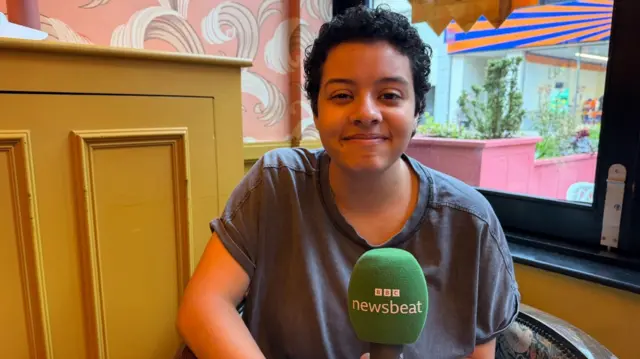
    A young woman with dark curly hair and a grey t shirtImage source, Naomi Clarke

    Biomedical science graduate Olivia McLaren says her self-confidence took a real knock after being rejected by about 100 employers since finishing her degree last year.

    “It's really easy for it to bring you down and internalise it and make you feel like you're not good enough,” the 23-year-old says.

    She tells BBC Newsbeat this also affected her motivation, which impacted the number of applications she sent out, and it became a “vicious cycle of rejection and rejection”.

    Olivia, who also has a master’s degree in research, recently secured a part-time retail job and is due to start an apprenticeship soon to become a work coach.

    She says she doesn’t want to discredit her new job, but feels like she is a “long way” from where she wanted to be at this age, and is far from the sector she is trained in.

    Olivia had previously been living off her student loans and is now on Universal Credit.

    She says job centre coaches helped improve her confidence and helped develop her employability.

    Olivia wants to remind others that “not getting a job isn't a reflection of who you are and if you're good enough or not, it's just the way the workforce is going at the moment".

  13. Too expensive to train apprentices for small businesses, manager sayspublished at 12:12 BST

    Bernadette McCague
    Your Voice

    Nicola Taylor is the general manager of a grounds maintenance company in Sheffield. She says it’s frustrating that the public doesn’t understand how expensive it is for a small business to take on an apprentice.

    “The apprentice would be attending college one day a week. They would need a lot of additional on-the-job support and training sessions, which takes a lot of the experienced staff away from their roles and affects productivity,” Nicola says.

    She estimates that training an apprentice over two years would cost more than £25,000, which she says is unaffordable “as a small business that has been hit in every direction from the government”.

    “I have a responsibility to the 16 staff I already employ to ensure they can all pay their mortgages every month and take care of their own families.”

    A purple banner which says 'YOUR VOICE' in white
  14. Youth employment charities say Milburn recommendations 'can’t come soon enough'published at 12:10 BST

    Kate McGough
    Education reporter

    Charities who work with young people have also been reacting to the Neets figures out this morning.

    Iona Ledwidge, who runs the youth employment charity Spear, external, says the “stubbornly high” figures show there’s a “clear need for effective help” in preparing young people for the world of work. She says 70% of the young people who complete their programme are in work or study a year later.

    She wants more support for work-readiness programmes saying, “Alan Milburn’s full report and effective action to support young people and overhaul the system can’t come soon enough".

    The interim Milburn report out earlier this year highlighted that the UK spends 25 times more on benefits for young people than it does on supporting them into work.

    Chris Goulden, from the Youth Futures Foundation, external, which funds research and develops policy to tackle youth unemployment, says today’s figures are “another clear signal that system-level reform is essential, if we’re to see numbers fall sustainably.”

  15. Widening access to opportunities 'vital' for next generation, defence contractor sayspublished at 12:05 BST

    Europe's biggest defence contractor, BAE Systems, says the latest ONS data is a "stark reminder" that there are not enough opportunities or support for young people.

    With around 5,100 apprentices and 1,700 graduates and undergraduates, the company says the Neets figures "underscore the importance of partnerships across industry, government and education to strengthen pathways into work".

    Richard Hamer MBE, HR Director of Education and Skills at BAE Systems, says apprenticeships "build confidence and resilience which cannot always be taught or found elsewhere".

    "At a time of economic uncertainty, widening access to high-quality opportunities is not just the right thing to do for the next generation - it is vital for the long-term success of industry," he adds.

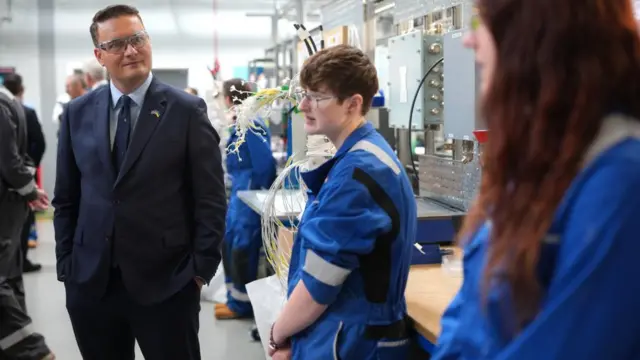
    Defence Secretary Wes Streeting in what appears to be a lab, with young apprentices in BAE lab uniformImage source, PA Media
    Image caption,

    Defence Secretary Wes Streeting meeting apprentices at BAE systems in July

  16. UK not alone in high Neet rates, nor is it the highestpublished at 12:00 BST

    Emer Moreau
    BBC News

    The UK isn't the only country grappling with high youth unemployment. According to OECD figures, France, Finland and Spain all have higher rates than we do.

    One country which has drastically reduced the number of young Neets is Ireland.

    Neet rates in Ireland went from 14.3% in 2015 to 6.1% in 2025.

    Alan Milburn, the former Labour minister who is leading a review of youth unemployment in the UK, recently travelled there to find out how they did it.

    He visited a school which receives extra government funding because its pupils are at a higher risk of poverty, social exclusion and educational disadvantage.

    The school's guidance counsellor told Milburn that they are "agnostic" about whether a student goes to university, instead focusing on technical education and preparing them for the world of work.

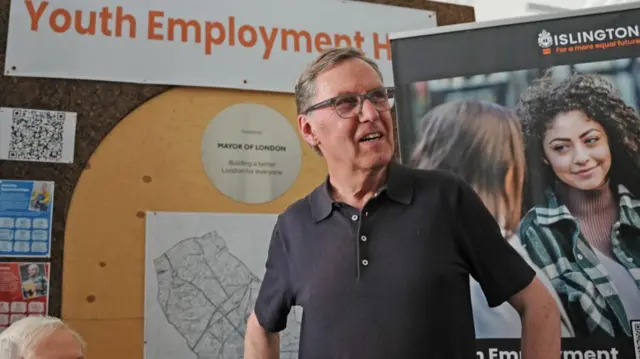
    An older man in a dark polo shirt and glasses.Image source, PA Media
    Image caption,

    Milburn recently went to Ireland to investigate its fall in Neet rates among young people

  17. Figures highlight urgency of government's task - Resolution Foundationpublished at 11:54 BST

    Think tank Resolution Foundation says the nearly one million young people who are Neet highlights the urgency of the government's task.

    It says while the number of those Neet fell to 981,000 in the second quarter of 2026, down from just over one million in the first quarter, the number is higher than a year ago.

    Tackling the crisis it says, includes early intervention on young people's mental health, more engaged employment support, and a renewed focus on high-quality further and vocational education.

    The UK continues to have the third highest rate of Neets aged 18 to 24 in Europe, and the Resolution Foundation warns that serious fiscal commitments could be required to tackle the crisis.

  18. Today's rise in Neet numbers is largely among menpublished at 11:39 BST

    Hazel Shearing
    Education correspondent

    We’ve been reporting this morning that there’s been a 3% rise in the number of young people who are Neet - from 951,000 between April and June 2025, to 981,000 over the same period this year.

    That’s an additional 30,000 young people - and the increase was largely among men.

    An extra 25,000 men were estimated to be Neet between April and June, compared to the same time last year. There were another 4,000 young women.

    In the first part of his major report into Neets, former minister Alan Milburn said the reasons for the rise in rates among men were “complex” but could be down to more health issues, the “erosion of traditional employment routes” and “a growing gap in educational outcomes”.

    He also said the “Neet problem is grounded in social disadvantage” and highlighted higher rates among certain groups, including young people who:

    • have grown up in poverty
    • have Special Educational Needs or Disabilities (SEND)
    • don’t have a GCSE-level qualification
    • are Black, African and Caribbean

    This Flourish post cannot be displayed in your browser. Please enable Javascript or try a different browser.

  19. Barney is autistic, has ADHD and is deaf. Without an internship, he'd still be looking for workpublished at 11:30 BST

    Erica Witherington
    Disability reporter

    Barney smiling at the camera while using a computer at a desk

    Barney Konneh, 22, loves his job and the team he works with. But if it wasn’t for an internship, he believes he’d still be at home applying for work.

    Barney is autistic, has ADHD and is deaf.

    Now a business support officer at Liverpool City Council, he started out on supported placements with them five years ago. A job coach helped him with practical skills like writing a CV and adjusting to the workplace.

    "I’m hoping that I can get more experience and gain new skills in the future," he tells me, and "possibly get a promotion".

    The former Labour minister, Alan Milburn, who’s investigating the Neet issue, has said he wants internships for young people with special educational needs and disabilities to be "turbocharged".

  20. 'There's no winning for us': Mental health struggles worsen the job searchpublished at 11:24 BST

    Erica Witherington
    Disability reporter

    Should young people with mental health problems just get a job? It’s a question that frustrates the increasing numbers who are struggling.

    I’m in touch with someone in Yorkshire who’s not been in work or training since he was 19. Ten years later, he relies entirely on benefits.

    He’s suffered depression and anxiety since 14, and told me nobody chooses this sort of isolation:

    "It’s tedious as hell watching the world move on as we have to sit and watch."

    He says he’s tried to get psychiatric help many times, but that "there’s no way to see anyone anymore".

    "All they do is give you phone numbers to charities and palm you off. There’s no winning for us," he added, "and most don’t seem to care".

    The proportion of disabled Neets who said their main condition is mental health has nearly doubled since 2011.

    Mental health charity Mind said young people are being "let down" - stuck on long waiting lists or "bounced" between services, while "their problems become worse and more entrenched".