Summary

  • Our coverage on this page has ended. For the latest developments, head to our new live page here.

  • Iran's Islamic Revolutionary Guard Corps Navy says the Strait of Hormuz will remain closed from this evening until the US blockade on Iranian ports is lifted

  • It says the continuing US blockade is a "breach of the ceasefire" and warns that ships approaching the vital shipping channel "will be targeted"

  • On Friday, Iran opened the Strait of Hormuz, but Donald Trump said the US naval blockade "will remain in full force until our transaction with Iran is 100% complete" - here's how the situation has evolved

  • Earlier today, Trump told reporters in the Oval Office that Iran's leaders want to close the strait, but the US won't let them "blackmail us"

  • Three ships have reported attacks in the region, the UK Maritime Trade Operations says

  • It's hard to keep up with what's really happening in the Strait of Hormuz, writes our correspondent, and this casts doubt on Trump's claim of an imminent deal

  1. Strait of Hormuz closed again as Trump says US won't be 'blackmailed'published at 23:11 BST 18 April

    Matt Spivey
    Live editor

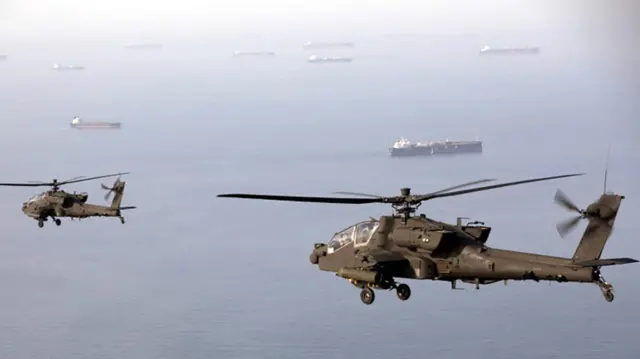
    AH-64 Apache helicopters patrol the Strait of Hormuz, ships seen on the water in the distance.Image source, CENTCOM

    We're pausing our live coverage on this page. Here's a look at what has happened over the last few hours:

    Strait of Hormuz closed again

    Ships report attacks

    • A tanker and container ship have both come under attack off the coast of Oman, the UK Maritime Trade Operations (UKMTO) said. These were the first reported attacks on ships in the region in more than 10 days
    • Meanwhile, India's foreign ministry says two Indian-flagged ships involved in "shooting incident" in the strait

    US-Iran hint at dialogue

    Across the region

    • French President Emmanuel Macron said a French soldier was killed during a peacekeeping mission in Lebanon. United Nations Interim Force in Lebanon said the patrol "came under small arms fire from non-state-actors" while clearing explosive ordnance. Hezbollah denied involvement
    • The Israel Defense Forces (IDF) said it has set up a “yellow line” security perimeter in southern Lebanon. It also said it had struck "terrorists [who] violated the ceasefire understandings by approaching from north of the Yellow Line toward IDF soldiers"

    You can read more in our main story from today here: Strait of Hormuz closed again, Iran says, as ships attacked.

  2. IDF says soldier killed in southern Lebanon after ceasefire beganpublished at 22:56 BST 18 April

    The Israel Defense Forces (IDF) say a soldier has died after being wounded during fighting in southern Lebanon on Friday.

    This follows a 10-day ceasefire between Lebanon and Israel that began at 16 April.

    In a statement, the IDF says the soldier "succumbed to his wounds after being injured during combat" in the area. Three other soldiers were also injured, IDF says.

    No further details about the incident have been released.

    Earlier, the IDF said it "remains on high alert and will continue to remove threats in southern Lebanon throughout the area between the border with Israel and the designated line", adding this is "in accordance with ceasefire understandings".

    On Friday, Lebanese state media reported that an Israeli air strike killed one person.

  3. What has the US said about its blockade of Iranian ports?published at 22:31 BST 18 April

    The US has started a naval blockade of maritime traffic entering and leaving Iranian ports this week.

    Donald Trump announced the blockade less than a day after lengthy talks between the US and Iran in Pakistan failed to reach a deal.

    American forces said they would intercept or turn back vessels travelling to or from Iran's coast, regardless of nationality.

    The US hopes to put pressure on Iran by restricting its ability to profit from oil exports.

    US Central Command (Centcom) said earlier today it had forced 23 ships to turn around near the Strait of Hormuz since the blockade began.

    In a social media post published just an hour ago, Centcom says "the blockade has completely halted economic trade going in to and out of Iran by sea".

    However, BBC Verify tracked at least four vessels from Iranian ports that appeared to have crossed the US blockade line.

    Media caption,

    The US military published a video showing one of its helicopters above a tanker at sea

  4. Ghalibaf calls US blockade "ill-judged and misguided decision"published at 22:01 BST 18 April

    Ghoncheh Habibiazad
    Senior reporter, BBC Persian

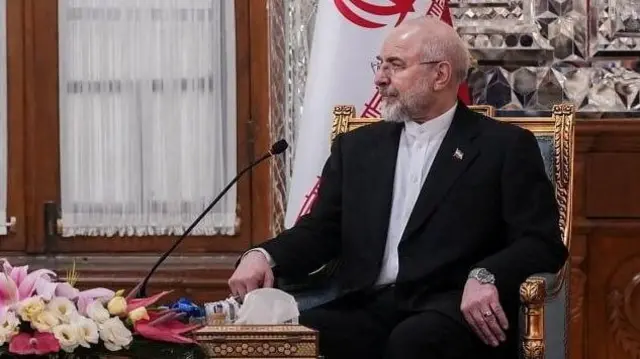
    Iranian Parliament Speaker Mohammad Bagher GhalibafImage source, WANA/Reuters

    Iranian Parliament Speaker Mohammad Bagher Ghalibaf has called the US blockade of Iranian ports "an ill-judged and misguided decision".

    "I had said that if they do not lift the blockade, transit through the Strait would certainly be restricted," Ghalibaf told Iran’s state TV.

    In a video message to Iranians, Ghalibaf said the Strait of Hormuz is "under the control" of Iran.

    He also said that when the US wanted to carry out mine-clearing operations in the Strait, Iran “stood firm and confronted” the US.

    “We regarded this as a breach of the ceasefire and said that if they took such action, we would strike,” Ghalibaf said.

    Ghalibaf has emerged as one of the key figures in the Iranian establishment since the war began, and he led the delegation during recent talks between the US and Iran in Islamabad.

  5. Lebanese government called ceasefire with Israel 'a gateway to advancing negotiations'published at 21:48 BST 18 April

    A little earlier, Iran-backed Hezbollah called a US statement about the ceasefire agreement between Lebanon and Israel an "insult", saying the Lebanese government "did not issue its approval of this statement".

    The statement, external, titled "Ten Day Cessation of Hostilities to Enable Peace Negotiations Between Israel and Lebanon", was published on 16 April. After it was released, the Lebanese presidency published a post on social media, saying: "The state's position is to consolidate the ceasefire."

    The Lebanese presidency also said "the ceasefire is the gateway to advancing the negotiations, and it is an option that enjoys local and international support".

    In another social media post, the Lebanese presidency said its president Joseph Aoun had a phone call with Donald Trump, thanking him for reaching a ceasefire in Lebanon.

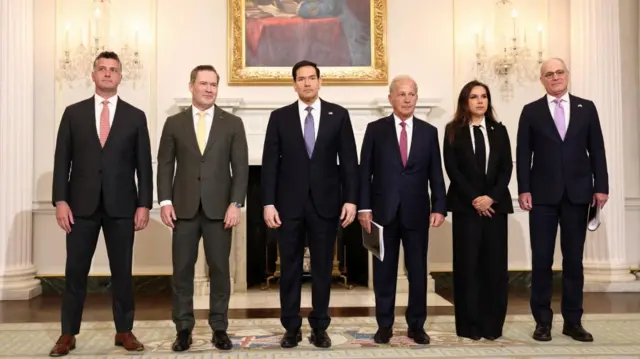
    U.S. State Department Counsellor Michael Needham, U.S. Ambassador to the UN Mike Waltz, U.S. Secretary of State Marco Rubio, U.S. Ambassador to Lebanon Michel Issa, Lebanon Ambassador to the U.S. Nada Hamadeh Moawad and Israel Ambassador to the U.S. Yechiel Leiter pose for a photo before their meeting at the State Department in Washington, D.C., U.S., April 14, 2026Image source, Reuters
    Image caption,

    US Secretary of State Marco Rubio, Lebanon Ambassador to the US Nada Hamadeh Moawad and Israel Ambassador to the US Yechiel Leiter with other officials before their meeting at the State Department in Washington DC on 14 April

  6. A timeline of US-Iran talks since the war beganpublished at 21:17 BST 18 April

    Ben Hatton
    Live reporter

    Both the US and Iran have today hinted at dialogue aimed at resolving the conflict. Here’s an overview of negotiations so far:

    28 February: Conflict breaks out after the US and Israel launch strikes on Iran, as diplomatic talks collapse

    6 March: Donald Trump says there will be no deal "except unconditional surrender" of Iran.

    21 March: Trump sets a deadline, threatening to target Iran’s energy infrastructure unless it agrees to open the Strait of Hormuz.

    23 March: Trump postpones his deadline, citing "productive conversations" - this is followed by a series of further postponements.

    7 April: Trump warns “a whole civilisation will die” if the strait is not opened before another deadline.

    8 April: Pakistan, acting as mediator, announces a two-week ceasefire between the US and Iran for further talks.

    11 April: Senior US and Iranian officials, including Vice-President JD Vance and Iranian Foreign Minister Abbas Araghchi, meet in Pakistan. After 21 hours of back and forth, Washington and Tehran remain far apart on key sticking points.

    12 April: Trump announces a blockade of Iranian ports.

    17 April: Iran’s Araghchi says the strait will remain open for the rest of the ceasefire. Trump says the US blockade will continue.

    18 April: Iran’s Islamic Revolutionary Guard Corps says it will block the strait again. Trump says “very good conversations” are happening but the US will not be “blackmailed” over the waterway.

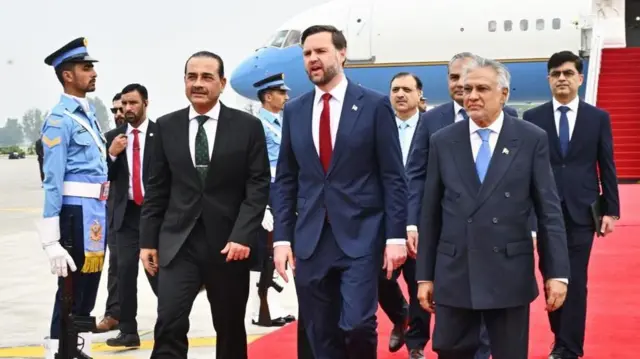
    U.S. Vice President JD Vance (C) walks with Pakistan's Chief of Defence Forces and Chief of Army Staff, Field Marshal Asim Munir (L), and Pakistani Deputy Prime Minister and Foreign Minister Mohammad Ishaq Dar (R), upon arrival at the airport in Islamabad, Pakistan, 11 April 2026. An Iranian and US delegation arrived in Islamabad for planned peace talks amid a fragile two-week ceasefire following the conflict that began on 28 February 2026Image source, EPA
    Image caption,

    US Vice-President JD Vance walks with Pakistani officials including Deputy Prime Minister and Foreign Minister Mohammad Ishaq Dar on arrival at Islamabad airport, Pakistan, 11 April 2026

  7. What ceasefires are currently in place?published at 20:39 BST 18 April

    Here's a reminder of the different ceasefire deals currently in place in the war in the Middle East:

    US and Iran

    • Started: 8 April
    • Due to last: 14 days (22 April)

    Trump said the deal was agreed on the condition that the Strait of Hormuz reopen.

    Pakistan, which had mediated talks between Iran and the US, said Lebanon was included. Iran agrees, but the US and Israel dispute this.

    Israel and Lebanon

    • Started: 16 April
    • Due to last: 10 days (26 April)

    The deal was subsequently agreed by the two countries and announced by the US.

    Trump urged the Iran-backed group Hezbollah in Lebanon, which had been trading fire with Israel, to abide by it.

    Israeli Prime Minister Benjamin Netanyahu has meanwhile said troops will remain stationed 10km-deep (6.2 miles) into southern Lebanon, despite the ceasefire.

  8. Trump's comments on Strait of Hormuz carry no validity, Iran's navy sayspublished at 19:59 BST 18 April

    Iran's navy says that the continuing US blockade on Iranian ports is a "breach of ceasefire conditions".

    As a reminder, earlier this month Iran and the US agreed to a conditional two-week ceasefire, during which they agreed shipping traffic will be allowed through the Strait of Hormuz.

    The vital shipping lane has today been closed again by Iran and Iran's navy says it will remain shut until the US blockade of Iranian vessels and ports is lifted.

    In its latest statement, the Islamic Revolutionary Guard Corps (IRGC) Navy says statements made by Trump on the Strait of Hormuz "carry no validity".

    It is not clear if the statement is referring to specific comments made by the US president.

    Earlier, Trump told reporters in the Oval Office that Iran's leaders want to close the strait, but the US won't let them "blackmail us" - watch what he said earlier in the video below:

  9. Iranian navy: Strait closed until US blockade lifts, approaching ships will be targetedpublished at 19:48 BST 18 April

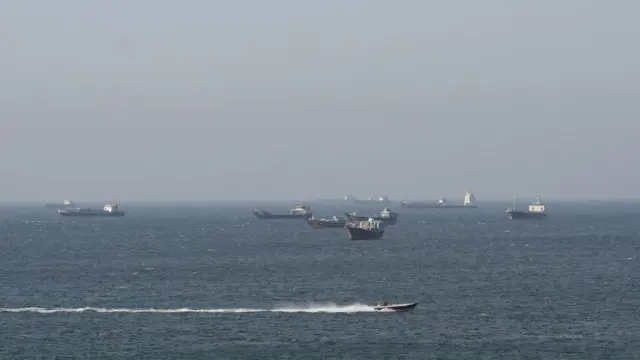
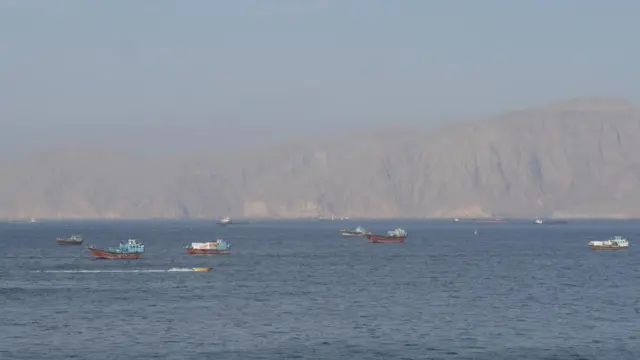
    Ships and tankers in the Strait of Hormuz off the coast of Musandam, Oman, April 18.Image source, Reuters
    Image caption,

    Ships and tankers in the Strait of Hormuz off the coast of Musandam, Oman. Pictured earlier today

    We can bring you an update from Iran's Islamic Revolutionary Guard Corps (IRGC) Navy. It says that from this evening the Strait of Hormuz is closed until the US blockade on Iranian ports is lifted.

    In a statement, the IRGC Navy warns that "no vessel is to move from its anchorage in the Persian Gulf or the Sea of Oman".

    It says a number of vessels had passed through the strait under its management since last night, but that the waterway would shut again until the US stops its blockade of Iranian ports.

    "Approaching the Strait of Hormuz will be considered co-operation with the enemy, and the offending vessel will be targeted," it adds.

    In our next post, we'll bring you more of the IRGC's latest statement.

  10. Hezbollah says temporary ceasefire has 'no practical significance'published at 19:32 BST 18 April

    Lebanese people travel south on an improvised bridge with their belongings on April 18, 2026 in Qasmiyeh, Lebanon. At 00:00 on April 17, a 10-day ceasefire took effect that is meant to pause fighting between Israeli forces and the Lebanese militant group Hezbollah.Image source, Getty Images
    Image caption,

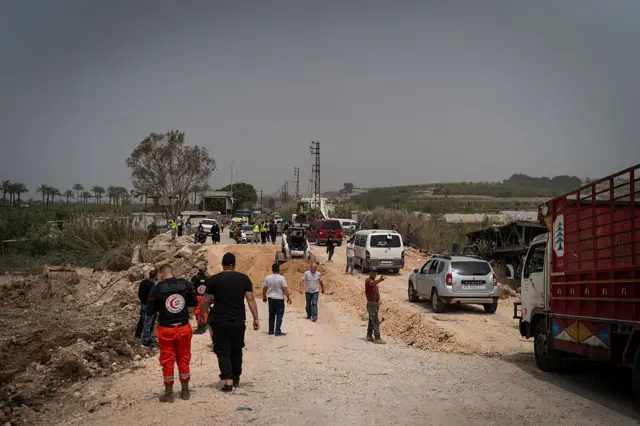
    Since the 10-day ceasefire came into effect on Thursday, displaced people have been returning back to their homes in Lebanon

    The Iran-backed group Hezbollah says the 10-day ceasefire agreed between Israel and Lebanon has "no practical significance".

    In an update on Telegram it says it is an "insult" that the US, which announced the deal, should "speak on behalf of the Lebanese government... yet everyone knows that the Lebanese government did not meet and did not issue its approval of this statement".

    It also says its fighters will "remain in the field with their fingers on the trigger" to respond to any violations of the ceasefire, which began on Thursday, "because we do not trust this enemy".

    The group says the next step is the fulfilment of five points:

    1. "A permanent halt to aggression throughout Lebanon by air, land and sea
    2. The withdrawal of the Israeli enemy from the occupied territories to the borders
    3. The release of prisoners
    4. The return of residents to their villages and towns up to the border
    5. Reconstruction with Arab and international support and national responsibility"

    "Hezbollah is open to the fullest co-operation with the authorities in Lebanon," it adds.

  11. Official says 3,468 killed during war in Iranpublished at 19:23 BST 18 April

    Ghoncheh Habibiazad
    Senior reporter, BBC Persian

    Ahmad Mousavi, head of Iran’s Foundation of Martyrs and Veterans Affairs, says the records of 3,468 individuals killed during the war are currently being registered.

    This is the latest death toll of the war announced by an Iranian official, and is up from 3,375, recorded on 12 April by Iran’s Forensic Medicine Organisation chief.

    The BBC cannot independently verify these figures.

  12. Iran not ready for further in-person talks with US, minister tells APpublished at 19:08 BST 18 April

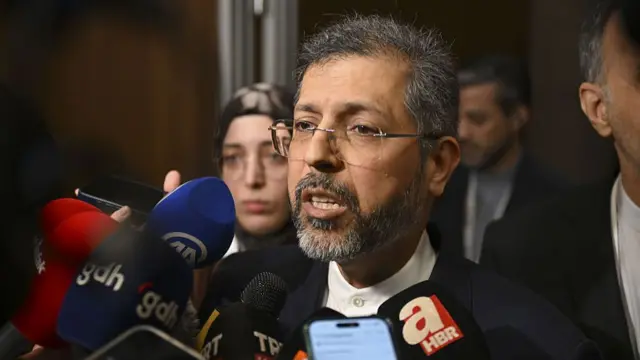
    Saeed Khatibzadeh speaks into a pack of press microphonesImage source, Getty Images

    Iran's deputy foreign minister says the country isn't ready for a new round of face-to-face talks with the US, according to the Associated Press (AP), because Washington refuses to drop what he calls "maximalist" demands on key issues.

    Saeed Khatibzadeh also tells AP that Tehran won't hand over its enriched uranium to the US, calling it a "non-starter" - despite what Donald Trump said on Friday.

    Khatibzadeh says there has been contact between the two sides, but Iran wants a "framework agreement" to be finalised before any in-person talks.

    He says the US needs to "understand and address our main concerns", including sanctions imposed on Iran.

    Earlier today, Trump says there are "very good conversations going on" with Iran.

  13. Captain stranded on ship says crew hope 'to go back home'published at 18:36 BST 18 April

    Captain Raman Kapoor has been stranded with his 23 crew members on a crude oil tanker near the Strait of Hormuz since the start of the war.

    He tells the Weekend programme on the BBC World Service that his crew have had a lot of "mixed emotions" since the war began. He also says they have seen frequent missiles and an explosion close to their ship in recent weeks.

    However, he adds, they have been waiting patiently and professionally.

    "We hope that we will be able to go back home," he says.

  14. First attacks on ships in more than 10 dayspublished at 18:05 BST 18 April

    Jacob Phillips
    Live reporter

    As we reported earlier, two Iranian gunboats opened fire at a tanker in the Strait of Hormuz, while a container ship was also hit by an "unknown projectile", according to UK Maritime Trade Operations (UKMTO).

    The maritime security organisation last reported an attack near the Gulf on 7 April, when a bulk carrier was struck by "two unidentified projectiles", causing a fire onboard. That attack happened 112 nautical miles (207km) south east of Ras Al Hadd, Oman.

    On the same day, a container ship was also hit by an unknown projectile south of Kish Island in Iran, UKMTO said.

    UKMTO first reported attacks on ships in the region on 1 March.

    In an update on 14 April, it said there had been 18 reports of attacks on vessels operating in and around the Gulf, Strait of Hormuz and Gulf of Oman.

    In total, there had been 30 incidents affecting vessels, UKMTO says.

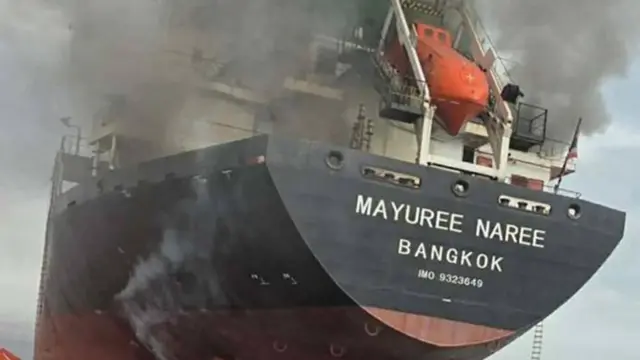
    A photo shows the Thaiflagged cargo ship Mayuree Naree on fire after being hit by Iranian missiles in the Strait of Hormuz, Iran, 11 March 2026Image source, EPA
    Image caption,

    A Thai-flagged cargo ship caught fire after being hit by Iranian missiles in the Strait of Hormuz on 11 March

  15. Two Indian-flagged ships involved in 'shooting incident' in Strait - foreign ministrypublished at 17:35 BST 18 April

    India's Foreign Secretary Vikram Misri says he's concerned about a shooting incident earlier on Saturday involving two Indian-flagged ships in the Strait of Hormuz.

    In a statement, Misri called for Iran to resume facilitating India-bound ships crossing the strait.

    This follows reports from UK Maritime Trade Operations that three ships - a tanker, a cargo ship and a cruise ship - all flagged incidents in the region on Saturday.

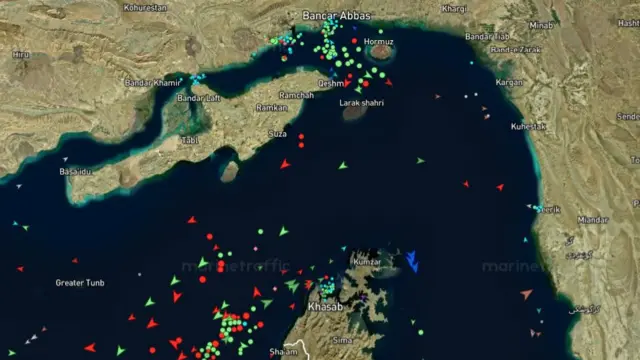
  16. Images show marine traffic decreasing through the straitpublished at 17:05 BST 18 April

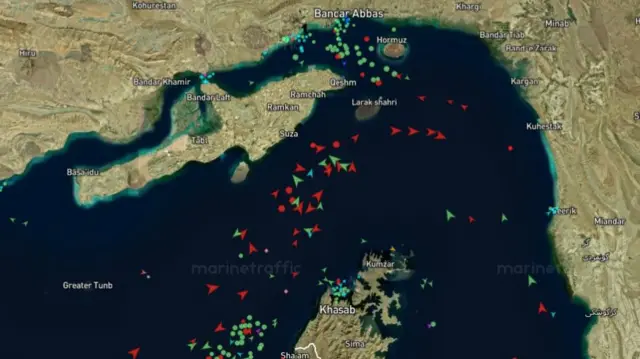
    We showed you this image earlier this morning at about 07:40 BST (06:40 GMT) - after US President Donald Trump and Iranian Foreign Minister Abbas Araghchi said the strait was open.

    A small number of ships pass through the strait, with a number very close byImage source, MarineTraffic

    Since then, Iran's Islamic Revolutionary Guard Corps and Supreme National Security Council have said they will reintroduce restrictions on the strait.

    This is what ship-tracking website MarineTraffic showed after that, at about 17:00 BST.

    The strait is mostly empty, with the cluster of vessels nearby having moved further awayImage source, MarineTraffic
  17. Strait of Hormuz remains a key focus in the Middle East conflict - a recappublished at 16:35 BST 18 April

    Jacob Phillips
    Live reporter

    Ships and tankers in the Strait of Hormuz off the coast of OmanImage source, Reuters
    Image caption,

    Vessels in the Strait of Hormuz off the coast of Oman

    Here’s a quick recap.

    Ship attacks

    Two gunboats from Iran’s Islamic Revolutionary Guard Corps opened fire at a tanker in the Strait of Hormuz, according to UK Maritime Trade Operations (UKMTO). The crew are reported to be safe.

    A container ship was also hit by “an unknown projectile” 25 nautical miles off north-east Oman, damaging some containers, UKMTO says.

    Strait of Hormuz

    Iran’s Supreme National Security Council (SNSC) says it’s "determined" to enforce control over the strait until the end of the war.

    It comes after the Islamic Revolutionary Guard Corps (IRGC) said the strait will return "to its previous state", with armed forces controlling the area.

    US President Donald Trump says he won’t let Iran “blackmail” the US.

    Meanwhile, the US says it has turned away 23 ships since it began enforcing a naval blockade on 13 April. Iran’s SNSC calls the US blockade a breach of ceasefire conditions.

    Lebanon

    A French soldier in the UN peacekeeping mission has been killed, President Emmanuel Macron says. He suggested Hezbollah is responsible, but the Iran-backed group denies involvement.

    The Israel Defense Forces says it has set up a “yellow line” security perimeter in southern Lebanon and struck “terrorists [who] violated the ceasefire” approaching its soldiers.

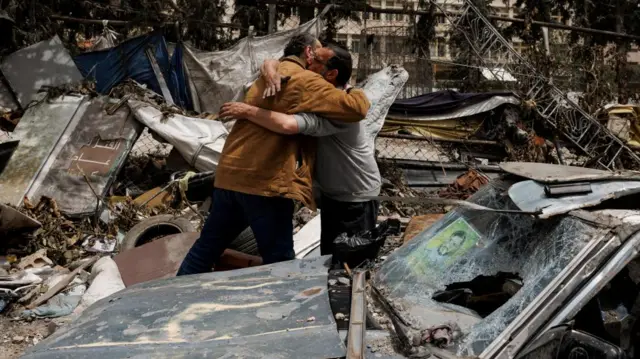
    Two men hug in front of a destroyed car. Rubble from damaged buildings can be seen behind the pairImage source, Reuters
    Image caption,

    A displaced resident in Lebanon hugs a friend beside his damaged car as he returns home after a 10-day ceasefire with Israel comes into effect

  18. BBC reports from Lebanese border town as residents try to return homepublished at 16:17 BST 18 April

    Media caption,

    Watch: BBC reports from Lebanese border town as residents try to return home

    BBC Arabic correspondent Carine Torbey is reporting from the Lebanese border town of Khiam, as the ceasefire between Israel and Hezbollah in southern Lebanon enters its second day.

    Residents are trying to return to the town, but the Lebanese army has set up a barrier to stop them, as loud explosions can still be heard in the area under Israeli occupation.

    These explosions are thought to be caused by the Israeli army detonating structures inside the area.

  19. Hezbollah denies involvement in death of French peacekeeper in Lebanonpublished at 15:47 BST 18 April

    Hezbollah has denied involvement in the incident that left a French peacekeeper dead and three others wounded in southern Lebanon this morning.

    The United Nations Interim Force in Lebanon (Unifil) said earlier that an initial assessment "indicates the fire came from non-state actors (allegedly Hezbollah)". It says it has launched an investigation.

    French President Emmanuel Macron has also said that the available information suggests Hezbollah is responsible.

    Hezbollah, the militant group backed by Iran, says it is "surprised" that others have "rushed to make arbitrary accusations", adding that it affirms "the necessity of coordination between the Lebanese Army and UNIFIL in its movements, especially under these sensitive conditions".

  20. Israeli military speaks of 'yellow line' in Lebanon for first timepublished at 15:31 BST 18 April

    Nick Beake
    Reporting from Jerusalem

    The Israel Defense Forces (IDF) says it has set up a “yellow line” security perimeter in southern Lebanon.

    It’s the first time the IDF has spoken of a demarcation in this way since the ceasefire with Hezbollah began on Thursday night, when Israeli Prime Minister Benjamin Netanyahu announced a 10km (6.2-mile) deep "security zone" would be established.

    A similar line was set up by the IDF in Gaza after a ceasefire deal there last year, to separate its forces from territory held by Hamas.

    In a statement today, the IDF said it had struck "terrorists [who] violated the ceasefire understandings by approaching from north of the Yellow Line toward IDF soldiers".

    There’s no word yet on who may have been injured or killed in this attack the Israelis carried out.

    It said its soldiers are allowed to take action against threats, even during the ceasefire.

    There’s been no immediate response from Hezbollah or the Lebanese government, which agreed to the 10-day truce with Israel.

    In Gaza, Israeli troops have opened fire dozens of times at Palestinians they say were trying to cross the “Yellow Line”. Earlier this year, the Associated Press reported that 77 people had been killed by Israeli gunfire in the three months since the ceasefire began.