Summary

  1. Pausing our coverage for tonightpublished at 22:16 BST 3 June

    With residents told they can return to their homes after the detonation of the device, we're ending our coverage for tonight from Coventry.

    We'll have updates on the aftermath in the morning.
  2. Praise for teams from policepublished at 22:15 BST 3 June

    Assistant Chief Constable Mike O’Hara said: “Our approach throughout has been to keep everyone safe while minimising disruption to the local community.

    “Coventry City Council has provided significant support to displaced residents and worked closely with partners to ensure people had access to accommodation and welfare support.

    “Thanks to EOD’s expertise and the dynamic render safe planning the cordon was kept to a minimum of 100 metres, preventing a much wider evacuation and limiting disruption to homes and businesses."

  3. Controlled explosion makes bomb safe - policepublished at 22:12 BST 3 June

    West Midlands Police said in a statement a controlled explosion had taken place to disarm the bomb found at the Sandy Lane Business Park.

    The force also said the bomb had been removed safely.

    It thanked colleagues from the army's Explosive Ordnance Disposal team and Coventry City Council.

  4. Police confirm controlled explosionpublished at 22:07 BST 3 June
    Breaking

    West Midlands Police have just confirmed there has been a controlled explosion.

  5. Reports of loud explosionpublished at 21:57 BST 3 June

    A number of people reported hearing a loud explosion just after 21:00 BST.

    Sean O'Brien, one of the residents evacuated from their homes last night, has confirmed the police have now contacted him and confirmed the bomb has been destroyed.

    He said the police told him it is safe to return home.

    West Midlands Police have not yet confirmed it directly to the BBC.

  6. Device detonated - residentpublished at 21:54 BST 3 June
    Breaking

    A resident who was evacuated from near the site has told the BBC he's been contacted by police to say the device has been detonated.

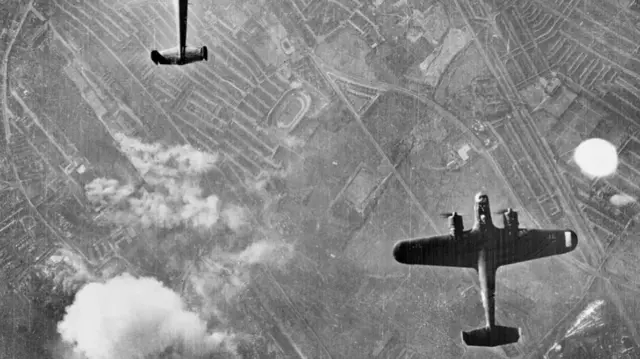
  7. Why did some WW2 bombs not explode?published at 21:41 BST 3 June

    While the majority of bombs exploded when they fell on Britain during the Second World War, we are still finding ones which didn't.

    Matt Brosnan, a historian with the Imperial War Museum, told the BBC that around 10% failed to go off and in many cases that was because they were duds.

    German munitions factories were producing them as quickly as possible, he said, and that led to mistakes.

    But others were fitted with time-delay fuses or booby traps and were not designed to detonate on impact - they were designed to kill bomb disposal teams which went to disarm them.

    All of these unexploded bombs still pose a danger.

    Two large aircraft in a black and white photo seen from aboveImage source, Imperial War Museum
  8. Bomb one of many dropped on Coventrypublished at 21:04 BST 3 June

    Historians believe bomb discovered last night is likely to have been one dropped by the Germans during the air raid on Coventry in November 1940.

    In that raid up to 150 high explosive bombs and 3,000 incendiaries were dropped on the city's Daimler works, causing a huge fire.

    But many more bombs were dropped across Coventry - up to 400 tonnes of high explosives, 30,000 incendiaries and 50 landmines.

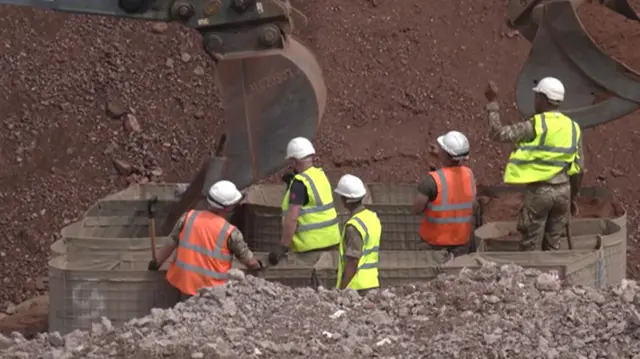
    Workmen in yellow and orange reflective jackets and white helmets standing in a pile of rubble with the arm of a mechanical digger above them
  9. The site previously 'fuelled Britain's wartime engine'published at 20:37 BST 3 June

    Dr Darren Reid, associate professor in History at Coventry University, said the Sandy Lane site was targeted because of its vital role in Britain's war effort.

    He told the BBC: "The site was a target because it produced essential wartime materials that Britain needed to fuel its wartime engine.

    "Without its heavy industrial base, Britain would not have been able to fight the war - it would not have been able to defend itself, let alone take part in the operation to liberate France and continental Europe from the Nazis."

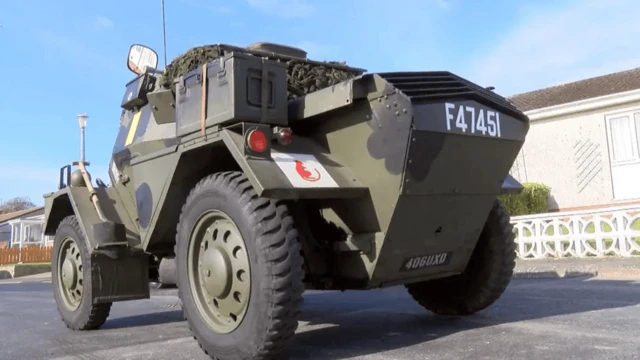
    A picture of a restored Daimler Dingo army car
    Image caption,

    The site would have produced vehicles like the Daimler Dingo

  10. What has happened this evening?published at 20:21 BST 3 June

    With bomb disposal experts still on site, here's a summary of the key events so far this evening:

    • Army bomb disposal experts have moved the bomb to the centre of the construction site and covered it in sandbags and earth
    • Coventry City Council said it expected a controlled explosion today
    • The council also said 37 people were waiting to return to their homes
    • The bomb has been described as being the size of a town centre waste bin
    • Another bomb disposal truck arrived on site at about 18:00 BST

  11. 'Probably many more bombs to be found' under Coventrypublished at 20:06 BST 3 June

    Kevin Reide
    in Coventry

    This site is famous in Coventry. The first British motor car ever made was built here at Daimler, before it became a factory for aircraft components during World War Two.

    There have been four bomb discoveries in the city in the last 20 years alone, and experts say there are probably many more still to be found beneath its streets.

    It's been a very difficult day for residents. One man I spoke to said his wife wasn't feeling well and they'd had to check back into a hotel having already checked out. There are still a lot of people wondering when they can come home.

  12. Who are the disposal experts dealing with the bomb?published at 19:40 BST 3 June

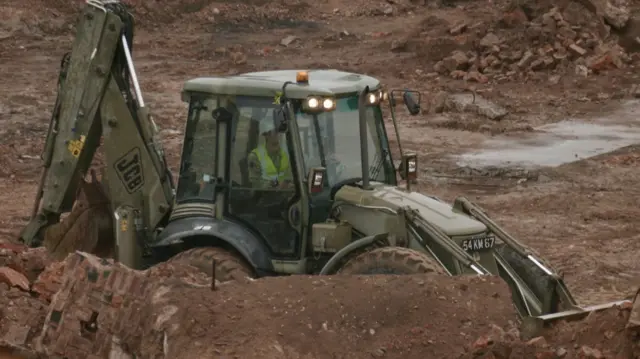
    An Army digger can be seen at the site surrounded by dirt and rubble

    The Explosive Ordnance Disposal (EOD) team dealing with the Sandy Lane bomb are specialists from the British Army's Royal Logistic Corps.

    The 11 EOD & Search Regiment Royal Logistic Corps is the Army's specialist unit responsible for improvised explosive device and conventional munitions disposal, employing about 650 specialist soldiers.

    The regiment is made up of five squadrons based across the UK, including one at Ashchurch in Gloucestershire - just short of 50 miles from Coventry.

    Bomb disposal expert Steve Rimmer, who spent eight years in the Army as a EOD engineer, told BBC CWR earlier that the process involves an initial assessment by a bomb disposal officer.

    Then a second team moves in to put earthworks and sandbags in place to suppress any blast if the device detonates unexpectedly, he said.

  13. Unexploded bombs found 'on a weekly basis', expert sayspublished at 19:16 BST 3 June

    Bomb disposal expert Steve Rimmer says discoveries like the one in Coventry are far more common than people might think.

    "As a nation and as an industry, we do find unexploded ordnance - it can be on a weekly basis, depending on what construction is going on," he told BBC Midlands Today.

    "But it doesn't always end up in the news. A lot of this just goes on behind closed doors."

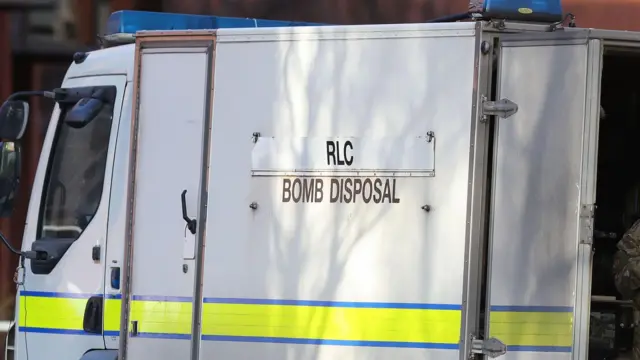
    Picture of a van belonging to the Explosive Ordnance Disposal Unit
  14. Bomb disposal experts busy on sitepublished at 18:54 BST 3 June

    Kevin Reide
    in Coventry

    There's been lots of activity here today.

    We saw army bomb disposal experts surveying the area before moving the bomb from a corner of the construction site to the centre.

    The site is about the size of two football pitches and the bomb was placed between two huge mounds of earth and then they buried it beneath sandbags and more earth.

    We were expecting it to be dealt with at that point, but it's been quiet for about the last three or four hours.

    In the last few minutes a bomb disposal truck has arrived, so something might happen later this evening.

    A building side with lots of rubble and a vehicle parked in the middle with houses in the distance
  15. From Blitz bombing to city of peace and reconciliationpublished at 18:36 BST 3 June

    Coventry was such a target during World War Two as much of its industry had been repurposed towards the war effort.

    Known as Motor City, Coventry boasted 12 automotive manufacturers by 1950, including Alvis, Armstrong Siddeley, Daimler, Hillman, Humber, Jaguar, Lanchester, Lea-Francis, Singer, Standard, Sunbeam-Talbot and Triumph.

    During the war, Daimler like others produced vehicles and munitions. But that also put a target on its factories.

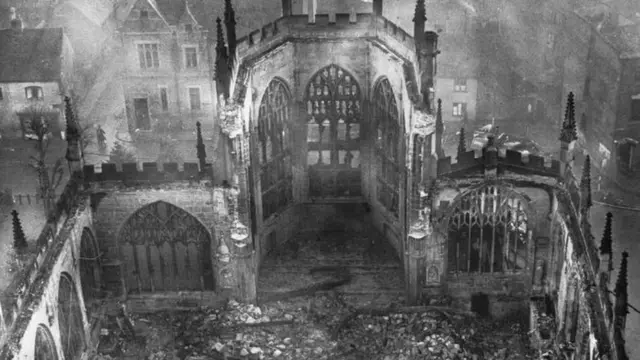
    The most famous casualty of the Blitz bombing of 1940 was Coventry Cathedral, whose ruins have become an iconic landmark, while the city has become known as the city of peace and reconciliation.

    Ruins of Coventry CathedralImage source, Getty Images
  16. Sound of explosion 'should not cause concern', police saypublished at 18:20 BST 3 June

    We're still awaiting news of when the controlled explosion will be carried out, but West Midlands Police has warned people living in the area to expect a very loud noise.

    Officers said this was expected and "should not cause concern".

    "Residents will be allowed to return to their homes once the operation has been safely completed and it is confirmed that the area is secure," the force added.

  17. Grand plans for canal-side sitepublished at 17:57 BST 3 June

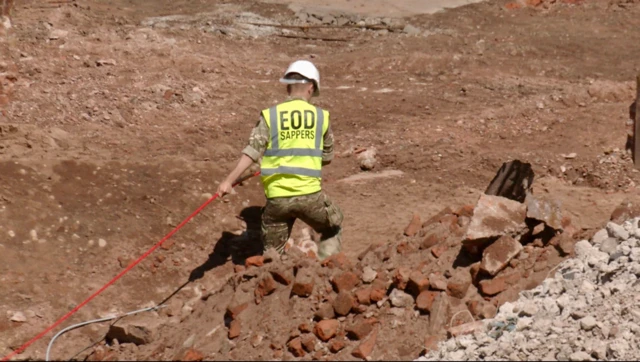
    Bomb disposal team member in Army fatigues and a high-vis jacket

    After this bomb is disposed of, developers the Wigley Group will be hoping to get back on track with their project for the site.

    The master plan includes mixed-use of the six-acre canal-side site in Coventry.

    Daimler Wharf, which will include the Daimler Powerhouse arts complex, is expected to feature houses, apartments, employment and some leisure and recreation facilities.

  18. Bomb the 'size of a town centre waste bin'published at 17:40 BST 3 June

    Kevin Reide
    in Coventry

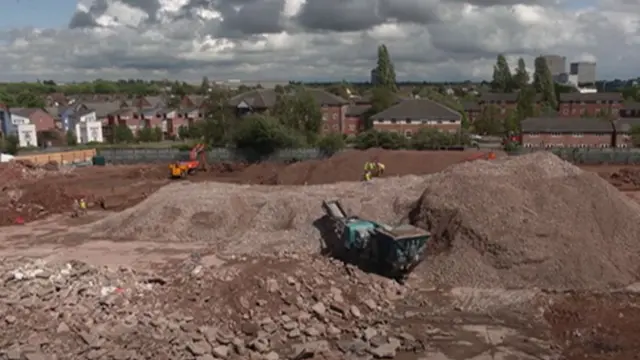
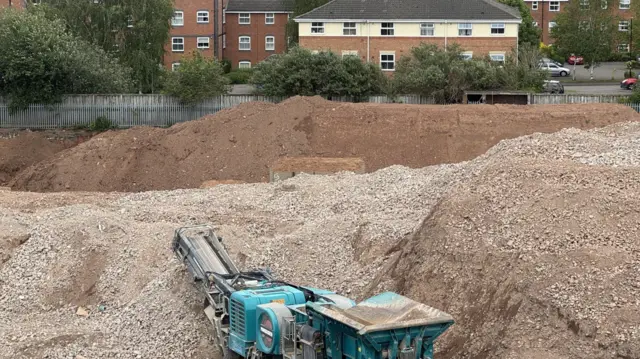
    A construction site features piles of dirt and rubble, with a teal-colored crushing machine in the foreground. Residential buildings are visible in the background beyond a metal fence.

    The bomb has been buried under the box-like structure, as seen in the centre of the photo above.

    The Explosive Ordnance Disposal Team have vacated the site several times in the last two hours but sporadically reappear to inspect things, then leave again.

    The bomb is described as being about the size of town centre waste bin.

  19. What has happened this afternoon?published at 17:25 BST 3 June

    As the wait for the bomb detonation heads into the evening, here is a summary of the key developments that have unfolded since lunchtime:

    • West Midlands Police confirmed a controlled detonation would take place this afternoon following a "detailed assessment of the device"
    • The MP for Coventry North West Taiwo Owatemi said the "hope is that residents will be able to return home later"
    • Army bomb disposal experts have withdrawn from the scene following the controlled explosion
    • Residents are awaiting confirmation that the area is secure before being allowed to return home
    • Coventry City Council confirmed 15 households - comprising 37 people and one dog - were provided with overnight accommodation last night
    • Many others spent the night in hotels or with family
  20. Evacuated resident plans for second night awaypublished at 17:10 BST 3 June

    Sean O'Brien, who was evacuated from his home near the site on Tuesday, says he and his partner were spending a second night in a hotel.

    "My partner wasn't feeling well so we made the decision to stay in a hotel again just in case we couldn't get home," he said.

    "Looking at updates it looked like it was going to be detonated this afternoon so hopefully we'll be home tomorrow, all being well.

    "I've not heard anything from anyone today - not even police - but we're just getting updates from the news."

    Many other residents are expected to return home this evening, after the controlled explosion.