Summary

Media caption,
‘You can taste the smoke’: New Yorkers on air quality as fires burn across Canada
  1. Landmarks shrouded in haze as New Yorkers don masks outsidepublished at 21:03 BST

    New York City's famous landmarks, including the Empire State Building and Statue of Liberty, are obscured by smoke brought south from Canada's wildfires.

    Those braving the outdoors are donning masks, with air quality warnings advising people to mostly remain indoors.
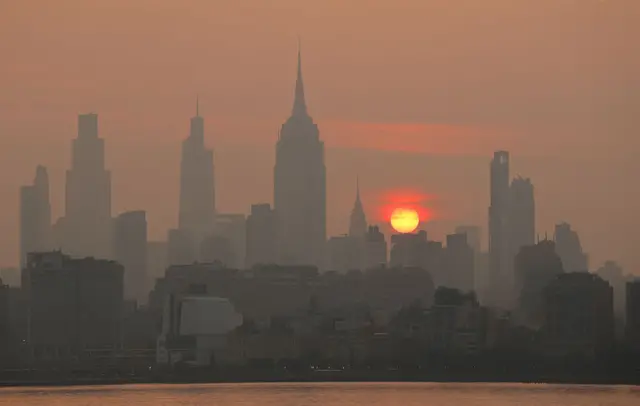
    The sun rises behind the midtown Manhattan skyline and Empire State Building, casting the city in an orange hazeImage source, Getty Images
    Image caption,

    The sun rises behind the midtown Manhattan skyline and Empire State Building, casting the city in an orange haze
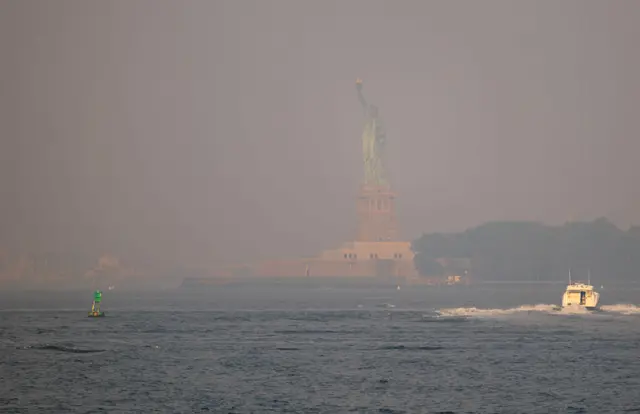
    The Statue of Liberty as seen through a hazy sky.Image source, Getty Images
    Image caption,

    The thick haze has left the Statue of Liberty, as seen from Brooklyn Bridge Park, obscured
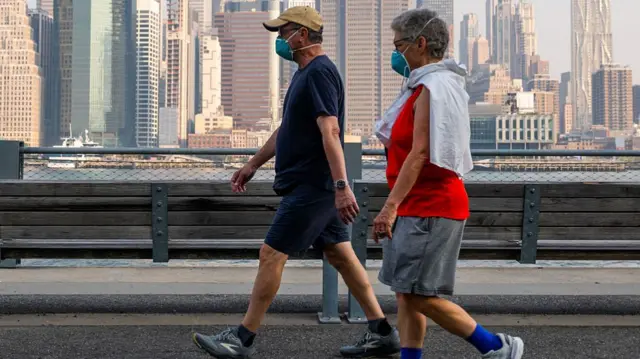
    An older man and woman wearing masks and walking next to the water with the Manhattan skyline behind them.Image source, Getty Images
    Image caption,

    New Yorkers are wearing masks due to the poor air quality

  2. Western Canada also under threat of wildfirespublished at 20:48 BST

    Wildfires are not only a problem in eastern Canada. Over on the country's Pacific coast, more blazes have been reported, according to the British Columbia Wildfire Service.

    There are currently 59 active fires in British Columbia, the agency says, adding that 39 of the fires started in the last 24 hours. More than half (31 fires) are out of control, officials say, meaning firefighters are using more aggressive means to control them.

    Thunderstorms in the forecast this week may also bring lightning strike-related blazes, the agency says.

  3. Trump threatens to add smoke damage costs to tariffs on Canadapublished at 20:39 BST
    Breaking

    US President Donald Trump is hitting out at Canada for the wildfire smoke wafting south into the United States.

    "We are holding Canada responsible for the fact that they are not properly maintaining their Forests, and Brush therein, and the United States is being unnecessarily invaded by filthy, polluted, and unhealthy air, the quality of which is dangerous, and totally unacceptable!" he wrote on his Truth Social platform.

    Trump says he will call Canadian Prime Minister Mark Carney to demand an explanation over his country's "willful negligence" that has imposed an "incalculable cost" on the US via the smoke.

    The "cost of this pollution must of necessity be added to the TARIFFS Canada is currently paying", Trump threatens.

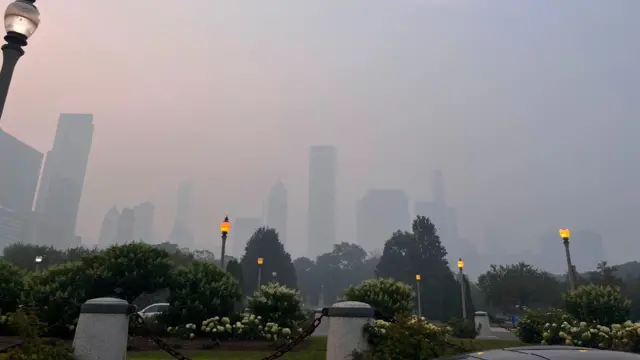
  4. Chicago skyscrapers completely hidden by smoke, resident sayspublished at 20:27 BST

    Katie Williams
    Live reporter

    Wildfire smoke obscures high-rise buildings in ChicagoImage source, Francia Garcia Hernandez

    Conditions in Chicago have improved slightly compared to yesterday, when you could see smoke "filling entire blocks" as you drove along the highway, says Francia Garcia Hernandez, a 33-year-old journalist who works in the city.

    But things are still "very smoky and hazy", she tells me.

    Garcia Hernandez has lived in Chicago for about seven years, and she says yesterday's smog was the worst she's ever seen. High-rise buildings were barely visible and smoke was "filling the air".

    The smoke has impacted day-to-day life in the city, she says, with some local events cancelled, people wearing masks and fewer people exercising outdoors.

    She adds that the conditions raise health concerns for residents, noting she had a slight headache yesterday after spending some time outdoors. While she can't be sure it was related, some health experts have warned headaches can be one potential smog-related symptom.

  5. Analysis

    Blaming Canada for wildfire smoke misses the bigger picture, experts saypublished at 20:14 BST

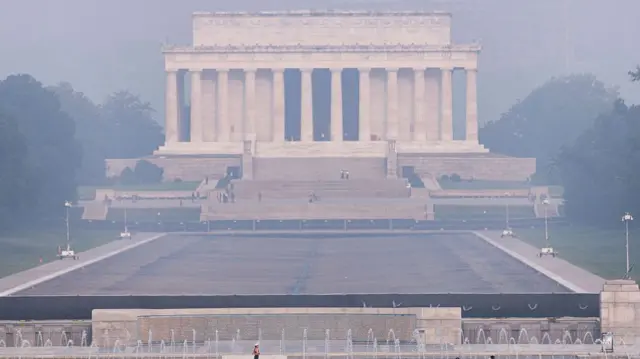
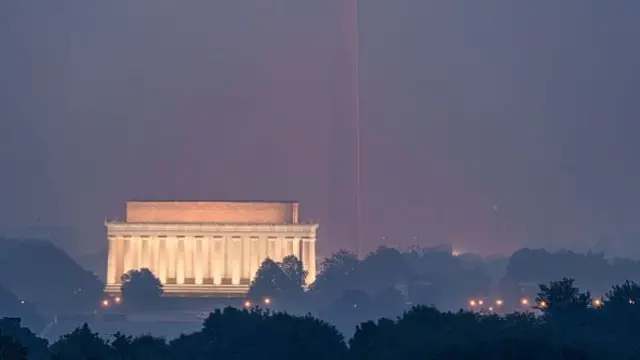
    Smoke from massive wildfires in Canada and Minnesota engulf the Washington, D.C. skyline, reducing visibility and casting a colored haze over the Lincoln Memorial.Image source, Getty Images
    Image caption,

    The Lincoln Memorial in Washington, DC blanketed by smoky haze

    by Marco Silva

    Some Republican politicians in the US have blamed Canada for failing to properly manage its forests and prevent the wildfires causing smoke to drift across the border, but scientists BBC Verify has spoken to say the picture is more complicated.

    “Weather doesn’t care about international borders,” says Patrick James from the University of Toronto.

    Once smoke reaches the atmosphere, it travels wherever the winds take it - and smoke from major US wildfires has also affected Canada in recent years.

    Experts also say many of the current fires are burning in Canada's vast, remote forests, where fires can be difficult to detect or contain before they become too large.

    While better forest management can reduce wildfire risk in some areas, particularly near communities, it cannot prevent fires across an ecosystem of this scale.

    Scientists also say increasingly severe wildfire seasons are being driven in part by climate change, which is creating hotter, drier conditions that allow fires to spread more easily.

    “Climate change is a global issue, and it would be inaccurate to suggest that Canada alone caused or could have prevented these wildfires,” says Anabela Bonada from the University of Waterloo.

  6. Detroit, Michigan sees worst air quality in the worldpublished at 20:01 BST

    Madeline Halpert
    Reporting from Detroit, Michigan

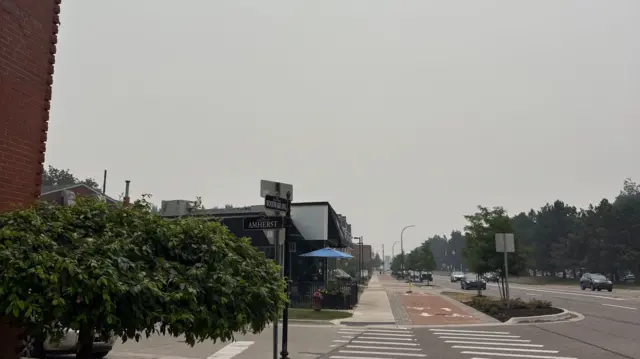
    Hazy street of DetroitImage source, Madeline Halpert / BBC

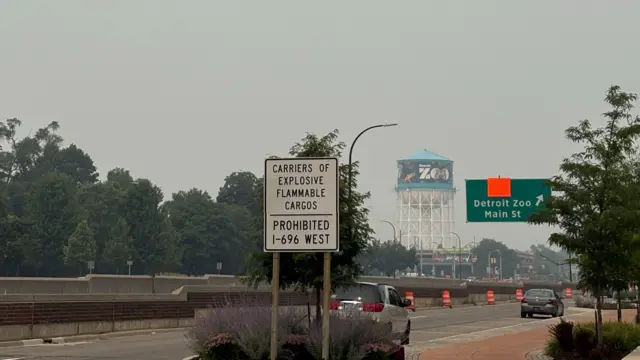
    I’m here in Detroit, Michigan, where the air has been awful for the past two days - the worst in the world right now. The smoke in the air burns your eyes and throat when stepping outside even for a few minutes.

    Very few people are outside, and many of those who are are wearing N95 masks. The smoke is supposed to improve tomorrow, and is better than the even thicker haze from yesterday, but most are still hunkering down indoors.

    Hazy street of DetroitImage source, Madeline Halpert / BBC
  7. White House holding 'informal' meetings with FIFA on weather for finalpublished at 19:51 BST

    Bernd Debusmann Jr
    White House reporter

    The inclement weather has sparked concerns for Sunday's World Cup final between Argentina and Spain at MetLife Stadium in New Jersey - and the White House is watching.

    The BBC understands that White House officials - including Andrew Giuliani, the head of the White House's World Cup task force - is holding informal meetings with FIFA officials and others monitoring the wildfires. No larger, formal meeting has so far been planned, though.

    Forecasters believe that rains over the weekend will improve conditions before the two teams take the field at 1500e/2000b.

    Later today, President Donald Trump is expected to attend a FIFA reception, Press Secretary Karoline Leavitt told press yesterday.

    Trump will also be in attendance at the game on Sunday.

  8. First Nation community 'distraught' after fires force evacuationpublished at 19:41 BST

    Katie Williams
    Live reporter

    I've just spoken with Matthew Hoppe, incident commander for the Namaygoosisagagun First Nation - a community devastated by the wildfires in northern Ontario.

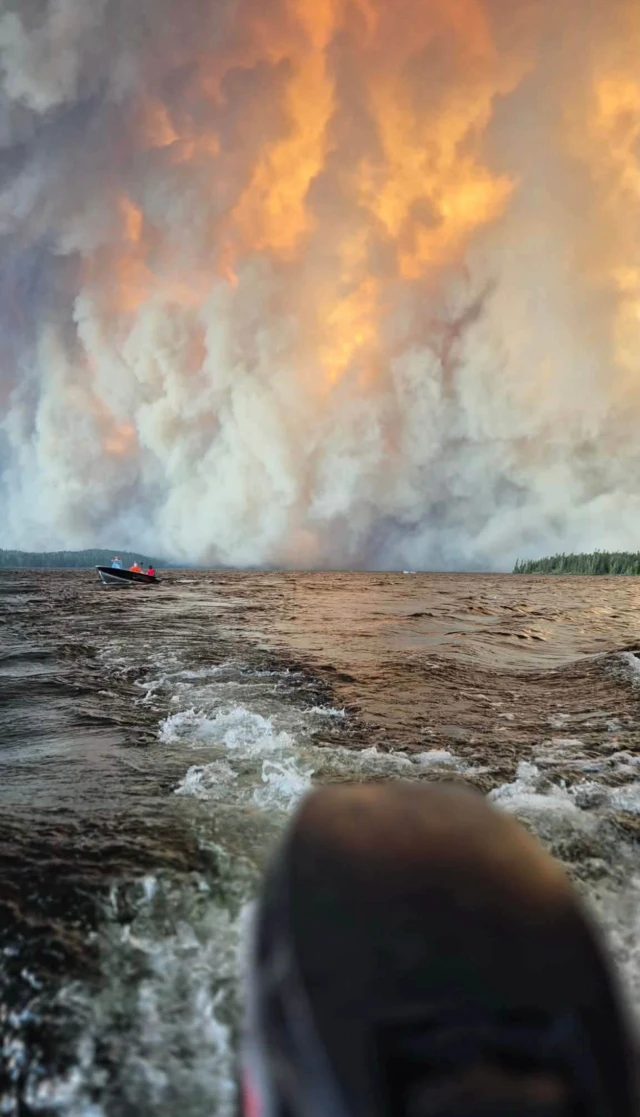
    He says the community had to "self-evacuate" via small boats on Monday afternoon with the fire rapidly approaching.

    Thankfully, there were no deaths or direct injuries, he says, but the community has been "completely levelled" and people are "distraught, overwhelmed, and at a complete loss".

    Hoppe says the fire tore through with very little advance warning. After "repeated pleas for help", residents eventually had to flee.

    While there have been other forest fires in the region in the past, the community has not been directly impacted in this way before, he says.

    In terms of what's next, Hoppe says the community is speaking with the government to "firm up resources". The longer-term plan is ultimately to "rebuild and return".

    Namaygoosisagagun First Nation evacuates following wildfiresImage source, First Nation via Matthew Hoppe
  9. How much longer will these wildfires burn?published at 19:28 BST

    Stav Danaos
    BBC Weather

    It's difficult to say how long these Canadian wildfires will burn for, but many of the current wildfires are likely to go on for weeks. Some could even be burning for months, especially in remote boreal forests.

    Very often, large boreal forest fires aren't fully extinguished by firefighters at all. Instead, fire crews focus on protecting communities and critical infrastructure while allowing fires in remote areas to burn until weather changes. Heavy widespread rain or early autumn snowfall are often weather events that finally stop them.

    Canada is still in the middle of its wildfire season, with July and August typically the most active months. Officials expect fire danger to remain elevated throughout much of the rest of the summer in many regions.

  10. A pair of smoky days in Torontopublished at 19:18 BST

    There are more than 190 wildfires burning in Ontario at the moment.

    They are the source of most of the smoke that was experienced in Toronto on Wednesday and Thursday, and now in major US cities like New York and Washington.

    On Wednesday, Toronto had the worst air quality in the world, according to air quality monitor IQAir.

    Here are some scenes from the past two days.

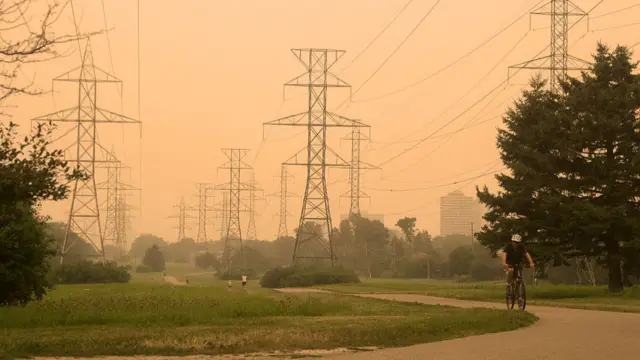
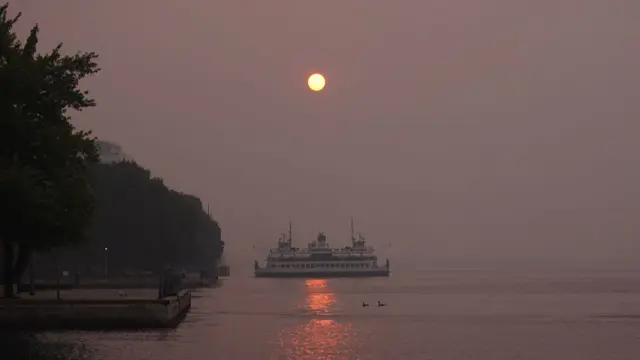
    Orange haze from wildfire smoke is seen in Toronto, Ontario, Canada, on July 15, 2026.Image source, Getty Images
    Image caption,

    The wildfire smoke caused the entire sky to turn orange in Toronto on Wednesday

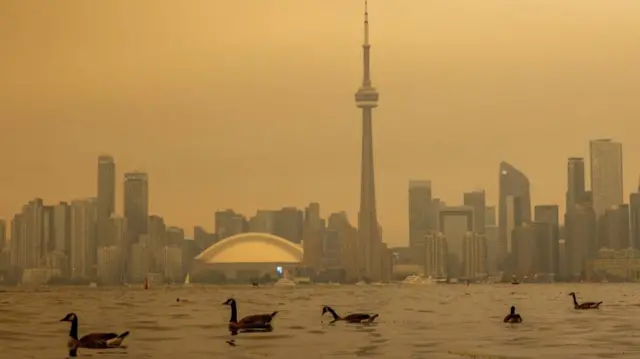
    Canada geese swim in Lake Ontario, as wildfire smoke from northwestern Ontario fills the skyImage source, Reuters
    Image caption,

    Canada geese swimming in Lake Ontario against a backdrop of smog

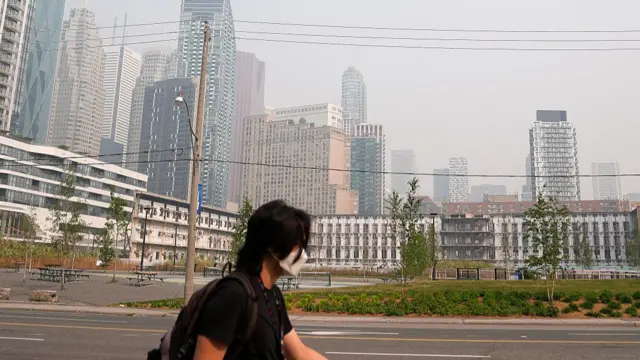
    A man wearing face mask walks on the street as smoke from wildfires continue to impact air quality in Toronto, Ontario on July 16, 2026Image source, Getty Images
    Image caption,

    Some wore N95 masks to protect themselves from inhaling the harmful particles in the air

    The sun rises over Toronto's waterfront through dense wildfire smoke for a second consecutive day as poor air quality persists across the city, in Toronto, Ontario, Canada, on July 16, 2026. (Photo by Arrush Chopra/NurPhoto via Getty Images)Image source, Getty Images
    Image caption,

    The smoke turned the sun bright orange over Lake Ontario on Thursday

  11. Free N95 masks handed out to New Yorkerspublished at 19:08 BST

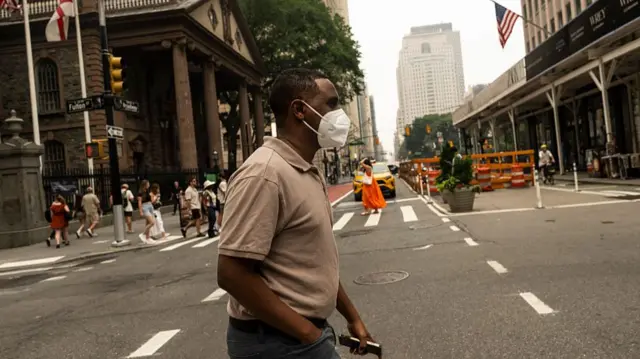
    A man in an N95 mask walks across the street in Manhattan.Image source, Getty Images

    New York City is handing out free N95 masks as authorities urge residents to protect themselves from the poor air quality being brought on by the Canadian wildfires.
    The masks are being distributed from all libraries and all police precincts, where the city advises masks are limited to two per person.

    Firehouses in the Bronx, Brooklyn, Manhattan, Queens and Staten Island are also giving them out.

    (Masks have also been handed out to staff here at the BBC's Washington DC office.)

  12. How to stay safe in the smokepublished at 18:58 BST

    If you’re in an area impacted by wildfire smoke today, here are some tips on how to reduce health risks:

    • Stay inside as much as possible, with windows closed
    • Avoid strenuous outdoor activities
    • Wear a well-fitting N95 mask when outside and keep windows closed in cars
    • Monitor existing health conditions closely and talk to your doctor if symptoms worsen

    This list was compiled from tips shared by health organisations like the American Thoracic Society, the Centers for Disease Control and Prevention (CDC) and the Environmental Protection Agency (EPA).

    You can find specific government advice for your area via the EPA’s AirNow air quality checker, external in the US and the Air Quality Health Index, external in Canada.

  13. Before and after pictures show haze descending over Washington DCpublished at 18:51 BST

    Bill McKenna
    Picture editor

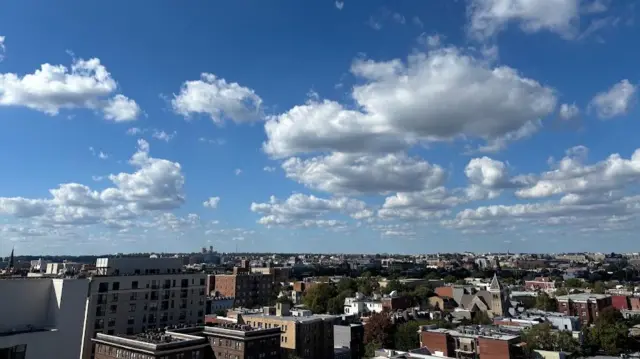
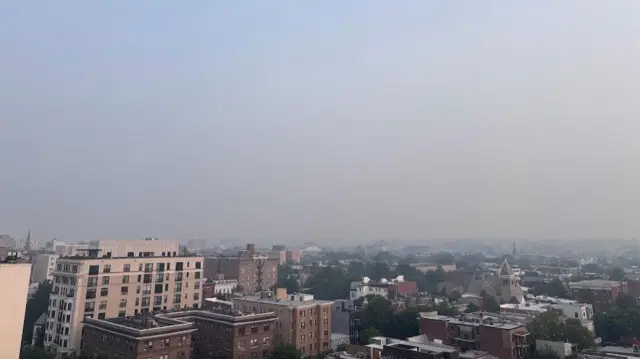
    There are so many days here in Washington DC where the air is clear and I can see the National Cathedral up on the hill from our rooftop - but not today.

    These comparison photos give a sense of the conditions currently being experienced, as wildfire smoke blankets parts of the US and Canada.

    Photo shows skyline from rooftop in Washington DC on a relatively clear day, with a few normal clouds in the skyImage source, Bill McKenna / BBC
    Photo shows skyline from rooftop in Washington DC on a hazy day, with smoke polluting the air following Canadian and US wildfiresImage source, Bill McKenna / BBC
  14. An unpleasant day in Washingtonpublished at 18:35 BST

    Bernd Debusmann Jr
    White House reporter

    I've just come back inside after about 30 minutes filming outside - an experience I don't hope to repeat anytime soon.

    By the standards of famously hot and humid Washington, it's a relatively cool 32 Celsius. The air quality, however, is abysmal.

    Within seconds of stepping outside, I was assaulted by the clear scent of smoke in the air while my eyes began watering. On the street, several people were wearing masks. I saw several young women walk by smelling their hair, clearly upset at the prospect of having to carry the scent around for the rest of the day.

    Conditions are worse than expected. Earlier forecasts I saw predicted that the AQI would top out between 150 and 200 today. But my 0600 local, it already stood at 250. At the time I stepped out at around noon, it stood at 248.

    Local authorities have declared a rare "Code Purple", which means that anyone - even those without any underlying health risks - should avoid going outside.

    Some have clearly avoided these concerns. As I walked back into my office, I caught a glimpse of a young, shirtless man jogging. He did not appear to be enjoying it.

  15. Washington DC issues safety guidance as smoke hangs over city's iconic monumentspublished at 18:24 BST

    "If you must go outside, wear a mask," says Mayor of Washington DC Muriel Bowser, issuing guidance to residents grappling with the smoky conditions in the city.

    Washington DC is in Code Purple - a notice of "very unhealthy air" - Bowser says, and advises "sensitive groups to stay indoors" and everybody else "to limit both time outside and to avoid heavy exertion activities".

    She adds that all government activities in the city are cancelled, and outdoor pools and spray parks are closed.

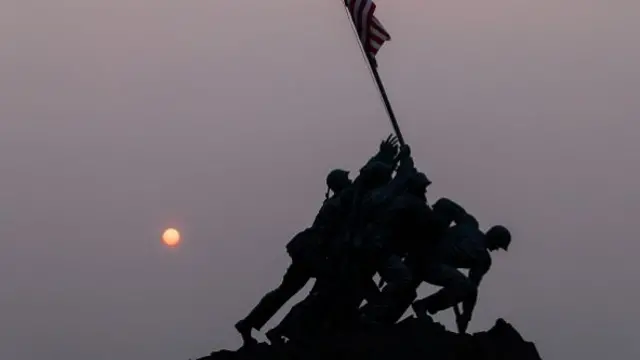
    Smoke creates a coloured haze over the US Marine Corps War Memorial as the sun risesImage source, Getty Images
    Image caption,

    The Marine Corps War Memorial

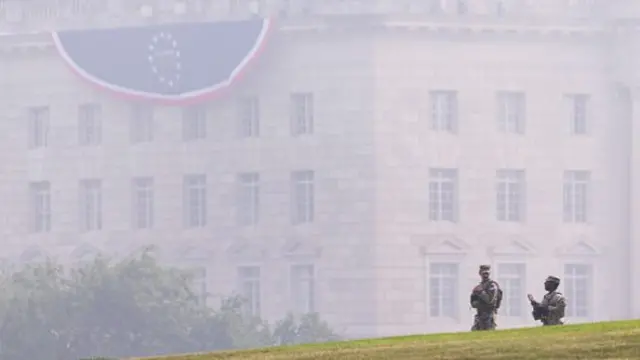
    Army National Guard members patrol in front of the Herbert C. Hoover Federal Building shrouded in smokeImage source, Getty Images
    Image caption,

    The Herbert C. Hoover Building, which houses the US Department of Commerce

    Smoke shrouds the Lincoln Memorial, Washington Monument, and the US Capitol Building DomeImage source, Getty Images
    Image caption,

    The Lincoln Memorial

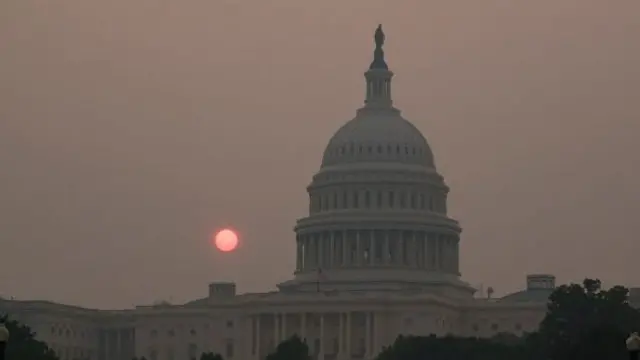
    The sun rises behind the US Capitol building as smoke hangs in the airImage source, Getty Images
    Image caption,

    The US Capitol Building

  16. 'Rather than complain, send support' says Doug Ford to US lawmakers upset about smokepublished at 18:14 BST

    Nadine Yousif
    Reporting from Toronto

    Ontario premier Doug FordImage source, Getty Images

    As the smoke from Canada wildfires drifts south, four Republican lawmakers from Michigan have publicly blamed their northern neighbour for not doing enough to put out the flames.

    Ontario Premier Doug Ford has since responded, telling reporters on Friday that Americans should support Canada instead of complain.

    He notes that Canada has helped the US battle its wildfires in California and respond to hurricanes in North Carolina in recent years.

    "Maybe what you should do rather than complain is send support, send help, because we have done the exact same thing for our American friends," Ford says.

    Defending his province's wildfire response, Ford says that Ontario has over 150 crews battling flames with the help of over 80 water bombers and helicopters.

    "We are throwing every single resource we can," he says.

    Carney has also responded, telling reporters on Thursday that combating climate change is the responsibility of both countries.

  17. US Republican lawmakers hit out at Canadian PM over wildfirespublished at 18:10 BST

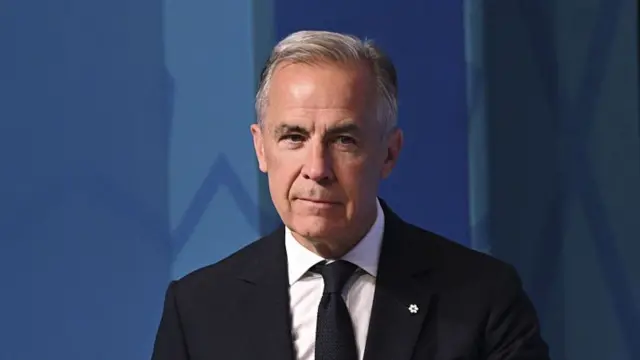
    Canadian Prime Minister Mark Carney in a dark suit and tie.Image source, Getty Images

    Several Republican members of the US Congress have lashed out at Canadian Prime Minister Mark Carney, accusing his government of failing to adequately mitigate the risk of wildfires as smoke from blazes in Canada drift into northern US cities.

    John James, Jack Bergman, John Moolenaar and Lisa McClain jointly signed a letter to Carney this week, claiming "American lungs are paying the price for Canadian inaction".

    "If Canada will not manage its forests to prevent these fires, the United States will look elsewhere, and act on our own, to protect our people. That means our own agencies exploring direct involvement in cross-border fuel reduction and firefighting capacity," the 15 July letter says.

    Following US criticism, Carney reportedly said in in Ontario that fighting climate change was the responsibility of all countries, "including the United States".

  18. Wildfire trend consistent with projections from climate researcherspublished at 18:00 BST

    Stav Danaos
    BBC Weather

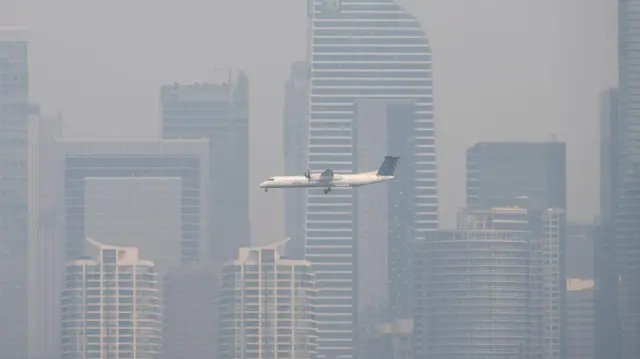
    A plane flies past smog-covered Toronto high-risesImage source, EPA
    Image caption,

    Planes have flown through smog to land at Toronto's Billy Bishop airport.

    Wildfires are not unusual in Canada – they are a normal part of its ecosystems – but what has become more unusual over the past couple of decades is the increasing occurrence of exceptionally large and long-lasting wildfire seasons which produce smoke that can affect millions of people across Canada and the United States.

    This trend is consistent with what climate researchers have projected as the climate continues to warm.

    Many are asking how the Canadian wildfires were started this year and the answer is a little more complex. Some Canadian wildfires were sparked by lightning while many others were caused by human activity or still remain under investigation.

  19. My asthmatic lungs have had enoughpublished at 17:35 BST

    Sakshi Venkatraman
    Reporting from New York City

    It was a bad week to catch a cold in New York City.

    Just when I thought I'd kicked the cough that had left me hacking and wheezing last week, the smoke rolled around and is trying to take my lungs out once again.

    Outside yesterday, the air was so thick and hard to breathe that I had to go to the doctor and get a new inhaler prescribed to combat my flaring asthma. I haven't had this bad of a flare since childhood.

    Safe to say I will be indoors until the smog lifts.

  20. The dangers of wildfire smokepublished at 17:25 BST

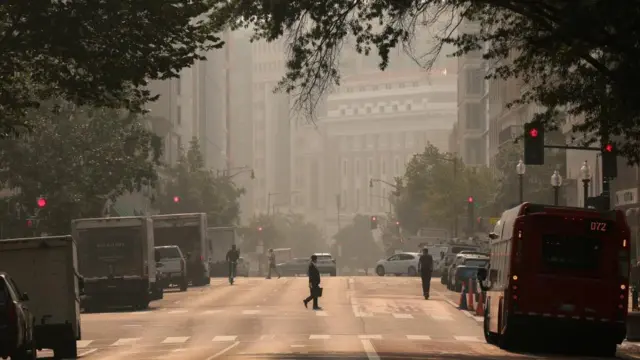
    A person crosses the street as smoke from Canadian wildfires blankets Washington DCImage source, Reuters
    Image caption,

    Smoke from Canadian wildfires seen in Washington DC

    Outdoor events including summer camps and music concerts have been cancelled in affected areas, as officials stress the health ramifications of inhaling wildfire smoke.

    Wildfire smoke is hazardous for humans as it contains a mixture of very small polluting particles like PM2.5 and nitrogen dioxide.

    "These particles when they get into our system get all the way down into our lungs, all the way down to our tiny breathing tubes and… they cause inflammation," said Jim McDonald, New York State Department of Health commissioner, in a public address video on social media.

    The smoke can exacerbate existing respiratory, heart, kidney and eye conditions, according to the World Health Organization, external.

    Emergency responders, and vulnerable groups such as those with chronic illnesses and children – who are closer to the ground where the smoke can sink – are most at risk.