Summary

  1. WHO says it is providing 'essential emergency medical supplies'published at 19:22 BST

    Director-General of the World Health Organisation Tedros Adhanom GhebreyesusImage source, Reuters

    The World Health Organization's operation in Nepal has "mobilized and dispatched essential emergency medical supplies", according to its director-general Tedros Adhanom Ghebreyesus.

    He says "selfless" rescuers have his "greatest respect and gratitude".

    It follows an earlier post on X, in which the organisation said it was providing "medicines" and "multipurpose tents".

    The UN agency also said it was committed to "monitoring public health risks", "strengthening disease surveillance", and ensuring communities could continue to access essential healthcare services.
  2. Photos show aid leaving India for Nepalpublished at 19:10 BST

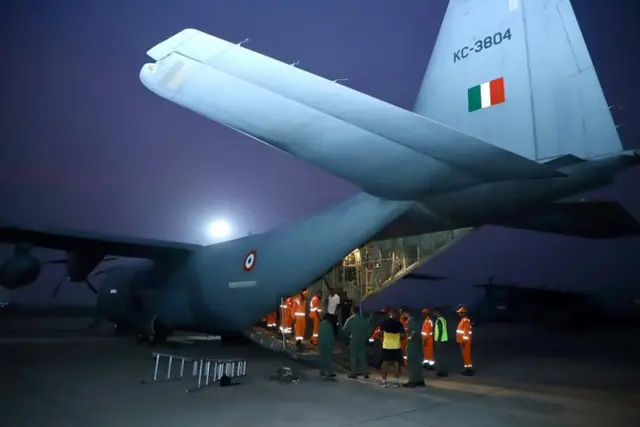
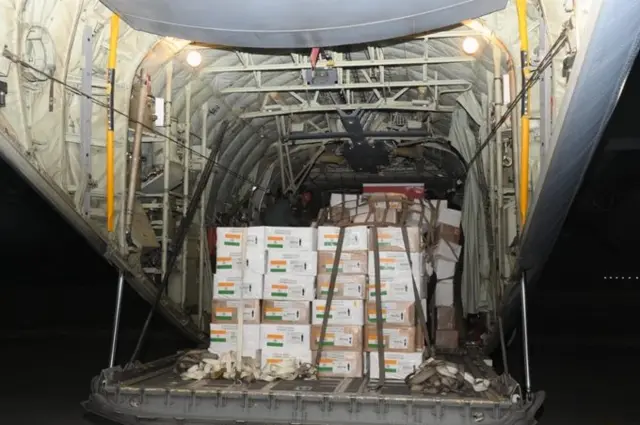
    An Indian government official says the country has sent 10 tonnes of aid to Nepal to assist with the emergency response.

    "Our thoughts are with the bereaved families and all those affected. In face of this challenge, India stands with Nepal and its people," says the country's external affairs minister, Subrahmanyam Jaishankar, in a post on X.

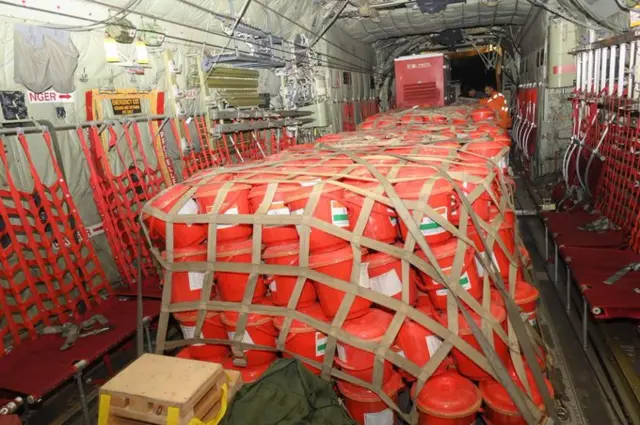
    Shared alongside this are photos of aid being loaded onto aircraft destined for Nepal.

    workers load aid onto a plan destined for nepal. they wear orange high-vis suits. the plane appears to be a military aircraft marked with the air force logo.Image source, X/@DrSJaishankar
    aid boxes marked with the indian flag are seen filling the body of an aircraft.Image source, X/@DrSJaishankar
    orange buckets are strapped down in the body of an aircraft, securing them for take off.Image source, X/@DrSJaishankar
  3. Search and rescue operation to continue overnight - Nepal PM's officepublished at 19:00 BST

    Balen Shah wears a black suit and had and walks towards a microphoneImage source, LightRocket via Getty Images
    Image caption,

    Prime Minister of Nepal Balendra Shah, pictured in April

    The office of Nepal’s prime minister says search and rescue efforts by the country’s army will continue overnight.

    In a statement, it says 1,697 personnel have been deployed, while a further 656 have been kept on standby for additional operations.

    Six military helicopters rescued 94 people during the day, while five civilian helicopters rescued 12 others. Ground teams rescued a further 27 people, it says.

    The office also says 800kg of tents and 200kg of medical supplies were delivered to the affected areas.

    A large number of people stranded above Timure will be evacuated by air Thursday morning, the office adds.

  4. What can trigger a landslide?published at 18:51 BST

    Mark Poynting
    Climate and science journalist

    Initial reports from Nepal had suggested that an earthquake may have triggered the ice avalanche and landslide.

    The US Geological Survey, which studies earthquakes, has now said that further analysis indicates “that the seismic energy was instead generated by a landslide” by itself.

    Landslides or avalanches can have various triggers. One possibility is that water - either from rainfall or melting ice - may have destabilised the ground or ice.

    Climate change is known to be driving faster glacier melt in the Hindu Kush Himalaya region, but scientists say it is too soon to pinpoint its role in this specific event.

    In a steep, mountainous and glaciated region like Nepal, hazards often act in chains, with one hazard increasing the chances of another one occurring, says Martha Day, a hydrological researcher at Imperial College. Scientists are now trying to piece together the order of events.

    They’ll be looking at satellite images of exactly where the landslide occurred, whether any glacial lakes suddenly drained, and where the river might have become blocked - as well as data on recent rainfall.

  5. Death toll rises to 157 - Nepal policepublished at 18:41 BST
    Breaking

    In an update, Nepal’s police say 157 bodies have been found in the country following the flooding.

    The previous update from authorities put this figure at 100 people.

  6. Dogs and drones deployed for Nepal's search and rescuepublished at 18:30 BST

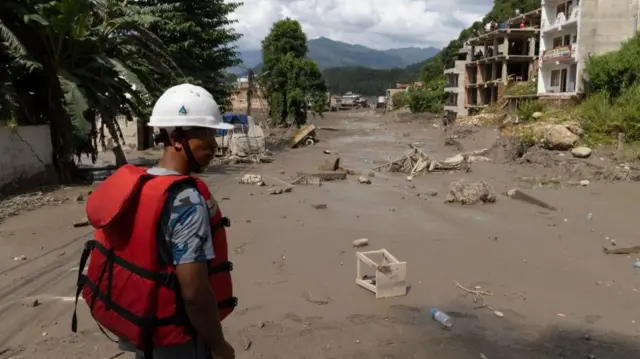
    A man with a white hard hat and a red inflatable vest surveys a flooded landscapeImage source, EPA/Shutterstock
    Image caption,

    A rescue worker in Devighat village in the flood-hit Nuwakot district of Nepal

    Nepal police say multiple teams have been deployed to the flood-affected area to carry out search and rescue operations, distribute relief, and record deaths.

    A canine team and four drones have also been mobilised for the search and rescue effort, the force says.

    According to its statement, 28 police officers in Rasuwa are still missing, and efforts to find them and other missing people will continue.

    The public is requested "not to go to river and stream banks, flood-affected areas and risky places" and to follow the information and instructions issued by the government of Nepal and security agencies, it says.

  7. US embassy 'working closely' with authorities in Nepal to assist Americans - State Departmentpublished at 18:19 BST

    The Trump administration "has no higher priority than the safety and security of Americans", a US State Department spokesperson tells the BBC.

    They say they are aware of US citizens affected by the floods and are "closely tracking the situation".

    The embassy "is working closely with local tour agencies and local authorities to assist Americans in the affected areas", the spokesperson adds.

    As it stands, 54 US tourists are known to be among the missing, according to figures from Nepal's tourist board confirmed by police.

  8. Nepali officials say ice fall may have triggered massive volume of waterpublished at 18:10 BST

    Navin Singh Khadka
    Environment correspondent, BBC World Service

    The Nuwakot district in Nepal after water swept through the Trishuli BazarImage source, EPA/Shutterstock

    Whenever there is a flood like this in the Himalayas, one question that comes up spontaneously is: what caused it?

    And the problem often is there is no definitive answer instantly. The difficult terrain of the Himalayas including in Tibet, where some say the flood originated, and where there is hardly any human presence, is the main reason.

    Experts therefore try to analyse satellite images, but monsoon clouds have not been so helpful this time, they say.

    Officials with Nepal's department of meteorology and hydrology, however, have told me that some images they have seen show a massive chunk of ice (perhaps a part of a glacier) that seems to have collapsed from a mountain in the Tibetan side, bringing down rocks and other sediments with them.

    That, they say, may have generated some volume of water because of the friction between the rocks and ice when they were falling down. The remaining debris of rocks and sediments created a dam on the Lhende river below, obstructing its flow initially but ultimately causing it to breach.

    Some Nepali academics in China say they have been given similar accounts by some Chinese experts. But the Chinese news agency Xinhua in a post on X has called it a mudslide in Nepal.

    Earlier, there were also suspicions of a collapse of a glacial lake but some glaciologists are ruling that out.

    The real reason will be known once clear satellite images are obtained and verified by multiple sources.

  9. We will do 'everything we can' to support Britons affected by flooding, says Burnhampublished at 17:55 BST

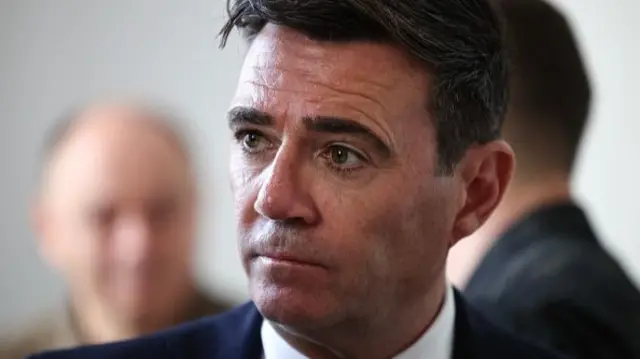
    Andy Burnham close up pictureImage source, AFP via Getty Images

    UK Prime Minister Andy Burnham says his government will do "everything we can" to support British nationals after the flash flooding on the Nepal-Tibet border.

    Calling the scenes "devastating", Burnham says in a statement that his "thoughts are with all those affected including the families and loved ones of British nationals missing in this tragedy".

    “We will do everything we can to support British nationals impacted in the region and are in touch with the relevant authorities to offer support," he says.

    British nationals in the region should follow guidance from local authorities as well as travel advice from the British government, he adds.

  10. Nepal death toll from floods rises to 100 - policepublished at 17:43 BST
    Breaking

    Nepal police says 100 people have died in the country as of 20:30 local time (14:45 GMT) due to the flash floods.

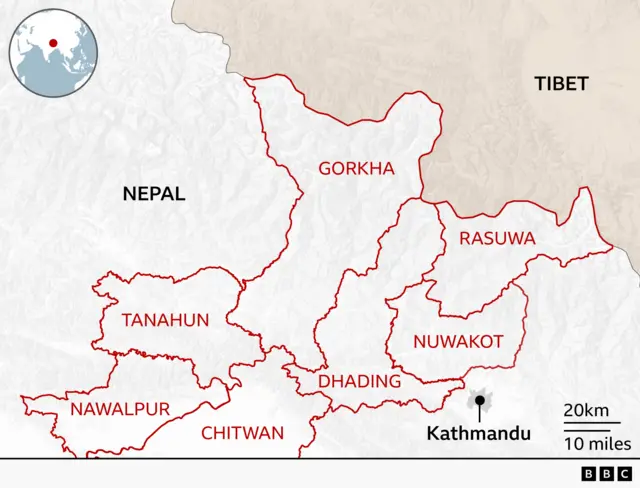
    Those include one in Rasuwa, 11 in Nuwakot, 18 in Dhading, 33 in Chitwan, 19 in Gorkha, seven in Tanahun, and 11 in Nawalpur.

    Map of central Nepal showing districts north-west of Kathmandu. District boundaries are outlined in red, with Gorkha at the centre, bordered by Rasuwa to the east, Nuwakot to the southeast, Dhading to the south, and Tanahun to the southwest. Chitwan and Nawalpur are shown further south. Kathmandu is marked by a black dot southeast of Nuwakot. Tibet lies to the north of the mapped area. An inset globe in the top-left indicates the location within Asia. Scale bar shows 20 km and 10 miles.
  11. New analysis indicates no earthquake prior to flash flooding - US Geological Surveypublished at 17:37 BST

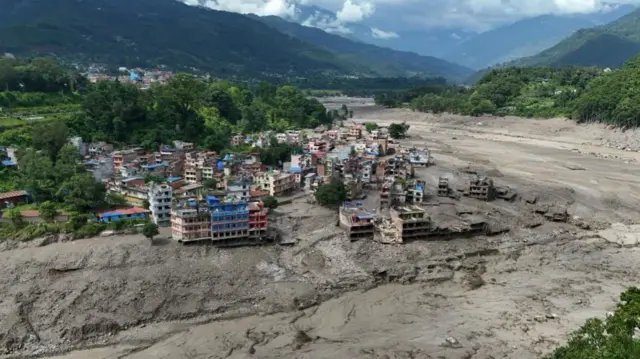
    And aerial view of the aftermath of the flood shows a town with mud-covered buildings beside a wide scoured muddy river bed.Image source, EPA/Shutterstock

    Further analysis indicates that a landslide preceded the flash flooding in Nepal and there was no earthquake, says the US Geological Survey (USGS).

    "This event was initially reported as a magnitude 4.4 earthquake," it says.

    "Additional analysis of long period seismic waves indicate that the seismic energy was instead generated by a landslide."

    Earlier, Nepal's foreign minister had told parliament that preliminary information indicated that an earthquake hit Nepal, which then triggered a landslide and resulted in flash flooding.

  12. Flooding causes more than £70m in damage, Nepal official tells BBCpublished at 17:30 BST

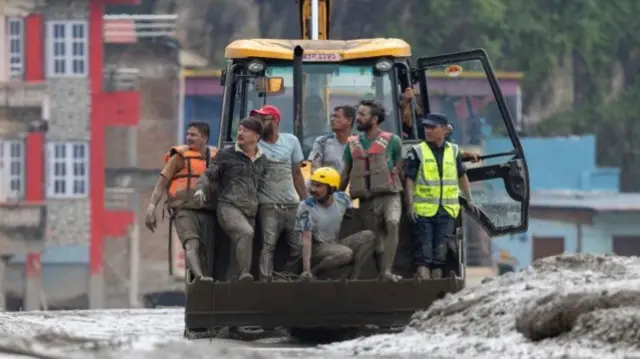
    Seven men in muddy clothes are shown in the front scoop of a digger that is on a mud-covered street.Image source, EPA/Shutterstock

    Initial estimates show that roads and bridges worth more than 15bn Nepalese rupees (£72.18m, $98.33m) were damaged by the floods, a government official tells BBC Nepali.

    Earlier, we reported that 19 bridges and 40km (25 miles) of road had been damaged.

    Vijay Jaisi, head of the Roads Department, also says portable bridges will be installed at sites where bridges collapsed from Thursday.

  13. Aftermath of flash floods in Nepal's Nuwakot district - in picturespublished at 17:15 BST

    Earlier, we brought you the latest pictures from Nepal's Nuwakot district, where the Nepalese foreign minister has warned there is still a risk.

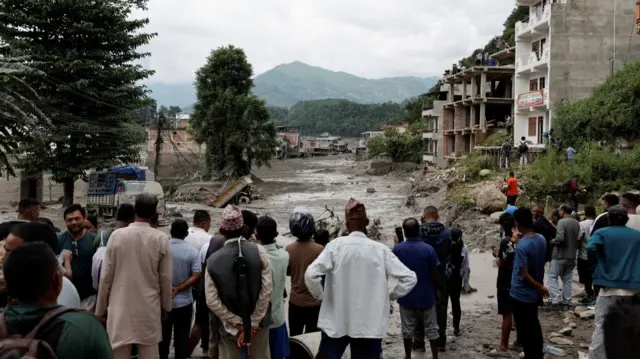
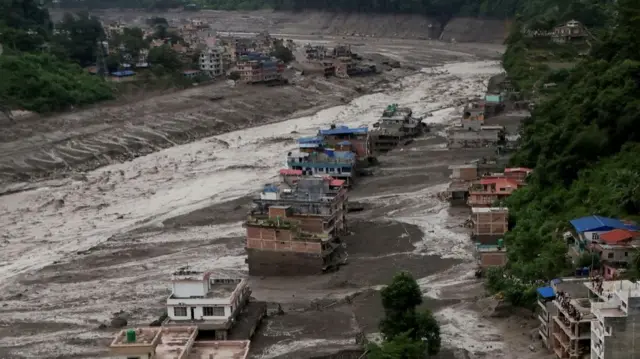
    Here are some more images from the scene, showing houses and roads submerged in mud, as well as residents examining the extent of the damage.

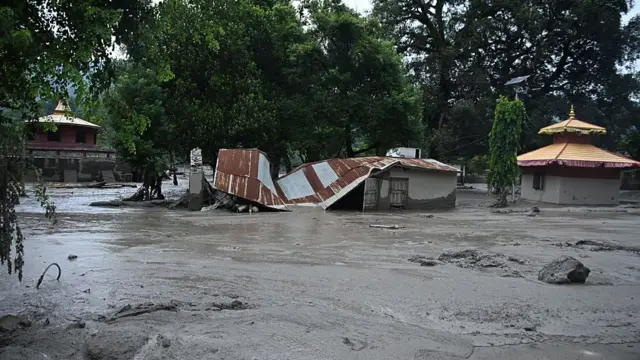
    A house with a collapsed roof is submerged in mud and debris in the middle of a residential area in Nepal's Nuwakot districtImage source, AFP via Getty Images
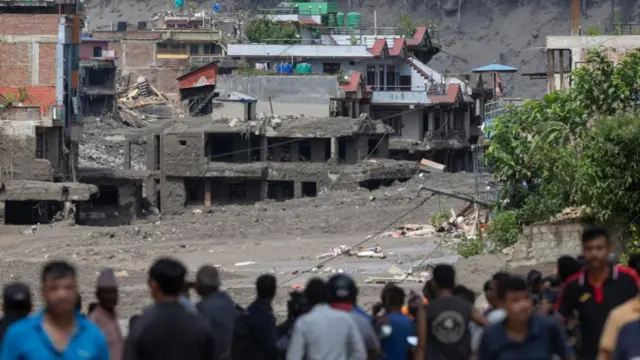
    A large crowd of people stands looking at a mud covered houses and a roadImage source, Reuters
    A aerial view of several houses, some covered in a think layer of mud, along the bank of the Trishuli riverImage source, Reuters
  14. Missing in Nepal include dozens of army personnel, police officerspublished at 17:06 BST

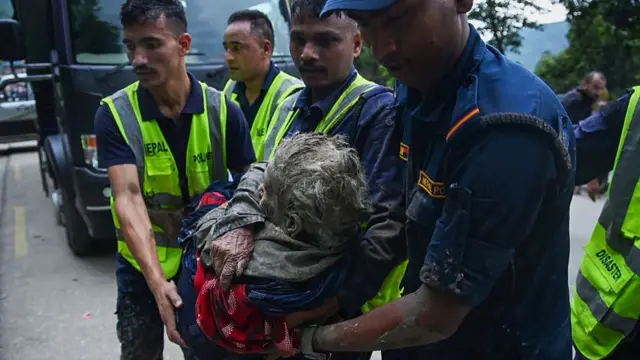
    Rescue workers carry an older woman who is covered in mud and wrapped in a blanket.Image source, Getty Images
    Image caption,

    An intensive search and rescue operation is under way across Nepal

    Army personnel, police and power workers are among the hundreds missing following devastating flash flooding in Nepal.

    In an update earlier, the prime minister's office said the missing included:

    • 44 army personnel
    • 28 police
    • 13 armed police
    • 60 people working on power projects

    Foreign and domestic tourists also form a significant portion of the missing reported so far - with the latest figure now at 579.

    As we've been reporting, officials say 95 bodies have been recovered.

    Infrastructure has also been hit, with 19 bridges and 40kms (25 miles) of road reported as damaged.

  15. Chitwan district sees most deaths among 95 killed in Nepal - policepublished at 16:57 BST
    Breaking

    Nepal police have shared a breakdown of the 95 bodies found following the flash flood.

    They include one in Rasuwa, 11 in Nuwakot, 18 in Dhading, 33 in Chitwan, 16 in Gorkha, five in Tanahun and 11 in Nawalpur.

    Police say they are working to move households at risk to safe places and carry out rescue and search operations.

    We are receiving regular updates from Nepalese authorities, and these numbers are likely to change.

  16. Charities warn of ripple effect from flooding disasterpublished at 16:49 BST

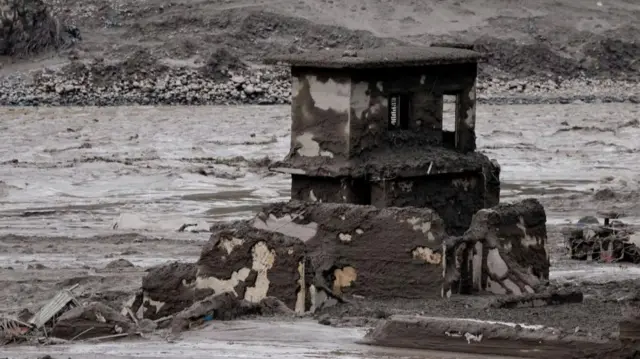
    The ruins of a building are shown covered in mud and debris beside a swollen river.Image source, Reuters

    Earlier, the BBC spoke to the country director of Save the Children, which has deployed teams to support in the aftermath.

    Tara Chettry says the worrying factor is that key infrastructure, including hydropower facilities, has been destroyed.

    "This can have a ripple effect as bridges and roads are damaged," she adds.

    Meanwhile, Care International's Nepal director Mona Sherpa says the flooding sparks concerns of waterborne diseases given the damage to sanitation infrastructure.

    Sherpa says her charity's relief efforts will prioritise those most vulnerable, including women, girls, older people and those with disabilities.

  17. 'My house has collapsed and my sister is missing,' trekking guide tells BBCpublished at 16:39 BST

    Gabriela Pomeroy
    Live reporter

    Sonam Dorjee, a man with black hair and black glasses.Image source, Sonam Dorjee

    I have just spoken to Sonam Dorjee, a trekking guide for international tourists who lives in the village of Rasuwa Syafru Besi in Nepal's Rasuwa district.

    Sonam says his village was hit by the flood at 09:00 local time (04:00 BST). Luckily, Sonam had left an hour earlier to drive to Kathmandu for a planned visit.

    But his sister, Dechen Tamang, is missing, along with her husband and several other family members.

    Sonam says he heard sounds of the floods as he drove away from the village.

    "It sounds like an earthquake," he says. "My house has collapsed... I have seen a photo."

    He describes the flood as "sudden and devastating".

    "Many survivors are now left without homes and they need emergency rescue and evacuation, as well as food, temporary accommodation and medical support."

    He is praying his sister may be found alive. “There is a 10% chance we hope," he says.

  18. Number of missing tourists now 579, Nepali police saypublished at 16:34 BST
    Breaking

    Phanindra Dahal
    BBC Nepali, Kathmandu

    The number of missing tourists now stands at 579, according to the latest figures confirmed by Nepali police.

    Of the missing tourists, 466 are foreign nationals from 28 different countries.

    One hundred and thirteen of the missing tourists are Nepalese, 54 are from the US and the number of missing UK nationals remains at 33 people.

  19. Ice avalanche potentially triggered 'chain of hazards' that led to disasterpublished at 16:26 BST

    Mark Poynting
    Climate and science reporter

    It’s difficult to say exactly what has caused the flooding at this early stage, but some details are starting to emerge.

    “Most people think of flash floods as being caused by heavy rainfall, but in Nepal and Tibet, as in many other high-mountain regions, they can also result from complex chains of hazards,” says Prof Liz Stephens of the University of Reading.

    The working theory in this case is that an ice avalanche was the trigger.

    Large volumes of ice and rock would have added to the water already in the river and could have generated a sudden surge in river levels.

    The avalanche could also have temporarily blocked the river at a narrow section, creating a dam and allowing water to build up behind it.

    When the dam fails “it can cause a sudden, devastating release of water and sediment downstream,” Prof Stephens says.

    An earthquake was also recorded in the region at a similar time to the floods.

    It’s not yet clear what role that played and whether it triggered the avalanche itself or released water that had already been trapped behind the landslide dam.

    This Flourish post cannot be displayed in your browser. Please enable Javascript or try a different browser.

  20. 'My family members were swept away...in front of my eyes'published at 16:07 BST

    The BBC has been hearing from survivors of the flash flood.

    "My family members were swept away by the flood in front of my eyes," says Kalpana Malla from Nepal's Nuwakot district.

    She says her father, mother, sister and her sister's children were all swept away.

    "They could not escape the flood; there was no chance at all," she says. "This flood took everything, but my son and I climbed the rooftop of a house and survived but couldn’t explain how."

    Her son, Sugam Malla, says he saved his mother by pulling her hand.

    "Before that I had given my phone to my sister to remain safe and contact for help, but she is not reachable now, the mobile is switched off. I am worried she must be swept away."

    Another woman, Goma Pandit, says she has lost her buffaloes and all her other cattle.

    "My farmland is also swept away. Ten sacks of mustard seeds, tons of corn and rice paddy are all gone. Nothing is left."

    Media caption,

    'My family members were swept away'