Summary

  • John Healey promises a "new age of industrialisation", saying he is a "proud optimist" who "believes in Britain", in his first Labour conference speech as chancellor

  • Speaking about young people who are not in education, employment, or training (Neets), he says the government has a "moral duty" to ensure it doesn't "write" anyone off

  • "The best thing we can offer a young person is not a benefit payment - it's a first job with training and a wage," Healey says to applause

  • Healey dedicated a chunk of his speech to talking up Labour's record - but he also warned that the "money New Labour had in the '90s is simply not there now", writes our political correspondent

  • Earlier, Foreign Secretary Ed Miliband said the UK had "reset" its approach to Israel and the Palestinian people under PM Andy Burnham

  1. Analysis

    Speech had a defence flavour to it - but key questions on spending remainpublished at 13:04 BST

    Jack Fenwick
    Political correspondent, reporting from Liverpool

    This speech had a distinct defence flavour to it, but big questions remain on that area for the chancellor.

    Healey resigned as defence secretary, a move that many saw as one of the final nails in the coffin for Sir Keir Starmer’s premiership.

    He announced £6bn of new contracts for British shipyards, which he said would help defend the UK for decades to come.

    But the chancellor still needs to find almost £5bn in next month’s Budget to fund the Defence Investment Plan.

    And he's under pressure to set out when and how the UK will reach 3% of GDP on defence spending.

    Expect that to be one of the biggest talking points around Healey in the coming weeks and months.
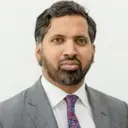
  2. Chancellor announces 'rebirth' of union training fundpublished at 12:56 BST

    Healey says "national industrial strength is national security" as he announces the government will commit £6bn of contracts for British shipyards.

    Funding will be used to build new docks for new submarines, which Healey says will be built "in Britain, by British workers" and "will defend us all for decades to come".

    The chancellor says British trade unions are "full partners in this new age of industrialisation" as he announces the "rebirth" of the Union Learning Fund.

    He says 180,000 workers got new training each year through the fund before it was abolished by the Tories, adding that he's proud to reinstate the fund.

    Healey says he wants this new learning fund to come with a focus on artificial intelligence, to help "British workers harness AI, not be outrun by it".

    He describes AI as "the greatest innovation of our time" which will "transform our society at every level", adding that the UK will also need to "face the serious risks" it poses to national security.

    Returning to his analogy about the miners' lamp, Healey says the government "needs to light the way for a new generation" before finishing his speech.

  3. Analysis

    Healey tries to manage expectations at a tumultuous time in global marketspublished at 12:49 BST

    Faisal Islam
    Economics editor

    John Healey.Image source, PA Media

    In the conference hall, Chancellor John Healey is sporting a tie he lent to his predecessor Gordon Brown 27 years ago.

    In the first part of his speech he is spelling out the balancing act between talking up economic vibes and the tough message to his Labour colleagues.

    That message is also aimed for the markets, and perhaps some of the business leaders I have just seen being shepherded in for his speech.

    "I have to level with you that the money New Labour had in the '90s is simply not there now," he says. At the top of his speech he was trying to channel "many reasons for optimism… new leadership, new confidence and new hope".

    The chancellor and PM's approach is a conscious contrast to what we heard from their own colleagues in 2024, but he is also managing expectations at a tumultuous time in global markets.

  4. Chancellor says Rolls-Royce will inject £300m more into British factoriespublished at 12:44 BST

    Healey announces Rolls-Royce will invest an extra £300m into its British factories in Derby, in Bristol, in Glasgow and in Rotherham.

    "This is the new age of industrialisation, this is the new confidence in Britain lit by this government, driven forward by business," he says.

    Healey goes on to say the government will use everything it can to create jobs and industrialise Britain, including directing more of taxpayers' money to British business jobs and innovation.

  5. 'Best thing we can offer young people is a first job, not a benefit payment' - Healeypublished at 12:40 BST

    John Healey speaking at a lectern.Image source, UK pool

    Healey says when he sees a million youngsters he sees hope not despair.

    He says he wants to announce a "down-payment" on the work of Alan Milburn - who is delivering a major report on youth unemployment - and deliver thousands more apprenticeships.

    Healey says a local apprenticeship service will be like football scouts for apprenticeships, delivering more apprenticeships for young people.

    It will be led by mayors, he says. "They know which firms are hiring and which colleges are delivering and they know which estates have been left behind – that’s what devolution means," he says.

    He says the Labour government had planned to start in a few areas, but now every mayor will have a chance to do it, backed by an extra £100m fully funded by savings from the Department for Work and Pensions.

    The best thing we can offer a young person isn't a benefit payment, it's first job, with training and a wage, he says.

  6. Analysis

    Healey uses speech to reassure he's a safe pair of handspublished at 12:36 BST

    Jack Fenwick
    Political correspondent, reporting from Liverpool

    Much of the talk around Andy Burnham in the weeks leading up to him becoming prime minister focused on how much he’d be willing to spend.

    This time last year Andy Burnham, then the mayor of Greater Manchester, caused a stir at Labour conference when he suggested the country needed to stop being in hock to the bond markets.

    Those comments led some to believe that a Burnham government may look to spend and borrow more money.

    Some of the prime minister's critics worried that approach would spook the markets and lead to even higher borrowing costs.

    Burnham has since then sought to reassure people and talked up his belief in economic restraint.

    His appointment of John Healey as chancellor was intended to signal that he'd put a safe pair of hands in the treasury.

    And he's used this speech to stress that he will stick to the previous government's fiscal rules, designed to keep the bond markets on side.

    Economically those around the chancellor feel there is no other option.

    But politically that does restrain the government.

    One big question being asked by Labour members here will be whether Burnham and Healey can achieve the sort of change they've promised, while sticking to those rules.

  7. Chancellor takes aim at Reform UK as he promotes 'fiscal discipline'published at 12:33 BST

    Healey says world wide economic shocks and trade tensions are felt hard here at home, from prices at the pump to the cost of monthly mortgage payments.

    "These times demand of us a greater resolve, a greater determination and a greater hope, to build a more resilient country," he says.

    Healey says his first duty on his first day as chancellor was fiscal discipline because it "underpins every promise this government makes", adding that "we can't succeed without it".

    He says it's not just the shadow chancellor who "offers the opposite" as he criticises Reform UK for what he describes as "dodgy donors and fantasy funding behind every plan".

    Healey says Reform UK leader Nigel Farage "wants you to think he's a man of the people but when it comes to the economy he's Liz Truss with a Bitcoin account".

    "Through the core of the Budget I deliver a month today will be fiscal discipline," Healey adds.

  8. First warning about challenges chancellor facespublished at 12:29 BST

    Jack Fenwick
    Political correspondent, reporting from Liverpool

    We've had our first warning from John Healey about what's to come when he delivers the Budget a month today.

    The chancellor has spent the first part of his speech talking up the record of the New Labour governments of Tony Blair and Gordon Brown, which Healey was part of.

    But he says "the money New Labour had in the '90s is simply not there now".

    Healey said the amount of money the UK is spending servicing its debt is preventing the government spending in other areas.

    Andy Burnham's government has strived to strike a more optimistic tone in its first few months.

    But the economic situation is clearly very tricky.

    And this was a clear indication that difficult decisions on tax and spending lie ahead in the next few weeks.

  9. Healey says he and Burnham in 'lockstep' over meeting fiscal rulespublished at 12:28 BST

    Healey gestures as he addresses the conference from the podiumImage source, PA Media

    Healey accuses the Conservatives of gutting public services through austerity measures, and says Brexit hammered exports, while the Liz Truss mini budget "crashed the economy" and collapsed confidence in Britain's fiscal strength, leaving a "legacy of sky-high debt costs".

    These levels of debt are an "assault on our common sense" and an "affront to our values", he says.

    He adds that is why he and the PM are in "lockstep" that they will meet the fiscal rules and maintain control of the UK's finances.

  10. Hope earned through 'fiscal discipline and strong industries', Healey sayspublished at 12:21 BST

    Healey tells the conference he wants to talk about the "politics of hope, our belief in a better day". He says hope is earned through "fiscal discipline, good work and through strong industries".

    Labour will bring back hope through "good jobs" and a "new age of industrialisation", he says, adding that he is a "proud Yorkshireman representing a former coalfield".

    He says coal miners' lamps were a "symbol of hope" that there was "always light at the end of the tunnel" and that "the same goes now for Britain's future".

    He lists what he says the Labour party has achieved in the last two years, and since Andy Burnham has became PM, with policies on the cost of living, cutting VAT from energy bills and reducing business rates on pubs, clubs and music venues.

  11. Strong response as Healey praises lifeboat volunteerspublished at 12:18 BST

    Jennifer McKiernan
    Reporting from Liverpool

    There's a strong response to Healey mentioning the lifeboat volunteers of the RNLI.

    He's speaking after some volunteers were targeted by anti-immigration activists earlier this month due to their work in the Channel.

  12. Burnham to 'give people hope again' as PM - chancellorpublished at 12:11 BST

    John HealeyImage source, UK pool

    Healey says it's been 40 years since his first Labour conference, and that it is the "privilege of my life" to address it as chancellor today.

    He then praises Andy Burnham, saying the prime minister has the vision and determination to "give people hope again".

    He then pays tribute to former Chancellor Rachel Reeves, who he says delivered two Labour budgets which mean "we're cutting NHS waiting lists and lifting half a million children out of poverty".

    Also paying tribute to Keir Starmer, Healey says the former prime minister rebuilt Britain's respect and international reputation, especially in standing up to Russia in defence of Ukraine.

  13. Warm welcome for Healey in Liverpoolpublished at 12:06 BST

    Jennifer McKiernan
    Reporting from Liverpool

    Healey speaking on stage laughs as he makes a jokeImage source, PA Media

    A warm response in a packed hall as Chancellor John Healey starts his speech.

    There's laughter as he recalls how his first Labour conference was in 1986.

    "Back then, I had hair," he quips.

  14. John Healey begins his first conference speech as chancellorpublished at 12:04 BST

    Chancellor John Healey has just begun his speech at the Labour Party conference.

    Watch live at the top of the page, and we'll bring you the key lines, analysis and reaction in updates here.

    Chancellor Hohn Healey address Labour conference. He wears a navy suit and stands in front of a red backdrop
  15. Chancellor John Healey to address Labour conference shortlypublished at 11:58 BST

    Britain's Chancellor of the Exchequer John Healey delivers a speech at the Manufacturing Technology Centre in Coventry, Britain, September 7, 202Image source, Getty Images

    Chancellor John Healey is expected to address the Labour Party conference in Liverpool shortly.

    It is Healey's first conference speech as chancellor, after previously having served as defence secretary in Keir Starmer's government.

    He is expected to promise a "new age of industrialisation" for the UK in his address, which will also announce plans to boost the UK's shipbuilding industry.

    You'll be able to watch live at the top of this page, and we'll also be providing text updates on all the key points.

  16. 'Business tax kitty has got to stop being raided', chief executive tells BBCpublished at 11:54 BST

    Nick Edser
    Business reporter

    One of the businessmen at the Labour Party conference today to listen to the chancellor is Steve Rigby, the chief executive of the family-owned Rigby Group, a technology and investment company.

    Ahead of the speech, Rigby told the BBC’s Today programme that at the conference events he had attended the sentiment for businesses had been positive, adding: "I think there's a feeling of change."

    However, he said he was hoping for a "pretty boring Budget" next month, with no tax rises for business as some sectors in the economy were "at their limit".

    "I think that the business tax kitty has got to stop being raided, and we've got to get on with growth as the main agenda."

    Rigby said people behind business start-ups were worried about possible changes to capital gains tax.

    Asked if he thought there was a risk that changes to the tax might push start-ups out of the UK, he said: "I've no doubt there'll be an impact along those lines. I think you know the mobile nature of business today."

  17. UK diesel price hits all-time high, RAC sayspublished at 11:51 BST

    Emer Moreau and Theo Leggett
    Business reporter and international business correspondent

    A person putting a diesel pump into a car.Image source, EPA

    Ahead of the chancellor's speech, diesel prices have hit an all-time high of 199.18p per litre, according to the motoring organisation RAC, as the war in the Middle East continues to push up the cost of fuel.

    Petrol prices are also still rising, with a litre currently costing 174.13p.

    Over the past seven months, the Iran war has severely disrupted the production and transportation of wholesale oil across the region, causing the price of fuels made from oil to surge.

    RAC said diesel prices had entered "uncharted territory" and served as a reminder of "just how exposed the UK is to events occurring far away".

    The cost of diesel has now risen by 59p a litre, or just under 40%, since the conflict between the USA and Iran erupted at the end of February. The previous record was 199.09p in June 2022.

  18. BBC Verify

    How much ‘fiscal headroom’ does Healey have on spending?published at 11:48 BST

    By Daniel Wainwright

    There’s been some discussion recently around the amount of “fiscal headroom” Chancellor John Healey has in the run-up to his first Budget.

    Fiscal headroom is the margin by which the government is forecast to meet its fiscal rules which govern how it manages spending and borrowing. The headroom figure is the amount of leeway it has to increase spending or cut taxes, without breaking those rules.

    When former Chancellor Rachel Reeves delivered her final spring statement in March the government had about £23.6bn of fiscal headroom against its fiscal rules, up from £21.7bn at the November 2025 budget.

    This was more room than forecasts at other recent Budgets and spring statements since 2022, as the chart below shows

    Bar chart titled "Fiscal headroom up on recent Budgets" showing the amount by which government spending could increase or taxes could decrease without breaching fiscal targets, from 2010 to 2026. Fiscal headroom fluctuates considerably over the period, ranging from about £8bn to just over £80bn. It peaks at around £83bn in 2015 and is generally between £15bn and £45bn in most years. Headroom falls to its lowest levels around 2023, at roughly £8bn to £13bn. The most recent figures show an increase, reaching about £22bn in late 2025 and approximately £24bn in March 2026. Source: Office for Budget Responsibility.

    The UK’s public finances watchdog the Office for Budget Responsibility should give an official update at the Budget.

    But a, externalccountants KPMG estimate the current headroom has halved from £23.6bn in the spring to about £12bn. It puts this down to rising borrowing costs caused by the war in Iran and weaker economic growth.

    The Resolution Foundation think tank has a more pessimistic estimate. It puts the headroom figure at about £8bn, saying “market turmoil” has potentially reduced it even further.

  19. Borrowing surge adds to pre-Budget pressure on chancellorpublished at 11:43 BST

    Tom Espiner
    Business reporter

    A chart showing UK borrowing costs from August 2024 to August 2026.

    An unexpected surge in government borrowing in August, driven by persistently higher inflation, has added to pressure on Healey as he prepares to deliver his first Budget at the end of October.

    Borrowing - the difference between tax receipts and government spending - was £18.3bn in August, almost a fifth higher than the year before, the Office for National Statistics (ONS) said.

    That figure was £3.5bn more than official forecasters expected.

    Inflation rose to its highest rate in five months in August in the UK, driven up by higher petrol and diesel prices.

    Although tax receipts were higher in August compared with a year ago, spending on public services, benefits, and other costs grew more as the pace of price rises increased.

    The interest the government is paying on its debt rose to £8.8bn, its highest August level since records began in 1997.

  20. Analysis

    Two big decisions the chancellor must makepublished at 11:39 BST

    Faisal Islam
    Economics editor

    Britain's Chancellor of the Exchequer John Healey delivers a speech at the Manufacturing Technology Centre in Coventry, Britain, September 7, 2026Image source, Reuters

    "It is tough," John Healey admitted to me earlier this month when I asked him if there had been too much doom-mongering?

    "Conflicts, uncertainty, driving up inflation, driving up interest rates. But we've got great strengths. We've got good reasons to be confident about the future of Britain," he insisted.

    The new scheme to try and help young people get on the property ladder, announced on Saturday, was aimed at boosting confidence in the economy.

    But the chancellor is now facing two big decisions before his inaugural Budget on 28 October.

    Firstly, about the longevity of the economic pressures caused by the Iran War, and then about how to sustain a modest but notable uptick in economic spirits, through yet more global turbulence.

    You can read the full story here.