Summary

  • Landmark new research reveals that children vaccinated at age 12–13 against HPV (human papillomavirus) have close to zero risk of dying from cervical cancer before the age of 30

  • Deaths have fallen sharply since school-age girls began being offered it in 2008

  • HPV is passed from one person to another through close skin-to-skin contact

  • How can I get the vaccine?Do I need to be tested for HPV? BBC health journalists are answering key questions in this live page

  • Do you have any queries? Get in touch: yourvoice@bbc.co.uk, external

  1. Mum told she had cervical cancer at 30 is 'real advocate for vaccine'published at 11:03 BST

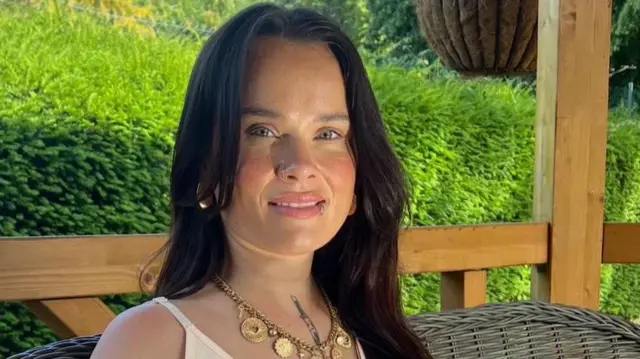
    A woman with brown hair sitting in a field of flowers in a wood with her young daughter sitting and smiling in between her legsImage source, Other
    Image caption,

    Alexandra and her three-year-old daughter Ivy, who was born after she had cervical cancer

    Alexandra Legg left school just before the HPV vaccine was introduced in England.

    In 2021, just as she was planning her wedding, she was diagnosed with cervical cancer aged 30.

    "I remember hearing the words and I just couldn't really breathe very well," she says. "I was so upset - everything went through my head, it was so hard."

    Her treatment involved the removal of lymph nodes in her abdomen, although surgeons were able to preserve a small part of her cervix, giving her a chance of becoming pregnant.

    Just a year later, her daughter Ivy was born. "Those nine months were so scary because I was at such risk of losing her at any point," she says.

    Alexandra says her life could have been far less traumatic if she had been offered the HPV vaccine and urged those eligible to get it.

    "I'm a real advocate for this vaccine and when Ivy is old enough, she'll be first in the queue," she adds.

  2. How HPV and cervical cancer are relatedpublished at 10:56 BST

    The human papillomavirus (HPV) causes almost all of the main types of cervical cancer, according to Cancer Research UK.

    There are many different types of HPV - 14 of which are considered high risk for cervical cancer. Two types of the virus (HPV 16 and HPV 18) cause about 70 out of 100 (70%) of all cervical cancer cases.

    For most people, HPV causes no harm and goes away on its own. However, if you have a persistent infection and a high risk type of HPV, you are more at risk of developing cervical cancer.

    People living with HIV or AIDS, and tobacco smokers have a higher risk of getting cervical cancer, while women who have a sexually transmitted infection alongside HPV may also be at greater risk.

  3. Do I need to be tested for HPV if I've never had sex?published at 10:45 BST

    Michelle Roberts
    Health editor

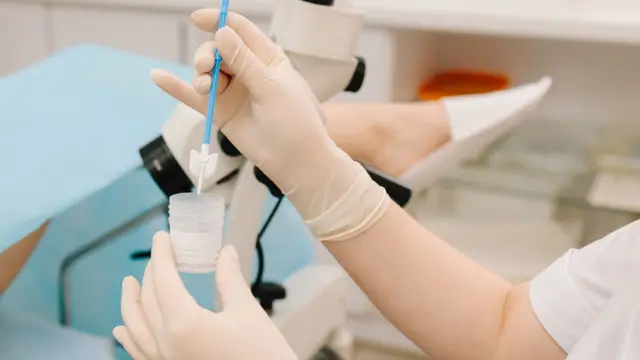
    Gynecologist doctor taking smear for cytology from female patient in gynecological office.Image source, Getty Images

    HPV is passed from one person to another through close skin-to-skin contact.

    You are at risk of getting HPV with any kind of sexual contact, including oral sex, touching of the genital area, vaginal sex, anal sex, and sharing sex toys.

    It is possible to get HPV from just one occasion of sexual contact. If you have not had any kind of sexual contact, your risk of getting HPV is low.

    You may decide not to have screening if you have not been sexually active, but you can still go if you want to. It might help to talk it through with your GP.

  4. Key findings of first report of its kindpublished at 10:41 BST

    The landmark new research looks at mortality rates of cervical cancer and vaccination data for women aged 20 to 34 to calculate the impact of vaccination on cervical cancer survival.

    Here's a breakdown of the key findings:

    • Children vaccinated at age 12–13 against HPV have close to zero risk of dying from cervical cancer before the age of 30
    • Between 2020 and 2024, no cervical cancer deaths were recorded in women aged 20 to 24 - the first time that had happened over a five-year period
    • Around 200 cervical cancer deaths were prevented by HPV vaccination up to the end of 2024
    • Cervical cancer deaths have fallen sharply since school-age girls began being offered it in 2008
    • Without vaccination, 23 deaths from cervical cancer would have been expected between 2020-2024
    A chart showing the death rates of women aged 20 - 24 from cervical cancer in England
  5. Who can get the HPV vaccine?published at 10:15 BST

    Doctor applies bandage to preteen girl's arm following an immunization.Image source, Getty Images

    The HPV vaccine - which helps protect people from human papillomavirus - is given as an injection into the arm.

    It's recommended for children aged 12 to 13, who are usually offered the vaccine in year 8 of secondary school.

    For those aged 24 and under who missed taking the vaccine as a child, you can get it by contacting your GP or school nurse.

    The NHS also recommends it to those at higher risk to HPV, including: sex workers, people with HIV, and men who have engaged in sexual intercourse with men.

    The number of doses taken depends on two factors: your age, and how well your immune system works. People under 25 usually take a single dose, with those who have a weakened immune system taking up to three doses across a year.

    You cannot have the vaccine if you've had a serious allergic reaction to a previous dose of the vaccine, or an ingredient in the vaccine.

  6. Risk of dying from cervical cancer before 30 'close to zero' after HPV vaccinepublished at 10:11 BST

    Schoolgirl getting a vaccineImage source, Getty Images

    Welcome to our live page covering HPV (human papillomavirus) and cervical cancer in England.

    Landmark new research has revealed that children who are vaccinated against HPV at age 12-13 have close to zero risk of dying from cervical cancer before the age of 30.

    The first study of its kind, external showed deaths from cervical cancer have fallen sharply since school-age girls began being offered the HPV vaccine in 2008.

    And crucially, between 2020 and 2024, no cervical cancer deaths were recorded in women aged 20 to 24 in England - the first time that had happened over a five-year period.

    Around 200 lives have been saved in England so far thanks to the jab, according to the study spearheaded by Queen Mary University of London and funded by Cancer Research UK.

    Without vaccination, around 23 deaths would have been expected in the five-year window from 2020 to 2024.

    Our experts will be answering the key questions on cervical cancer and HPV, as well as what these findings mean throughout the day. Stay with us.