Summary

  1. Starmer trims budgets to fund extra £15bn for defencepublished at 18:52 BST

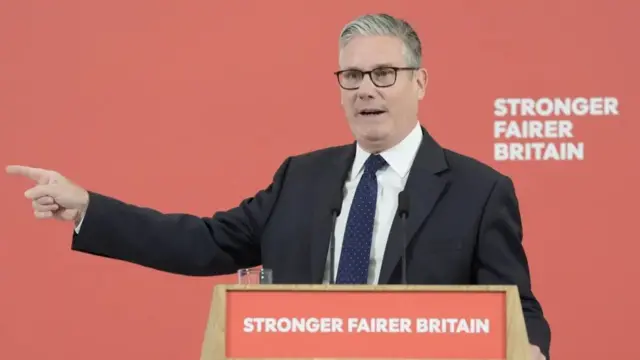
    Keir Starmer speaking behind a podium reading "Stronger Fairer Britain"Image source, Reuters

    The government's long awaited defence investment plan (DIP) has been published after Keir Starmer announced a £15bn increase in military spending, funded by cutting investment budgets in other areas.

    Here's a quick summary of what you need to know:

    Road and energy projects: In one of his final acts as Prime Minister, Starmer said some road and energy projects would not "go ahead as planned" to help raise defence funding to £80bn a year by 2029

    Increased spending still falls short for some: The extra £15bn in spending over the next four years is more than the £13.5bn secured by former Defence Secretary John Healey, who resigned earlier this month in protest at the plans, but less than the £28bn sought by defence chiefs

    Further borrowing ruled out: The PM says he has ruled out further borrowing to fund the increase, and instead the money will be found by cutting the long-term investment budgets of other government departments by 1%

    Department for Transport (DfT): Is making a further £700m in savings from roads projects, and the Department for Energy Security

    Net Zero (DESNZ): is finding an additional £2bn from its budget

    The Treasury later confirmed only £10.3bn in savings had currently been identified, with the remaining £4.7bn to be confirmed at the next Budget

    The plans will delight some but still fall well short of what others demand as the bare minimum needed to keep Britain safe, writes our security correspondent Frank Gardner, who breaks down the key points of the plan here.

    We're closing this live page now but you can read more about the government's defence plans in our latest story.

  2. How resignations have put pressure on the MoDpublished at 18:38 BST

    Jack Fenwick
    Political correspondent

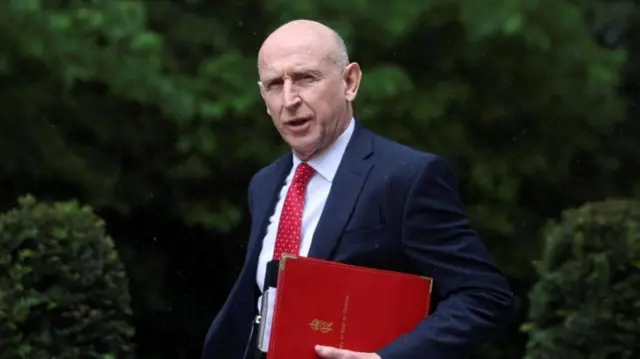
    Healey walking int he rain looking at the camera while he holds a red folderImage source, Reuters
    Image caption,

    John Healey stepped down as defence secretary earlier this month after criticising the government for not providing enough funding for his department

    The Labour frontbench this afternoon provided a clear visual representation of how tricky the issue of defence spending has been for this Labour government in recent weeks.

    There were four defence ministers sat next to the dispatch box.

    The Defence Secretary Dan Jarvis has only been in the job for 19 days, following the resignation of John Healey.

    Louise Sandher-Jones has been in the Ministry of Defence for longer, but has only served as armed forces minister for the same period of time, after Al Carns also quit.

    Calvin Bailey was appointed as the veterans minister on 11 June as well.

    Only Luke Pollard, the defence procurement minister, has been in post longer than a month.

    And he suggested to reporters earlier that the only reason he didn’t resign was because John Healey asked him not to.

    Add to that the confusion about who might keep their job in a potential Andy Burnham government.

    The MoD is a department trying to do important things but facing significant ministerial upheaval.

  3. Defence experts warn of 'hole that remains' in fundingpublished at 18:34 BST

    Jacob Phillips
    Live reporter

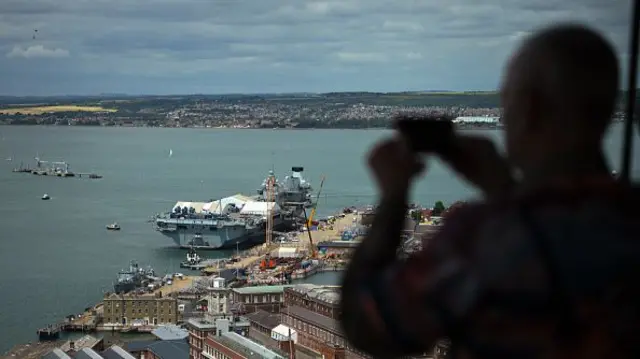
    The silhouette of a man can be seen taking a picture of the HMS Queen Elizabeth aircraft carrier in PortsmouthImage source, Getty Images
    Image caption,

    The Royal Navy's HMS Queen Elizabeth aircraft carrier and other ships in Portsmouth

    A former Royal Navy captain has described the defence investment plan (DIP) “as a jump to the future without necessarily filling in the hole that remains” in the UK’s armed forces.

    Kevin Rowlands tells me plans to create a “hybrid Navy” are not unexpected and will be very welcome.

    Rowlands, who was the Head of the Royal Navy Strategic Studies Centre and is a professor at Lancaster University, explains naval forces have seen this as "the direction of travel for a couple of years".

    But he adds that if the future of the UK does not involve drone warfare then the government is taking a “big gamble” and warns you should “never plan to fight the last war”.

    Meanwhile, Samira Braund, defence director at ADS, the UK trade body for aerospace, defence, security and space, welcomes the increase in defence spending but says there is "still a gap" in funding.

    Braund says the DIP has been a “long time coming” and it is “disappointing” the government has not revealed a road map to defence spending rising to 3% of GDP “yet alone 3.5%”.

    She tells me the next prime minister will have to pick up the issue and that hinders the defence industry from making investment decisions.

  4. Future of UK shipbuilding after defence investment plan publishedpublished at 18:17 BST

    Calum Watson
    BBC Scotland News

    The job of building the Royal Navy’s complex surface warships has in recent years been focused on Scotland.

    BAE Systems’ two shipyards in Glasgow are busy building the Type 26 anti-submarine frigates while Babcock’s yard at Rosyth is constructing cheaper but highly versatile Type 31 frigates.

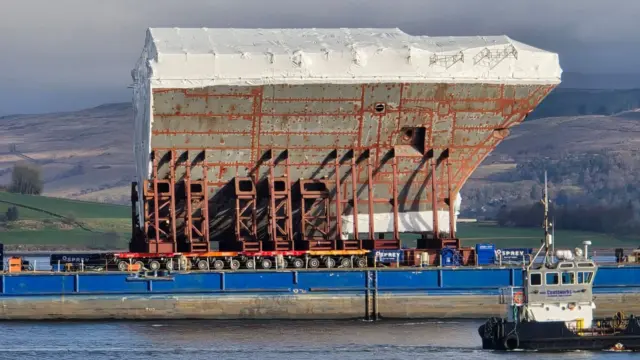
    Ships nowadays are built in blocks so they can be built at one yard, then transported by barge to another yard for assembly.

    The front section of a large ship, carried by a blue barge with a tug in the foregroundImage source, Christopher Brindle
    Image caption,

    A bow section built at Cammell Laird, carried by barge to the BAE Systems shipyard at Govan

    Smaller facilities in Scotland like Ferguson Marine and shipyards in Merseyside, Tyneside and Devon could end up building parts of the planned six new Common Combat Vessels.

    The autonomous ships themselves will require a lot of manufacturing – some of the concept designs are for ships 100m long.

    Add in the benefits down through the supply chain and it’s looking like UK military shipbuilding has a rosy future for years to come.

    But in the longer term does this mean the death of the complex warship that we are accustomed to? Only time will tell.

  5. What does the defence plan mean for Wales?published at 18:06 BST

    Shelley Phelps
    BBC Wales Westminster correspondent

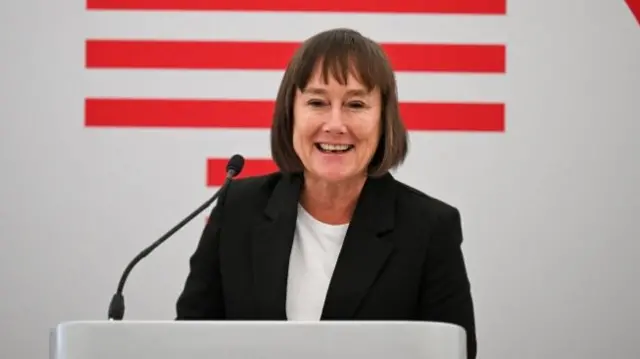
    Jo Stevens smiles while giving a speech in front of a white lectern. She has brown medium length hair and is wearing a black blazer with a white top underneath.Image source, Reuters
    Image caption,

    Welsh Secretary Jo Stevens says the DIP will deliver jobs across Wales

    The defence sector is an important source of jobs and growth opportunities for Wales.

    Over 180 Welsh-based companies are supporting the sector and Wales is home to major suppliers like General Dynamics, Airbus and Thales.

    The defence investment plan (DIP) will fund the £50m defence growth deal for Wales announced earlier this year, as well as providing more money for working with small businesses and strengthening skills.

    Welsh Secretary Jo Stevens says it will “shape the future of Wales’s defence industry for years to come, protecting and delivering skilled well-paid jobs across Wales”.

    Meanwhile, Plaid Cymru MPs want to know what increases in defence spending will mean for budgets in other areas and how it could affect public services.

    MPs on the Welsh Affairs Committee are likely to look at the implications of the DIP in more detail as part of a new inquiry looking at Wales's role in UK defence, which is expected to be launched soon.

  6. Analysis

    Finding defence funds could be a significant headache for next PMpublished at 18:02 BST

    Jack Fenwick
    Political correspondent

    Hidden away in the detail of this defence investment plan is confirmation that only £10.3bn of the £15bn that’s been committed has actually been identified.

    The remaining £4.7bn would have to be found at the next Budget, due in the autumn.

    But of course it won’t be Keir Starmer and Rachel Reeves in charge of that Budget.

    That could create a pretty significant headache for the likely incoming PM Andy Burnham, and whoever he picks as his chancellor.

    Andy Burnham delivers a speech at the People's History Museum, Manchester, to pledge to give Britain the "circuit-breaker it needs" whilst unveiling his plans for devolution and the economy.Image source, PA Media
    Image caption,

    Andy Burnham could become the UK's next prime minister next month if his Labour leadership bid is unchallenged

    The plan also relies on £10.7bn of "defence efficiencies" being found by 2030, with little detail about how that would be achieved.

    And there’s an assumption that defence will be a key priority at the next spending review, which potentially means further cuts in other government departments.

    Almost every Labour MP who spoke in the Commons today said that the cash being announced didn’t go far enough.

    It’s safe to say that this is going to be one of the trickiest things in the new prime minister’s in-tray.

  7. Defence plan required 'difficult choices', UK military chief tells armed forcespublished at 17:50 BST

    Air Chief Marshall Sir Richard Knighton delivers the closing keynote address at the Rusi Land Warfare Conference, at Church House, in Westminster, central London. Picture date: Wednesday June 24, 2026Image source, PA Media

    In a message to British defence personnel, the UK's military chief says some "difficult choices" have been made as part of the government's defence investment plan (DIP).

    "I want to acknowledge those who have served with distinction on capabilities that will retire over the coming years," says Chief of the Defence Staff Richard Knighton in the message.

    However, he says on top of the newly announced £15bn increase, the government has committed to increasing funds further in future, making defence its "top priority" for the next spending review.

    "We owe it to the taxpayer to use this investment wisely, equip our people properly, and deliver the capabilities the nation needs," he adds.

  8. Cutting budgets, scrapping road projects - how Reeves has funded military spending increasepublished at 17:41 BST

    Kate Whannel
    Political reporter

    Prime Minister Sir Keir Starmer and Chancellor of The Exchequer, Rachel Reeves during a visit to Malloy Aeronautics in Berkshire following the publication of the long-delayed defence investment plan (Dip)Image source, PA

    Chancellor Rachel Reeves has set out how (some) of the increased defence spending will be paid for.

    She says funding for £10.3bn of the £15bn boost has been identified, but interestingly £4.7bn will not be set out until this year’s Budget, expected in the autumn.

    That means finding the extra money will be a question for Prime Minister Keir Starmer's replacement - potentially Andy Burnham - and their chancellor, rather than Starmer or Reeves.

    Here are some of the areas Reeves says she has been able to find more money:

    • Cutting departments' capital budgets (that’s money for long-term investments, rather than day-to-day spending) by 1%
    • Scrapping some road projects - including potentially cancelling the A38 Derby junctions and the A46 Newark Bypass schemes - to save £700m
    • Selling off some Ministry of Defence assets for £400m
    • £2bn from the Department for Energy Security and Net Zero (more detailed plans are expected in the autumn)
    • Moving responsibility for some activities from defence to the Treasury, freeing up £2.4bn
  9. Analysis

    A radical transformation of the militarypublished at 17:36 BST

    Frank Gardner
    Security correspondent

    Media caption,

    What is in the Defence Spending Plan... and what isn't

    The newly-announced defence investment plan (DIP) will delight some, while still falling well short of what others demand as being the bare minimum needed to keep Britain safe.

    This, as the government says, is the largest increase in defence spending since the Cold War in the 1980s, with £270bn earmarked for defence over the next four years.

    The plan includes £63bn for the nuclear deterrent, £8bn for the next generation of combat aircraft, £11bn to replenish the weapons and munitions sent to Ukraine and £330m for protecting the UK’s vulnerable undersea cables.

    Above all, it marks a radical transformation of the military towards multiple cheaper, uncrewed and autonomous systems, i.e drones. It’s a lesson learnt from the recent wars in Ukraine and the Strait of Hormuz.

    But buried in the detail is the fact that Britain will fail to make the target 3% of GDP spent on defence by 2030, as mandated by Nato. Instead, it will be 2.7%. Russia currently spends in excess of 7.5%.

    There is an intention to meet the target of 3.5% by 2035 but as the former Defence Secretary Ben Wallace points out, the threat from Russia is now, not in the 2030s.

  10. Nearly £11bn of MoD cuts included in defence investment planpublished at 17:30 BST

    We're continuing to flick through the defence investment plan, published in full earlier while the defence secretary was speaking, external to the Commons.

    It says the Ministry of Defence is expected to implement approximately £10.7bn worth of cost-cutting measures between now and 2030 as part of today's defence investment plan. Here's where that'll come from:

    • About £3.7bn worth of changes are expected across acquisition and supply chains, including accelerated commercial pathways and acquisition driven through portfolios
    • Workforce changes including cutting civil service workforce costs, automating tasks and moving admin personnel to front-line roles will lead to around £3.3bn of savings
    • Within infrastructure, £2bn is hoped to be saved though the department generating more of its own power and investing in the reuse and repair of dormant assets
    • £1.1bn of savings is to be secured through merging existing organisations and closing bodies which are no longer deemed to be required
    • Digital innovations, such as accelerating the use of AI and automation, is expected to save around £200m
  11. BBC Verify

    What does the DIP tell us about how much the UK will spend on defence?published at 17:14 BST

    By Ben Chu

    Now the defence investment plan (DIP) has been published it confirms that UK defence spending will increase to 2.7% as a share of gross domestic product (GDP).

    According to the DIP, this target “based on latest projections” will be reached in 2027/2028. It does not provide a year-by-year estimate for later years but states that the money spent on defence “by the end of decade will be 2.7% of GDP”.

    That suggests the proportion of GDP spent on defence is not planned to change between 2027 and 2030.

    Former Defence Secretary John Healey resigned because he said the original DIP only increased defence spending to 2.68% of GDP by 2030.

    That 2.7% figure suggests an increase on the original DIP of around 0.02% of GDP, which the government has found since Healey resigned.

    In today’s money that’s equivalent to around £600m extra in 2030.

  12. A recap of what we heard in the Commonspublished at 17:00 BST

    The debate on the defence investment plan has ended in the Commons.

    Here is a reminder of the key moments:

  13. Greens question Jarvis over where defence spending is investedpublished at 16:42 BST

    Dr Ellie Chowns, Green Party Westminster leaderImage source, UK Parliament

    Ellie Chowns, Green Party Westminster Leader, asks Jarvis about "pouring billions of good money after bad into the black hole of Cold War technology instead of investing in true security".

    Jarvis agrees it does matter what the money is spent on - but that is where he and the Green Party part company, because he is not entirely clear on where the Greens stand on Nato membership.

    He says that not long ago the Green Party was advocating for withdrawing from Nato - and the only people who would welcome that, would be Putin and his cronies in Russia.

    The Commons session has now ended. We will bring you more analysis, along with the key lines from the defence investment plan in our next few posts.

  14. Jarvis says Labour will work with Welsh government to deliver defence growth dealpublished at 16:34 BST

    Plaid Cymru's Westminster leader Liz Saville-Roberts tells Jarvis that the Welsh government's capital budget is "already set to fall by 9% in real terms by 2029", due to decisions taken by the UK government.

    She asks Jarvis to confirm "exactly how much capital money Wales will lose" and asks if he agrees the Welsh government needs stronger borrowing powers.

    Jarvis says that is "precisely why we've got the defence growth deal in Wales", and says Labour will work with the Welsh government to deliver upon it.

    • For context: In September 2025 the UK government announced Wales was to receive a share of the £250 million defence growth deal funding to "forge long-term defence industry partnerships"
  15. Reform MP criticises difference in defence and welfare spendingpublished at 16:25 BST

    Reform UK MP, Danny Kruger,Image source, UK Parliament

    Reform UK MP, Danny Kruger, says the defence budget, with this new money, is due to rise by about £17bn a year over the next four years.

    In that same period, he says, the welfare budget is due to increase by about £60bn.

    He asks Jarvis if he accepts the government has failed to fund the strategic defence review and has left the nation "dangerously exposed, particularly at sea".

    Jarvis says he welcomes the question because it's often the case that there are no members of Kruger's party in attendance for defence debates.

    He urges the Reform UK MP to consider having "a slightly more constructive dialogue" about the subject in future.

  16. Defence investment plan is putting Britain 'further behind' its allies - SNPpublished at 16:20 BST

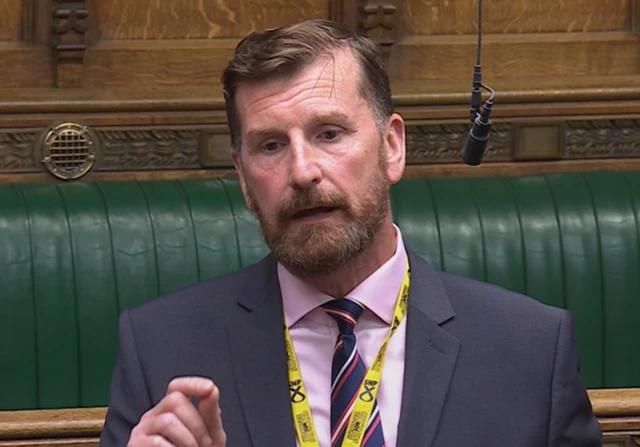
    SNP's Westminster leader, Dave Doogan

    Dave Doogan, the SNP's Westminster leader, says this plan is 300 days late and £13bn short.

    He criticises it for putting Britain "further behind our allies" in exposure to those that would "seek to do us harm", and says it falls short of Nato commitments.

    Doogan turns to the Defence Nuclear Enterprise (DNE), a partnership which operates and maintains the nuclear deterrent, which he says costs around £13bn per year.

    Since the defence plan will be funded partly "from the Scottish government's budget", Doogan asks what savings Jarvis has sought to make from the DNA.

    Jarvis says he acknowledges the "very important contribution" that Scotland makes to national security.

    He says billions of pounds are going into capabilities like the Faslane base, which is located on Scotland's west coast and is home to the UK's nuclear-armed submarine fleet. This will benefit Scotland through growth and jobs, Jarvis says.

    "I wonder perhaps what the defence investment plan would be for an independent Scotland which is what he would want," he adds.

  17. Jarvis faces awkward questions from Labour MPspublished at 15:54 BST

    Jack Fenwick
    Political correspondent

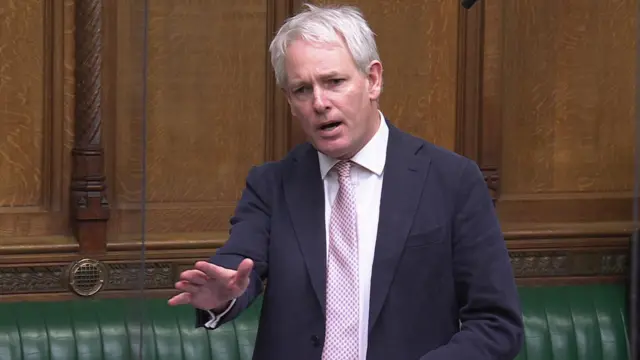
    The most awkward moments for Dan Jarvis have come not from interventions on the opposition benches, but his own side.

    A number of senior Labour backbenchers have stood up and told the new defence secretary that the government must do more.

    John Healey’s intervention is likely to grab the most headlines, but he was far from alone.

    Tan Dhesi, who chairs the defence select committee, said the governed had not provided a “clear pathway” to spending three per cent of GDP on defence.

    Dame Meg Hillier, who chairs the Treasury select committee, warned the government against avoiding scrutiny. I’m told that her committee has struggled to get anyone from the treasury to appear before them to discuss defence spending in recent months.

    And the former Health Secretary Wes Streeting said today’s announcement was “a good foundation to build on, but there’s more to do”.

    The government may have found an extra £1.5bn for defence in recent weeks, but this is an issue that isn’t going away and could well provide an early test for the next prime minister.

  18. Iain Duncan Smith hones in on Nato's 3.5% GDP targetpublished at 15:49 BST

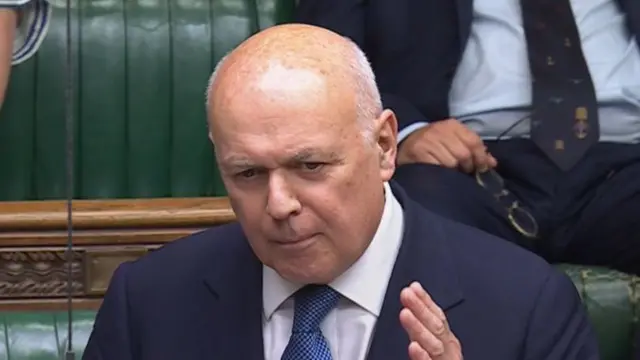
    Conservative MP Iain Duncan Smith

    Turning back now to the Commons, where Conservative MP Iain Duncan Smith says the defence plan leaves the UK £9.3bn short every single year.

    He says the government will not be able to reach the Nato minimum requirement of 3.5% of GDP by 2035.

    Jarvis says he does not agree with Duncan Smith and says he has been very clear about the need to spend more on defence.

    He insists that the next spending review will provide the resources required to chart the trajectory from 3% to 3.5%.

  19. Government to fund roll-out of veteran support programmepublished at 15:44 BST

    Prime Minister Sir Keir Starmer delivers a speech during a visit to Malloy Aeronautics in Berkshire following the publication of the long-delayed defence investment plan (DipImage source, PA

    The defence investment plan (DIP) also outlines a number of ways the government intends to help veterans.

    This, it says, includes funding the "roll out of VALOUR, the first of its kind one-stop-shop for veterans' support".

    It's a national programme designed to make it easier for veterans across the UK to access care and support.

    The DIP says this will be in the form of centres across the country, providing in-person support in areas including health, housing and employment.

    It says the government will "invest £70m in support for Veterans, through the Office for Veterans Affairs", and later adds there will be a £12m investment in a new fund for reducing veteran homelessness.

  20. Between 20% and 25% of MoD budget to be spent on nuclear deterrentpublished at 15:39 BST

    Turning our attention to the defence investment plan (DIP), which has just been published, and it outlines the funding for maintaining the UK's nuclear deterrent.

    Spending on the Defence Nuclear Enterprise (DNE) - which operates and maintains the nuclear deterrent - will increase to between 20-25% of the Ministry of Defence's overall budget, it states.

    In cash terms, there's an increase of more than £20bn in investment in the DNE over the next four years, compared to the previous four. That puts the total spend in that period, excluding workforce, to £63.6bn.

    Breaking it down, the plan says this includes £47bn to be spent on submarines (including maintenance and infrastructure), £13bn on warhead, and £1.7bn on nuclear fuels.