Summary

  1. Another 24 hours of twists and turns, and talk of a possible dealpublished at 22:50 BST 6 May

    It has been another 24 hours of dizzying twists and turns in the US-Iran war, writes our Middle East analyst Sebastian Usher.

    Within minutes of the US Central Command saying it shot at and disabled an Iranian-flagged oil tanker in the Gulf of Oman, Israel launched strikes on Lebanon.

    Here's a recap of today's developments:

    Reports emerge that a deal is close

    Earlier in the day, a US media outlet reported Trump administration officials had said they were close to finalising a memorandum of understanding with a response from Tehran expected within 48 hours.

    Trump then told reporters "we've had very good talks over the last 24 hours" and they could have a possible deal.

    Meanwhile, Iran's foreign ministry spokesperson said a US proposal is still being considered and its Navy added that the Strait of Hormuz could reopen if there is an "end of the aggressors' threats".

    Israel resumes strikes in Lebanon

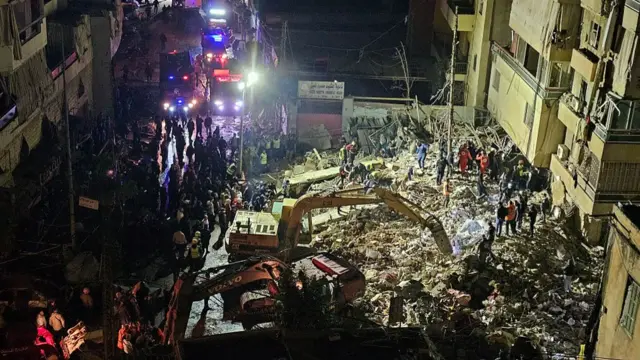
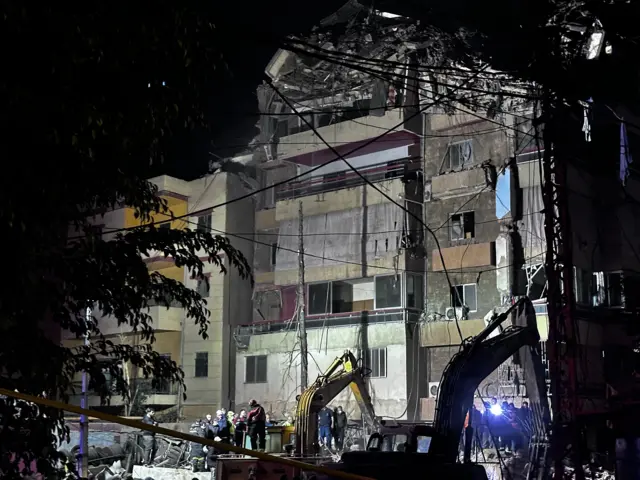
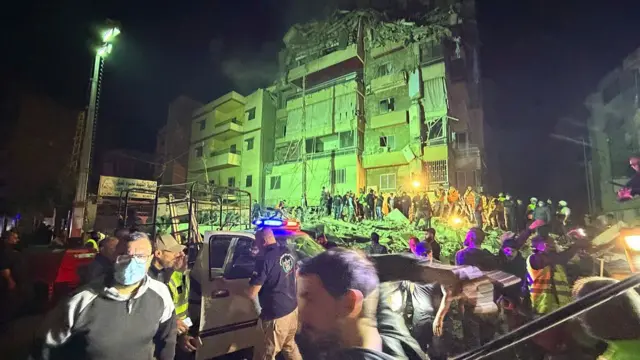
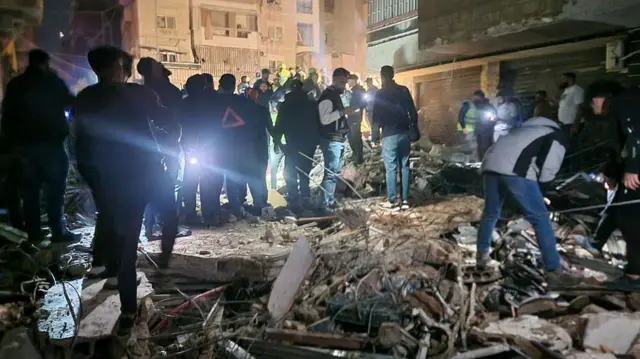
    Israeli forces struck Lebanon's capital Beirut for the first time since a ceasefire was announced 16 April. Images posted online show extensive damage near the building that was hit in the area known as Dahieh. Prime Minister Benjamin Netanyahu says the military is targeting a Hezbollah commander.

    US blockade continues

    The US blockade of the Strait of Hormuz continues, a day after President Trump announced the US was suspending Project Freedom.

    Today the US Central Command (Centcom) revealed 52 ships had been turned around so far. "The US blockade against ships attempting to enter or depart Iranian ports remains in full effect," Centcom said while announcing it had disabled an Iranian-flagged vessel.

    We are pausing our coverage here but you read more of the BBC's reporting about the crisis in the Middle East here.
  2. Iran won't give up Hormuz control lightly, says former Royal Navy headpublished at 22:24 BST 6 May

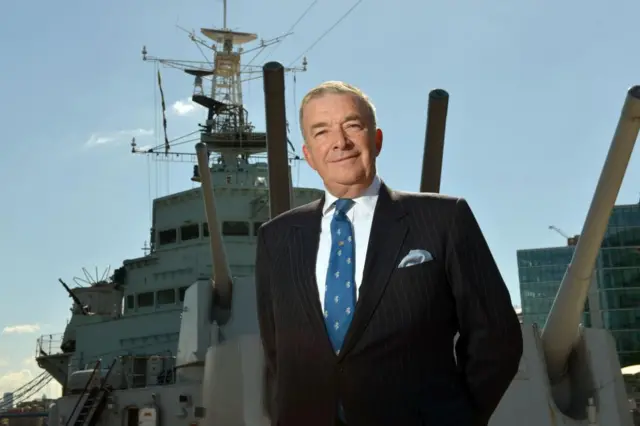
    Admiral Lord West is pictured wearing a suit and tie on the deck of a navy ship.
    Image caption,

    Admiral Lord West is the former head of Britain's Royal Navy

    The former head of Britain's Royal Navy does not expect Iran to give up its hold on the Strait of Hormuz "until all sorts of other things are agreed".

    Admiral Lord Alan West tells BBC News that the current situation was easily foreseeable.

    "Epic Fury has been an epic disaster, if you look at what [the US] aimed to achieve," he says, referring to the Trump administration's name for the operation.

    "It was quite clear straight way that as soon as you go to war with Iran, they will close, or try to close, the Strait of Hormuz. And it's almost as if the Americans were caught out by that," he adds. "I find that quite extraordinary."

    Any reopening of the crucial waterway will come down to Tehran and whether it's happy with what's put on the negotiating table, he says.

    "If the Iranians are not going to attack shipping, then the straits can be opened."

  3. US blockade of Iran's ports is still in forcepublished at 22:00 BST 6 May

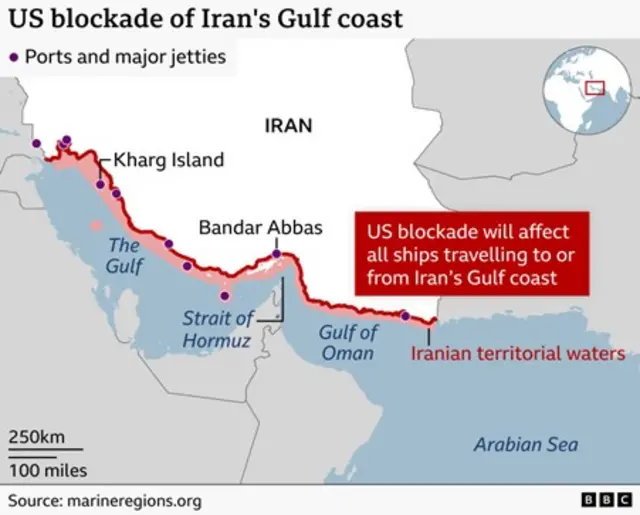
    Map showing the US blockade of Iran's ports

    The US attack on an Iranian-flagged oil tanker in the Gulf of Oman is part of the American blockade of Iranian ports which has been in force since early April.

    President Trump announced last month that US forces would intercept or turn back vessels travelling to or from Iran's coast, in an attempt to restrict Tehran's ability to profit from oil exports and put more pressure on the country.

    Trump said he was introducing the blockade in response to Iran restricting access to ships in the Strait of Hormuz.

    Today the US Central Command (Centcom) revealed that 52 ships had been turned around so far as part of the naval blockade, made up of warships like the aircraft carrier USS George HW Bush as well as aircraft and US service personnel in the region.

  4. In pictures: Israel strikes Beirut suburbs for first time since April ceasefirepublished at 21:40 BST 6 May

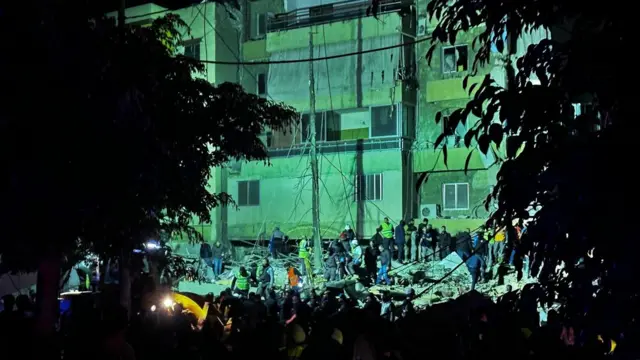
    Israel has struck a neighbourhood in Dahieh, an area in the southern suburbs of Lebanon's capital Beirut.

    Israeli Prime Minister Benjamin Netanyahu says the strikes are aimed at eliminating a Hezbollah commander.

    People can be seen gathering at the scene on Wednesday night to survey the damage.

    Cranes and crowds gather at a site of an Israeli strike in southern Beirut at night, with bright lights shining down on the sceneImage source, Getty Images
    A view from the front of a building destroyed in an Israeli strike. Silhouettes of diggers are in the foreground with emergency workers assessing the damageImage source, EPA
    People walk cross in front of the camera as a building in the background is lit up in green. Other people search through the rubbleImage source, Getty Images
    People search through the rubble in a close-up shot where htey are mainly silhouettes and a flashlight beam can be seenImage source, AFP via Getty Images
  5. Both sides hint a deal could be close - but what are the details?published at 21:16 BST 6 May

    Ione Wells
    Reporting from Jerusalem

    Donald Trump and his cabinet have repeatedly said that the US objectives in this war have all been achieved.

    But not only does Iran still have the same regime in power (albeit with some different personnel) and a degree of ballistic missile capability, it also still possesses the same nuclear material it did before, as far as we are aware. Ridding Iran of these things was the objective that the Trump administration set out at the start of this war.

    Iran has always denied its nuclear material is meant to be used in a weapon.

    Both sides, meanwhile, have hinted that a deal could be edging closer, without giving us much detail of what it would entail.

    Trump told PBS News it should involve Iran exporting enriched uranium to the US. Iran’s foreign ministry says the US proposal, which hasn’t been publicly outlined, is still being considered.

    Benjamin Netanyahu said all enriched nuclear material must be removed from Iran and that his country of Israel was “stronger than ever” while Iran and its proxies are "weaker than ever.” He added there was “full coordination” between the US and Israel, who share “common goals” - a suggestion that if Iran does not agree to remove its nuclear material, Trump’s comment that this could end may be swiftly withdrawn.

  6. Analysis

    It's not the first time markets have reacted to reports of potential peace dealpublished at 20:55 BST 6 May

    Mitch Labiak
    Business reporter

    As we reported earlier, oil prices have dropped and global stock markets have risen following reports that the US and Iran are close to a deal to end the war - something Trump himself has now distanced himself from.

    This is not the first time we've been here.

    Since the beginning of the war, when US President Donald Trump's administration has said or done something significant, markets have reacted by taking the news in good faith.

    In this case, if the reported deal happened to lead to lasting peace, those who sold oil futures contracts and bought shares would make a return.

    However, on more than several occasions, traders have ended up disappointed. Perhaps a peace deal is not on the way, perhaps Trump will change his mind. It is impossible to say.

    What is certain is that the markets have yet to figure out a way to properly react to Trump's style of presidency.

    Too often, they are left wrong-footed by a post on Truth Social which unravels everything they were basing their hopes on just minutes before.

    And yet, perhaps there is no other way for markets to react.

    Whatever happens next, oil prices are likely to remain much higher for a long time after the conflict ends. That has a knock-on effect everywhere.

    So take today's news and the market reaction with a pinch of salt. But don't downplay it completely.

  7. Trump claims Iran has agreed to no nuclear weapons, 'among other things'published at 20:26 BST 6 May

    Bernd Debusmann Jr
    White House reporter

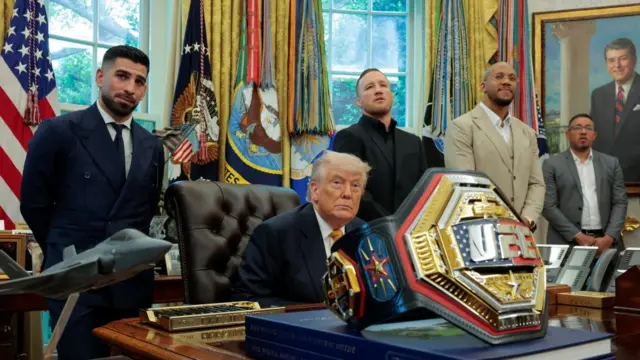
    Donald Trump sits at the Oval Office desk with the UFC champion belt in front of him and several UFC fighters standing either side of himImage source, Reuters
    Image caption,

    The UFC Belt lies on the table as President Donald Trump holds an event with UFC fighters Justin Gaethje, Ilia Topuria and Ciryl Gane in the Oval Office

    The White House press pool was just called into the Oval Office for a brief, surprise meeting with Donald Trump alongside several UFC stars, part of a highly anticipated 14 June event marking America's 250th anniversary.

    Trump insisted that reporters stay on topic, but answered several questions on Iran anyway - again expressing optimism that a negotiated settlement to the conflict is possible.

    "They want to make a deal," he told those in the room. "We've had very good talks over the last 24 hours, and it's very possible that we'll make a deal."

    Notably, Trump said - not for the first time - that Iran has agreed to never have a nuclear weapon "among other things".

    This claim has by no means been confirmed by the Iranian side.

    The US president also seemed to indicate that the 30-day deadline for a negotiated settlement that has been reported in US media outlets is flexible, telling reporters as they left that there is "never" a deadline.

    We still have very little information directly from the administration on the status of talks, although Trump and other officials have repeatedly claimed they are going well.

    And while the White House has left a "kinetic" military option on the table, at least publicly they continue to express confidence it won't be necessary.

  8. Netanyahu says he speaks with Trump every daypublished at 20:11 BST 6 May

    Addressing Israelis from a cabinet meeting today, Prime Minister Benjamin Netanyahu said he has been in constant communication with Trump - and plans to speak with him again tonight.

    "We are maintaining continuous contact with our friends in the US. I speak with President Trump on an almost daily basis," he said.

    He adds that the two countries have "full coordination".

    "There are no surprises," he said. "We share common goals."

    Netanyahu added that Trump believes he can win the war in Iran and dismantle their nuclear capabilities "in one way or another".

    "We are prepared for any scenario," he said.

  9. 'We're going to get it' - Trump on extracting Iran's uraniumpublished at 19:49 BST 6 May

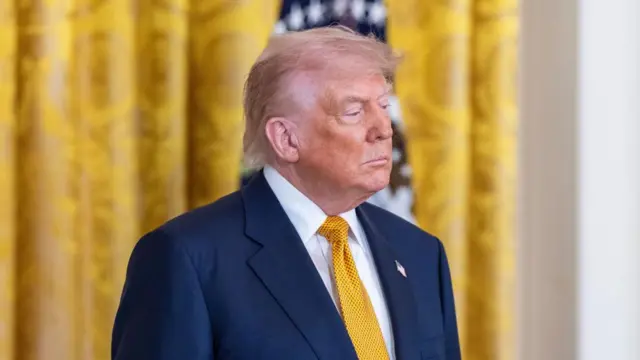
    Trump listens as First Lady Melania Trump delivers remarks during a Military Mother's Day EventImage source, SHAWN THEW/EPA/Shutterstock

    As President Donald Trump was leaving an event at the White House today, a reporter asked him about the possibility of the US extracting Iran's uranium.

    "We're going to get it," Trump replies.

    When asked how the US would do this, the president repeats: "We're going to get it."

  10. Trump offers cautious optimism on Iran dealpublished at 19:32 BST 6 May

    Bernd Debusmann Jr
    White House reporter

    A little earlier Donald Trump spoke alongside First Lady Melania Trump at a White House event for military mothers.

    The president began his remarks by addressing the situation in Iran, saying that it's "going very smoothly".

    "They [Iran] wants to make a deal," Trump said. "They want to negotiate."

    He did, however, inject a note of caution into his remarks and again subtly suggested that Iran would, eventually, be coerced into an agreement.

    "We'll see whether or not they are agreeing. And if they don't agree, they'll end up agreeing shortly thereafter," he said. "That's the way it is."

    Trump's remarks are very much a continuation of his earlier Truth Social post in which he vowed renewed - and intensified - strikes if Iran does not come to the negotiating table.

    Broadly, Trump appears to be taking a carrot and stick approach to Iran.

    On one hand, he believes the blockade and the effort to cut Iran off from global financial markets, or the promise of pausing those campaigns, will bring it to the table.

    On the other hand, Trump still has a military option available.

  11. The Israel-Lebanon ceasefire is in name onlypublished at 19:03 BST 6 May

    Hugo Bachega
    Reporting from Beirut

    An Israeli air strike has hit the southern suburbs of Beirut for the first time in weeks.

    Images posted online show extensive damage near the building that was hit in the area known as Dahieh.

    This is a ceasefire in name only. In southern Lebanon, Israeli air strikes continue, and more than a hundred people have been killed in recent days, including civilians. Israel says it is reacting to breaches of the deal by Hezbollah.

    The group has been attacking Israeli troops that occupy parts of Lebanon and northern Israel, saying it is responding to Israel’s violations.

    The strike on Beirut could lead to another escalation in the conflict.

    The scene following an Israeli airstrike on Dahieh, Beirut, LebanonImage source, EPA
  12. Netanyahu says Hezbollah commander attacked Israeli communities and soldierspublished at 18:52 BST 6 May

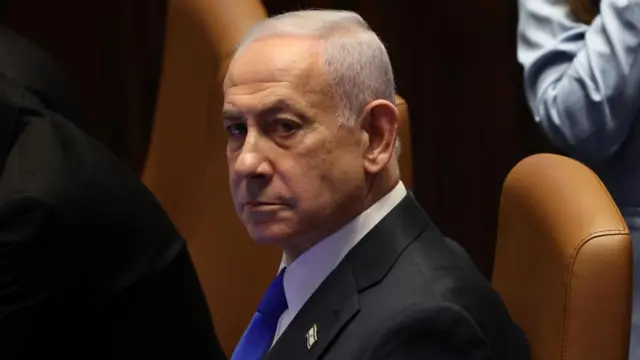
    Netanyahu pictured glancing to his sideImage source, ABIR SULTAN/EPA/Shutterstock

    More now from Israeli Prime Minister Benjamin Netanyahu, who has announced fresh Israeli strikes hitting Beirut, targeting a senior Hezbollah commander.

    Netanyahu says he and Israel's Defence Minister Israel Katz ordered the country's military "to strike now in Beirut the commander of the Radwan Force in the terrorist organization Hezbollah in order to neutralize him".

    In a post on social media he claims the Radwan force was "responsible for firing at Israeli communities and harming IDF [Israel Defense Forces] soldiers."

    Netanyahu said that "Israel's long arm will reach every enemy and murderer", adding; "this is how it's done and this is how it will be done!"

    Correction 8 May: This post was amended to replace the word 'settlements' with 'communities', in line with the Israeli prime minister's post on X.

  13. Israel launches strikes on Beirut, targeting top Hezbollah commanderpublished at 18:37 BST 6 May
    Breaking

    Israel's military has launched strikes in Beirut, targeting a senior Hezbollah commander, Israeli Prime Minister Benjamin Netanyahu has said.

    We'll be bringing you more on this shortly.

  14. US forces say they shot at an Iranian vessel in the Gulf of Omanpublished at 18:21 BST 6 May
    Breaking

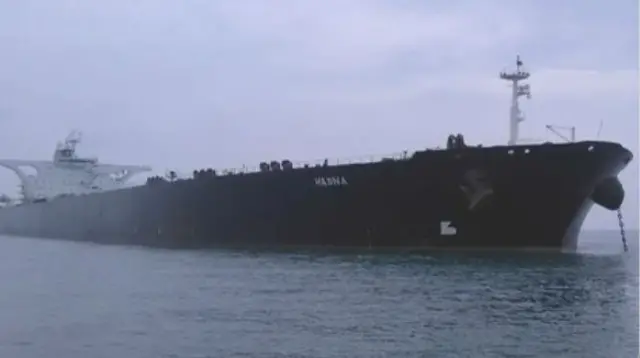
    US Central Command says it shot at and disabled an Iranian-flagged oil tanker in the Gulf of Oman.

    In a post on social media, the US military says the tanker, called M/T Hasna, was attempting to sail to an Iranian port, in defiance of the US blockade.

    After repeated warnings, the US shot at the vessel with a cannon gun on a navy jet, disabling it, the post says.

    "Hasna is no longer transiting to Iran," they wrote. "The US blockade against ships attempting to enter or depart Iranian ports remains in full effect."

    A picture of the Hasna released by CentcomImage source, US Centcom
    Image caption,

    A picture of the Hasna released by Centcom

  15. Oil prices drop and stock markets rise after reports of potential dealpublished at 17:48 BST 6 May

    Oil prices have dropped and global stock markets have risen following reports of a potential breakthrough in negotiations over the conflict in the Middle East.

    Earlier today the Brent oil price fell by around 6%, following a US media report that Washington believes it is close to reaching a deal with Iran on a one-page memorandum of understanding.

    The graph below shows how global oil prices have reacted since the war began.

    This Flourish post cannot be displayed in your browser. Please enable Javascript or try a different browser.

  16. US and Iran, who blinks first?published at 17:09 BST 6 May

    Jiyar Gol
    BBC Persian world affairs correspondent

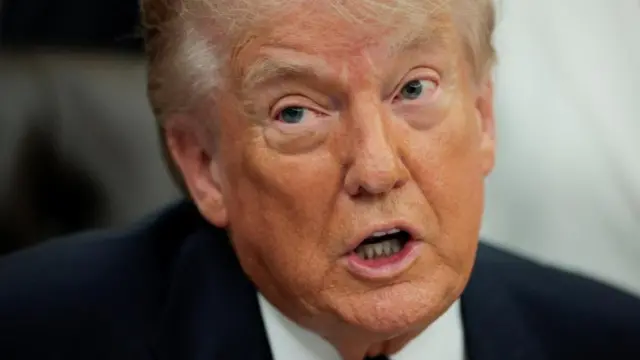
    Donald TrumpImage source, Reuters
    Image caption,

    US President Donald Trump

    President Trump and the Islamic Republic of Iran’s leadership share an important trait: both resist acknowledging pressure and admitting how much they want to avoid a return to war.

    After weeks of war, it has become increasingly clear that the United States is seeking a way out. Rising gas prices have fuelled domestic dissatisfaction, adding pressure on Washington to de-escalate.

    Iran faces far deeper challenges, yet, like Trump, its leadership refuses to fully acknowledge the economic cost and the hardship Iranians are experiencing.

    Many factories have laid off workers, internet access has been restricted, and hundreds of thousands who depended on the digital economy are now struggling to survive. Many households have shifted into survival mode, focusing only on essential needs.

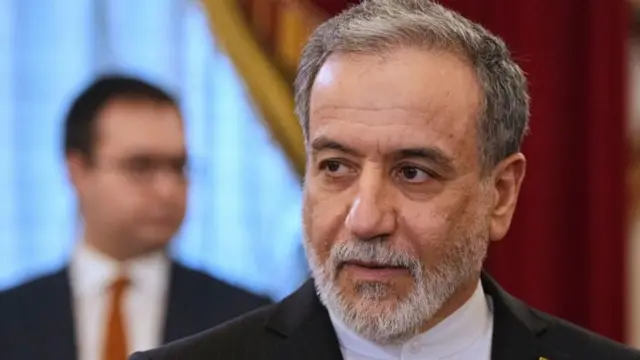
    Iranian Foreign Minister Abbas AraghchiImage source, EPA/Shutterstock
    Image caption,

    Iranian Foreign Minister Abbas Araghchi

    Hardliners, driven by ideology, appear willing to accept severe human and economic costs to preserve the Islamic system.

    The Islamic Republic of Iran is increasingly concerned about the risk of renewed unrest.

    In the past month, more than 20 political prisoners have been executed, many of them protesters arrested during last January’s nationwide demonstrations.

    These executions are an attempt by the authorities to deter young people from rising again.

  17. In Washington, questions swirl on potential dealpublished at 16:44 BST 6 May

    Bernd Debusmann Jr
    White House reporter

    Reports suggest that the US and Iran are inching closer to a one-page memorandum aimed at ending the war.

    Experts, however, are warning that any negotiations aimed at bringing the war to an end are incredibly complex, and in the case of Iran's nuclear materials are highly technical.

    Holly Dagres, an Iran expert at the Washington Institute on Near East Policy, told the BBC that unless the Iranians address their nuclear programme as part of the proposed memorandum, the Trump administration is "highly unlikely" to be satisfied.

    While the one-page memorandum being reported sets a 30-day period to negotiate the issue - as well as the Strait of Hormuz and sanctions relief - Dagres said that timeline may be unrealistic.

    "It's worth emphasising that the Joint Comprehensive Plan of Action, from which the first Trump administration withdrew in 2018, was 150 pages long and included technical details," she said.

    There's also considerable confusion as to the pause in "Project Freedom", and whether freedom of navigation in the Strait will, in fact, bring the two sides closer to a deal.

    "If this Mou [memorandum of understanding] does finalise, it should free up these vessels and be a big step in ending this war," a former top Pentagon official told me. "If it doesn't, this may further embolden Iran."

    Trump himself seems to be somewhat cautious about a deal.

    In a brief telephone interview with PBS this morning, Trump acknowledged that he's believed a deal was close in the past only to be thwarted.

    “I felt that way before with them,” he said. “So we’ll see what happens."

  18. Another day of twists and turns over how to end the warpublished at 16:23 BST 6 May

    Sebastian Usher
    Middle East analyst

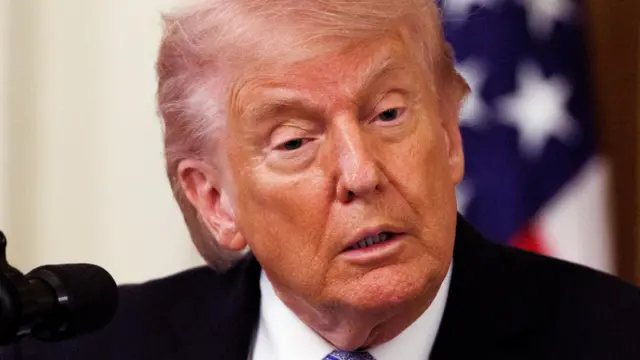
    US President Donald TrumpImage source, EPA/Shutterstock

    It's been another 24 hours of dizzying twists and turns over the Iran war.

    On Tuesday, the US strategy seemed to be newly dependent on unclenching Tehran's grip on the Strait of Hormuz, with the diplomatic path apparently on the backburner.

    Now, President Trump has ditched that approach and is saying that peace is all but at hand.

    It's being reported that there's a one-page document that the two sides are close to agreeing. The Pakistani mediators are talking it up, too.

    The little that's come out of Iran so far is as ever notably less enthused about developments.

    One official has said that what Washington has presented is a wish-list rather than a reality.

  19. Any potential negotiations need to be in 'good faith' - Iranian foreign ministrypublished at 16:08 BST 6 May

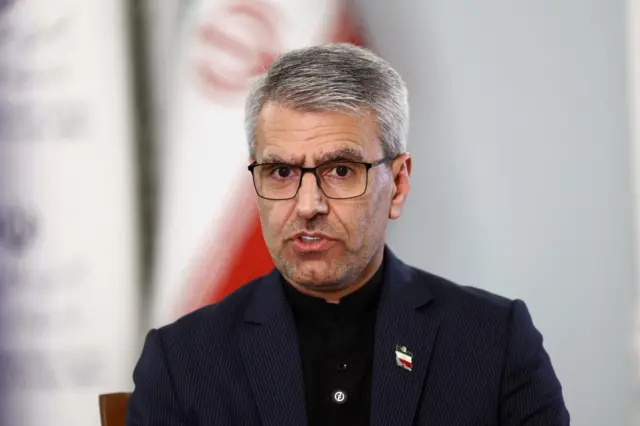
    We can now bring you more from Iranian foreign ministry spokesperson Esmail Baghaei.

    In a post on X citing the International Court of Justice (ICJ), Baghaei says the concept of negotiations requires "at the very least, a genuine attempt to engage in discussions with a view to resolving the dispute".

    "It needs 'good faith', then, meaning that 'negotiations' is not 'disputation'; nor is it 'dictation', 'deception', 'extortion' or 'coercion'", he adds.

    There is no direct mention of the US, or an American proposal to end the war, in the post.

    However, as we've been reporting, Baghaei has told Iranian Students' News Agency (ISNA) that Iran has shared its views on the US proposal with Pakistani mediators.

  20. US proposal to end war with Iran still being considered, says Iranian foreign ministrypublished at 15:37 BST 6 May
    Breaking

    Iranian foreign ministry spokesperson Esmaeil BaqaeiImage source, Reuters

    An American proposal to end the war with Iran is still being considered, an Iranian foreign ministry spokesperson tells Iranian Students' News Agency (ISNA).

    In an interview with ISNA, Esmail Baghaei says that Iran is sharing its views on the US proposal with Pakistani mediators.