

Election

England council results

Number of councillors

131 of 136 councilsCounting under way

  • Reform UK 1,444 councillors 1,442 councillors gained
  • Labour 997 councillors 1,406 councillors lost
  • Liberal Democrat 834 councillors 151 councillors gained
  • Conservative 773 councillors 557 councillors lost
  • Green 515 councillors 374 councillors gained
  • Independent 199 councillors 27 councillors gained
Change

Summary

  • Prime Minister Keir Starmer is under pressure after Labour suffered heavy election losses in England and Scotland, and suffered a historic defeat in Wales

  • Labour's deputy leader Lucy Powell tells the BBC the party need to change approach but stick with Starmer. "Yes, yes, yes," she says when asked if Starmer will still be leader in six months' time

  • Though, senior Labour MP Clive Betts says a timeframe is needed to bring in a new leader

  • Labour's losses raised sharp questions, writes our political editor: How did they become so unpopular, so quickly? And what on Earth can they do about it?

  • Conservative Party chairman Kevin Hollinrake says his party, which also suffered big losses, had a "difficult night" but is is "making progress"

  • The results, in brief: In Wales, Plaid Cymru become the largest party in the Senedd, ending Labour's 27-year winning streak. Reform is the biggest winner in England, picking up more than 1,400 councils so far. In Scotland, SNP wins for the fifth consecutive year, but falls short of securing an overall majority

  • Look up who won in your area

  1. Analysis

    Trickle of Labour MPs join calls for Starmer to go, but so far no cabinet ministers or rivals have joined thempublished at 09:05 BST

    Harry Farley
    Political correspondent, reporting from Downing Street

    This morning has seen a trickle of Labour MPs joining those calling for the prime minister to step down.

    In the last few minutes the former minister Catherine West added her voice.

    "The Labour Party need the chance to have an honest conversation about how we deliver the change we promised in 2024, and that requires new leadership which understands the urgent and real concerns of people across the UK," she said.

    I’m reporting from a sunny Downing Street this morning. But if you’re one of those sat inside pondering the prime minister’s next steps, it’s looking pretty gloomy.

    Their one silver lining is, so far, there haven’t been any cabinet ministers or leadership rivals among those saying Starmer should go.

    He will give a speech on Monday to try and set a direction and vision for where he wants to take the country now. But writing in The Guardian, the prime minister said he'd made mistakes, but added "that doesn’t mean tacking right or left". From that, it doesn’t sound like a major overhaul in policy or approach.

    His problem is many more Labour MPs than the 20 or so who’ve publicly said so believe his time is up.
  2. 'Results confirm the fragmentation of our politics' - polling expertpublished at 08:54 BST

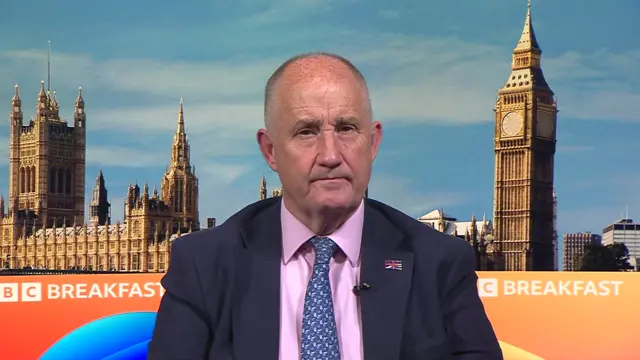
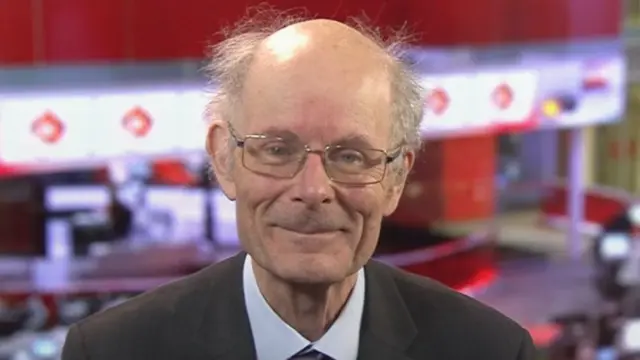
    A man with grey, balding hair with wire-rimmed glasses wearing a suit, with the BBC studio behind him

    Polling expert Prof Sir John Curtice tells BBC Breakfast the picture for Labour "has frankly emerged to be one that has been about as bleak as might have been imagined in advance of these elections".

    In Wales, the defeat was "about as serious as anybody had thought it might be", he says.

    Downing Street has a "substantial challenge on their hands" he says - to persuade colleagues they do not need a new leader, and if they don't change leader the challenge for Starmer to turn things around "is clearly now a very very substantial one".

    Looking at the wider trends, the polling expert says "frankly none of the political parties have the support of a substantial section of the public", and are all minorities.

    He says a national share projection shows Reform with more support, and that it's then "hard to get a cigarette paper" between support for the Green Party, Labour, Conservatives and Lib Dems.

    "The crucial point is the results confirm the fragmentation of our politics," he adds.

    Labour, he adds, now have to "think seriously" about the "substantial difficulties" they find themselves in.

  3. Timeframe for Starmer resigning 'would fire the starting gun' of distracting leadership debate, Powell sayspublished at 08:46 BST

    Labour deputy leader Lucy Powell is pressed on BBC Radio 4's Today programme about the growing number of Labour backbenchers calling for a Starmer to set out a timeframe for when he could stand down as prime minister.

    She says she agrees there has to be a "step change", but that she wants to see Starmer continue and lead that process.

    Thinking that setting out a timetable would "put to bed the issues of leadership I think is actually the wrong conclusion", saying it would "fire the starting gun of a quite honestly, a very distracting and ongoing debate about leadership".

    She says there has been "incessant speculation" in the last few weeks, adding: "I don't want to hear about that anymore. I want us to get on with the job."

  4. 'We don't do hostile takeovers in the Labour party' - deputy leaderpublished at 08:18 BST

    Powell is asked if she can say categorically that Starmer will still be Labour leader in six months time, or if there will be a change.

    "I don't think it should happen and I don't want it to happen," she says.

    Challenged again, she says that predictions about a leadership change are "already being proven to be incorrect" and adds that "we don't do hostile takeovers in the Labour party".

    Powell is asked to answer the question directly and say if she can say Starmer will still be leader in six months' time.

    "Yes, yes, yes," finishes Powell.

  5. Labour will look 'ludicrous' if it turns in on itself now, deputy leader sayspublished at 08:14 BST

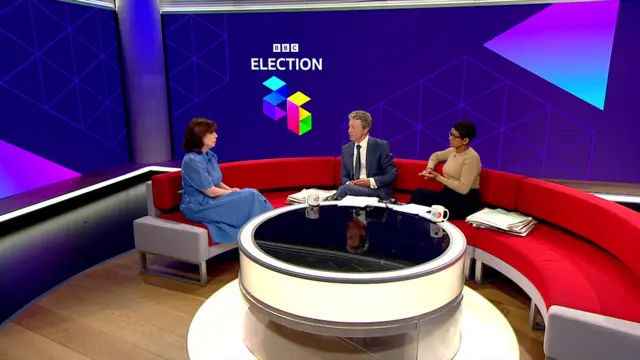
    Studio wideshot of Labour's deputy leader Lucy Powell being quizzed by the BBC's Charlie Stayt and Naga Munchetty in BBC Breakfast studio

    Powell is asked about rumours there are plans for a Labour MP to step aside so Andy Burnham can become an MP and challenge Starmer.

    Does she know if that's happening? "No," she says, adding the party has a leader.

    What has been damaging, she says, is the endless speculation and rumour about a leadership challenge.

    The government would look "ludicrous" if they turned in on themselves at this stage, she says.

    If things don't improve then Reform UK leader Nigel Farage could be "walking up Downing Street in two or three years time", Powell says, adding she "can't even begin to think" about letting that happen.

    She says they have to do better as a party and that Starmer "knows that as well as everyone else".

  6. Labour needs to change approach, but stick with Starmer - Powellpublished at 08:07 BST

    Labour's deputy leader Lucy Powell is pressed on whether Starmer can continue as Labour leader.

    Several quotes are put to her on BBC Breakfast from senior Labour MP Clive Betts who told the BBC that the public has "stopped listening to Keir" and they have made their minds up.

    Powell says that the problems the country is facing and the expectations people have for the party will still be there "whoever was the Labour prime minister at this point in time".

    She says the right course of action now is for the party to "reflect, to hear, to listen" and "to change what we're doing and how we're doing it, but to get behind Keir as the leader and go forward as one team".

    She adds that Starmer has spoken about previous mistakes that have been made and that she has heard a deep sense of frustration and disappointment across the country.

    Powell is repeatedly pressed on whether she has spoken to Starmer about his future and whether she has suggested that he should stand down - she says he wants to continue.

    Asked if she has suggested he shouldn't, she says "no", adding she wants him to continue as leader.

  7. Labour has to 'do a lot better', says deputy leaderpublished at 07:57 BST

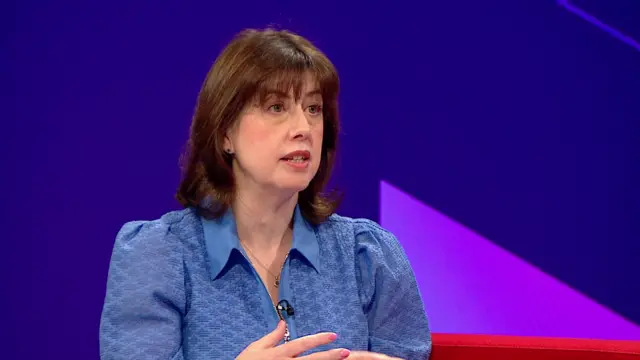
    Labour's deputy leader Lucy Powell speaks to BBC Breakfast wearing blue dress with studio background behind her

    Labour's deputy leader Lucy Powell is speaking to BBC Breakfast and says prime minister Keir Starmer "takes responsibility" for Labour's poor election results.

    Asked what Starmer's mood is like, she says: "He is very reflective, he's understanding as I do that these are very tough results for Labour, incredibly painful."

    She adds: "He is accepting responsibility, he is saying we've got to change. He hears what people are saying."

    Asked what accepting responsibility means and if Starmer is saying that he is the reason Labour has done badly, Powell says "he is absolutely accepting that these election results are a reflection on the Labour government" and what it has been doing and not doing.

    People are feeling "incredibly disappointed and frustrated", she says, adding the party has to hear what voters have said and "we've got to do a lot better".

    Starmer has been clear he has a job to do and he wants to carry on, she says.

  8. Starmer should stay, but needs to 'step up' - former deputy Labour leaderpublished at 07:48 BST

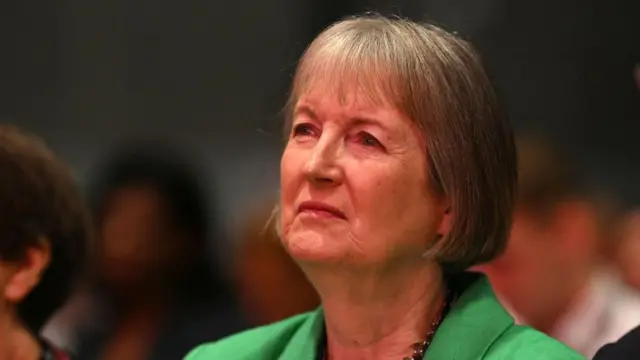
    A file photo of Harriet HarmanImage source, AFP via Getty Images

    Former deputy Labour leader Harriet Harman says Starmer should not stand down as prime minister but "he really has got to step up" and listen.

    She tells BBC Radio 4's Today programme Starmer is only two years into being prime minister and took on a "very difficult" situation.

    He has made "unforced errors", Baroness Harman says, but people "don't want instability" in government.

    Two years into his premiership "things have got worse, some because of his own responsibility, some not", she says, but Starmer "has got to turn it around, that's on him".

    There are examples of prime ministers who have been unpopular at one point but gone on to win back support when circumstances changed, she says.

    Harman says Starmer's job is to rebuild confidence with voters and respond to the message they have sent.

  9. Senior Labour MP calls for timeframe to introduce new Labour leaderpublished at 07:35 BST

    Clive Betts, one of Labour's longest serving MPs, has been speaking to BBC Radio 4's Today programme.

    Asked if he still thinks Starmer is the right person to lead the party, he says: "In some ways it's not what I think this morning, it's what the electorate were telling us in the last few weeks."

    He says the results have been "pretty devastating", seats have been lost that the party has held for decades, and people have repeatedly said they wanted to vote Labour "but not while Keir is the leader".

    "That is a real problem going forward," he says. "People have made their minds up."

    He says either Starmer carries on and Labour lose "badly" at the next election, Starmer decides to stay and an "internal battle" turns off the public and potentially leads to an election loss, or Starmer recognises "for the good of the country" that "he has to stand down" in the "not too distant future".

    He says the public has stopped listening to Starmer and says a timeframe needs to be brought in to introduce a new Labour leader in the next few months.

  10. Analysis

    No leadership pressure on Badenoch despite Tory lossespublished at 07:24 BST

    Jack Fenwick
    Political correspondent

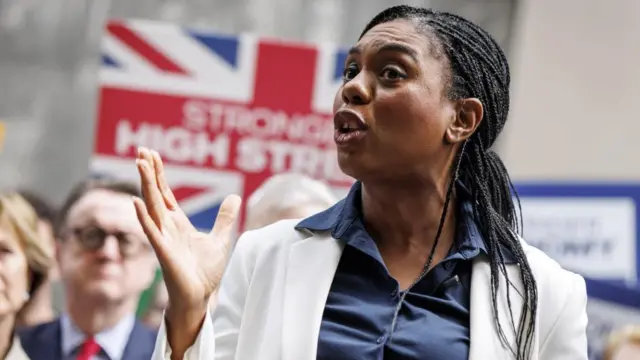
    Kemi Badenoch gestures in a speech with a union flag in the backgroundImage source, PA Media

    The Conservatives have suffered heavy losses in elections across the UK - but there is no hint of leadership speculation surrounding Badenoch.

    That might seem strange for a party that has had such a bad night at the polls.

    But it will not surprise anyone who has been watching the Tories closely in recent weeks, when it's become clear that regardless of the level of Conservative losses, Badenoch's future would not be in doubt.

    The party is pointing to some glimmers of hope among these election results, including Westminster and holding on to other councils such as Harlow, Broxbourne, Bexley and Fareham.

    But there are two much more important factors which have prevented any sense of jeopardy from forming around the Conservative leader.

    The first is her performances in Parliament. Many MPs believe that Badenoch has for some months now been an impressive combatant at Prime Minister's Questions, her weekly joust with the prime minister.

    The second is a stark lack of alternatives. During the early part of Badenoch's tenure as leader, there was much chatter that Robert Jenrick wanted the job for himself. But he has now defected to Reform UK.

  11. SNP win fifth successive Scottish Parliament election, with Labour and Reform tied secondpublished at 07:18 BST

    Angus Cochrane
    Scotland senior political reporter

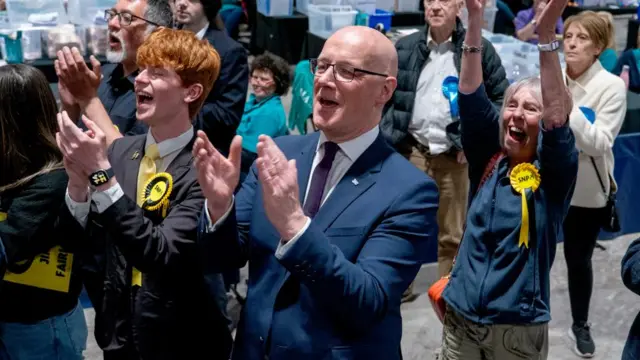
    First Minister and SNP leader John Swinney with party supportersImage source, PA Media
    Image caption,

    First Minister and SNP leader John Swinney with party supporters

    The SNP has won a fifth successive Scottish Parliament election, but fallen short of its target of an overall majority at Holyrood.

    The party won 58 seats, with 65 needed for a majority.

    Labour, who not so long ago harboured ambitions of toppling the SNP, finished a distant second on 17 seats - tied with Reform, who made their electoral breakthrough in Scotland.

    The Scottish Greens won a record 15 seats - including their first ever constituency victories.

    The Conservatives lost their position as the parliament's largest opposition party, suffering their worst-ever Holyrood election result to finish with 12 seats.

    The Liberal Democrats, meanwhile, returned 10 MSPs.

  12. 'A lot of work to do to prepare for next general election' - Tory party chairmanpublished at 07:12 BST

    Sticking with Conservative Party chairman Kevin Hollinrake on BBC Breakfast, he says his party has "a lot of work to do to prepare for the next general election".

    But he notes these results are not from a general election, and insists Kemi Badenoch is popular compared with the other party leaders.

    He's asked about what he thinks of Reform UK's leader - the Tories appear to have lost a lot of votes to Nigel Farage's party.

    He says Farage is a "very good communicator", but calls him a "populist" who "tells people what they want to hear".

    He says a lot of Reform's policies are not deliverable, and insists his party's positions "stand up to scrutiny".

    He says it's "not true" that "everybody is going to Reform", and points to areas where his party gained councillors, including where it retook Westminster in London.

    "It's not right to say that people are simply leaving Labour and going to Reform," he says.

  13. Conservative chairman says party 'making progress' despite 'difficult night'published at 07:02 BST

    Kevin Hollinrake speaks in the BBC studio

    Conservative Party chairman Kevin Hollinrake says his party had a "difficult night" but had some "really good highlights", as he speaks to BBC Breakfast.

    "If you look behind the trends, behind the headlines, we hoped to narrow the gap between Reform, particularly in England - that's exactly what we've done," he says.

    "We had some really good highlights, particularly across London," he says, pointing to his party retaking Westminster, but "nevertheless a difficult night for us, losing many good colleagues".

    The party is "very keen to continue the progress" under Kemi Badenoch, he says.

    He's questioned about some of his more positive language about the results, and is asked if he's deluded about what has just occurred - the party has lost more than 500 councillors across England.

    "Not deluded at all," he says, saying it was a "difficult night for us, losing many good colleagues".

    He says his party is coming "from a long way back" after tough results over the last two years. That's where Badenoch should be judged from, he says, adding his party is "making progress".

  14. A closer look at yesterday's results in Walespublished at 06:40 BST

    Plaid Cymru's leader Rhun ap Iorwerth says he is ready to run the Welsh government after a stunning Senedd election victory left his party the largest group in Wales' parliament.

    The historic vote saw Reform UK come second, pushing Labour into third and ending a century-long run of election success in Wales.

    Plaid fell short of a majority in the 96-member Senedd, but with 43 seats has a better chance than anyone of forming a government with the help of at least some opposition politicians.

    The dramatic day of results on Friday saw the current first minister, Eluned Morgan, lose her seat and resign as Welsh Labour leader.

    Labour has won every general election since 1922 in Wales and, until this week, every Cardiff Bay election since the Senedd's predecessor the National Assembly was established in 1999.

    It had been in charge of the Welsh government for 27 years.

    Media caption,

    Rhun

  15. Analysis

    Starmer plans reboot - but how long will MPs give him?published at 06:09 BST

    Chris Mason
    Political editor

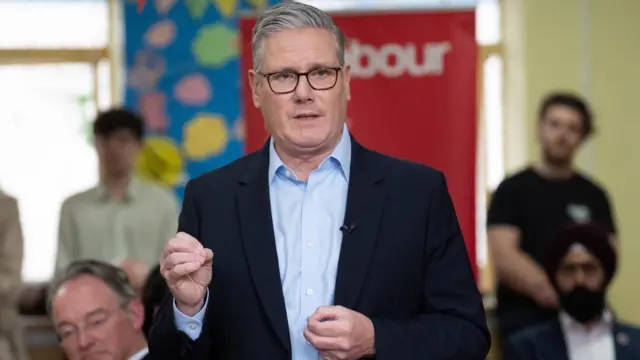
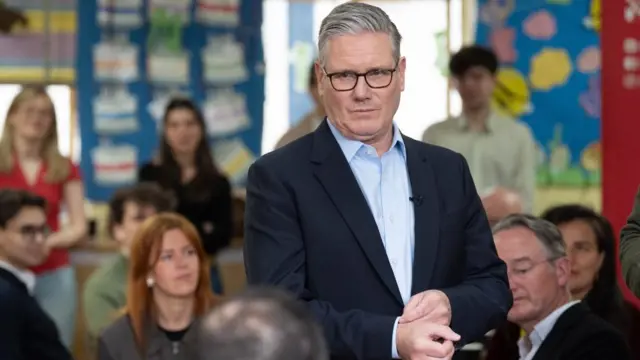
    Sir Keir Starmer gestures with his right hand in a speech at Kingsdown Methodist Church Hall in Ealing,Image source, PA Media

    This was a set of elections dizzying for their victors – and for the losers.

    It raised the sharpest of questions for the Westminster government, the Labour Party, and the prime minister.

    How did they - and how did he - become so unpopular, so quickly? And what on Earth can they do about it?

    It is three months to the day since Labour’s leader in Scotland, Anas Sarwar, publicly called for Sir Keir Starmer to resign, prompting hasty public demonstrations of loyalty and support from the cabinet.

    And last night it happened again, with ministers backing him on social media in the aftermath of crushing defeats in Wales, in Scotland and around England. And after more than 20 Labour MPs publicly questioned – to a greater or lesser extent - the merit in Sir Keir hanging around much longer in office.

    Another attempt at rejuvenating and relaunching his ailing premiership beckons on Monday with a speech, and on Wednesday a reboot with regalia - the State Opening of Parliament and the prime minister’s legislative plans for the year or so ahead.

    The question is whether his MPs will give him that long.

  16. Cabinet ministers voice support for Starmerpublished at 05:47 BST

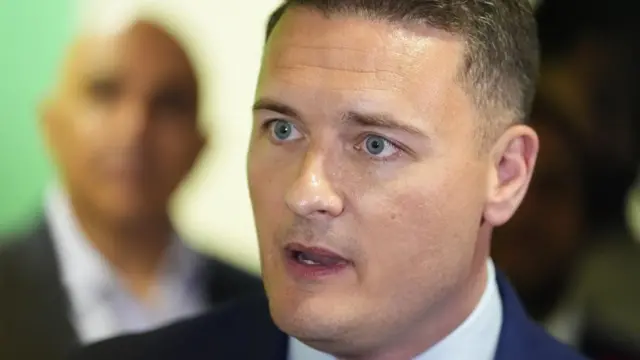
    A close up of Wes StreetingImage source, PA med
    Image caption,

    Health Secretary Wes Streeting says the prime minister will “have my support”

    While there have been some within Labour's ranks who have turned on Sir Keir, Cabinet ministers are toeing the party line, with a number of them expressing support late last night.

    Ed Miliband, Secretary of State for Energy, posted on X: “These are devastating election results for Labour and I’m deeply sorry for all of those colleagues who have lost their seats. Voters are making clear their anger at a broken economic and political status quo. As Keir has said, we must go further in delivering the mandate for change that Labour won in 2024 – and show how we will answer the call for change in our country.”

    Home Secretary Shabana Mahmood also wrote on the social media platform: “A devastating night in Birmingham and across the country. Good public servants, colleagues and friends have lost their seats. This was a verdict on us not them. The PM has rightly said we must do better. It is a privilege to serve the British people and we must live up to it.”

    Health Secretary Wes Streeting said the prime minister will “have my support” in setting out how the government will move forward on Monday. “I’ll continue putting my shoulder to the wheel as the Health and Social Care Secretary, who’s getting the NHS back on its feet and making sure it’s fit for the future,” he said.

  17. Starmer remains defiant under growing pressurepublished at 05:28 BST

    Jack Fenwick
    Political correspondent

    Starmer looks down with his hands togetherImage source, PA med

    Sir Keir Starmer is facing mounting pressure this morning from Labour MPs after more than 20 called for him to set out a timetable to resign in the wake of election losses across the UK.

    The PM said he took responsibility for the defeats - and admitted the public didn't believe the government was delivering enough - but vowed to build a stronger and fairer country.

    Reform UK was the big winner in England, sweeping up more than 1,400 councillors. The Green Party had a strong showing too, gaining 370 councillors - as well as two mayoralties in London.

    The Liberal Democrats made more modest improvements - but still achieved a record eighth year in a row of councillor gains.

    But it was much trickier for what have been traditionally the two biggest parties. The Tories lost more than 550 seats, Labour around 1,400.

    Writing in the Guardian, the prime minister said he'd made mistakes, but added "that doesn’t mean tacking right or left".

    "It means bringing together a broad political movement, being assertive about our values, bold in our vision and addressing people’s demands. Unifying rather than dividing."

  18. Six things to know about today's election resultspublished at 23:00 BST 8 May

    Adam Goldsmith
    Live reporter

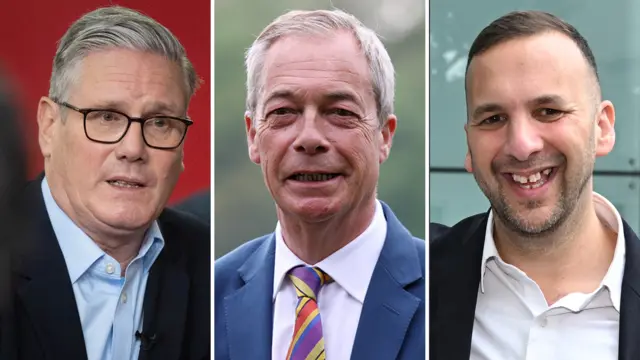
    Keir Starmer, Nigel Farage, Zack PolanskiImage source, PA/Getty Images

    Labour suffers historic loss in Wales: The party's 27 years in power have come to an end, with First Minister Eluned Morgan also losing her seat. Prime Minister Keir Starmer praised Morgan as a "tireless champion for Wales".

    The new 96-seat Senedd is a sea of green and lightning blue: But Plaid Cymru's 43 seats leave it six short of a majority. Reform follows close behind with 34.

    In Scotland, the SNP holds on: The BBC forecasts the SNP will secure 58 MSP seats, remaining the biggest party but still short of the 65 needed for a majority.

    England's councils are set to welcome more than 1,400 Reform councillors: After Nigel Farage's party took seats in a tough election for Labour and the Conservatives, who lost over 1,300 and 500 seats respectively. The Liberal Democrats and Greens also made gains.

    The Green Party triumphed for the first time in mayoral contests: Zoë Garbett's victory in Hackney was swiftly followed by another win in Lewisham. Labour took Newham, with no change elsewhere.

    Keir Starmer says he's "not going to walk away": There are now at least a dozen Labour MPs saying publicly that he should resign or attach a sell-by date to his premiership.

    There's also plenty across BBC News to recap a whirlwind day in UK politics:

  19. Analysis

    Many Labour MPs are blaming the boss for disastrous electionspublished at 22:31 BST 8 May

    Chris Mason and Iain Watson
    Political editor and political correspondent

    British Prime Minister and Labour leader Keir Starmer reacts as he speaks to supporters and councillors following local elections at Kingsdown Methodist Church on May 08, 2026 in London, England.

    Surveying the scale of Labour's disastrous election performance, there are now at least a dozen Labour MPs saying publicly that Starmer should resign or attach a sell-by date to his premiership.

    Most cabinet ministers have been circling the wagons, taking to the TV studios to reinforce his message that Starmer will not be walking away from No 10 and tweeting support for him.

    For example, Business Secretary Peter Kyle said: "Reversing these results requires a collective effort, not just blaming the boss."

    But while few MPs are entirely "blaming the boss", a significant number think he is part of the problem.

    "There was one issue on the door and it was Keir. If he leads us into a future election we are dead," one Labour MP told the BBC.

    Given the level of dismay and frustration, you might assume there would be even more calls for the PM's removal.

    But Labour politics is rarely that straightforward.

  20. Laura Kuenssberg's election take: 'gut punch' results for Labour partypublished at 22:18 BST 8 May

    "Even early this morning, Sir Keir Starmer chose to get out there and tell his party and all of us that he was not going to go anywhere.

    "He didn't even wait to see how bad it was before putting his defence out there, as if he was anticipating some attacks," Laura Kuenssberg says.

    Watch her analysis below.