Summary

How are you affected?

  1. Assisted dying can work alongside better social care, says MPpublished at 13:56 BST

    Harry Farley
    Political correspondent

    Lauren Edwards

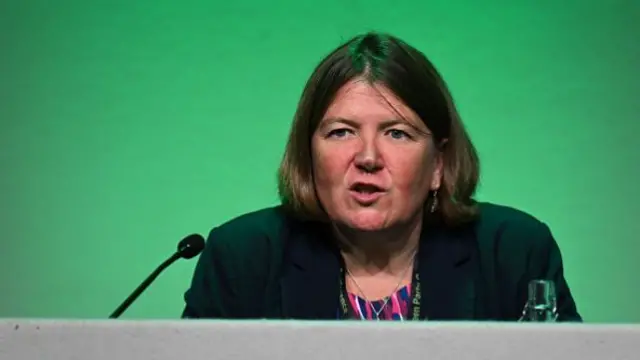
    The Labour MP bringing the assisted bill back to the House of Commons says improving social care and legalising assisted dying "is not a case of either/or".

    In a statement responding to the prime minister's earlier comments, she says: "Andy Burnham’s commitment to tackling the crisis in social care is extremely welcome.

    "He’s absolutely right to say that the care we offer people must be person-centred and integrated with the wider health system."

    She continues: "We all want to see better social, palliative and hospice care in every part of the country...

    "The evidence from around the world is that this can happen alongside providing the choice of an assisted death to that small minority for whom even the very best palliative care cannot relieve their suffering."

  2. Burnham wants social care 'fixed' before considering assisted dying changepublished at 13:45 BST

    Harry Farley
    Political correspondent

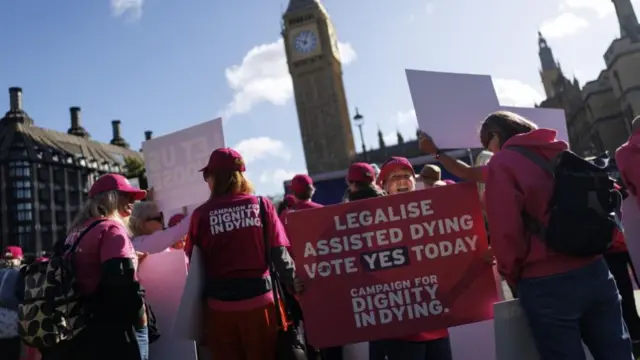
    Pro-assisted dying campaigners stand with placards outside ParliamentImage source, EPA/Shutterstock

    The prime minister said earlier that, before assisted dying is considered in England and Wales, the funding of palliative care and social care should be "fixed".

    It is the first time Andy Burnham has set out his position since becoming prime minister. MPs will debate the issue again when Parliament returns in September.

    The government is likely to remain officially neutral, but Burnham's remarks suggest he personally will not back the bill from Lauren Edwards, the Labour MP for Rochester and Strood.

    (The bill, external would "allow adults who are terminally ill, subject to safeguards and protections, to request and be provided with assistance to end their own life").

    Burnham's stance is seemingly a change from Keir Starmer, who voted in favour of the previous attempt to legalise assisted dying and promised to give the issue time to be debated in Parliament.

    Starmer's support was privately cited by some Labour MPs as a reason they backed the bill last time.

    • We'll have comments from Lauren Edwards in our next post
  3. BBC Verify

    Do two million people in England have unmet care needs?published at 13:39 BST

    By Tamara Kovacevic

    In his speech on reforming social care, Andy Burnham said: "It’s estimated that two million adults have unmet care needs."

    This figure comes from an Age UK report published in 2024, external, which estimated that two million people aged 65 and older in England have some unmet social care need.

    It said these unmet needs include people who are not receiving any help with basic tasks like getting in and out of bed, using the toilet and eating, as well as those who are receiving some assistance which does not meet their needs.

    The Age UK report doesn’t specify how it reached the two million figure. But it references the English Longitudinal Study of Aging, a study of more than 24,000 adults aged 50 and over, external which has collected data about their health, genetics, lifestyle, and economic and social situation for more than two decades.

  4. Rayner shares carer picture and says change starts 'today'published at 13:20 BST

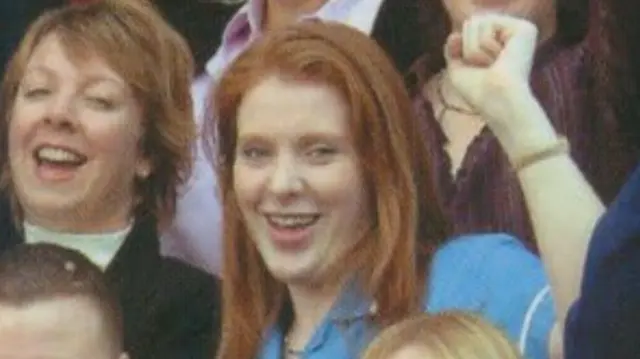
    Angela Rayner smiles and raises her fist in an old photo showing her as a care worker for Stockport Council. She is surrounded byImage source, Angela Rayner
    Image caption,

    "This photo takes me right back", Rayner said while sharing the undated picture

    Angela Rayner says being a home carer for Stockport Council was one of the "toughest" jobs she has ever done.

    "I know how it feels to graft hard day and night doing tough, physical shifts for wages I struggled to get by on," she says on X, alongside an old photo of her time as a care worker.

    Rayner, who returned to cabinet as housing secretary last week, says the prime minister's speech "matters so much" and that a national care service could be "genuinely transformative".

    "For decades, governments have kicked this issue down the road because they have seen it as too risky, too difficult and too complicated. That changes today," she adds.

  5. BBC Verify

    How much are social care workers paid in England?published at 13:08 BST

    By Tamara Kovacevic

    Prime Minister Andy Burnham used his speech to praise care workers, saying: "To me, they should be the best paid people in society, not the worst."

    According to the latest report on care workers’ pay in England, in December 2025 the median hourly rate - where 50% of workers would be paid more and 50% less - was £12.60 for a care worker in the independent sector. Most social care workers are employed in this sector.

    The minimum wage at the time was £12.21 an hour for workers aged 21 and over.

    The report also said about half (48%) of care workers were paid below the Real Living Wage - an hourly pay rate calculated by the Living Wage Foundation, based on the cost of living.

    At the end of last year, that was £12.60 outside London and £13.85 in the capital.

  6. Pay a major issue in Northern Ireland social carepublished at 13:07 BST

    Ciaran McCauley
    BBC News NI

    In Northern Ireland, the devolved government is responsible for social care.

    It is the only part of the UK where it is part of the same organisational system as healthcare – trusts in each geographical area manage hospitals and social care arrangements.

    People with capital – such as savings and property – of more than £23,250 are assessed as being able to pay for all the residential care they may require.

    Social care workers highlight intense pressures around funding, wages and capacity.

    Last year, staff in the independent sector were said to be "demoralised" that they were not to receive a pay rise to the level of the Real Living Wage.

    In March, the Department of Health in Belfast published a ten-year plan for adult social care, which aimed for "earlier preventative measures and more community-based support".

    The minister, Mike Nesbitt, said he was committed to funding the Real Living Wage "at the earliest affordable opportunity".

  7. 'It feels like I'm being punished for being disabled,' graduate sayspublished at 12:49 BST

    Erica Witherington
    Disability reporter

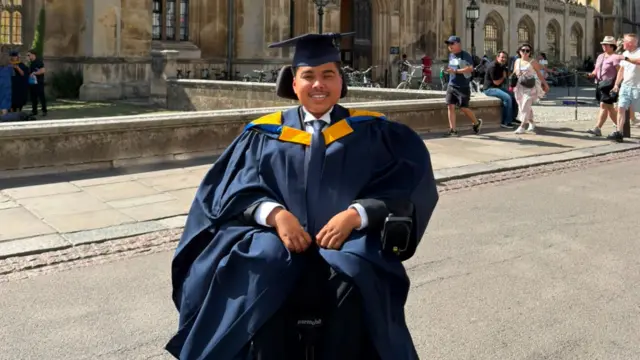
    A man in a navy graduation gown sits in a mobility chair in front of an old building. He is grinning.Image source, Maxwell McKnight

    For business management graduate Maxwell McKnight, social care is not about later life. It’s what allows him to live independently right now.

    Direct payments from his council mean he can hire his own assistants to support him with daily tasks such as getting up, getting washed, getting dressed.

    Maxwell, 22, has just graduated with a first-class degree and he's about to start work as a marketing executive, but says the social care system still puts a ceiling on his ambitions.

    If you have savings worth more than £23,250, you are not entitled to help with care costs from the council and have to start paying for your own support. For Maxwell, he says that would be almost £130,000 a year, so saving for a deposit for his own home feels impossible.

    "I could be a taxpayer, I could do everything right in life," he says, "but because I need the support of others, I won’t be able to have the same dreams as everybody else."

    "That doesn't feel like support. It feels like being punished for being disabled," he adds.

  8. Unpaid carers feel 'invisible and ignored', says wife of late Radio 2 DJpublished at 12:30 BST

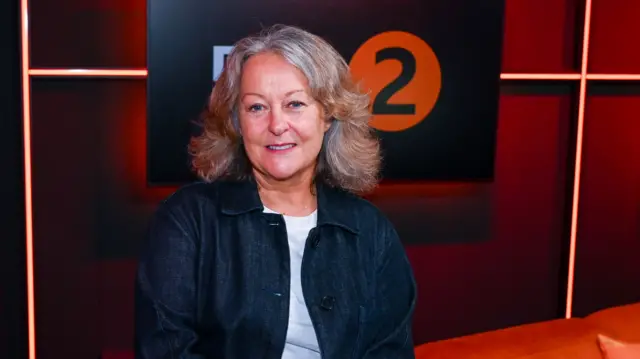
    Tiggy Walker sitting with a Radio 2 screen behind her.

    Tiggy Walker, the wife of the late Radio 2 DJ Johnnie Walker, says she "applauds" Andy Burnham for making social care reform central to his government, as the current system leaves unpaid carers feeling "invisble and ignored".

    Speaking to BBC Breakfast before Burnham's speech, she says life caring for her husband was "pretty awful".

    Tiggy says that while spending time with Johnnie was "lovely", she was left feeling burnt out.

    "You're living on a knife edge, you're living on adrenaline and cortisol, which is no way to exist as a human being," she explains.

    Tiggy adds unpaid carers need more support from professional carers who can share the burden of caring for a loved one.

  9. BBC Verify

    Burnham wants to fix social care - what are the options?published at 12:18 BST

    By Ben Chu, Policy and analysis correspondent

    BBC Verify has looked into four possible options for reforming the funding of England's social care system:

    1. Implementing a cap on lifetime care costs, where the government would pick up the bill over a certain threshold. Different cap proposals have ranged from £35,000 to £86,000 - meaning people would not pay more than this
    2. Making the means test for council-supported care more generous than the current system, where people start qualifying for financial help if all their assets are worth less than £23,250
    3. Giving everyone the right to free personal care, so everyone eligible gets state-funded support for things like helping frail elderly people wash and go to the toilet - but not for accommodation, food and everyday living costs
    4. Launching a national care service similar to the NHS where all personal care would be free to use

    Here's a graph of what three of these policies might cost:

    This Flourish post cannot be displayed in your browser. Please enable Javascript or try a different browser.

    For more detail on these possible options for social care reform, read the full story here.

  10. Analysis

    'Difficult decisions' a strong signal of some form of tax risepublished at 12:08 BST

    Harry Farley
    Political correspondent

    The main political parties all agree that social care needs reform and needs fixing. What they disagree about is how to fund that.

    The Conservatives, for example, have said Andy Burnham should rule out tax rises or increased borrowing to fund social care reform. They want spending reductions instead.

    The prime minister said there would be savings to the NHS from fixing social care, for example by reducing the cost of elderly people stuck in hospital because there isn't care available for them at home.

    "I think we owe it to the public before we talk about tax rises" to "do more with what you’ve got", he said.

    But he went on: "Some of what we want to do in the fuller sense will require difficult, difficult decisions."

    That admission is a strong signal that some form of tax rise is likely to fund the full scale of social care that Burnham wants to bring in.

  11. Plans won't directly impact Walespublished at 11:48 BST

    Tomos Morgan
    BBC Wales News

    As we mentioned in our earlier post, the prime minister’s plan will not have a direct impact in Wales - as social care is devolved.

    Currently, anyone with more than £50,000 of capital may have to pay the entire cost of residential care in Wales.

    Average private care home costs here are roughly £1,156 a week, external for residential care and £1,394 a week for nursing care.

    For non-residential care, anyone with more than £24,000 in savings, external (not including the value of your home), or a "high level" of disposable income, may have to pay up to £100 a week towards costs.

    The new Plaid Cymru government said in its manifesto for May’s Senedd election that it wanted social care to be free at the point of care, like the NHS.

    It also said it wanted to end the division between social care and health care, and would work towards creating an integrated service.

  12. Could England follow Scotland's social care model?published at 11:42 BST

    Angus Cochrane
    Live reporter

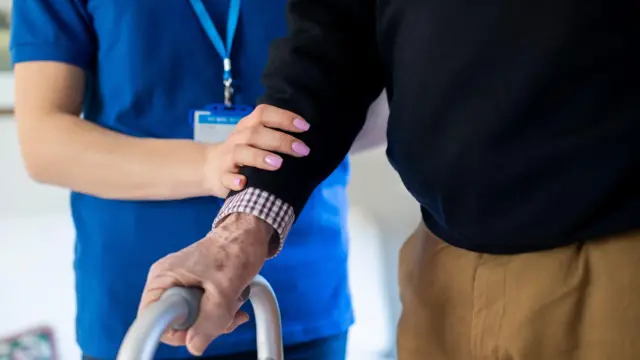
    A carer wearing a blue tunic and a lanyard around her neck helps an old man. Only their torsos are visible. The man has one hand on a zimmer frame and is wearing a checked shirt under a black jumper and beige trousers. The carer has pink nails and is resting a hand on the man's lower arm.Image source, Getty Images

    Burnham's plans on social care reform will only apply to England.

    That's because the devolved administrations in Scotland, Wales and Northern Ireland are in control of their own social care systems.

    Across the UK, the issues are similar - soaring costs, a struggle to recruit and retain staff and a widely accepted need for reform without an obvious path to it.

    The Scottish government had hoped to be the first UK nation to create a national care service - taking social care responsibilities away from local authorities into a new national agency. However, those plans were scrapped last year after becoming unworkable.

    Similar proposals are now being discussed as part of the Casey review for England.

    Another idea being discussed is free personal care - which already exists in Scotland.

    That includes things like helping frail elderly people wash and dress and go to the toilet, but does not cover accommodation, food and everyday living costs which are subject to means testing.

    The Health Foundation think tank estimates that implementing a Scottish-style system in England would cost £7.5bn a year by 2036.

  13. A care service, pay and cross-party talks: What we heard from Burnhampublished at 11:32 BST

    Andy Burnham speaks to residents, care workers, volunteers and the media during a care home visit in LondonImage source, Reuters

    Andy Burnham has finished his speech and taken questions from media - here's a recap of what we've heard from him.

    • The prime minister started by praising care teams, saying they should be the "best paid people in society, not the worst" and blamed his generation of politicians for failing to reform social care
    • Burnham made three announcements on social care, the first being that he's asked Baroness Louise Casey to bring forward her review by a year - from 2028 to 2027 - and focus on how the government could set up a National Care Service
    • The second announcement was about how the government could reform pay, training and progression for social care staff to bring it in line with the broader NHS
    • The third announcement was about the beginning of cross-party talks between Labour, the Conservatives and the Liberal Democrats
    • Moving on to questions from reporters, Burnham insisted his plans would be fully funded but said reform would require "difficult decisions"
    • At the same time, Burnham also recommitted to Labour's manifesto pledge not to raise income tax, National Insurance or VAT

  14. Doing things differently can bring 'financial solutions', says Burnhampublished at 11:17 BST

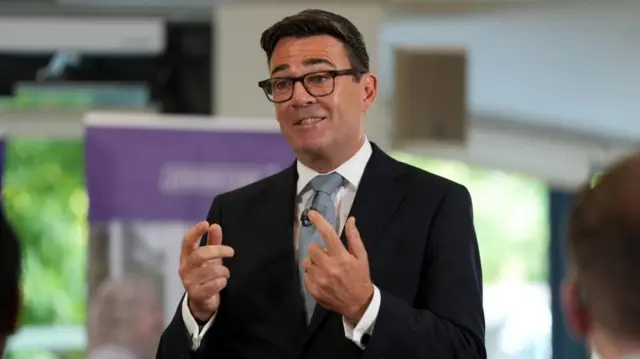
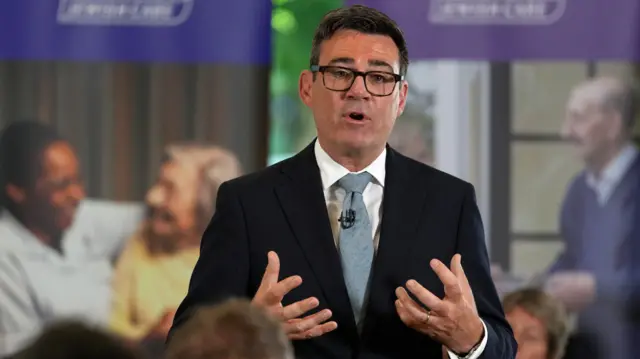
    Andy Burnham, who has short dark hair and glasses, speaks while wearing a business suitImage source, Reuters

    The Independent asks the prime minister if he can guarantee people will no longer have to sell their homes to pay for care.

    Burnham says that in an ideal world no one should have to sell their home to pay for care and that it's an "awful process" to live through.

    "The system isn't right," he says.

    The PM also pleads for a "factual debate" on social care to allow people to weigh up the options put forward by the Casey review.

    Burnham is also asked about how reforms to the current system will be paid for. He describes how focusing on financing one element of social care is "a failure of the past".

    He says viewing the issue as a whole may give the opportunity for "financial solutions" to come from "doing things differently".

  15. Burnham says he'd stick to Labour's manifesto commitments on taxpublished at 11:14 BST

    Burnham was asked if he will rule out tax rises and whether he can commit to 3% of GDP spending on defence by 2030.

    Burnham says he will stick to commitments made in the Labour manifesto, including on taxes.

    On defence spending, Burnham says he will honour Nato commitments. However, he adds, it will mean being prepared to look at challenging issues, including young people not in employment or training.

  16. Burnham's question and answer session endspublished at 11:10 BST

    Andy Burnham, who has short dark hair and glasses, holds his index finger to his chin in a contemplative poseImage source, PA Media

    Andy Burnham has now finished taking questions from the media.

    Over the next few posts, we'll detail some of the queries the new PM faced.

    This marks the first question and answer session Burnham has participated in since he became prime minister last week.

  17. Social care service in England as unfair as America - Burnhampublished at 11:09 BST

    Burnham is then asked about the threshold to qualify for social care help.

    In England, people with savings worth more than £23,250 are not entitled to help with care costs from their council.

    Burnham says he feels service in England is just as unfair as it is in America.

    "The vulnerable pay with everything and it can completely leave them with nothing," he says.

    The prime minister then answers a question on his stance on assisted dying, saying the funding of palliative care and social care needs to be fixed before a wider conversation can be had on the topic.

  18. Burnham says social care plans will be fully funded, but warns of 'difficult decisions'published at 10:59 BST

    Andy Burnham, who has short dark hair and glasses, speaks while wearing a business suit

    Burnham is then asked by ITV News if the government can realistically transform social care without raising taxes.

    The PM says this is a question of standards within organisations, adding that care is variable across different organisations.

    He says there is profiteering in the sector and "unnecessary and dangerous" cost cutting on the backs of vulnerable people.

    Burnham adds more can be done with existing resources and clarifies that today's announcements will be fully funded.

    He says that there will be some things that the government wants to do that will "require difficult decisions" but he will be honest with people about those and put them before the country "at the right time".

  19. Cross-party talks are 'just the start', Burnham sayspublished at 10:55 BST

    The BBC's Alison Holt has asked Burnham what would be different this time, noting that there have been cross-party talks before.

    Referring back to his experience as health secretary in 2009-10, Burnham says reform to social care was probably left too late then as it was too close to a general election.

    "It's better to do it sooner and further away from an election," Burnham says, adding that it's one of the reasons why he's asked Baroness Louise Casey to bring the review forward.

    "I don't know whether it's possible to find agreement, but let's give it a try," he says.

    Responding to whether the proposal for cross-party talks was late notice, Burnham says he had two approaches at the weekend from the Tories and Lib Dems and he was responding to that ask.

    He says these talks are "just the start".