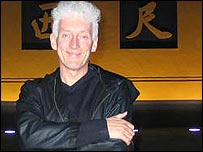
Art Loves Science. What makes you think that?| Art Loves Science | - The debate, Art Loves Science, is at Manchester Metropolitan University on Weds 14 Feb
- Professor John Hyatt is director of MIRIAD, Manchester Institute for Research and Innovation in Art and Design, at MMU
|
"Artists are curious people, they feed on the world around them, and love to artistically engage with questions and answers. With their appreciation of life in all its forms, there may even be beauty in the mundane or in the downright ugly. "In my capacity as the Director of MIRIAD, I would say, however, ‘Now hang on there, Artist, that sounds as though you see the creations of your scientific colleagues as mundane or ugly.’ ‘On the contrary,’ the Artist would reply, ‘I am saying that we recognize them as our rare and beautiful mirror image.’ "So the people involved will need curiosity, wisdom, diplomacy, and a certain courage to be able to get both artists and scientists to leave their preconceptions at the door before they come in and give them the courage and support to step out of their suits of professional armour." Surely art is about creativity and science is about logic. How can the two come together?| "Manchester has a history of radical thought and open debate. It is a friendly, cosmopolitan, independent, supportive city of positively active people." | | Professor Hyatt on why Manchester is the place for Art Loves Science |
"In actuality, the scientist is potentially just as creative and imaginative as the artist, but it just so happens that the artist is trained to be this. I have been training for every day of my life, therefore, I am someone to ask if you need creativity and imagination. They flow like water through me. "Yet, precious as these two gifts are, they are worthless without understanding and so are logic and facts. However, when we succeed in bringing together knowledge and insight, then we can hope to achieve understanding. A city that achieves understanding of itself and can see itself from multiple perspectives is a city that can nurture a Golden Age. "I believe that if Manchester can achieve the ability to listen to the twin voices equally and foster pragmatic ways for the dialogue to happen, then, it will realise the value of such a progressive and enlightened attitude." Why is Manchester such a good place for it to happen?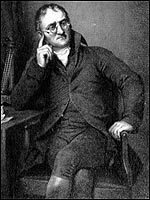 | | John Dalton |
"Manchester has a history of radical thought and open debate. It is a friendly, cosmopolitan, independent, welcoming, supportive city of positively active people. There are other voices to be joined in the debate but Art Loves Science is a place to start to get the full intellectual capital of the city working. The brain working within the body of a healthy, active, empathetic and supportive city." Why is Oxford Road so important to this marriage?"Within this nurturing womb of Manchester, the umbilical leads to All Saints on Oxford Road and the birth place of radical thought has spread its ideas south east along Oxford Road and north through St. Denys’ Gate, past the Cathedral, Exchange Square and Chethams, where incidentally Karl Marx, as a guest of his friend Engels, wrote ‘Das Capital’ and Elizabeth the First’s magus, John Dee, was seconded in the Sixteenth Century. 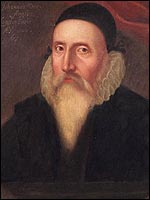 | | John Dee |
"Think of Oxford Road and radical changes in human thought and in humans themselves that have taken place there: from Dalton and the atom to the Pankhursts or to the philosopher Wittgenstein. He arrived as an engineer wanting to build a better propeller and left as a philosopher of language. "The story of Oxford Road is phenomenally alive with co-incidences and interesting scenes in a rich historical tapestry of free and creative imagination mixed with knowledge and pragmatism: Einstein, for example, delivered his first British lecture on the theory of relativity on Oxford Road. "The winding stems of stories of leaps forward in human thinking that happened on Oxford Road grow and grow. They are the strange and beautiful flowers that grow in Manchester’s soil. It is time we made new buds open because, heads up, everybody, there is a world to save and it is your world! 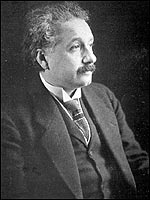 | | Albert Einstein |
"I believe we, as Manchester, should engage with that task full-bloodedly because we owe it to the giants that went before us upon whose shoulders we stand. We cannot watch as couch potatoes whist the world goes to hell when we have the love and power to stop it and the imagination and creativity to design a paradise." What do you hope will come out of this debate?"Eventually, the ideas, new insight and understanding that are achieved as the project grows to achieve its full potential. These will give us a new perspective or a multiple perspective view about the world we all share, allow us to see new answers to our current problems, possibly hidden in plain view, and encourage us to put these into actions that will help to refresh and save the world." |