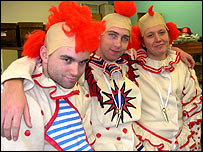
If you think the idea of a stand-up comic is a recent thing and that clowns are just for children, think again. Thanks to Dr Ann Featherstone and her discovery of the 130-year-old book, it turns out that a combination of painted faces and word-playing monologues were the order of the day for Victorians when it came to comedy. 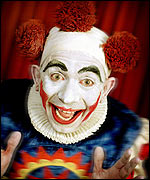 | | A Victorian clown |
Ann came across the book while helping a friend compile his family tree. It had belonged to his great-great-great-great-grandfather, Thomas Lawrence, a stage performer from the Victorian period. "I opened it and thought ‘goodness me, this is a clown’s gag book," explains Ann. "I’d never seen anything like it before in any of the archives I’ve ever used." A laughing matter?The question is though, how funny are the jokes? Dr Featherstone says she finds them hysterical, though is more than aware that they cut both ways in modern times. "Victorian jokes are either very similar or very different. The similarities are the themes. They make fun of women; talkative women like their wives or their mother-in-laws. They make fun of policemen. They do jokes about how dreadful it is to be poor and how long you have to work. | "The similarities are the themes. They make fun of women; talkative women like their wives or their mother-in-laws." | | Dr Featherstone on how some things never change in comedy |
"The difference is in the delivery. They do a lot of word-play and puns. It’s very wordy, like a build-up of gags. But I suppose even there, there’s a similarity with old-fashioned stand-up. I think Ken Dodd, for example, would find them very funny. "The thing is they’re not gags, they’re monologues. The comparison is probably Les Dawson. But the actual performance is different again. The physicality of it could be compared to Lee Evans. So in a way, it was a starting point for both the slapstick and the intense wit that we now know." The cheers of a clownFor all the differences in delivery, Dr Featherstone says the main difference is the fact rather than the casual attire we now know, the Victorian comic was dressed as a clown, which instantly makes things odd for a contemporary audience. 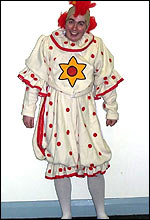 | | One of the drama students performing the jokes |
"For one thing, we don’t expect a circus clown to speak. Our experience of clowns tends to be of the silent European ones, but these were stand-up comedians. They filled up the gaps between acts in the circus programme, so they had to be very confident practitioners, in control of their material so that they could spin it out or wind it up as was needed, depending on how long the next act took to come on. "Also, the circus clown at the time had their own repertoire and people knew what to expect. Their reputation was that they told the oldest and the worst gags ever. It was family entertainment, you could be certain that it wasn’t going to be blue or offensive. It was just old, tired jokes, but then they do say that the old ones are the best!" A golden oldie?And if you want evidence of that, Ann’s favourite joke from the book is an example of a proper groaner: "What’s the difference between a rowing boat and Joan of Arc?" she smiles. "One is made of wood and the other is Maid of Orleans!" Thomas Lawrence’s jokes will get their first run-out in over a century at the Blackpool Grand, where four University of Manchester drama students are performing them in ‘Fool and Horses: The Victorian Clown’ on Thursday 25 January. |