Where did Sebastian Darke come from?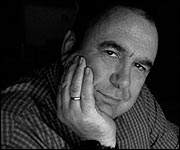 | | Philip Caveney |
"The interesting thing is that this all started by accident. I’ve been writing adult thrillers for a long time and my daughter, who was 10 at the time, asked if she could read one of my books. I thought maybe not, because they’re heavy stuff, so I told her I’d write a book just for her." Was it a big leap to jump from adult to children’s fiction?"There’s a famous saying by Maxim Gorky that goes ‘write for children in the same way you write for adults, only better.’ So it’s not too big a leap, although you do have to tone down certain things. "The great thing about children’s literature now is that it gives you free rein of your imagination. Literally anything can happen!" So where did the inspiration for Sebastian Darke come from?"My daughter and I had a favourite film, a Danny Kaye film called The Court Jester that we used to watch and watch. It struck me so when I came to write the story for her that I didn’t know of any books that had a jester as the central character, so it stemmed from that. "And then I thought, well, wouldn’t it be great if the jester wasn’t very funny, if he couldn’t tell a joke to save his life? So that was the basic premise for the story and from there, it grew and grew." There’s an old adage that writing a book is 90 percent perspiration and 10 percent inspiration. Is that true?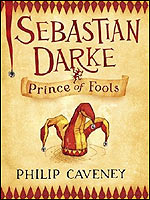 | | Sebastian Darke: Prince of Fools |
"Absolutely. I think that people who wait for the muse to perch on their shoulder and give them a good idea will be waiting a long time. I look at it as a nine-to-five job. I get up in the morning, go down to my office and tell myself that I have to write a chapter. It might not be a very good chapter, it might need re-writing later, but I try and produce as many words in a day as I can." But that hard work is all worth it when you see your book in the shop. How does that feel?"It’s a wonderful feeling. Funnily enough, I’ve published about 17 books now and I still can’t resist that impulse to turn the book face out or put it in a more prominent position. "I have had situations in the past when a book’s been out and I’ve gone into a shop and found not one copy of it. It all depends on what kind of push you’re getting from your publishers." You’re up for the Waterstones Children’s Book Prize with the novel. How do you rate your chances?"I’m on the shortlist of eight, having come down from 40 books, but there’s many a slip… there’s every chance I won’t get it, but just to be on the shortlist is a wonderful thing." It’s a long way from when you began writing. Those times must be very difficult…| "Show it to publishers, show it to agents, keep coming back to them. If they say re-write it, re-write it and give it to them again. But keep going!" | | Philip's advice to would-be authors |
"When you’re first staring out, and people at my writers’ group have told me this too, you could paper the walls of your room with rejection slips. "Often, books don’t even get read, because people have got a huge pile to read, and you’ll get a standard rejection letter. You know, from the phrasing of the letter, whether they’ve read your work or not, because they’ll make comments on it. "The truth is that it’s a lottery. You have to find the one person that reads your work, relates to it and thinks ‘I love this, I can do something with this.’ Plus, in this day and age where everything is business-related, they have to see that it has a potential market and that they can actually make some money on it." So what’s your advice to would-be authors?"Anybody that can write can improve as a writer, and it’s simply a case of getting constructive criticism. But the one piece of advice I’d give to any writer is simply this: never give up. "So many people get disheartened and think ‘this is not working. I can’t do this’, and they might stop halfway through something that’s very promising. I always say, whatever you do, finish the book to whatever level you can, and when you’ve finished, show it to as many people as you can. "Show it to publishers, show it to agents, keep coming back to them. If they say re-write it, re-write it and give it to them again. But keep going!" |