_____________________________________________________________________________________________________
Download a free 6 Minute English worksheet and transcript!
Try our free interactive quiz!
______________________________________________________________________________________________________


Introduction
Do you remember what it was like before you learnt to read? It's hard to think back that far! Scientific research has shown that learning to read changes the way our brains work. Not only that, but depending on the language you are reading, your brain changes in different ways. Becca and Georgie discuss this and teach you some new vocabulary.
This week's question
The longest novel in the world is widely thought to be by French author Marcel Proust. Its title has been translated into English as Remembrance of Things Past, and more recently as In Search of Lost Time. But how many words does the book contain?
a) 130,000
b) 1.3 million
c) 13 million
Listen to the programme to hear the answer.
Vocabulary
natural
coming from nature; developed without special training
dedicated
designed and used for one particular purpose
co-opt
involve someone or something, sometimes against their will
circuit
a system of connections
inevitably
in a way that cannot be stopped or avoided
intricate
having lots of detail
TRANSCRIPT
Note: This is not a word-for-word transcript.
Becca
Hello. Welcome to 6 Minute English from BBC Learning English. I'm Becca.
Georgie
And I'm Georgie. Remember, you can find all this episode's vocabulary along with a transcript and worksheet on our website, bbclearningenglish.com.
Georgie
Now, Becca, do you read a lot?
Becca
Hmm, I don't read often. I just feel like I don't have the time, Georgie. How about yourself?
Georgie
I would love to read more, but I don't read very much at the moment. I read mostly before bed because I feel like it helps me relax and go to sleep. And today we're talking all about reading. We'll be hearing from some experts about how reading can change our brains, and as usual we'll be learning some useful new words and phrases.


Becca
Let's start with a quiz question. The longest novel in the world is widely thought to be by French author Marcel Proust, a book which, when translated into English, means Remembrance of Things Past. But how many words does the book contain? Is it:
a) 130,000,
b) 1.3 million, or
c) 13 million?
Georgie
OK. The longest novel in the world. I still think 13 million words sounds too many, so I'm going to go with b) 1.3 million.
Becca
Alright. We'll find out at the end of the programme. Now, we might think of reading as like speaking. We're born with the potential to do it and then we learn. It's natural. If something is natural, it's something you were born with or that comes from nature.
Georgie
But Maryanne Wolf, author of the book Reader Come Home, says that this isn't true.
Maryanne Wolf
We think of language as natural, and reading is written language so it must be natural. But it isn't. It isn't natural at all.
Becca
Scientific studies suggest that when we're born, our brains already have the networks that allow our eyes to see and our vocal cords to produce sounds, but not with the pathways we need to read.
Georgie
Let's hear more from psychologist and neuroscientist Rebecca Gotlieb, speaking to the BBC World Service.
Rebecca Gotlieb
From an evolutionary timescale, our brain hasn't had enough time to develop a dedicated reading brain. And so, to build a reading brain network, we co-opt parts of the brain involved in vision and auditory processing, and language, and attention and affect. Reading is really a whole brain process. It involves activation in all four lobes of the cortex. The process of developing a reading brain alters everything, from brain activity to brain structure and brain connectivity. The power of deep reading is really fundamental to our humanity. When we read deeply, we change our brains and we change who we are.
Becca
Rebecca says that our brains haven't evolved to include a dedicated reading brain. Dedicated here means designed and used for one particular purpose.
Georgie
So, because we don't have a part of the brain designed specifically for reading, when we learn to read, we co-opt other parts of the brain. Co-opt here means to include someone or something, often against their will.
Becca
Right. Learning to read means using lots of different parts of the brain that are designed for other things, and this changes our brain structure compared to someone who hasn't learned to read.
Georgie
And the language we read also shapes our brain. Chinese characters, for example, use symbols instead of letters of the alphabet to represent words and ideas.
Becca
Research suggests that learning to read these symbols activates different areas of the brain to reading an alphabet-based system.
Georgie
Scientists studied a bilingual man who could read and speak Chinese and English. The man suffered a stroke, which affected parts of his brain, including his ability to read Chinese. But amazingly, he was still able to read English.
Becca
Maryanne Wolf explains more to the BBC World Service.
Maryanne Wolf
It's a beautiful example of how the brain's circuit reflects the requirements of Chinese, which inevitably means more visual memory and visual processing of those beautifully intricate symbols or characters.
Georgie
Maryanne says that the brain's circuit is shaped by learning to read Chinese. A circuit is a system of connections.
Becca
The visual qualities of Chinese symbols inevitably mean more visual areas of the brain are developed. Inevitably means in a way that cannot be stopped or avoided.
Georgie
Maryanne describes the symbolic Chinese characters as beautifully intricate. If something is intricate, it has lots of detail.
Becca
And something which also has lots of detail, or certainly lots of words – I asked you, Georgie, how many words are in Marcel Proust's Remembrance of Things Past.
Georgie
I said 1.3 million.
Becca
And you were correct!
Georgie
Yay!
Becca
The book also contains lots of very long sentences, including one with over 900 words.
Georgie
One sentence with 900 words? That is a lot. OK. It's time to recap the language we learned during this programme, starting with natural, which describes something you were born with or that comes from nature.
Becca
Dedicated can describe something that is designed and used for one particular purpose.
Georgie
If you co-opt someone or something, you involve them, sometimes against their will.
Becca
A circuit is a system of connections – for example, in the brain.
Georgie
Inevitably means in a way that cannot be stopped or avoided.
Becca
And intricate describes something which has lots of detail.
Georgie
That's it for this episode of 6 Minute English. Test what you've learnt with the worksheet on our website, bbclearningenglish.com.
Becca
Thanks for joining us. Goodbye!
Georgie
Bye.


Next
Find an A-Z list of our programmes.
To learn English from news headlines, listen to Learning English from the News.
Practise your reading skills with The Reading Room.
6 Minute English dhihoo kanaa


Can apps teach you a language?
Episode 260910 / 10 Sep 2026
What's better for learning languages – an app or a class?

Climate change and extreme weather
Episode 260903 / 03 Sep 2026
Every year we see damage, death and destruction caused by hurricanes, cyclones and typhoons - tropical storms. Is climate change making this impact worse?


Sharing the road with driverless cars
Episode 260820 / 20 Aug 2026
Would you trust a robot to drive you around a city?

Who does the housework?
Episode 260813 / 13 Aug 2026
When you were growing up, did your mum or dad do more household chores?
How do climate scientists make predictions?
Episode 260806 / 06 Aug 2026
What is the difference between a prediction and a projection?
The Enhanced Games
Episode 260730 / 30 Jul 2026
Would you watch a sport if you knew the athletes had taken drugs?
What's in a footballer's brain?
Episode 260716 / 09 Jul 2026
How do footballers cope with high-pressure scenarios like penalties and corners?



Stress-free family meals
Episode 260625 / 25 Jun 2026
What foods did you dislike when you were growing up?
Limiting screen time for children
Episode 260618 / 18 Jun 2026
Children are spending too much time with electronic devices.

How advertisers make us spend money
Episode 260611 / 11 Jun 2026
When was the last time you bought something you didn't need?

How reading shapes your brain
Episode 260514 / 14 May 2026
Can learning to read alter the way your brain works?


Should we eat ultra-processed food?
Episode 260430 / 30 Apr 2026
Ultra-processed food can be tasty, but what is it doing to our health?




Weight loss drugs
Episode 260326 / 26 Mar 2026
How do weight loss drugs like Ozempic and Mounjaro help people lose weight?

How do we adapt to the cold?
Episode 260319 / 19 Mar 2026
Would you prefer to be too hot or too cold?

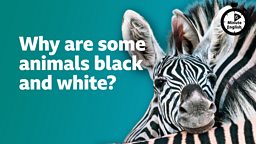
Why are some animals black and white?
Episode 260305 / 05 Mar 2026
The answer is not as black and white as you might think!




Why are billionaires building bunkers?
Episode 260129 / 29 Jan 2026
Is the end of the world closer than we thought?

Scared of speaking English?
Episode 260122 / 22 Jan 2026
Beth and Pippa talk about why we often find speaking a new language scary.
What English phrases really mean
Episode 260115 / 15 Jan 2026
Why don't British people say what they mean, or mean what they say?